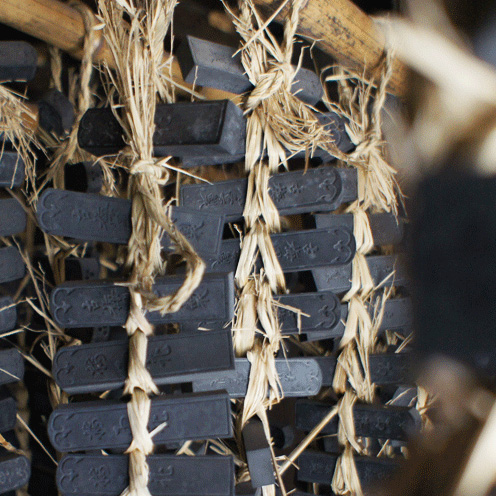
Kobai-en, a long-established ink maker, crafting ink using traditional methods.
Mastering the Essence of Nara Ink at Kobai-en
The word "sumi" (ink) is said to derive from "stain," and sumi is a wonderful writing instrument that lasts for years without fading or being eaten by insects. Nara ink began in 806 AD when Kukai brought ink-making techniques from China along with brushes, collecting soot from the ceilings of his temple at Kofukuji's Nitaibo and mixing it with glue. Even today, Nara ink accounts for over 90% of the national production.
A Unique Ink-Making Method Only at Kobai-en
In Nara City, Kobai-en has been dedicated to ink-making, preserving traditional methods since the Azuchi-Momoyama period. It is the only place in Japan that produces ink starting from soot collection, making it truly one-of-a-kind.
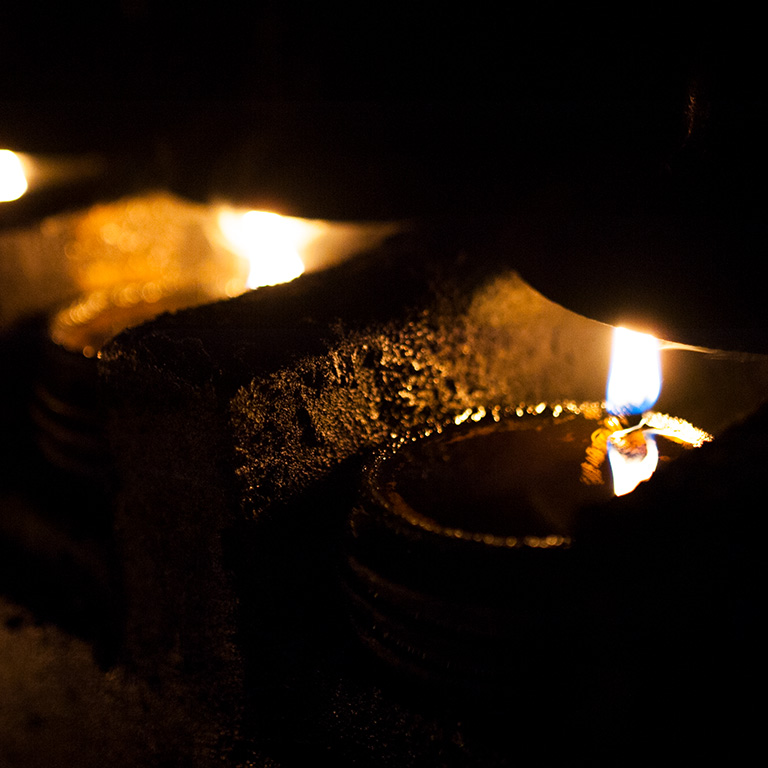
The soot collection process involves lighting wicks soaked in pure vegetable oil, covering them with earthenware, and harvesting the soot that forms. To ensure even coverage, all 200 earthenware pots are rotated every 20 minutes, and soot adhering to the lids is gathered with chicken feathers…
Oil Soot Ink from 200 Flames
Even after eight hours of continuous labor, the amount of soot collected does not reach 1 kg. The exterior walls of the smoke collection room turn black from soot particles. Inside, the heat from countless flames gives a mystical and sacred impression.
High-Quality Transparent Glue
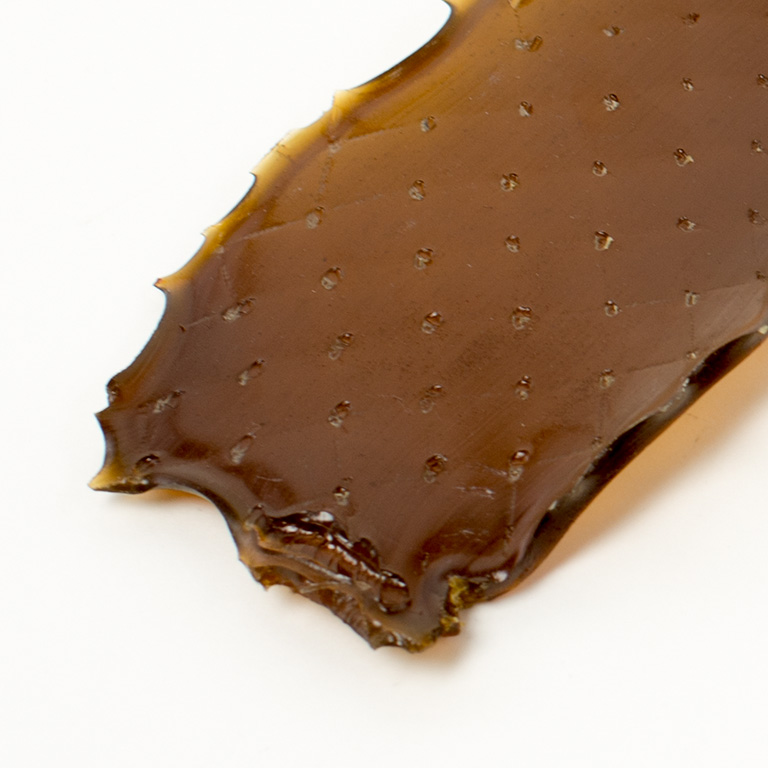
Ink is made from soot, glue, and fragrances. Glue is derived from animal bones or skins and is melted in a double boiler over long periods. Ink-making can only be done in cold months from autumn to spring to prevent spoilage. Surprisingly, high-quality purified glue has minimal odor and excellent transparency and stretch.
Staff emphasize that they only use high-quality glue. Once the soot and glue are prepared, fragrances are added, and the "ink master" begins the crucial kneading process.
Expert Ink Kneading
The paste-like ink is kneaded by foot until it shines, then finished by hand. The kneading process greatly affects the ink quality. Before molding, the ink is shaped into cylinders. Even a slight error in rotation can cause warping or cracking. Skilled masters rely on intuition and feel to stop at the perfect moment.
Mastery in Molding with Moisture Control
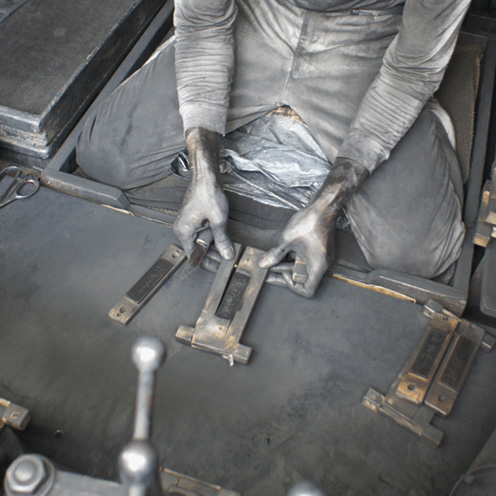
The weight unit for ink is "cho" (1 cho = 15 g). Considering moisture loss during drying, approximately 22.5 g is placed into each mold. Slight differences are adjusted by the master’s intuition, ensuring precision.
Careful Drying with Ash
Freshly molded ink is placed in wooden molds made from pear trees and clamped. The soft ink is then moved to the ash-drying room. It is gradually buried in wood ash, allowing slow drying.
Drying While Monitoring Moisture
On the first day, the ink is placed in moist wood ash, then gradually moved to drier ash. Small inks take about one week, larger ones 30–40 days.
Supreme Ink by Master Craftsmen
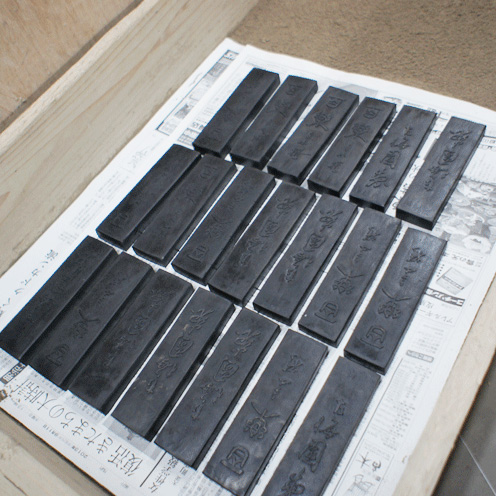
After ash-drying, 70% of the moisture is removed. Ink is braided with straw, hung from the ceiling, and naturally dried indoors for 0.5–3 months. Once dried, each ink stick is carefully washed, coated with a secret finishing layer, and sometimes charred over charcoal and polished with clam shells to achieve a glossy surface. Every step is labor-intensive.
Trusted by Many Artists
The finished ink commands a high price in stores, but the process ensures quality that never disappoints artists. Every step, from preparing water for grinding, monitoring temperature and humidity, to selecting paper, is carefully attended. Even with the growing use of convenient liquid ink, Kobai-en remains highly trusted by artists who insist on traditional ink for their creations.
Kobai-en continues to uphold its time-honored techniques and methods, embodying the true meaning of craftsmanship pride.