

How to Write on a Wedding Gift Envelope
When giving money as a wedding gift in Japan, it is customary to present it in a decorative envelope called a “Goshugi-bukuro” (celebratory envelope).
There are various etiquette rules for using these envelopes.
On this page, we explain how to properly write the front label and the inner envelope.
Read our column “How to Choose a Goshugi-bukuro” >>
Use a Dark Black Brush Pen or Fine Brush
For wedding gifts, use a dark black brush pen or brush to write on the envelope.
Light gray ink (used in condolence situations) is not appropriate for weddings.
Also, avoid thin-tipped pens such as ballpoint pens or fountain pens.
The writing feel and line quality of a brush pen vary depending on the tip shape.
Brush pens with firm tips such as “hard-tip type” or “soft-tip type” offer better control and are suitable for beginners.
The “brush type” allows beautiful expression of strokes like sweeping and flicking motions found in traditional calligraphy.
Although it requires practice, this could be a good opportunity to challenge yourself and develop this elegant skill.
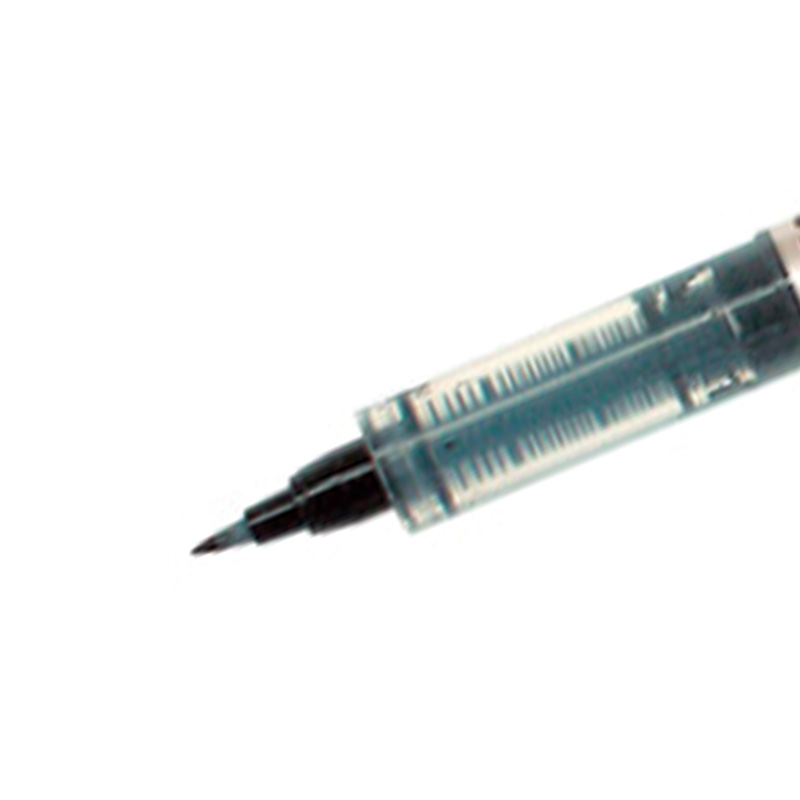
▲ Brush Pen – Hard Tip Type

▲ Brush Pen – Soft Tip Type
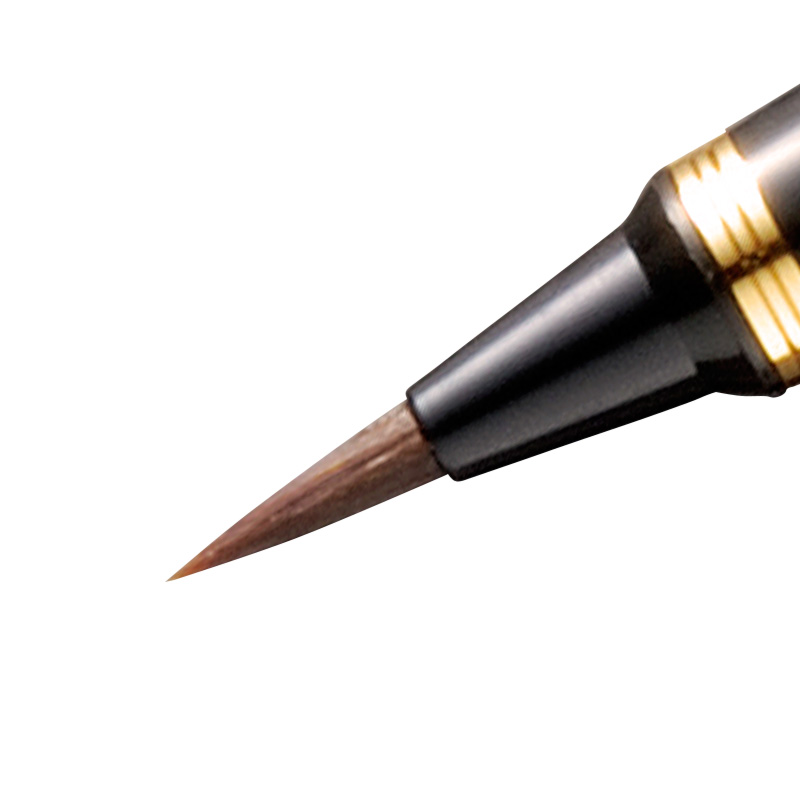
▲ Brush Pen – Brush Type
About the Front Label (Omote-gaki)
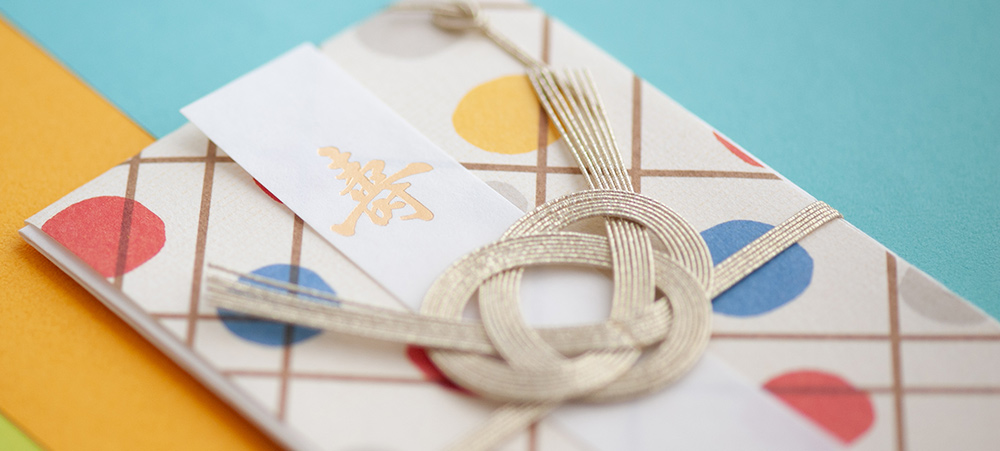
When you purchase a Goshugi-bukuro, it often comes with a long narrow strip of paper.
This is called a *tanzaku*, and it is where you write the “occasion name” and the “giver’s name.”
Occasion Name
For weddings, common words for the occasion name include “Kotobuki” (寿), “Oiwai” (御祝), or “Gokekkon Oiwai” (御結婚御祝).
Many envelopes already have the occasion name pre-printed, which you can use as is, or you can write your own on a blank tanzaku.
Some modern, casual-style envelopes include messages like “Happy Wedding,” suitable for giving to close friends in less formal settings.
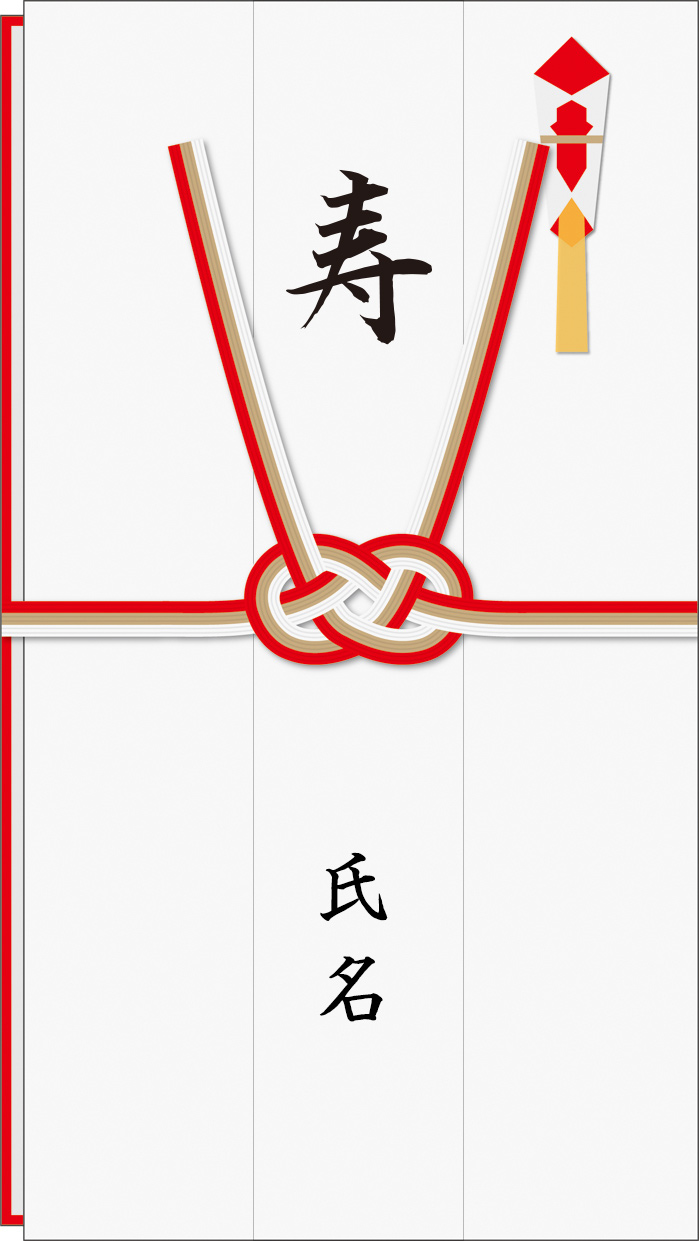
▲ Kotobuki (寿)
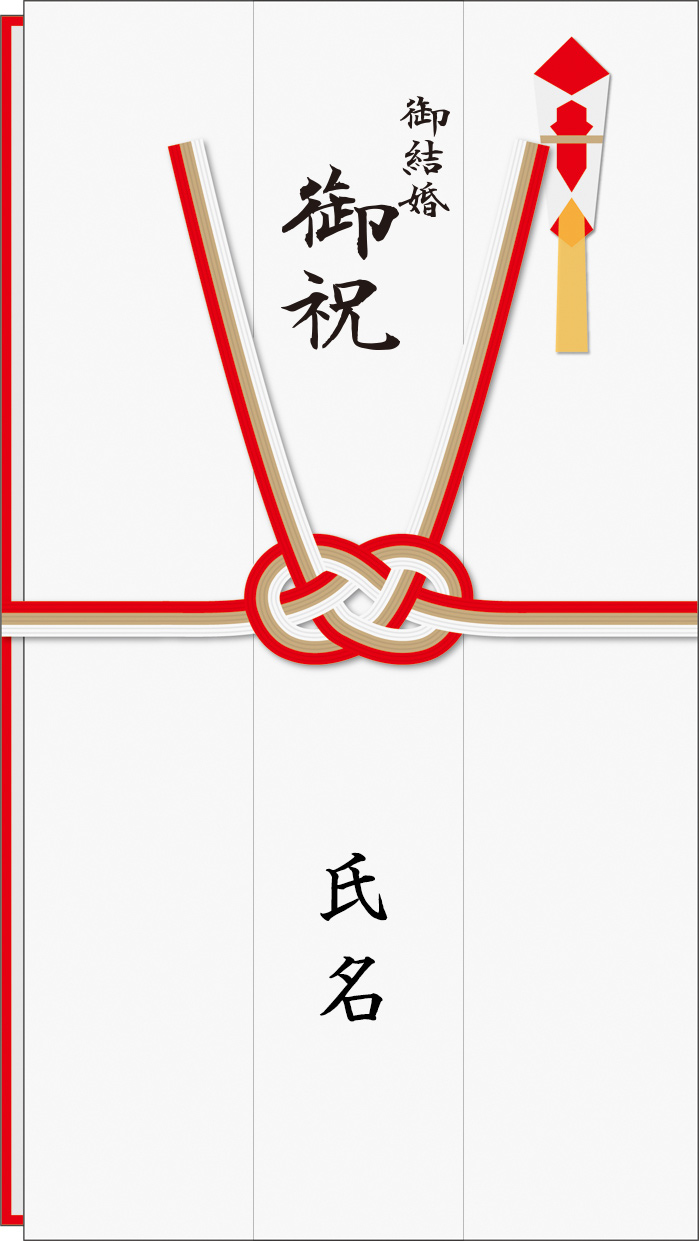
▲ Gokekkon Oiwai (御結婚御祝)
Giver’s Name
Below the occasion name, write the name of the person or people giving the gift.
If there are multiple givers, there are specific writing rules depending on the number of names.
| Individual | Write your full name in the center. The characters should be slightly smaller than the occasion name for better balance. |
|---|---|
| Married Couple | Write the husband’s full name in the center, and the wife’s first name (without surname) to the left of it. |
| Three People | Write the representative’s (eldest or most senior) name in the center, and the others to the left. |
| Four or More People | Write the representative’s (eldest or most senior) name in the center, followed by “and others” (外一同) to the left. Prepare a separate sheet of paper (such as *hōsho-shi*) listing all names and addresses, and place it inside the inner envelope. |
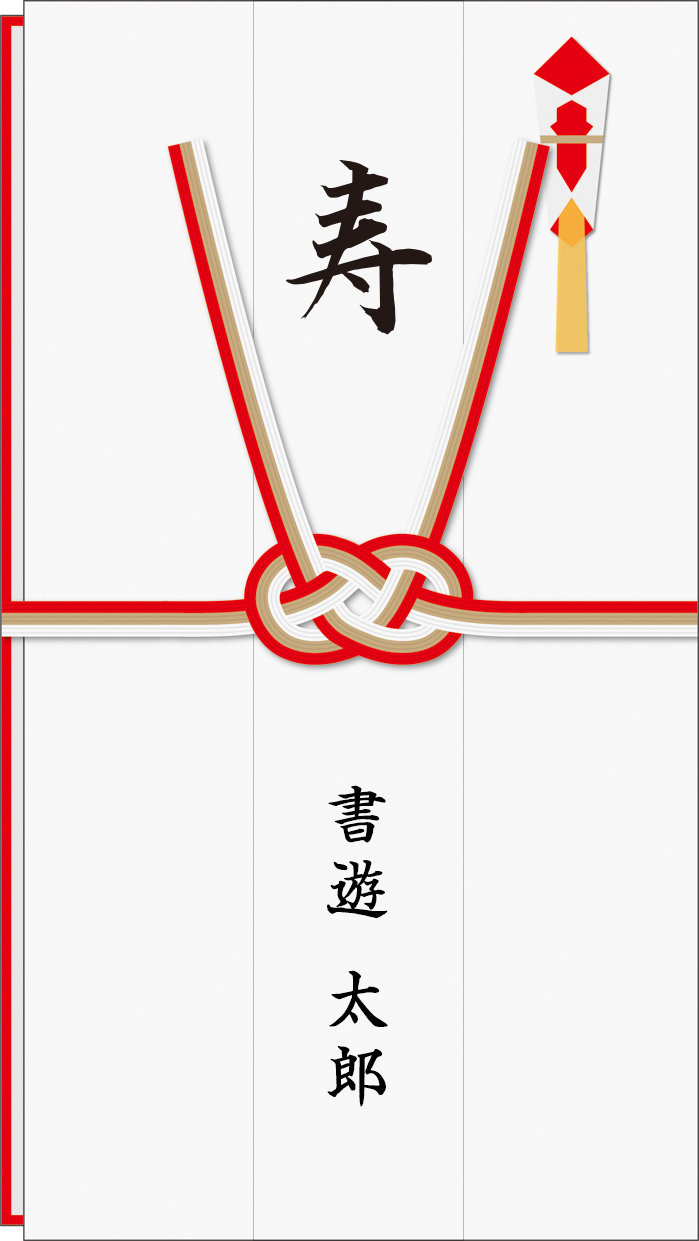
▲ For an Individual
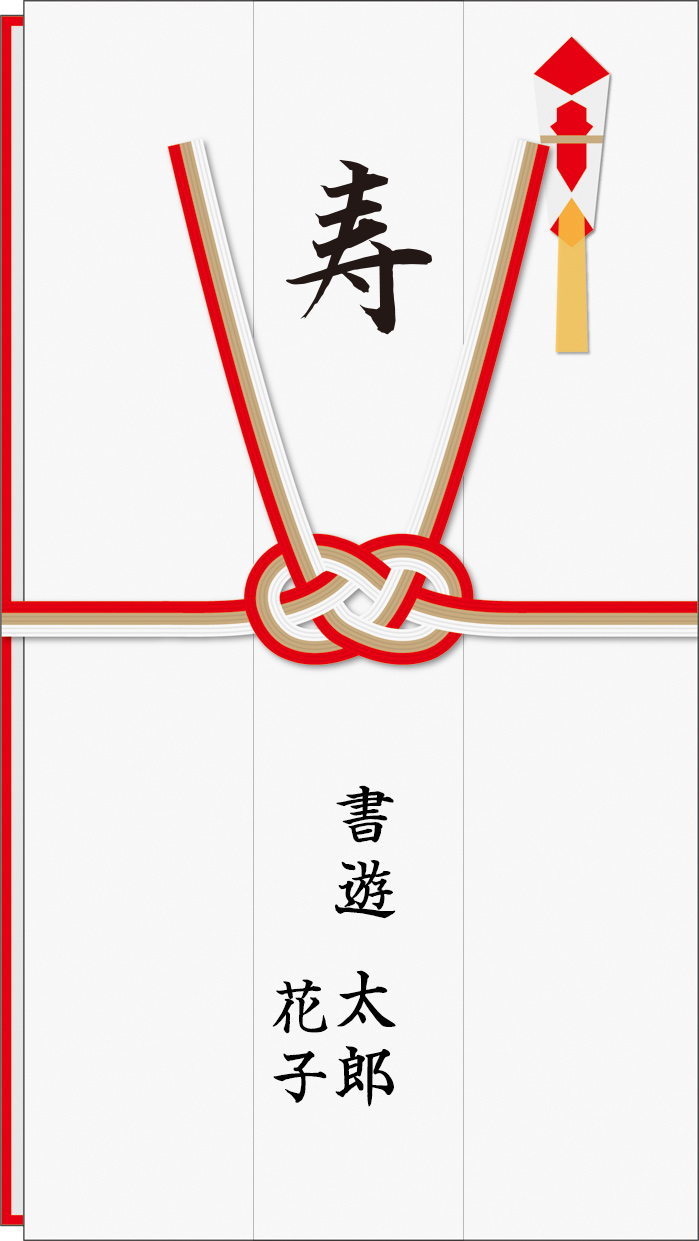
▲ For a Married Couple
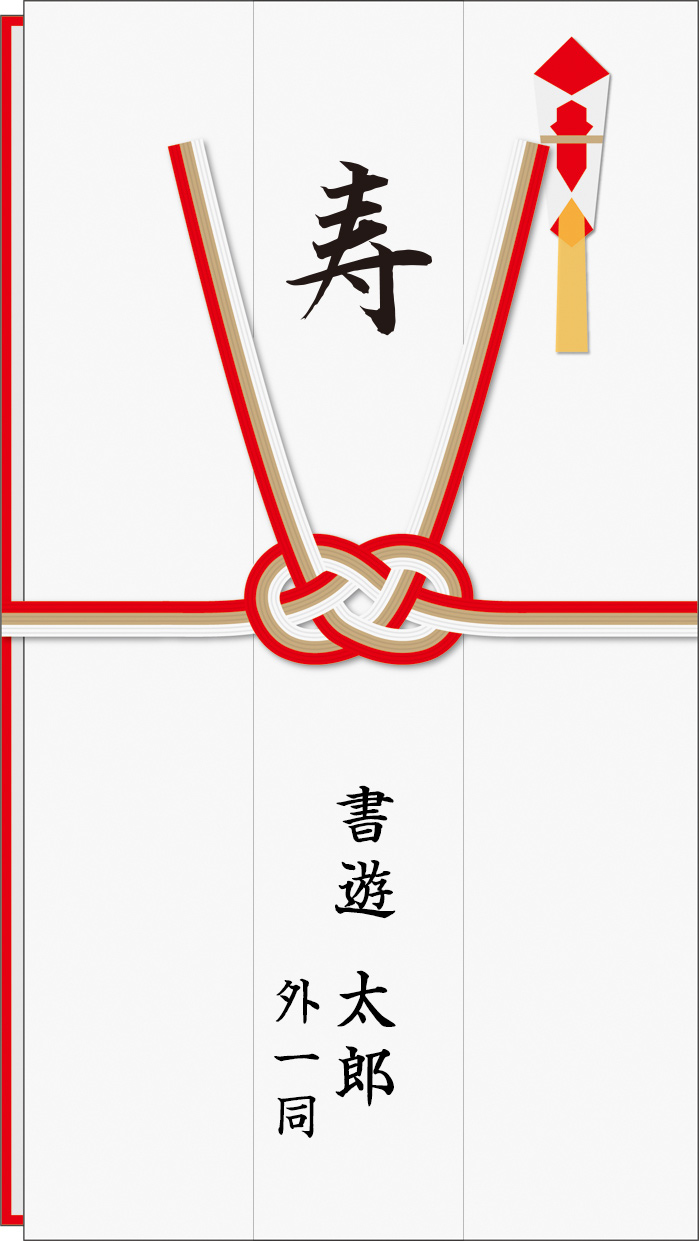
▲ For Groups of Four or More
Tips for Writing the Front Label Neatly
Check the position of the decorative cord (*mizuhiki*) before writing the occasion name and your name.
A common mistake is that part of the writing ends up being hidden by the *mizuhiki* once it’s attached.
If the start of your name overlaps with the cord, it doesn’t look neat.
If you’re unsure, lightly mark a guide with a pencil (2B or 4B, which erases easily).
After the ink has completely dried, simply erase the pencil marks.
How to Write the Inner Envelope
The inner envelope (*nakabukuro*) is the one that holds the actual bills.
Most *goshugi-bukuro* sets include an inner envelope.
Write the monetary amount on the front, and your address and name on the back, using a brush pen or brush.
When placing the new bills inside, make sure the front side (with the portrait) faces the same direction as the front of the envelope.
If the newlyweds receive the envelope and the inner one has no writing, they won’t know who gave how much.
As a courtesy, it’s proper to clearly write the amount and your name.
Front: Write the amount in traditional kanji numerals (old-style characters) in the center (e.g., 金参萬円, 金伍萬円).
Back: Write your address and name in the lower left corner.
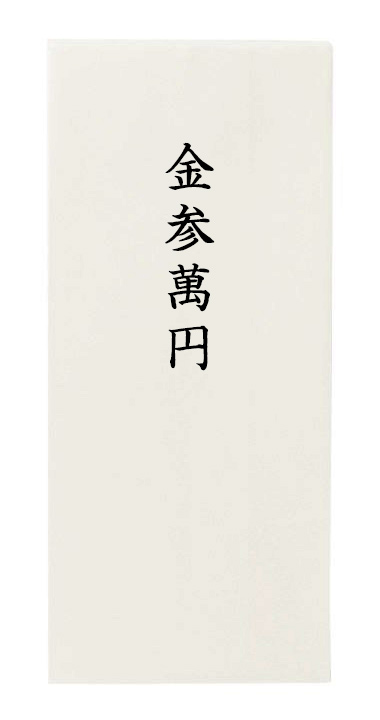
▲ Front of the Inner Envelope
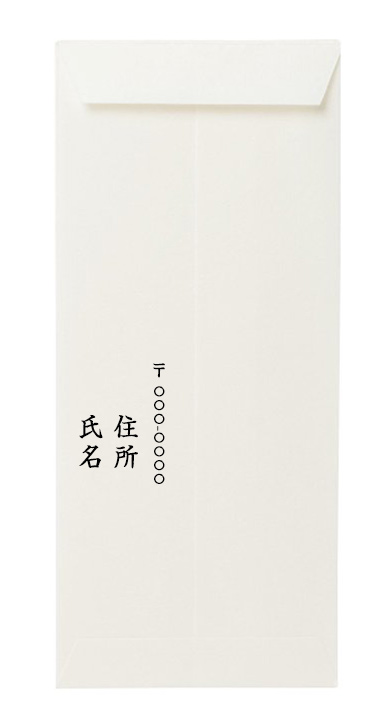
▲ Back of the Inner Envelope
How to Fold the Goshugi-bukuro (Outer Envelope)
There is also a correct way to fold the *goshugi-bukuro*.
On the back, fold the top flap first, then overlap it with the bottom flap.
This symbolizes the wish for “happiness to accumulate.”
For condolence envelopes, the folding order is the opposite, so be sure not to mix them up.
Summary
We’ve explained how to properly write and prepare a *goshugi-bukuro*.
Even a single envelope has many etiquette rules to observe.
By following them carefully, you can express your sincere congratulations.
If you’re not used to writing with a brush pen, it might feel a little nerve-wracking.
But even if your handwriting isn’t perfect, writing neatly with care will still convey your feelings.
At Shoyu Online, we offer a wide selection of celebratory envelopes (*goshugi-bukuro*) made with high-quality Japanese paper.