

Introduction to Seal Carving (Preparation)
In this article, we will introduce the work process based on the basic knowledge and preparation for seal engraving (tenkoku).
In the previous article, we introduced the tools necessary for seal engraving.
Senbun (Selecting the Text)
First of all, it is necessary to decide on the inscription to be carved, which is called senbun (selecting the text).
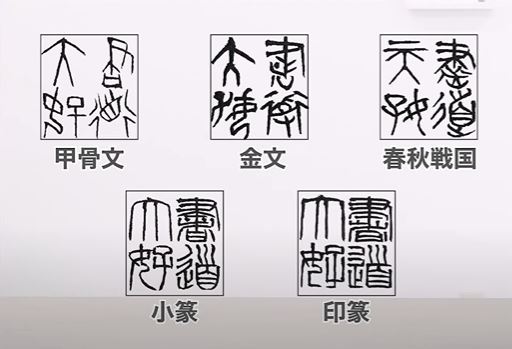
For senbun, characters in the ancient seal script style are looked up in a seal script dictionary. This process is called kenji (character search) or koji (character verification).
Seal script evolved through different eras: beginning with Oracle Bone Script of the Yin dynasty (the oldest form of Chinese characters), then Bronze Inscriptions (Kinbun), later the standardized Small Seal Script (Shōten) of the Qin dynasty, and finally variants such as Insen used for seals. It has continuously changed throughout history.
Inkō (Draft Design)
Inkō refers to planning how the characters will be placed on the seal surface. There are two main styles of how the characters appear when stamped. Depending on the complexity and size of the characters, choose which style to use and imagine how it will look once carved onto the seal surface.
Hakubun (Relief Script)
The characters are carved away, leaving the text in white. This style is mainly used for personal name seals.
Shubun (Intaglio Script)
The area around the characters is carved away, leaving the characters in red. This style is mainly used for art-name seals.
Fuji (Character Transfer)
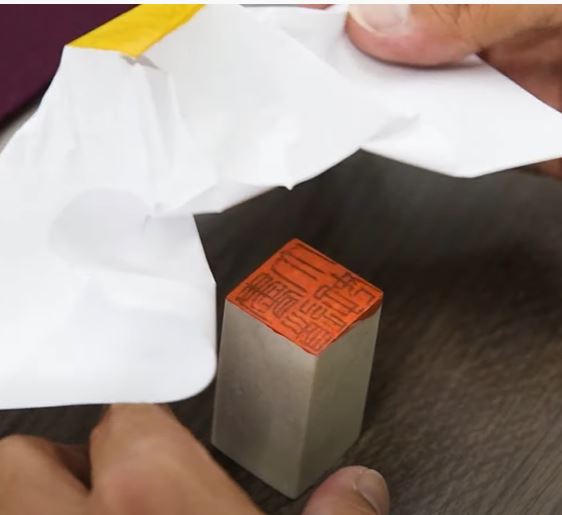
Fuji refers to transferring the characters onto the seal surface. Note that the design must be a mirror image.
As an example of a transfer method, here we introduce the “Magic Ink Transfer Method.” (*Only possible with toner-based copiers)
- Write the draft design (inkō) on A4 copy paper and make a copy.
- Apply red ink (vermilion) to the seal surface, place the copied draft design onto it, and rub over it with a marker.
- When you peel off the draft paper, the characters will have been transferred.
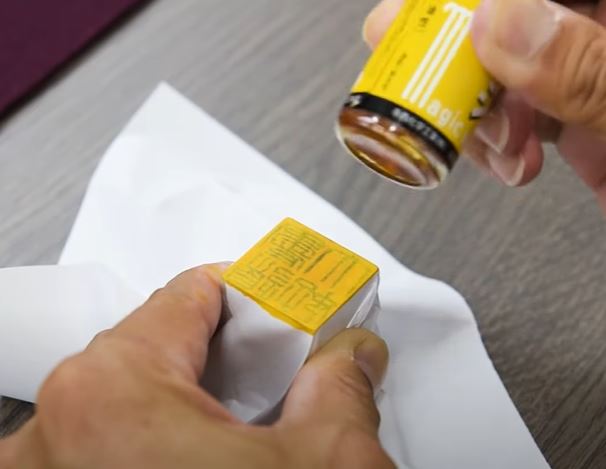
Precautions Before Character Transfer
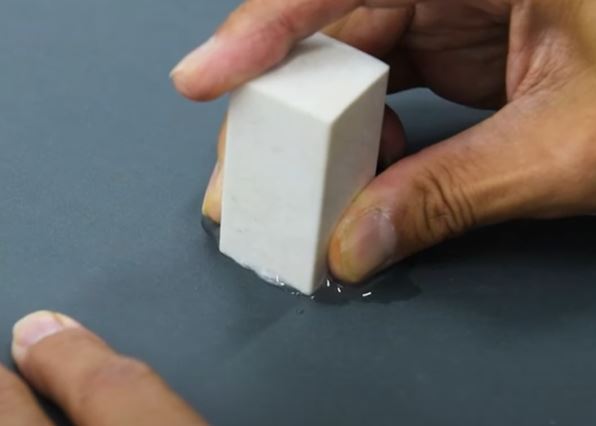
Use #600 water sandpaper to smooth the seal surface so there are no bumps or unevenness. Drip some water and polish by holding the base with the pad of your finger.
However, there is no need to make the surface excessively smooth.
The tools used are as follows:
Seal Stone: Balin Stone, 2.5cm square, height 5.0cm
Seal Knife: Shoyu Seal Knife 6mm
Ink: Unfinished Ink "Itsumaru Bansei" 1.0 size, made in Japan
Vermilion Ink: Seal Vermilion, Red Type, approx. 6g, made in Japan
Inkstone: Rammon Seal-Carving Double-Sided Inkstone
Seal Paste: Shanghai Xiling Seal Paste, "Birei", 1/2 liang
Seal Clamp: Wooden Karin, Screw Type [Made in Japan] *Large size used in the video (now discontinued)
Water Sandpaper: #600(N), 1 sheet
Transfer Paper: Seal-Carving Transfer Ganpi Paper, pack of 40