Making Ink with the Traditional “Kōfuku-ji Nitai-bō Koshiki Bokutetsu” Mold
“Supreme Ink” Made with a Muromachi-Era Traditional Iron Mold
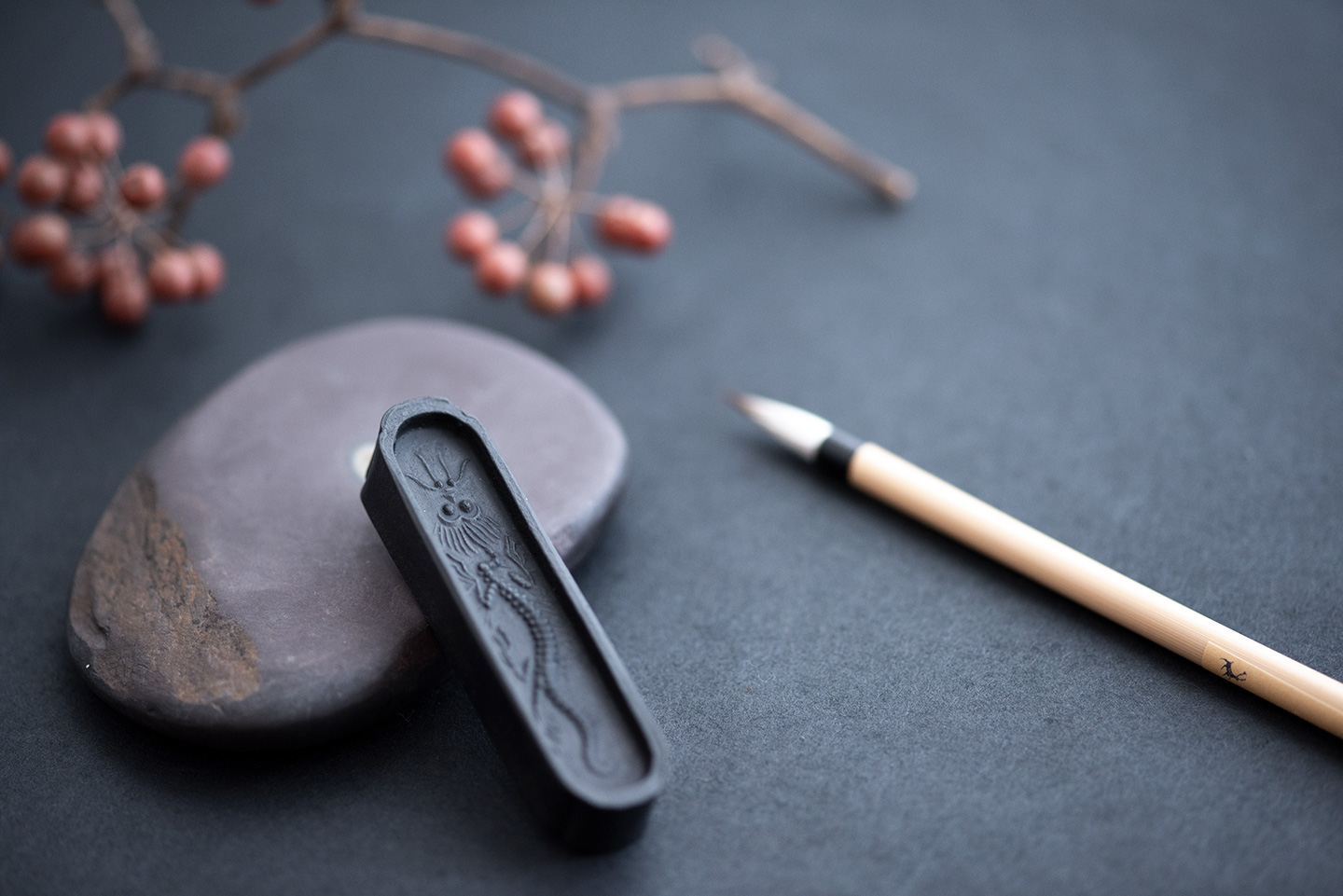
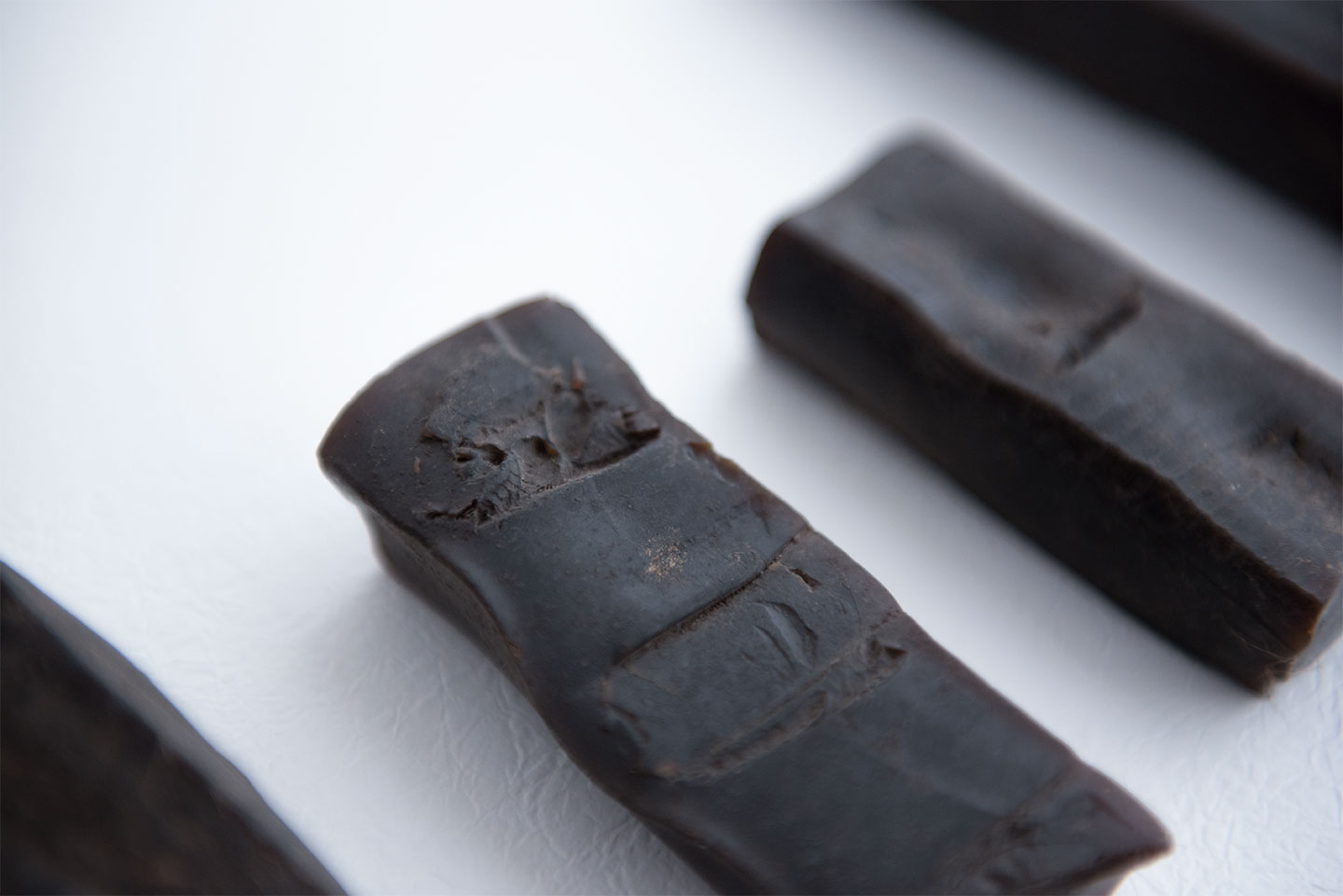
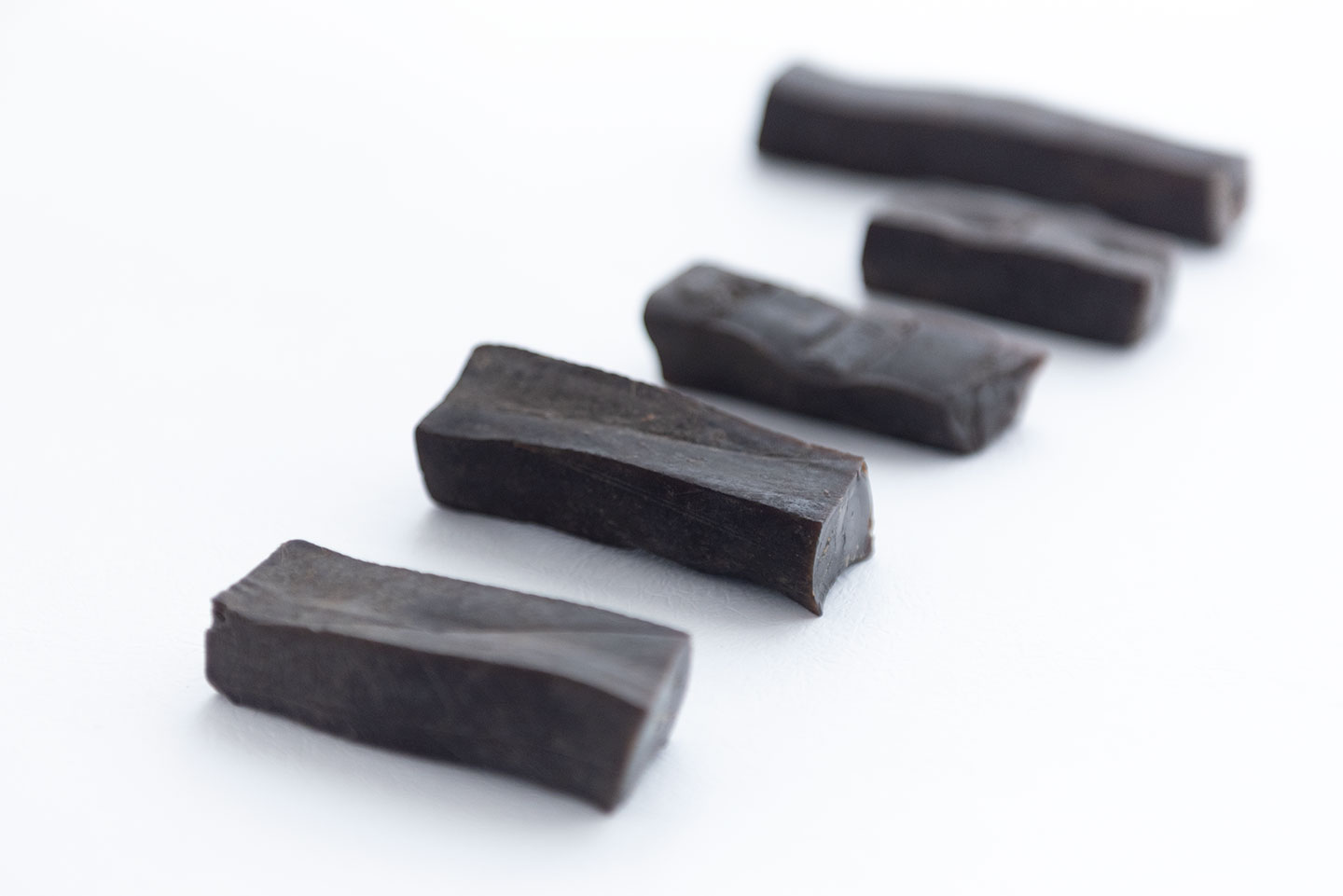
To commemorate the new “Reiwa” era name and the designation of Nara ink as a Traditional Craft, Shoyu Online has produced lacquer-black ink (top-grade rapeseed oil soot ink) using our treasured “iron ink mold” from approximately 680 years ago (Muromachi period).
Today, oil soot ink is mainstream, but up through the Heian period, pine soot ink made from the soot of burning pine wood containing resin was produced. Oil soot ink began in the Kamakura period and was established in Nara during the Muromachi period.
An “Iron Ink Mold” that Transcends 680 Years
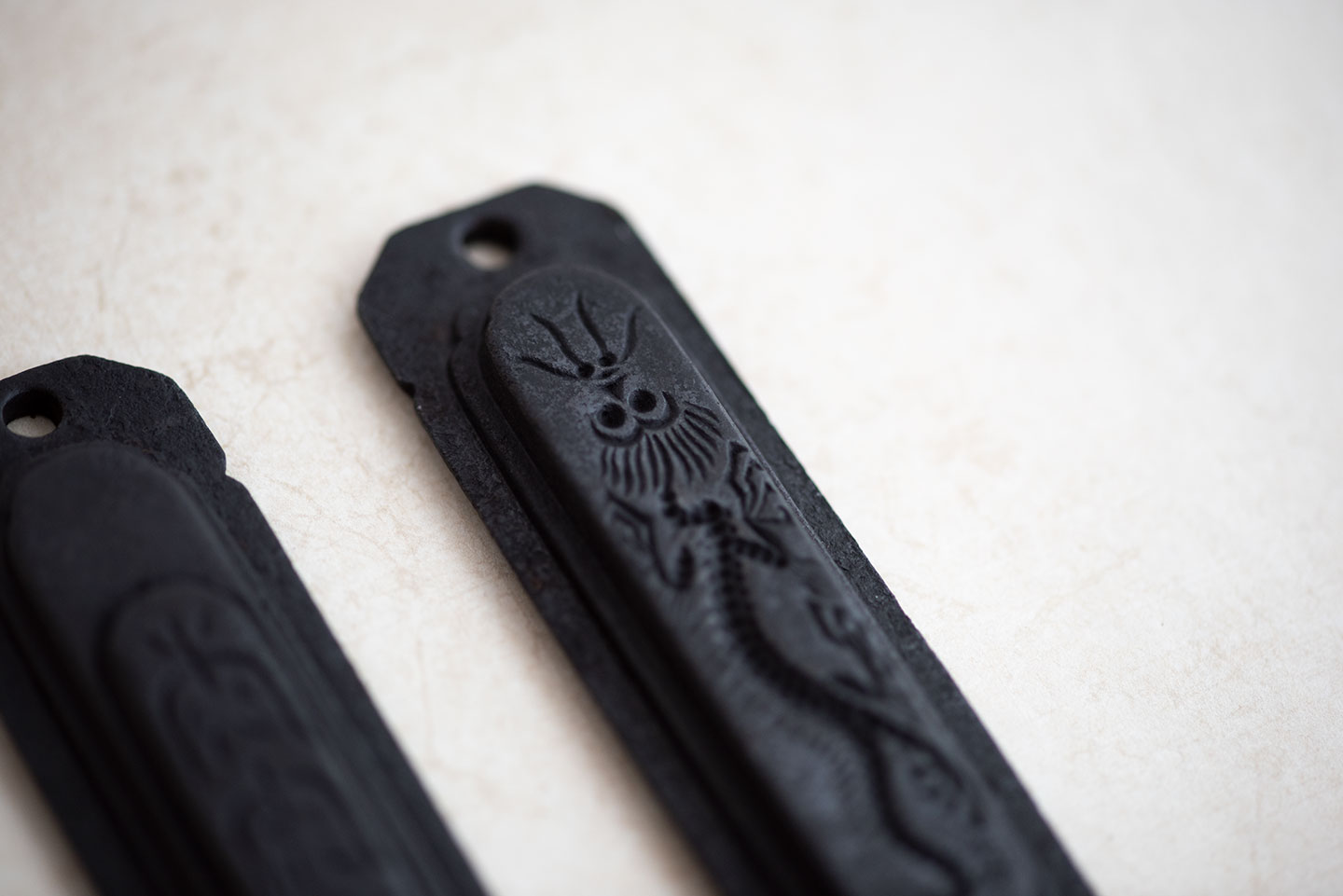
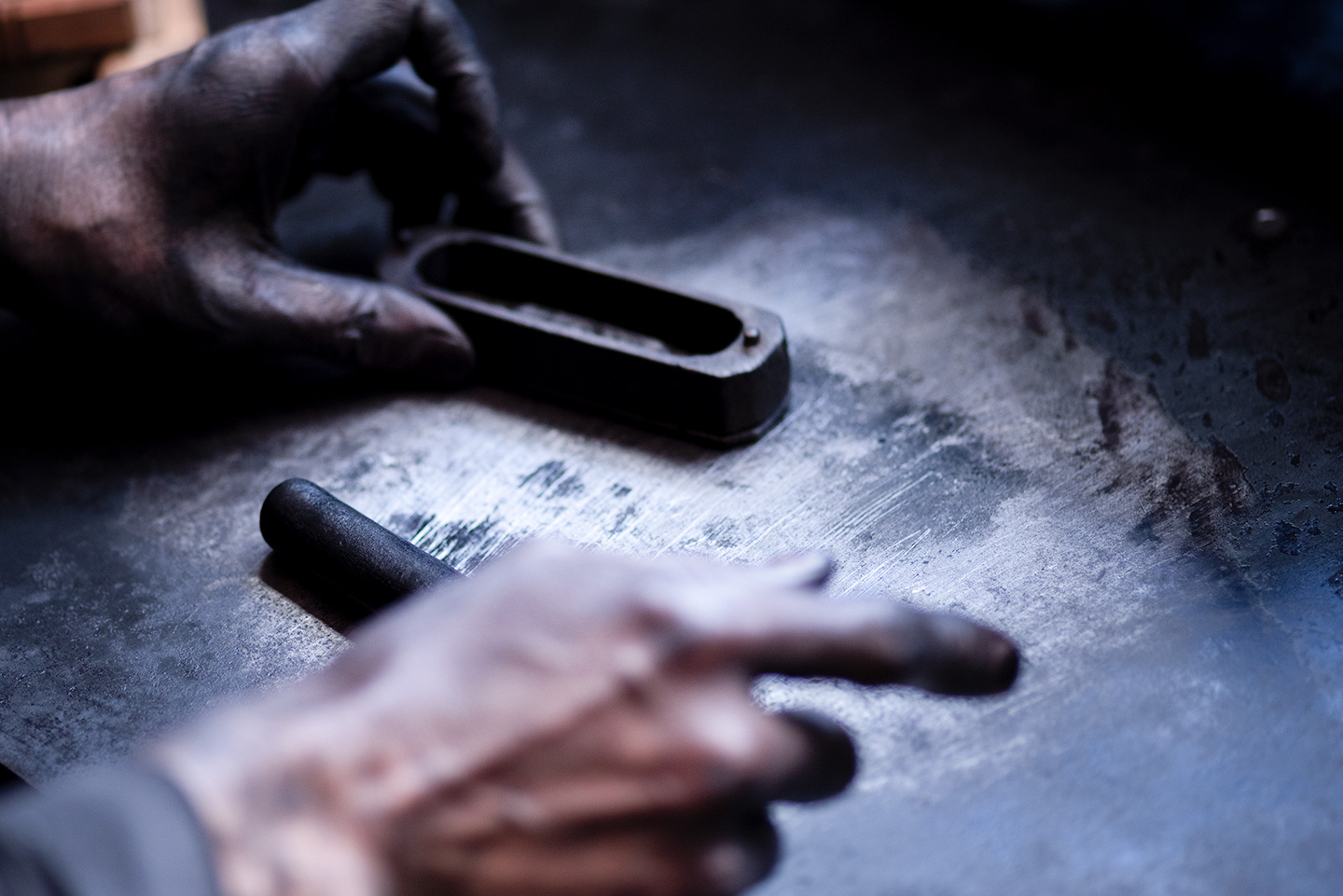
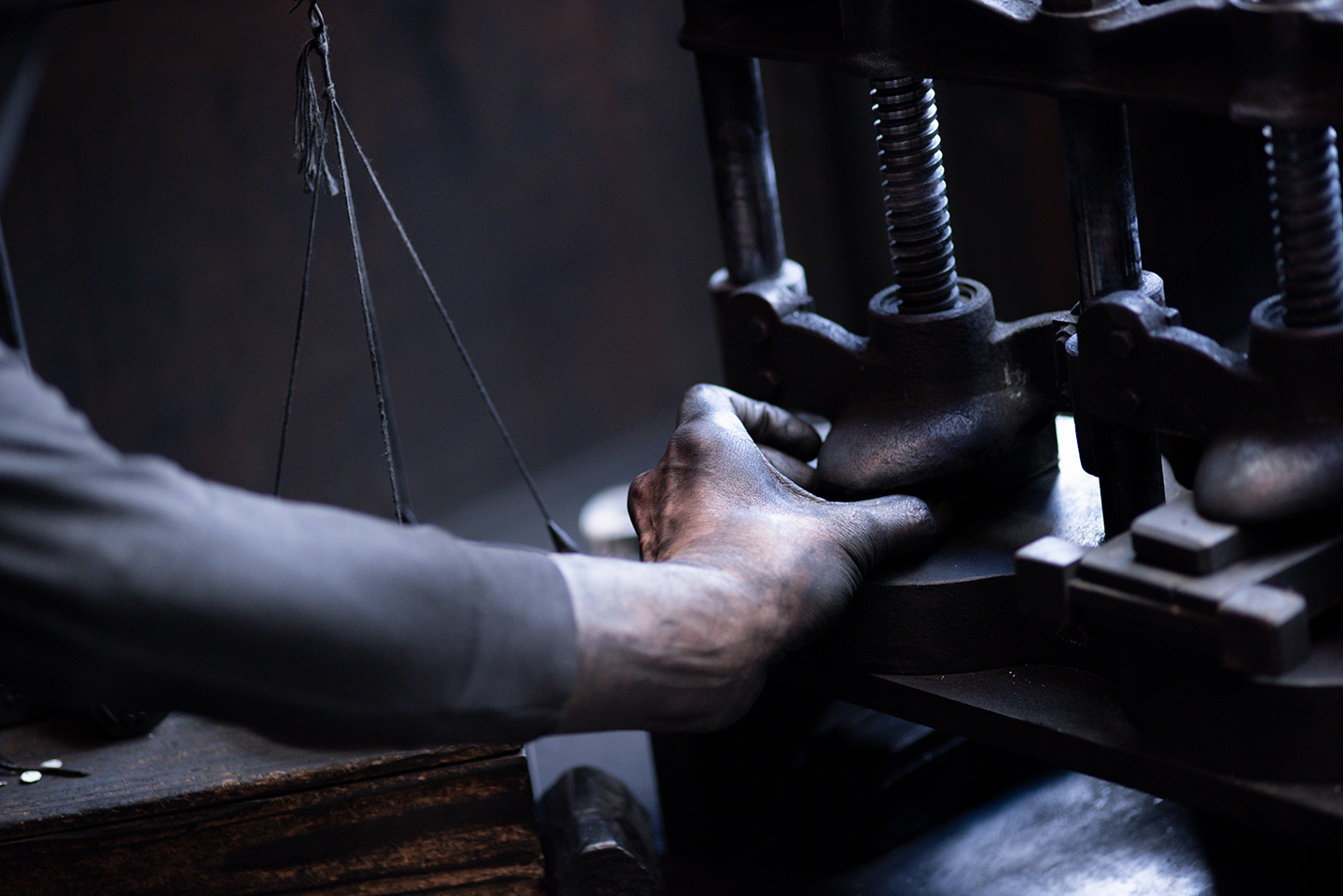
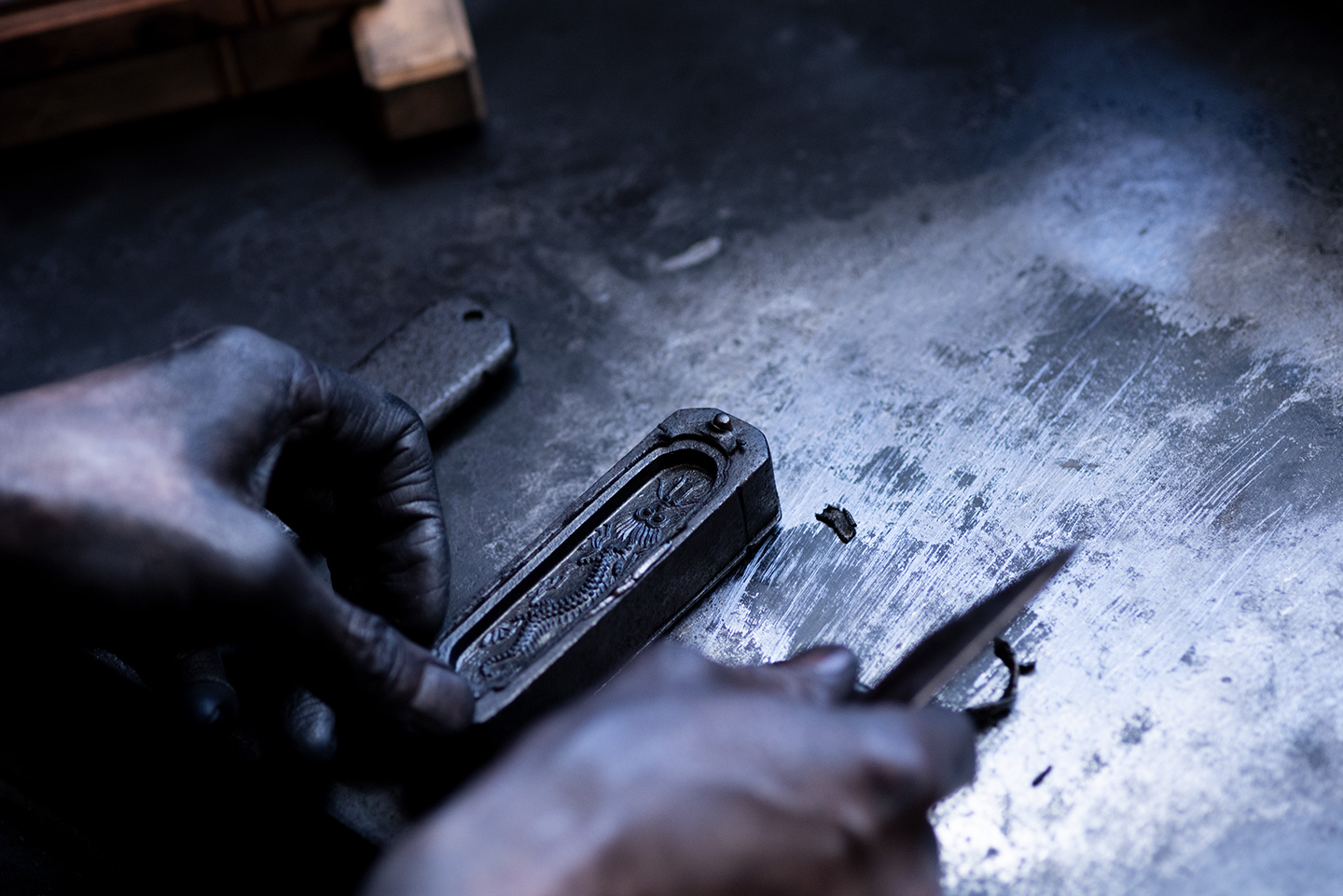
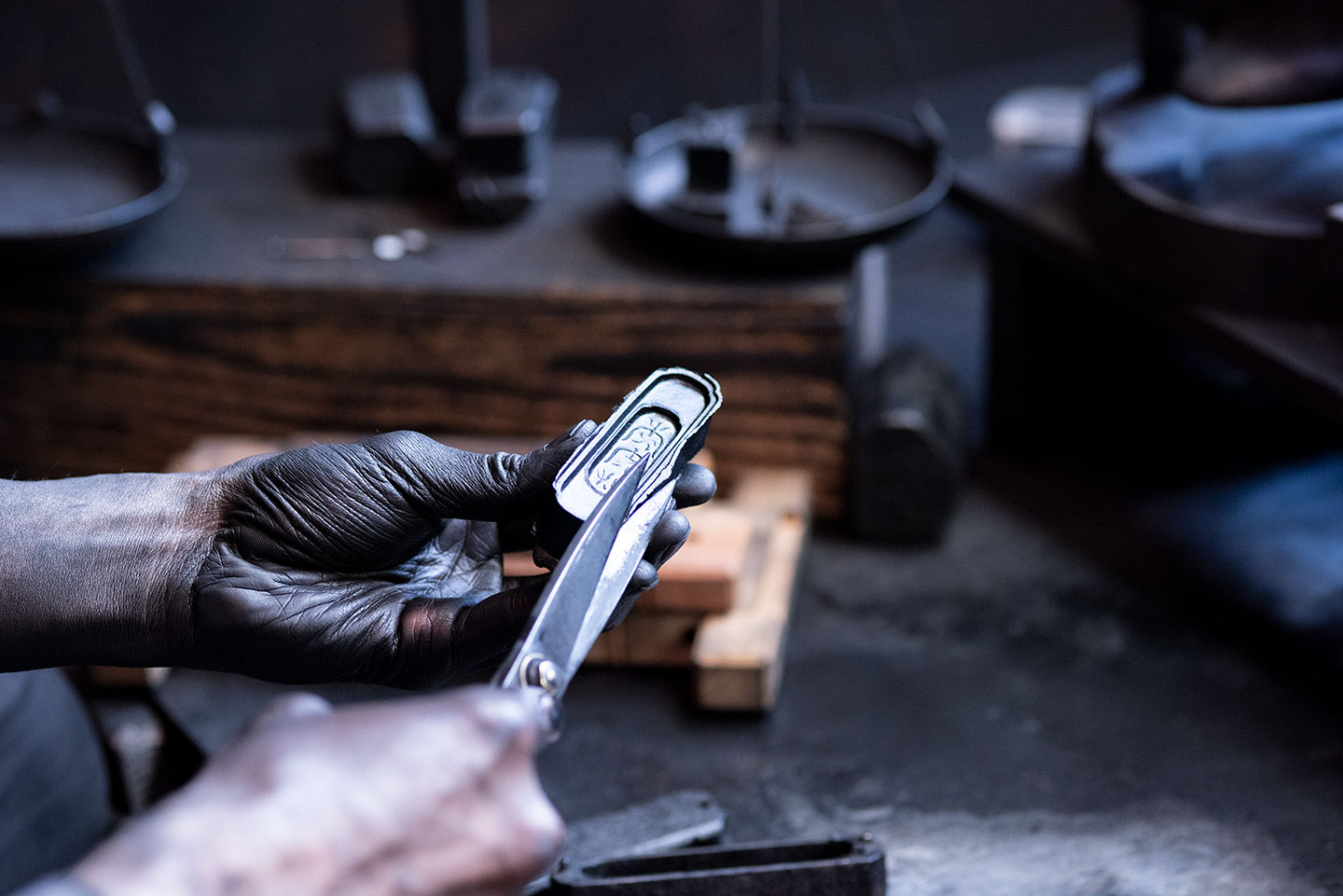
This iron mold, said to have been used at the Nitaibō of Kōfuku-ji in Nara during the Muromachi period about 680 years ago, has been handed down to us since the era of Dai Nippon Seiboku Co., Ltd. Commemorating the Reiwa era, we have recreated the ink of that time using the finest materials and techniques.
With the cooperation of the historic Nara ink maker Kobaien, we used our treasured “traditional iron mold,” combined independently sourced “top-grade rapeseed oil soot,” and the supreme, now-legendary glue “Ejiao” to complete this “Supreme Ink.”
The Finest “Soot” Taken from Top-Grade Rapeseed Oil
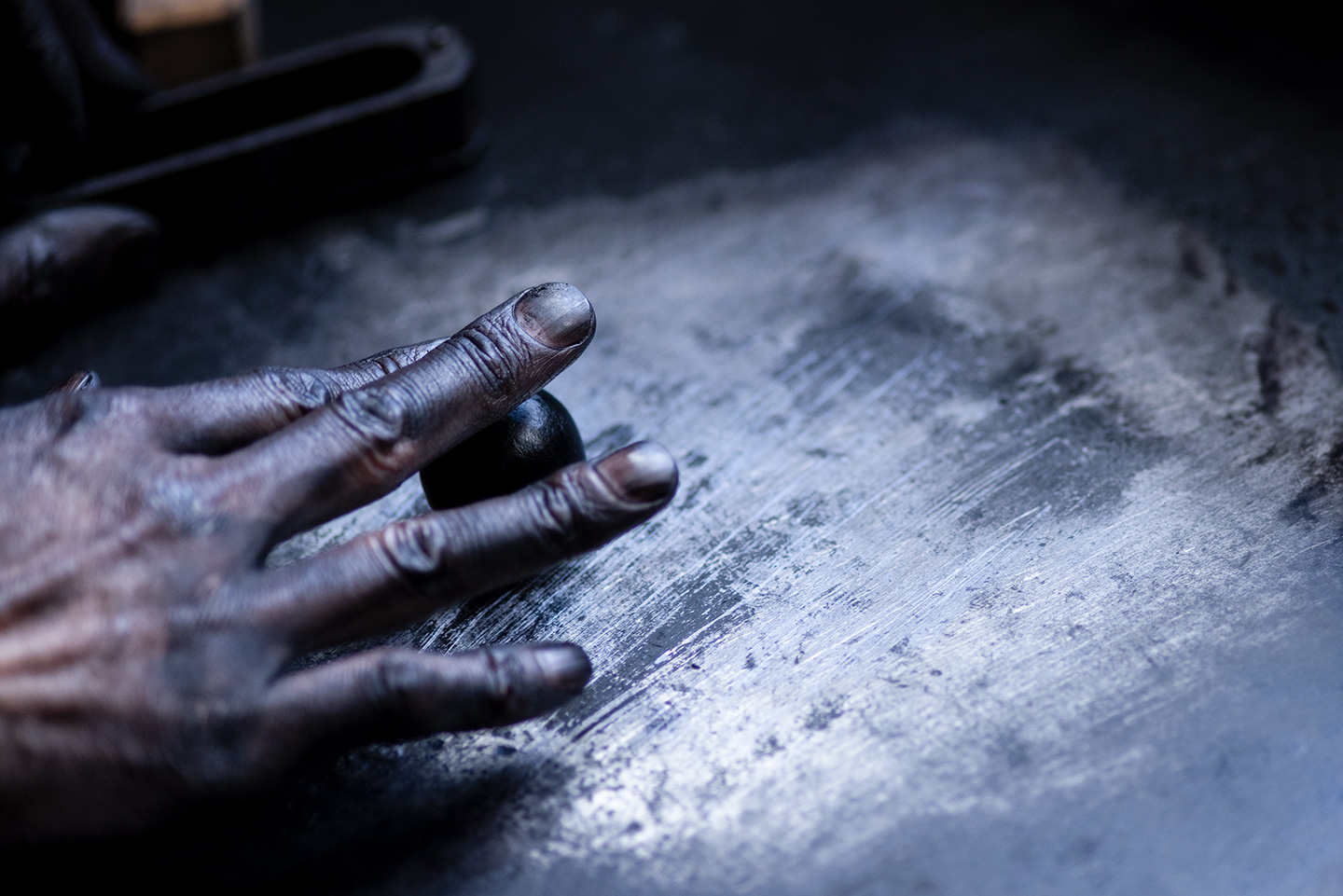
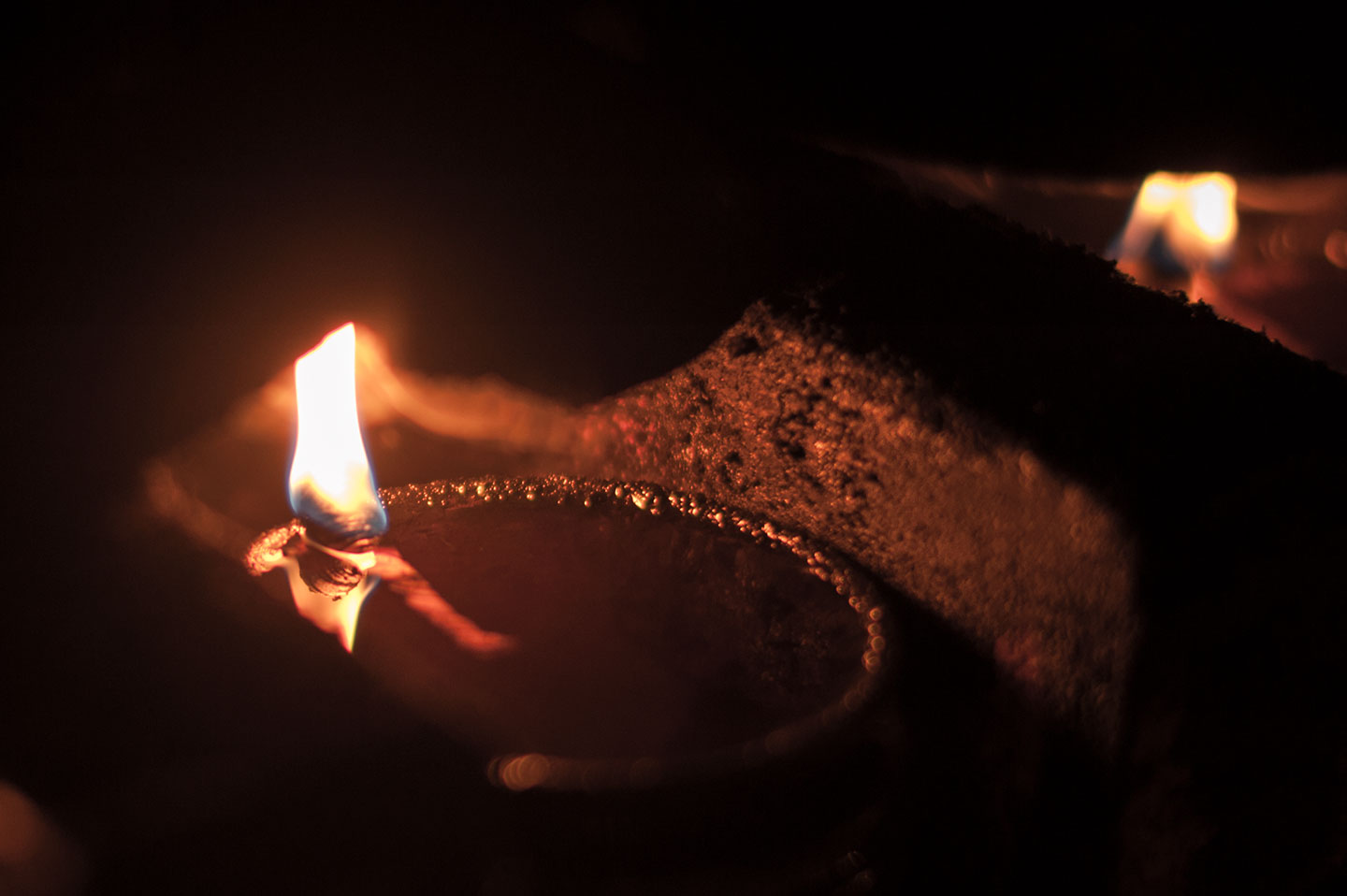
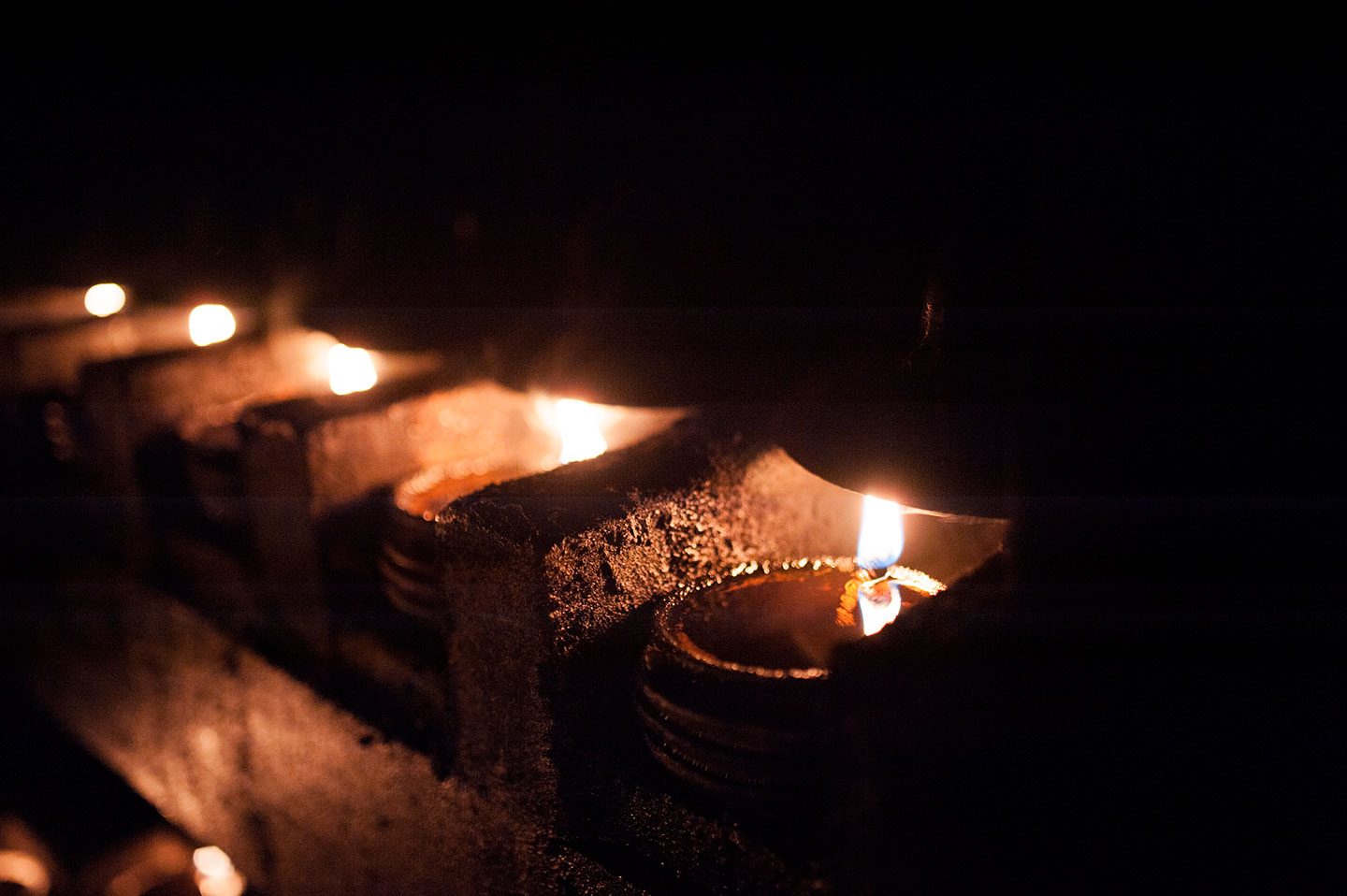
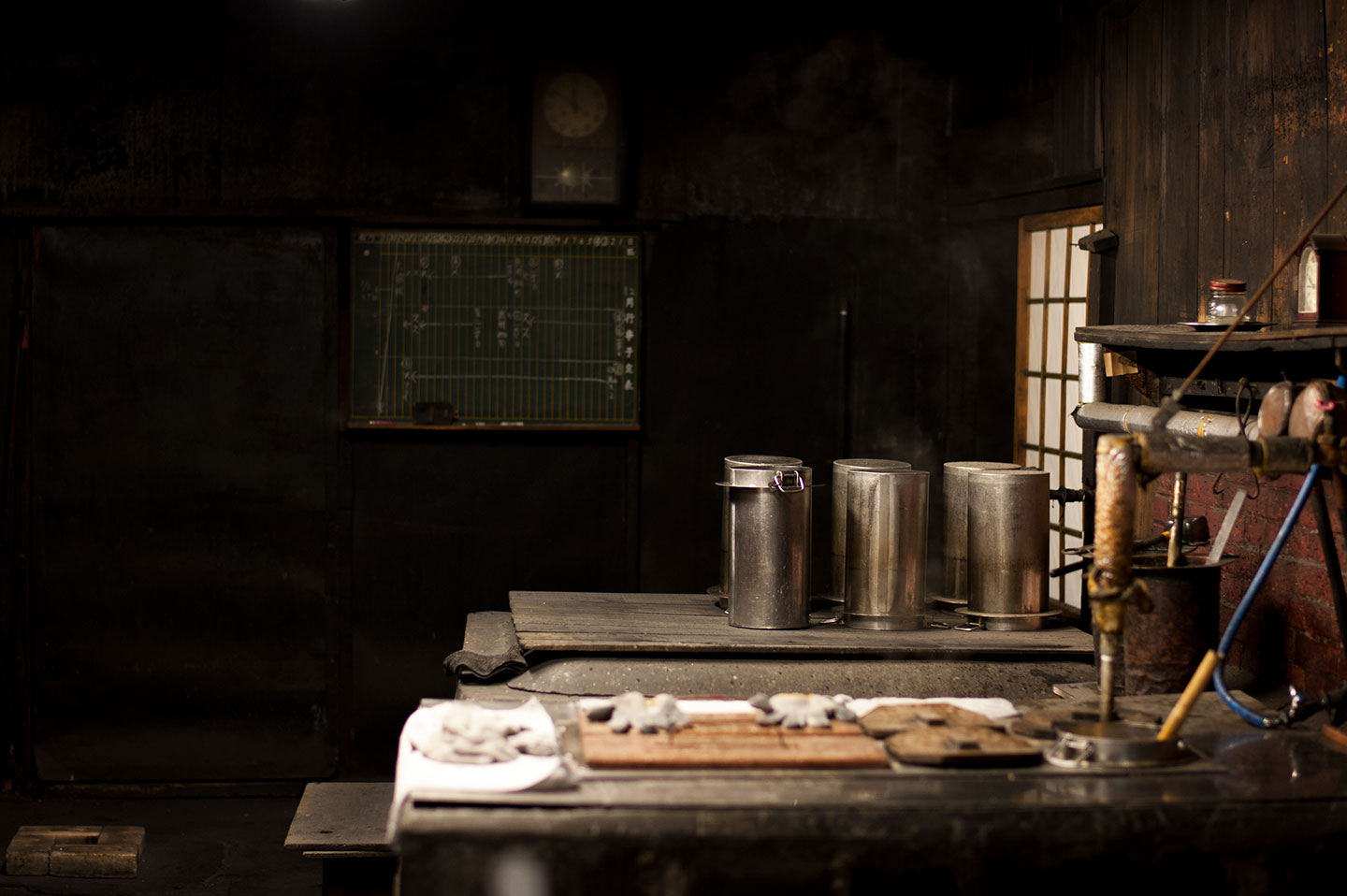
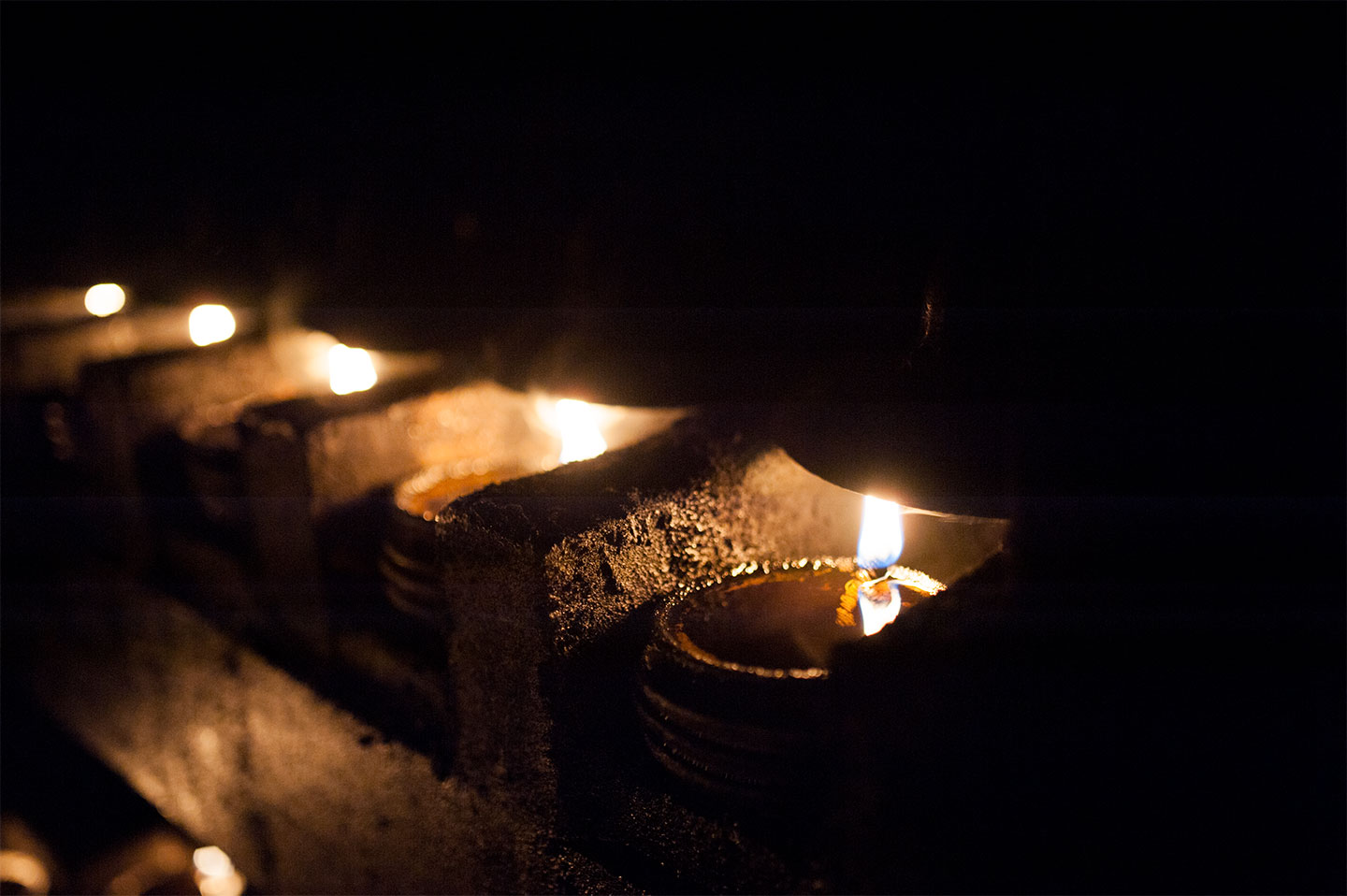
At Kobaien, soot is collected the traditional way in a dedicated smoke-collection chamber: top-grade rapeseed oil is poured into earthenware, a wick made from rush (igusa) is lit, and a cover is placed over the vessel to collect the soot on its inner surface.
Two hundred wicks are lit. Since the flame size and the oil type determine soot quality, a master artisan constantly monitors the process—rotating the vessels every 20 minutes to prevent uneven soot buildup from the 200 flickering flames, while finely adjusting the flame and oil. This delicate process is managed with uniform precision.
Pursuing the Ultimate Ink—Down to the Soot Itself
The quality of soot depends on the thickness of the wick (made from the stripped core of rush bound into a wick) and the type of oil. To obtain ultra-fine, high-quality soot particles, only wicks used for special premium products—the highest of four traditional grades (approx. 5–6 mm thick)—are employed.
It is said that it takes one to two years of training just to bind these wicks. The more tightly and finely they are wound, the finer the soot particles and the richer the ink tone becomes. Through such skill, time, and care, the finest, ultra-fine soot was collected to create this “Supreme Ink.”
The Ultimate Glue, “Ejiao,” Called Legendary
Glue (nikawa) plays an extremely important role in ink-making: beyond forming the stick and adjusting viscosity, it fixes the soot particles and greatly affects ink tone and flow.
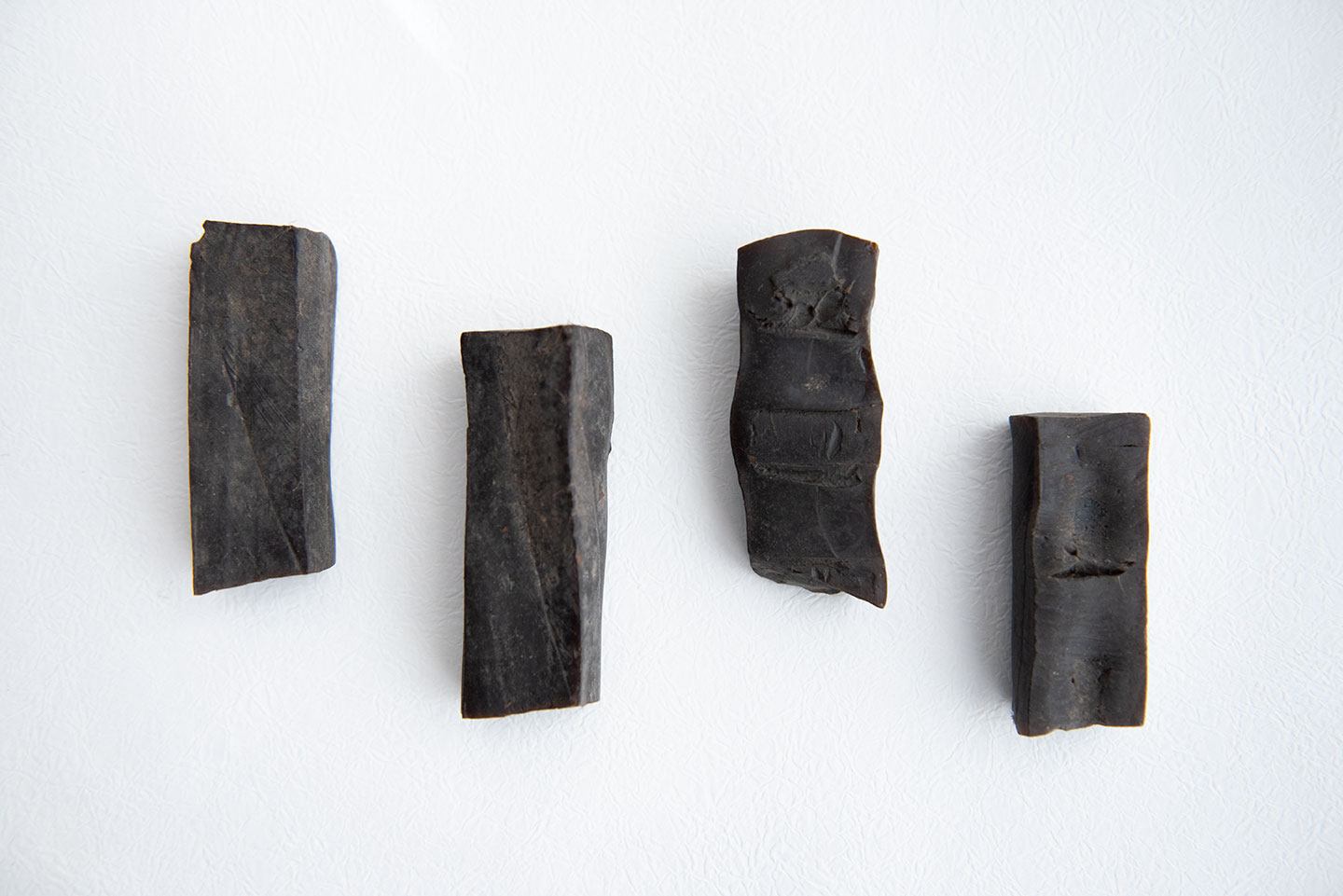
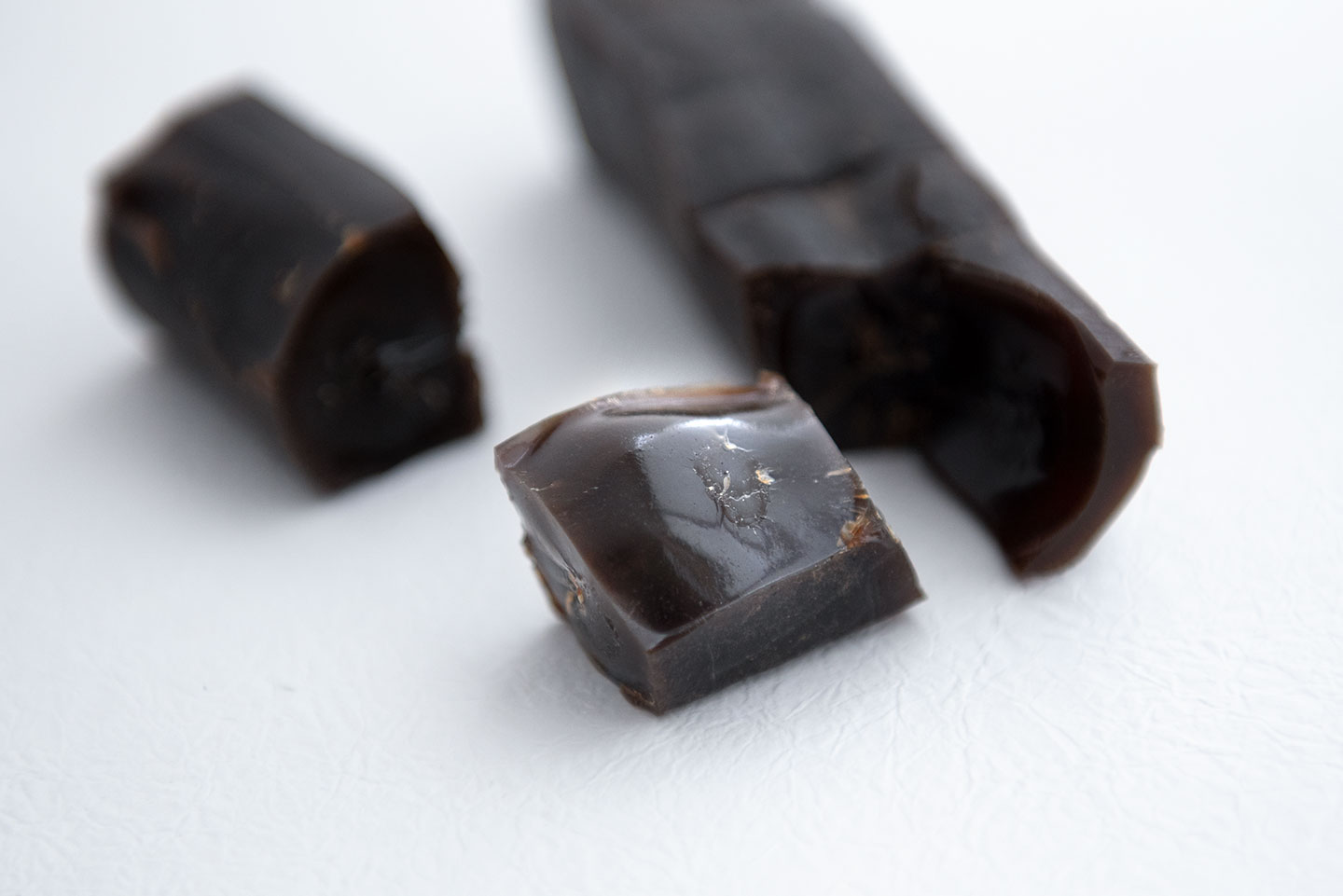
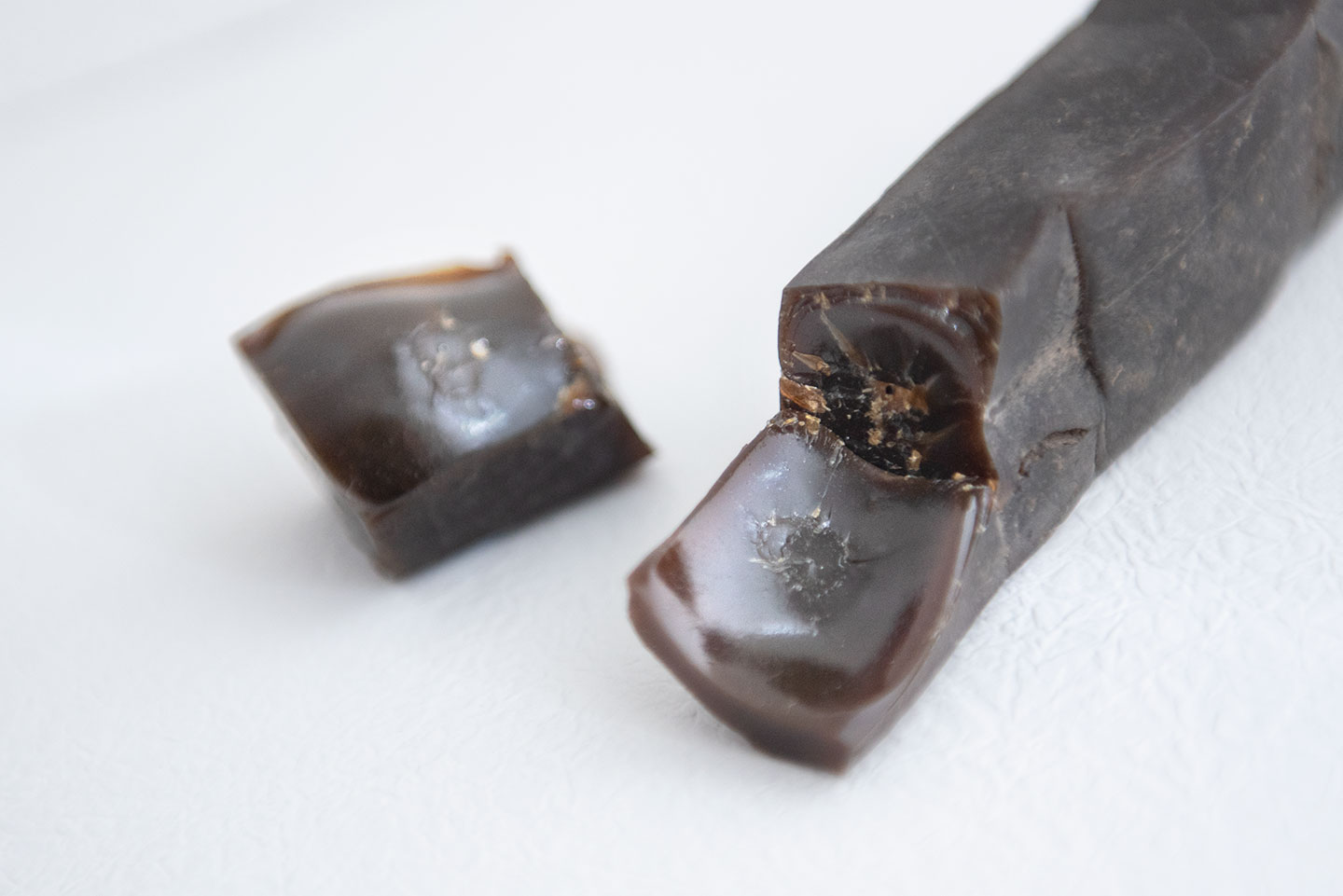
Japanese ink typically uses glue derived from boiling the hides and bones of animals such as cattle and horses; for this “Supreme Ink,” we used the highest-grade, legendary glue known as “Ejiao.”
It features exceptionally beautiful cross-sections and a rare, clear, viscous quality unmatched by ordinary glues.
What Is Ejiao?
Ejiao is obtained from black donkeys native to Dong’e County, Shandong Province, China—famous since antiquity as a glue-producing region. For this “Supreme Ink,” Kobaien has drawn upon its carefully preserved, limited reserves passed down through generations.
Kobaien, Essence of Nara Ink, Crafts the “Supreme Ink”
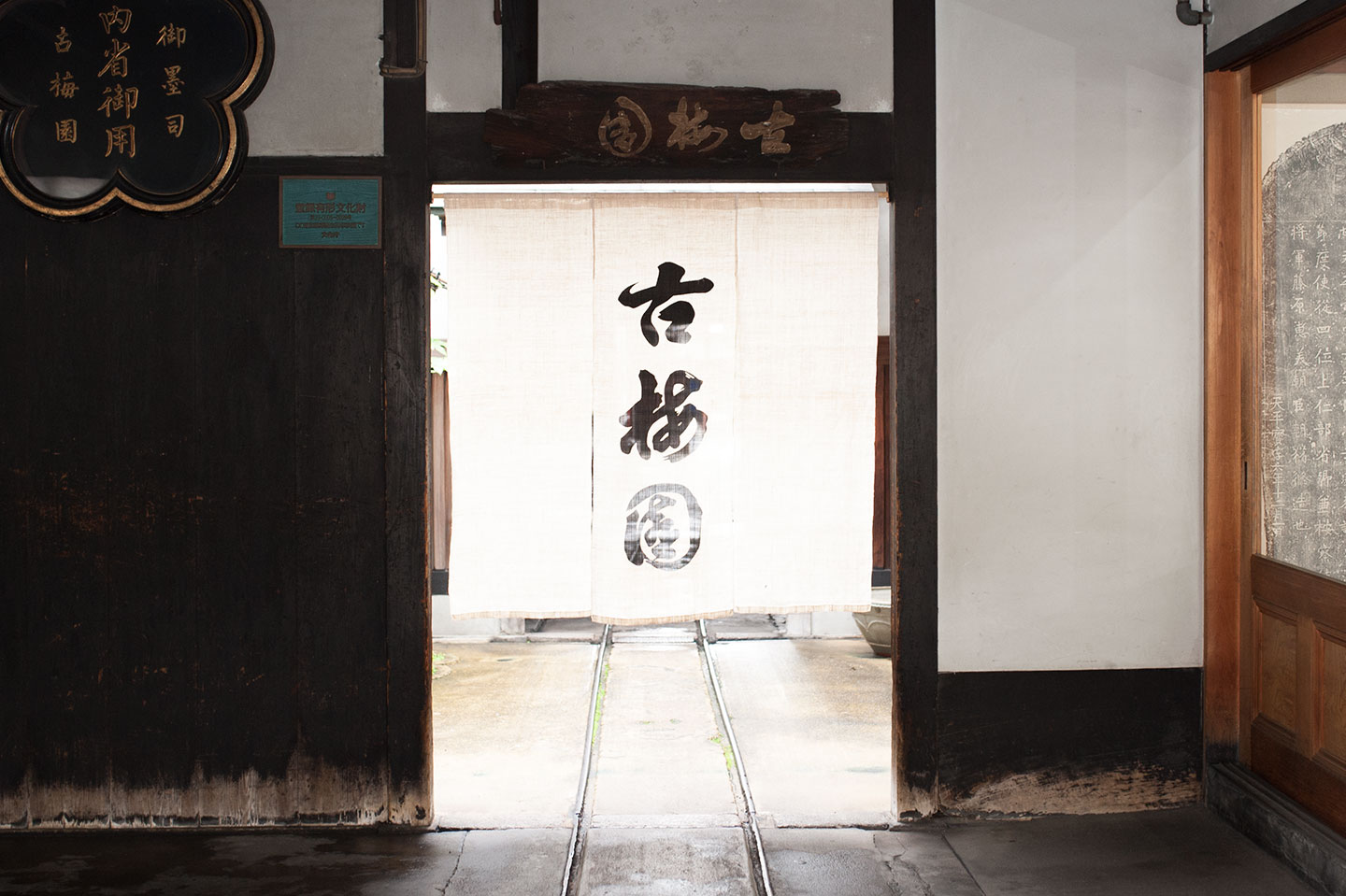
Kobaien began producing ink in the late Muromachi period.
During the Edo period, when ink-making techniques flourished, Kobaien—operating with shogunate approval—deepened exchanges and research with Chinese ink-makers, creating even higher-quality ink. That skill continues today. The traditional techniques and methods cultivated over more than 440 years truly embody the essence of Nara ink.
Ink Made from Secret Methods Passed Down Through Generations
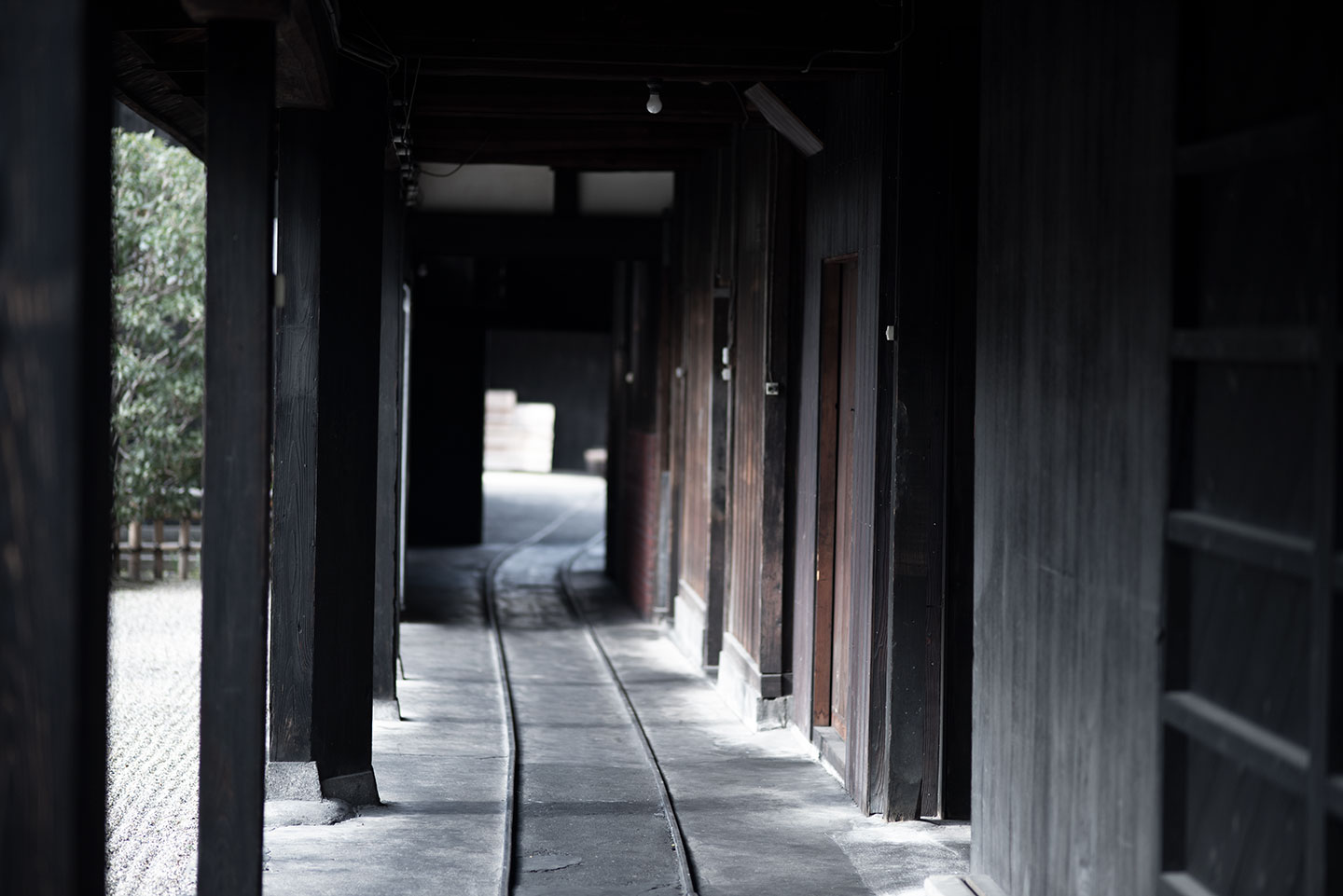
From soot collection and formulation to kneading and drying, Kobaien continues to make ink using time-honored techniques at every stage.
Across Japan, Kobaien is the only maker that still begins with “soot collection,” making it truly one of a kind.
This painstaking dedication reflects an uncompromising commitment to producing genuine, first-class ink.
Kobaien Ink—Trusted by Many Artists
Ink created through such exhaustive processes never disappoints artists’ expectations.
Works begin with preparing water for grinding, then careful attention to temperature and humidity, grinding technique, pairing with the right inkstone, and selection of paper—fueling artistic inspiration.
While the number of people using convenient “liquid ink” grows year by year, artists who seek the ideal tone achievable only with stick ink place unwavering trust in Kobaien’s products.
Reviving Muromachi-Era Ink: The “Nanto Ink—Original Nitaibō Style” Mold
Since the Nara period, it is said that ink was made at Kōfuku-ji’s Nitaibō using smoke soot from votive lamps. The shift from pine soot (then mainstream) to oil soot was established in the Muromachi period.
At the center of this development was Kōfuku-ji’s Nitaibō. The oil soot ink produced there surpassed pine soot ink in color, luster, and grinding feel, making its name known throughout Japan. By the Edo period, Nara was famed as the home of “Nanto oil soot ink.”
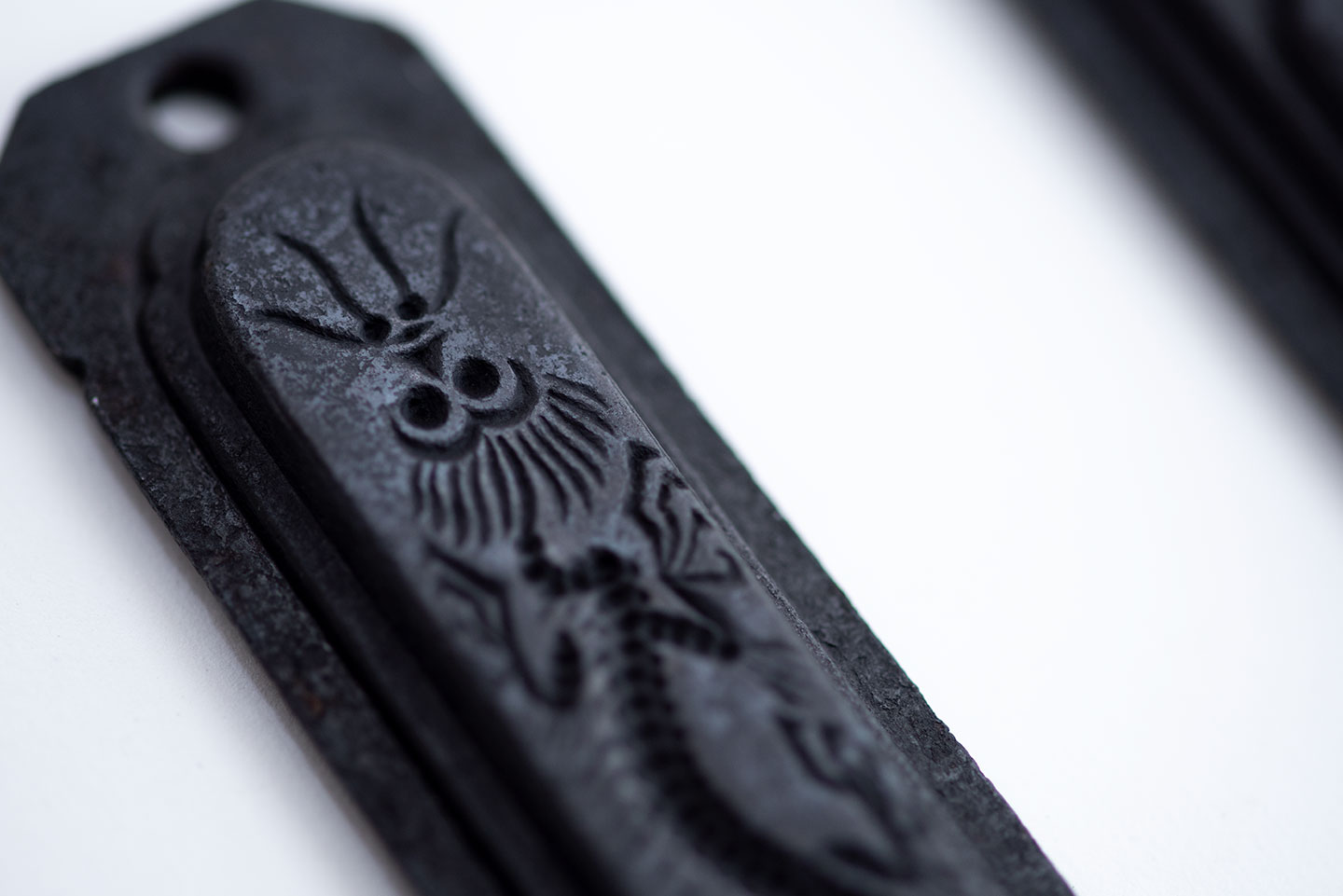
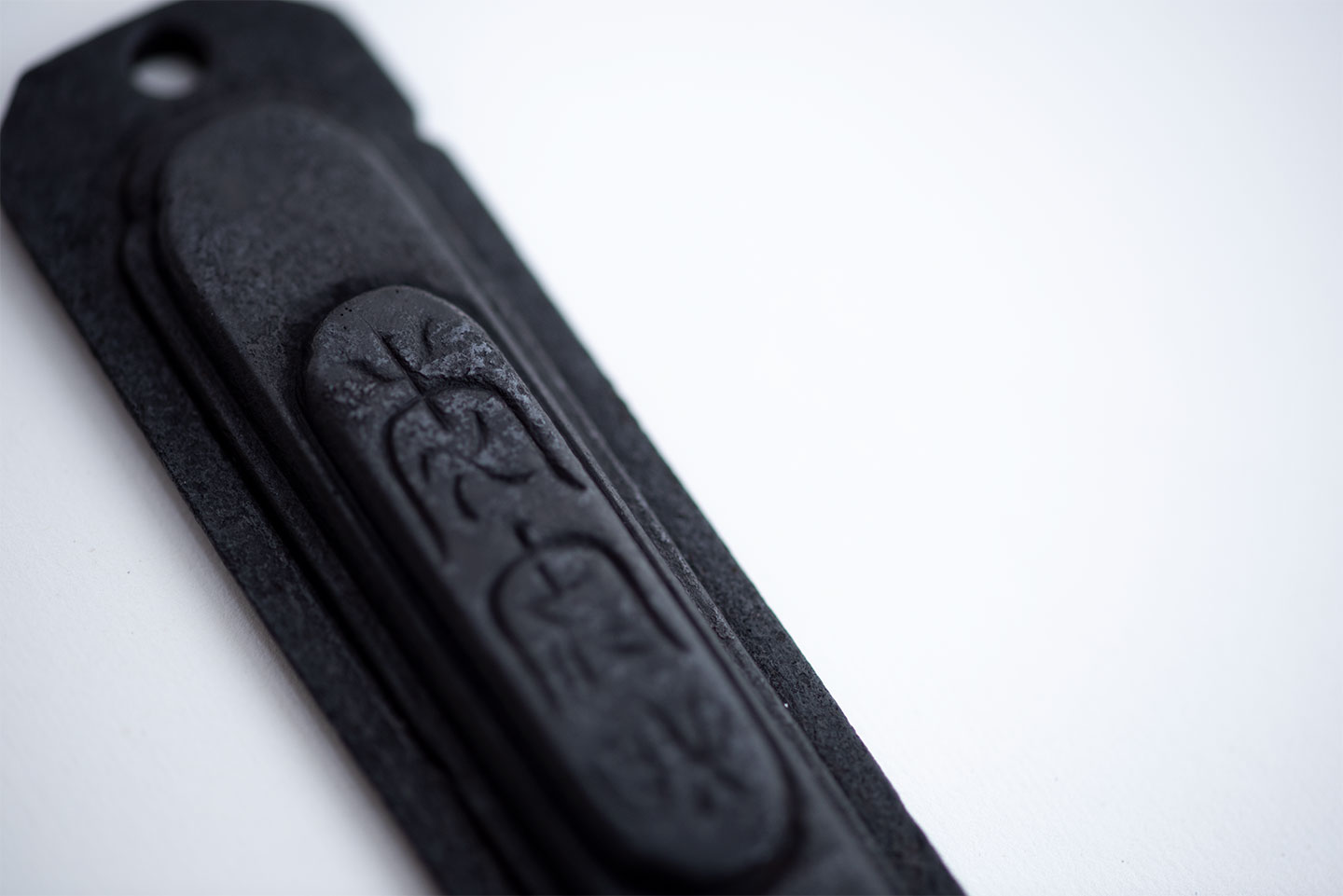
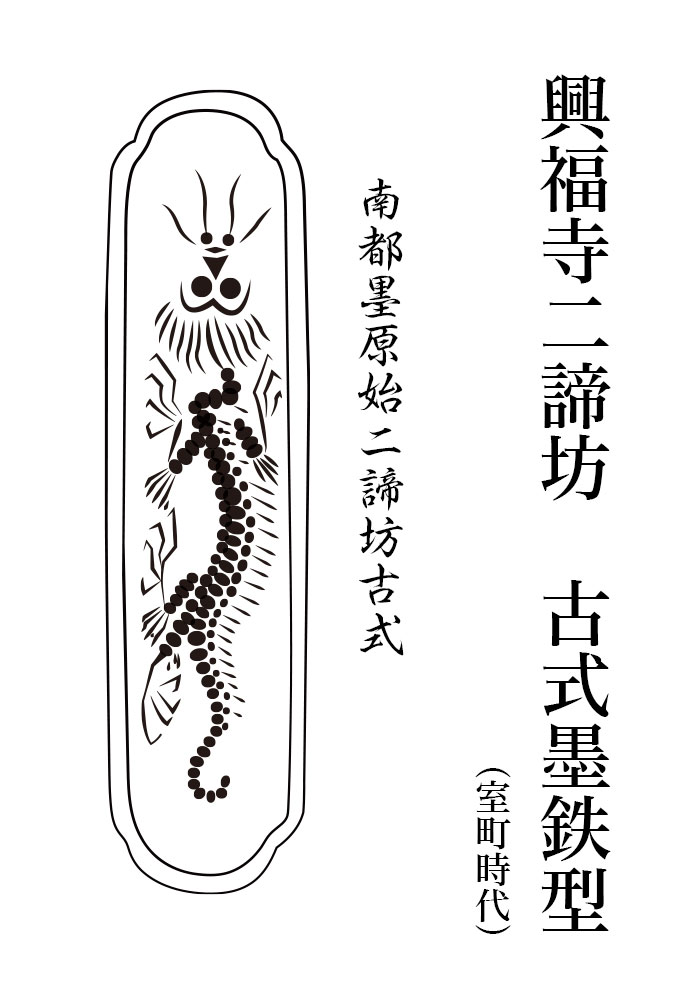
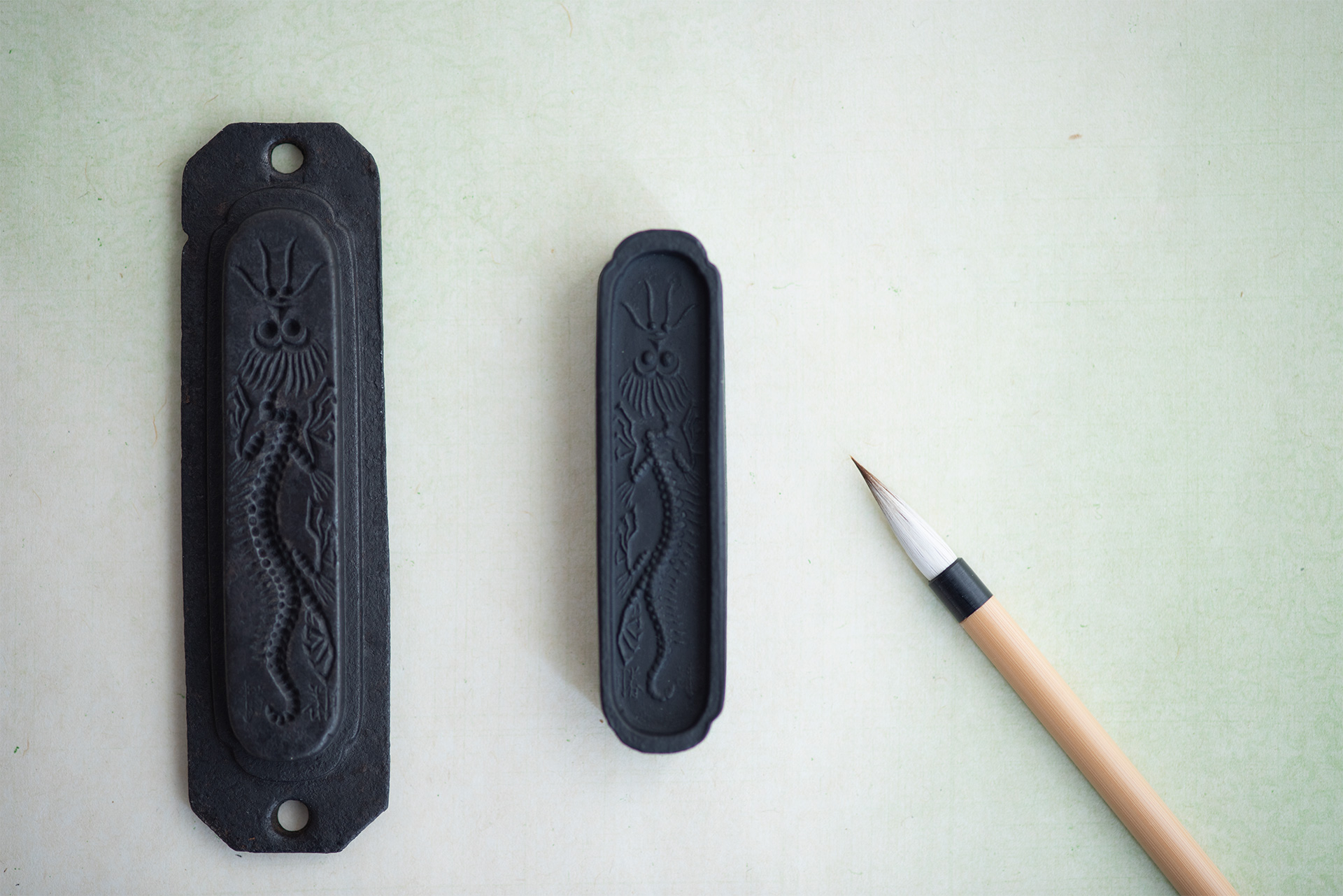
The iron ink mold used then at Nitaibō—employed for this “Supreme Ink”—has survived for roughly 680 years, retaining its original form. This “Nanto Ink—Original Nitaibō Style (iron)” mold is said to be truly one of a kind.
The First Traditional Craft Designated as “Nara Ink”
As the first item designated under “Nara Ink” in 2018 as a Japanese Traditional Craft, we present the “Supreme Ink.”
Crafted from the finest materials with the highest techniques—and born across 680 years of history—the “Supreme Ink” is also a work of craftsmanship that imparts richness and depth.
Ink Commemorating the Reiwa Era Name
The “Supreme Ink” project was conceived by Nihon Seiboku Shoyu to create the finest ink in celebration of the Reiwa era name, with production entrusted to Kobaien.
Using the iron mold revived after 680 years, the finest materials, and the finest techniques, this commemorative ink has achieved a finish that satisfies master artisans—extremely dense, with an astonishingly smooth grinding feel. It is truly exceptional.
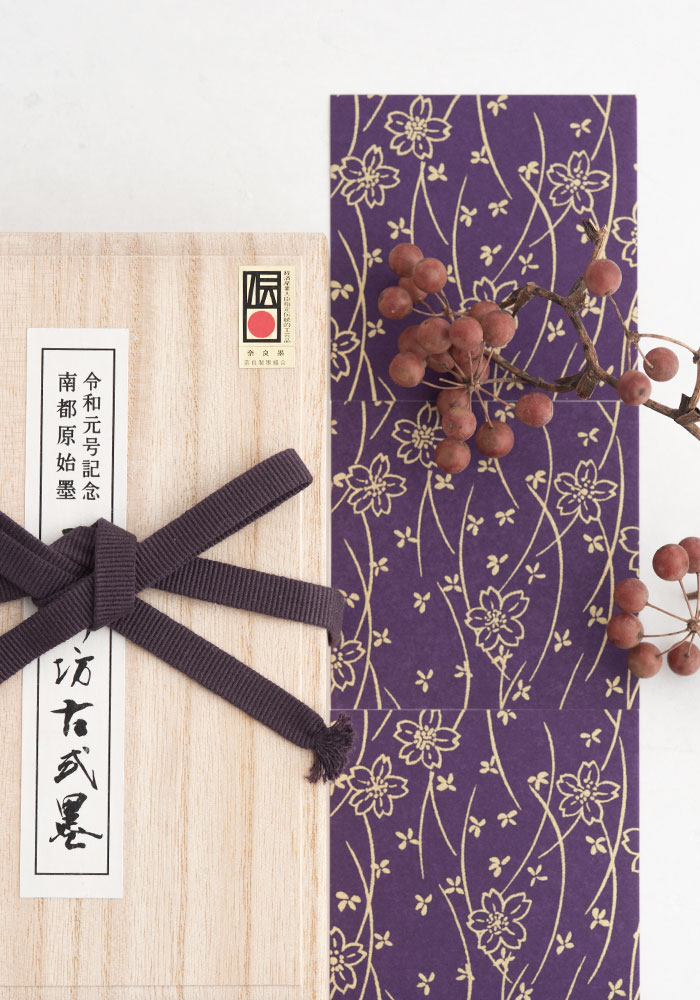
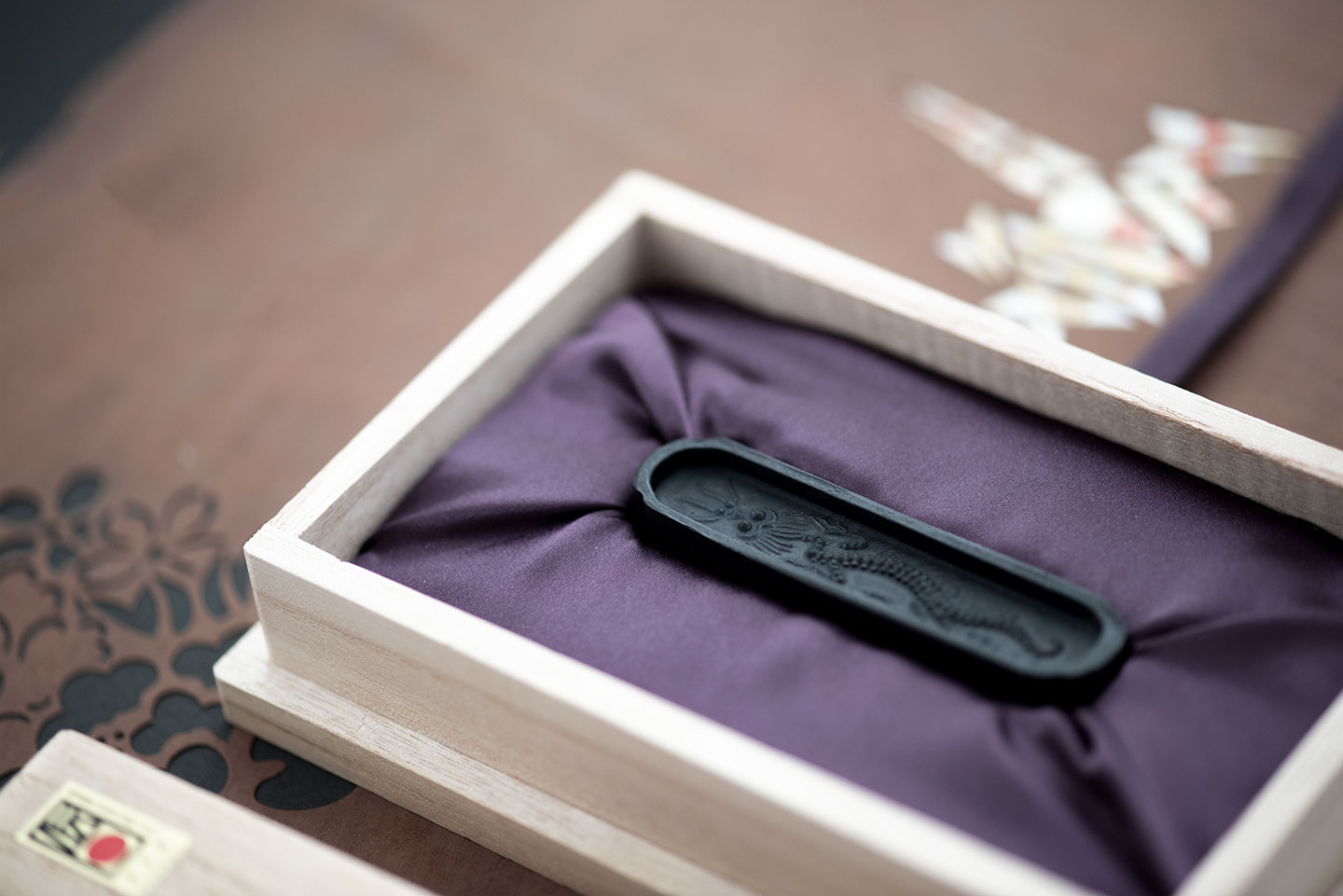
A Supreme Ink Crafted from Select Materials and Methods — Shoyu Online Exclusive, Limited to 25 Sticks.
An unparalleled piece that brings together the only surviving Muromachi-era Nitaibō iron mold, the finest soot and glue, and the techniques of Kobaien, a venerable ink maker with over 440 years of history.
As a commemorative ink for the “Reiwa era name” and the designation of “Nara ink” as a Traditional Craft, this Shoyu Online special edition is limited to just 25 sticks.
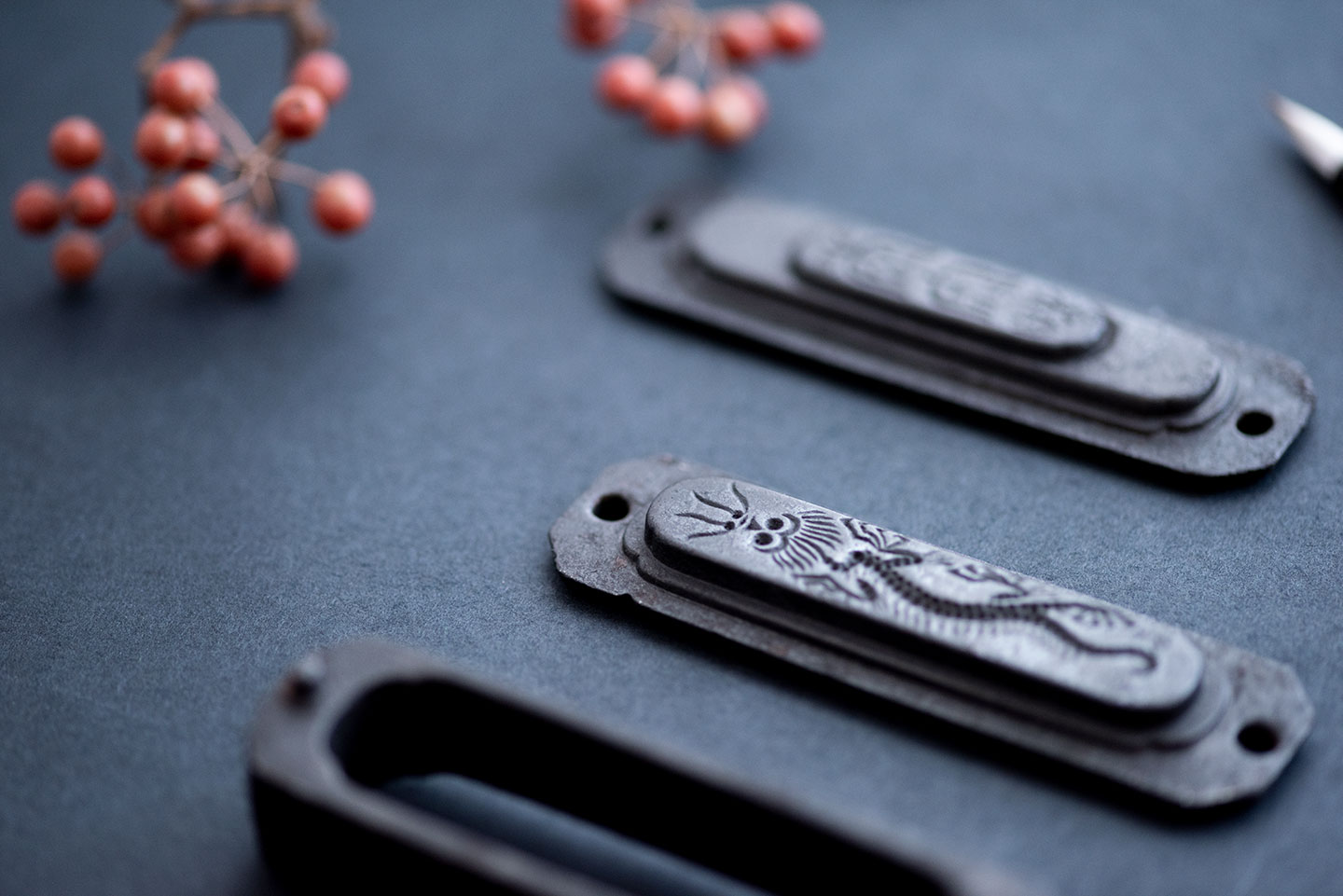
Traditional Ink—Iron Mold
An extraordinarily rare mold said to be the only one of its kind in Japan, made in the Muromachi period about 680 years ago.
Supreme Material: “Ejiao”
A luxurious ink made with ejiao— a premium glue used only in very limited amounts of ink—together with high-grade oil soot.
Essence of Ink-Making: “Made by Kobaien”
A venerable maker with 400 years of history, supported by many artists for techniques and methods cultivated since the Muromachi period.
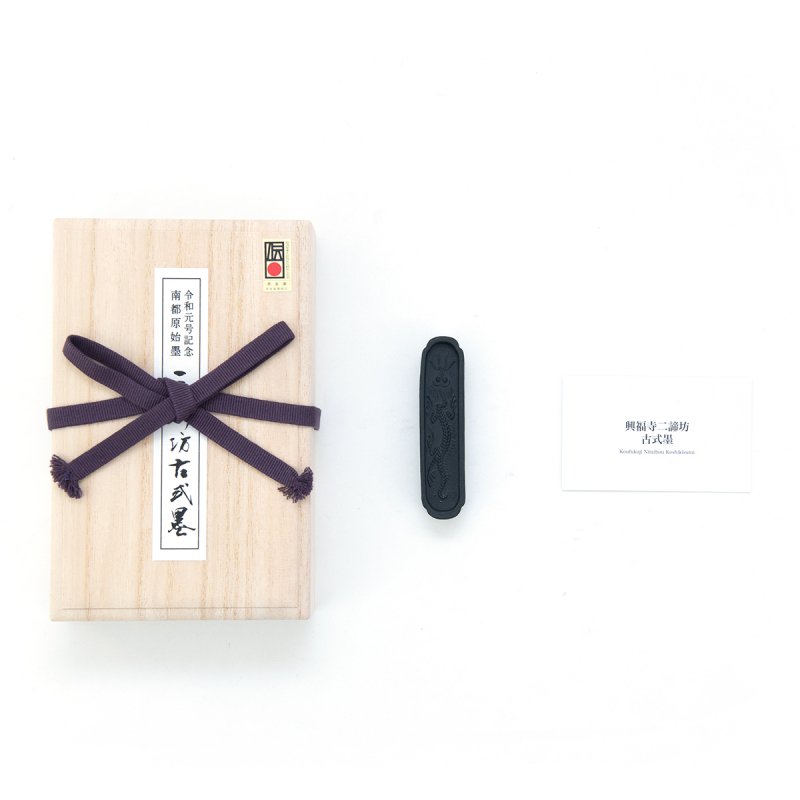
Kōfuku-ji Nitaibō Traditional Ink — 1.3-chō Type
- Use
- Suitable for all calligraphy and painting
- Size
- Approx. 86 × 21 × 15 mm / Box: 183 × 117 × 40 mm
- Category
- Top-grade oil soot ink
- Ink Tone
- Dense ink: glossy pure black / Light ink: beautiful tea-toned black.
- Price (incl. tax)
- ¥77,000
Made with the finest soot and glue using the highest techniques, this product has a dense finish and offers an astonishingly smooth grinding feel.
Go to Purchase Page