

Proper Storage and “Aging” of Calligraphy Paper
Calligraphy paper plays an essential role among the “Four Treasures of the Study.”
The texture and expression vary greatly depending on the thickness and manufacturing method of the paper.
Proper storage of calligraphy paper is crucial to preserve its quality and to support the creation of better works.
What Is the Correct Way to Store Calligraphy Paper?
When storing calligraphy paper, special care should be taken to avoid direct sunlight and humidity.
Recommended Storage Locations
Choose a place out of direct sunlight, with good ventilation and low humidity.
A paulownia (kiri) chest or the top of a dresser is considered ideal.

Recommended Storage Methods
Wrapping the paper in newspaper or washi allows it to “breathe” while protecting it from direct sunlight.
Placing a wooden lattice (sunoko) underneath improves ventilation, and using moisture absorbers or drying agents is also effective for humidity control.
Adding insect-repellent incense (ordinary mothballs for clothing are fine) can prevent insect damage.
Avoid sealing the paper completely in plastic materials, as this prevents the paper from breathing and can lead to stains or mold.
What Does It Mean to “Let Paper Rest”?
The term “letting paper rest” refers to the practice of aging paper. In general, paper that has aged for several years is said to perform better than freshly made paper.
The ideal resting period varies, but some calligraphers recommend as long as ten years.
It ultimately depends on the type of work you want to create and your personal preference—experiment to find the aging period that best suits you.
Benefits of Letting Paper Rest
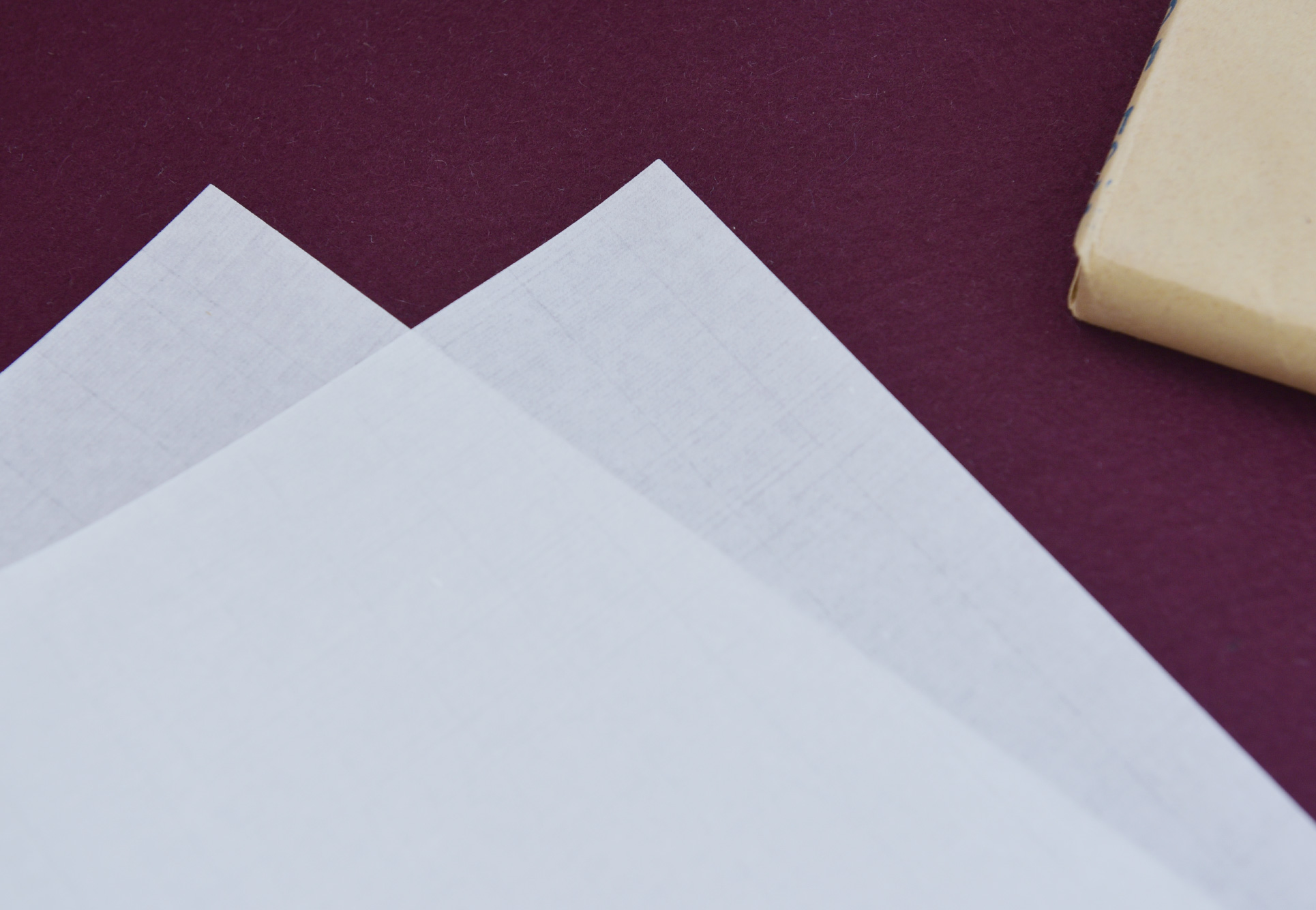
As paper rests, excess moisture evaporates and the fibers tighten, leading to:
① Ink that penetrates the paper well, yet with reduced bleeding
② A more beautiful ink tone
③ More elegant texture and shading (kasure)
④ Better brush release and smoother writing
These are the main effects.
Paper absorbs and releases moisture repeatedly, gradually losing excess glue and water in the process.
When the paper has dried completely, it is referred to as “kareta kami” (matured paper).
This matured paper provides excellent brush contact and rich ink color, beautifully expressing both bleeding and texture.
While slight yellowing or small stains (called “hoshi,” or “stars”) may appear, properly stored paper is often valued even more for these qualities.
Please note, however, that processed papers—such as those with anti-bleeding treatments, dyed papers, or machine-made gasenshi—do not benefit from resting. Long-term storage may instead cause them to harden or become brittle.
Can Paper Catch a Cold?
On the other hand, even well-aged paper can “catch a cold” if stored incorrectly, causing white blotches to appear when ink is applied.
Improper storage can reduce the quality of even aged paper, so great care is required in how you store it.
Summary
Calligraphy paper is essential for artistic creation, and proper storage greatly enhances the quality of your work.
By storing and resting paper correctly, you can enjoy better brush feel and more beautiful texture effects.
In recent years, the time between paper production and delivery to customers has shortened compared to the past, reducing the natural drying period.
As a result, much of today’s paper still retains some moisture and may not yet have fully stabilized, so many sheets are treated with anti-bleeding agents.
These agents strengthen over several months; therefore, over-aging the paper can cause it to resist ink entirely. This is a reality of modern paper production.