Kobaien – The Ink Manufacturing Process
Ink Making Method Passed Down Through Generations
There are two main types of ink: "Sumi ink from soot of vegetable oils" (yuen-sumi) made from the soot collected by burning rapeseed, sesame, or paulownia oil, and "Sumi ink from pine resin soot" (shoun-sumi) made from burning pine resin. Recently, ink made from mineral soot has also been developed.
Among them, yuen-sumi is high-quality ink with fine particles, deep blackness, and strong gloss. Yuen-sumi originated during the Muromachi period at Nitai-bo of Kofuku-ji Temple, where soot was collected from the ceiling lamps of household Buddha halls and mixed with animal glue (nikawa).
At our workshop, we continue to preserve this superior yuen-sumi using secret techniques handed down through generations.
1. Soot Collection
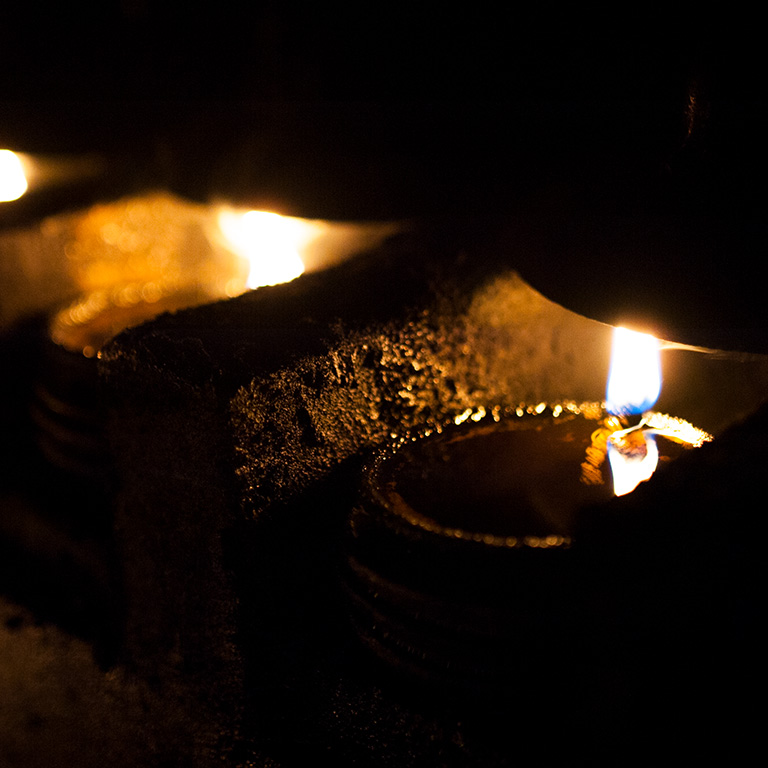
Pure vegetable oil is placed in earthenware pots, wicks are lit, and covers are placed on the pots to collect soot adhering to them. To ensure even soot collection, all pots are moved every 20 minutes.
2. Dissolving Glue
Animal glue made from bones and skins of cows and other animals is placed in a double boiler and simmered for a long time to create a glue solution.

3. Wooden Mold
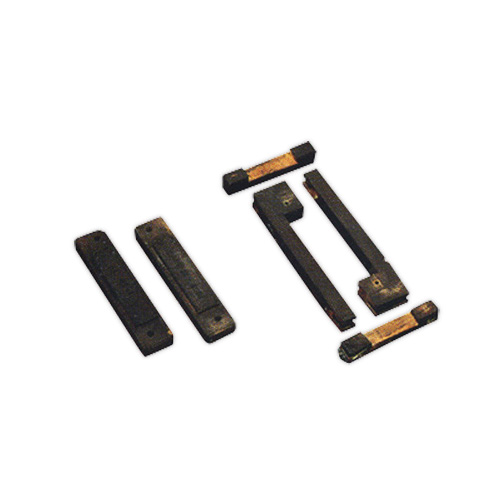
The wooden molds for ink, made from pear wood, have characters and patterns carved into them.
A standard-sized ink stick weighs 15g when finished, so approximately 25g of raw ink is placed in the mold to account for shrinkage during drying.
4. Pressing into Mold
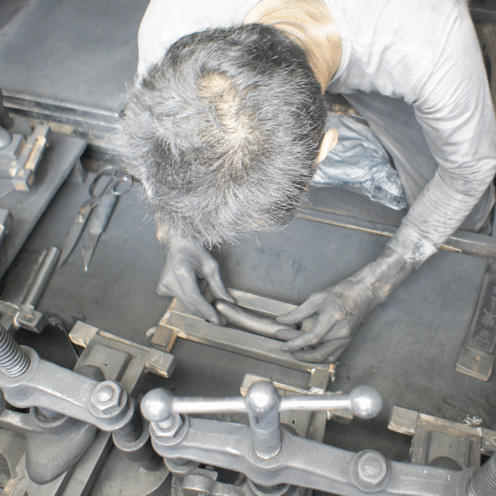
The soot, glue solution, and fragrance are mixed and kneaded by hand until glossy, then carefully pressed into the molds.
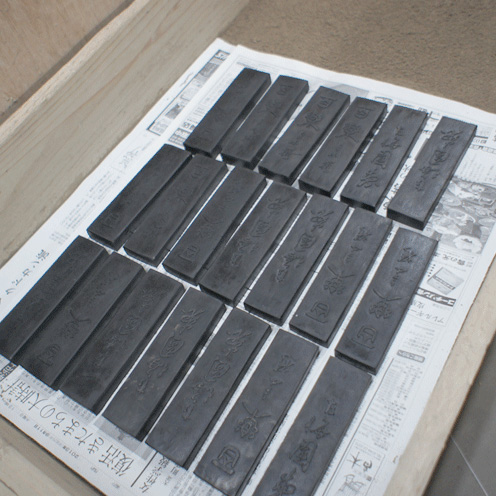
5. Ash Drying
Ink sticks removed from the molds are buried in wood ash with high moisture on the first day. From the second day onward, they are gradually replaced with wood ash containing less moisture.
Small ink sticks are dried for about one week, while larger ones take 30 to 40 days.
6. Natural Drying
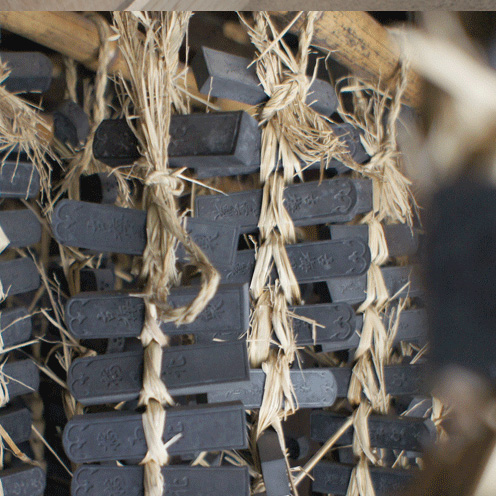
After ash drying, the ink sticks (with about 70% of moisture removed) are woven with straw and suspended from the ceiling to dry indoors.
This usually takes about half a month to three months.
7. Finishing and Polishing
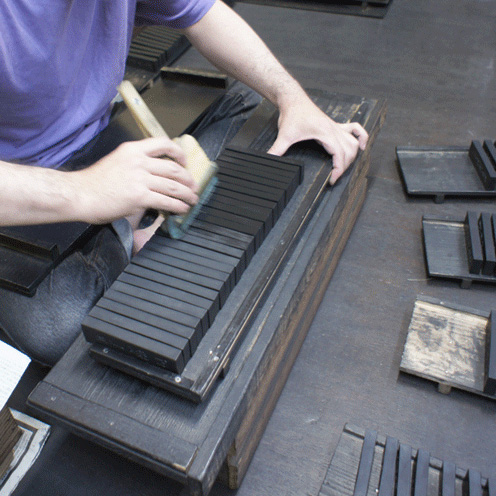
Once naturally dried, the ink sticks are washed individually to remove adhering ash and other impurities.
After washing, a finishing coat is applied to the surface. Depending on the product, the surface may also be gently roasted over charcoal and polished with clam shells to produce a glossy finish.
8. Coloring Finish
Polished ink sticks are air-dried for 3 days to 1 week to remove remaining moisture, then decorated with gold powder, silver powder, or other pigments.