Kobaien: Traditional Ink Making with Time-Honored Methods
```html
Dedicated to Ink Making
Traditional Craftsmanship of Kobaien
SPECIAL CONTENTS LIST
Kobaien: Mastering the Essence of Nara Ink
It is said that the word “sumi” (ink) originates from “shimi” (stain), reflecting how ink remains vivid over time—resistant to fading and even insect damage—making it an exceptional writing medium.
Nara ink is believed to have originated in 806 (Daido 1), when Kukai brought ink-making techniques back from Tang China along with brushes. At Kofuku-ji Temple, soot collected from the ceiling of a Buddhist hall was mixed with animal glue to create ink. Even today, Nara ink accounts for over 90% of Japan’s total production.
A Unique Ink-Making Method Found Only at Kobaien
In Nara City, Kobaien has been devoted exclusively to ink-making, preserving traditional methods since the Azuchi-Momoyama period.
It is the only place in Japan that produces ink starting from soot collection—truly one of a kind.
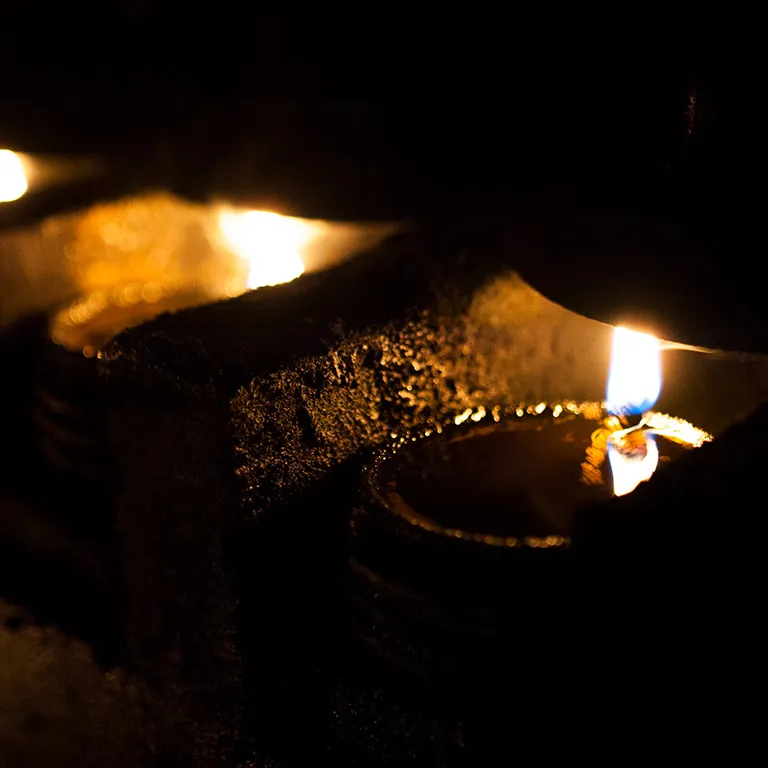
The process begins with “soot collection,” where a wick made of rush grass soaked in pure vegetable oil is lit and covered with earthenware. The soot that accumulates on the inside is carefully collected.
To ensure even accumulation, all 200 earthenware covers are adjusted every 20 minutes, and the soot is gently gathered using chicken feathers…
Oil Soot Ink from Two Hundred Flames
Even after eight continuous hours of this painstaking work, less than 1 kg of soot is collected.
The outer walls of the soot collection room turn completely black from fine soot particles.
Inside, the heat of countless flames creates an atmosphere that feels both mystical and sacred.
High-Quality Glue with Clarity
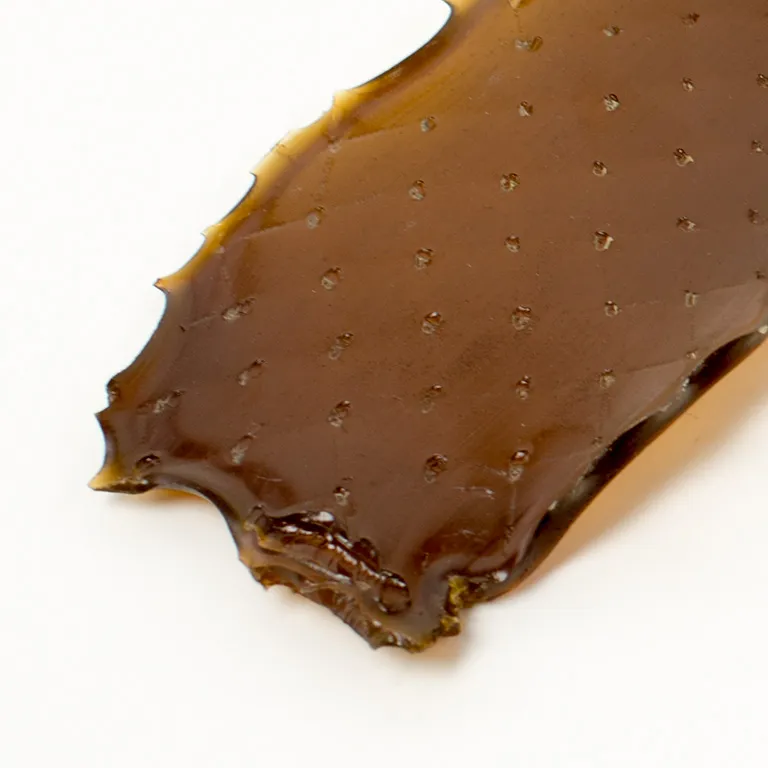
Ink is made by combining soot, glue, and fragrance. The glue, derived from animal bones and skin such as cattle, is slowly heated in a double boiler to create a solution.
Since glue can spoil, ink production is limited to colder seasons from autumn to spring. One might expect a strong odor, but surprisingly there is almost none—demonstrating the purity and refined quality of the glue, with minimal impurities and excellent clarity and elasticity.
It’s no surprise that all staff proudly say, “We use only high-quality glue.”
Once the soot and glue are prepared, calming fragrances such as clove or plum are added, and then the ink master takes over.
Finally, the crucial “kneading” process begins—one that determines the fate of the ink.
Expert Kneading by Skilled Craftsmen
The raw ink, resembling mochi, is kneaded evenly by foot until it gains a glossy finish, then refined further by hand.
This “kneading” greatly influences the final quality of the ink.
Just before being placed into molds, the ink is shaped into a cylinder by the craftsman’s hands. Even a slight inconsistency in rolling can cause warping or cracking during drying.
It is said that “the ink itself tells you when to stop kneading”—a testament to the craftsman’s refined intuition.
Precision Molding Based on Moisture Control
Ink weight is measured in “cho” (1 cho = 15g).
Considering moisture loss during drying, about 22.5g is placed into the mold for one cho.
Even slight variations are adjusted by the craftsman’s intuition, refined through experience with temperature and humidity.
Their judgment is never mistaken.
Careful Drying Using Ash
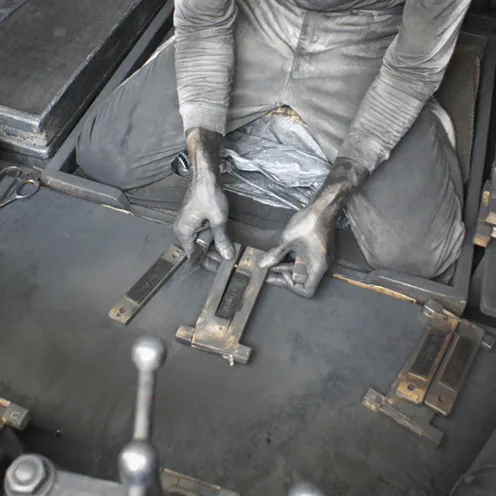
Freshly molded ink is placed into pear wood molds and secured with clamps.
Once removed, the ink is as soft as jelly.
It is then transferred to the ash-drying process, where specialized craftsmen take over.
The ink is buried in ash within wooden boxes arranged around the drying room, allowing it to dry slowly.
A Drying Process Controlled by Moisture
On the first day, the ink is buried in moist ash. From the second day onward, it is gradually moved to drier ash.
This process lasts about one week for small ink sticks and 30–40 days for larger ones.
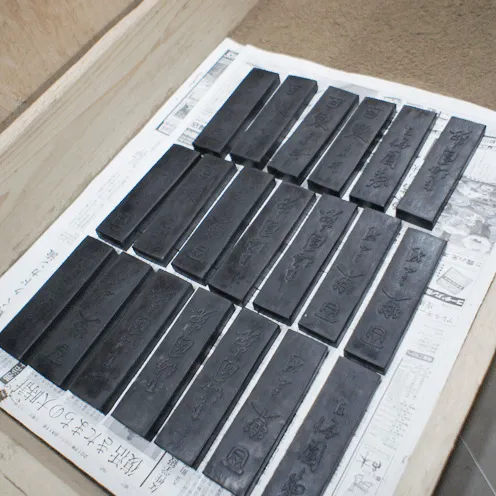
The Finest Ink Crafted by Masters
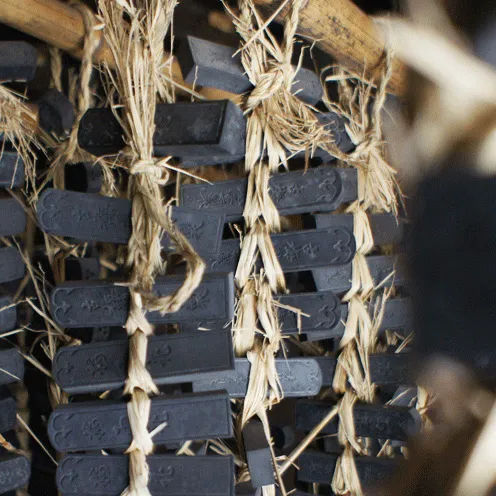
After ash drying, about 70% of the moisture is removed. The ink is then braided with straw and hung from the ceiling for natural indoor drying.
This process takes about half a month to three months. Once fully dried, each piece is carefully washed to remove ash and impurities, then coated with a secret finishing glaze.
Some products are further polished by heating over charcoal and buffing with clam shells to achieve a glossy finish—all done by hand.
Trusted by Artists Worldwide
Once completed, these ink sticks are not inexpensive when displayed in stores.However, the meticulous craftsmanship ensures they never disappoint artists.
From preparing the water for grinding ink, to controlling temperature and humidity, to selecting paper and inkstones—every detail matters.
Even as convenient liquid ink becomes more popular, many artists who value authenticity insist that “true works must be created with solid ink,” placing deep trust in Kobaien’s products.
Kobaien continues to uphold its time-honored techniques with unwavering dedication.
This commitment to craftsmanship is the very embodiment of their “PRIDE.”