

Shodo Daisuki Episode 73
Shodo Daisuki Episode 73
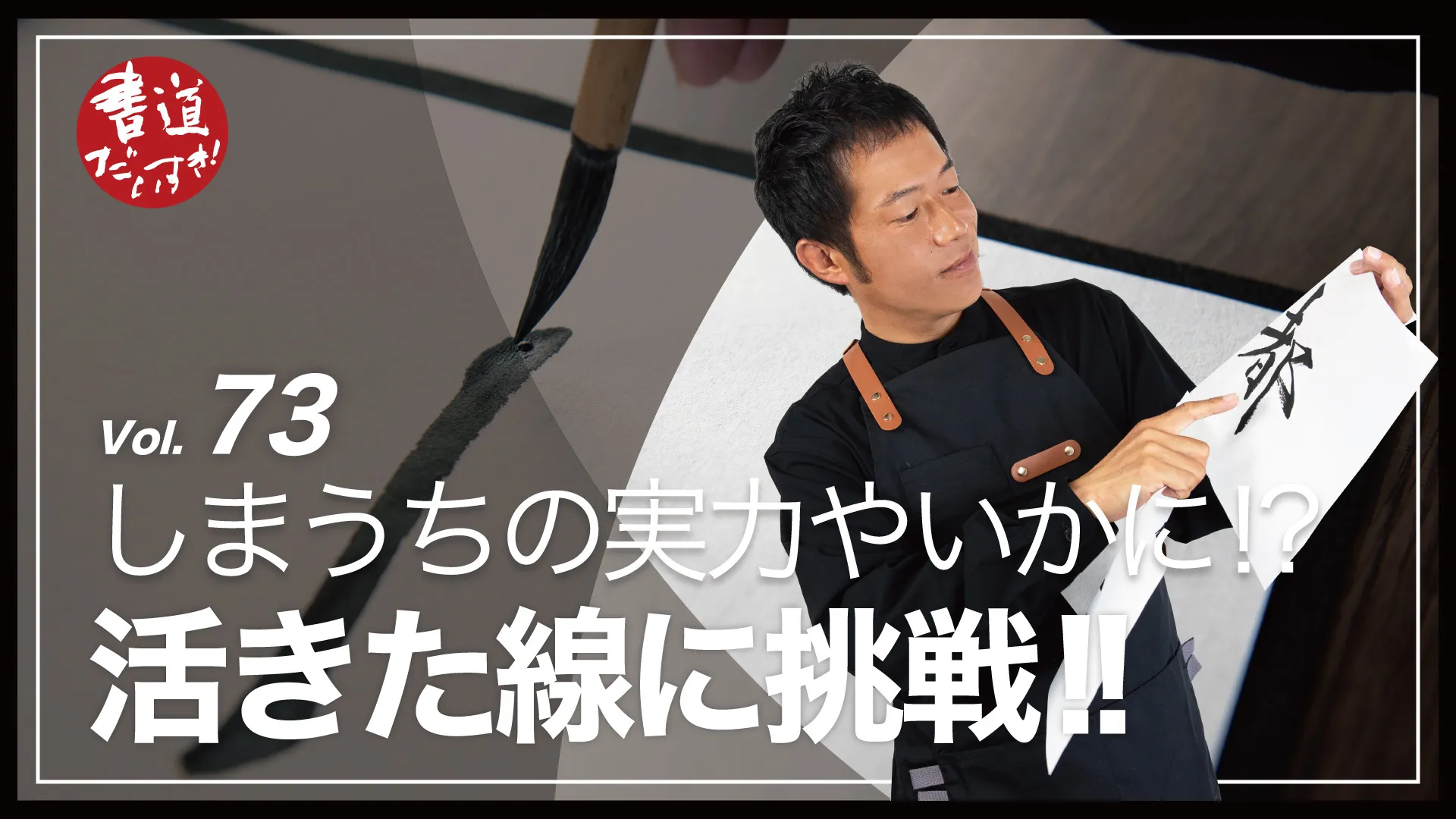
How Strong Is Shimauchi’s Skill!? Taking on “Living Lines”!! [Shodo]
Shodo Daisuki – Episode 073
“Living lines” are an eternal challenge!!
In this episode, we explain what “living lines” really are and introduce related techniques!! Please apply them to your own calligraphy!!
Shodo Daisuki Episode 73 — Video Overview
This is a lecture on calligraphy given by Mr. Shimauchi.
The theme is “living lines,” and he explains an important concept in shodo.
At the beginning, Mr. Shimauchi mentions the phrase “Write living lines,” a line often heard in calligraphy classes, and says it is an eternal challenge.
In this video, he aims to explain what “living lines” are and introduce related techniques.
In the main part of the lecture, Mr. Shimauchi conducts a comparative verification with a senior calligrapher he respects, referred to as “Roshi (master teacher).”
Using the same brush, the same paper, and the same ink, they write the same characters to see what differences appear depending on skill.
They focus on three characters—“良,” “寿,” and “都”—and explain in detail how Mr. Shimauchi’s writing differs from Roshi’s in each character.
While acknowledging Roshi’s high level of technique, Mr. Shimauchi also suggests his own potential for growth.
Mr. Shimauchi emphasizes that improving in calligraphy requires observing every movement of your teacher, and explains that “living lines” are created through adjustments in brush speed and brush pressure.
He concludes by encouraging viewers to enjoy shodo and to find their own “living lines.”
YouTube — Shodo Daisuki Episode 73
Shimauchi 00:00
Write living lines.
Whether differences appear in the characters depending on skill—so there really were techniques, weren’t there.
Hello, I’m Shimauchi from “Shodo Daisuki.”
Today we bring you: How strong is Shimauchi’s skill!? Taking on “Living Lines.”
Shimauchi 00:21
If you attend a calligraphy class, you’ve probably heard this line at least once: “Write living lines.”
Even though Shimauchi knows all too well that this is an eternal challenge, I work on this difficult problem day after day.
Taking on the Classical Copying series is also
Shimauchi 00:37
for this purpose above all else.
That said, I think some viewers may be wondering at first, “What are living lines?” and have no idea.
By watching this video, you’ll learn what living lines are, and also brushwork derived from that,
Shimauchi 00:54
and I’ll introduce techniques as well—so if you can apply them to your own writing, nothing would make me happier.
Please stay with me until the end.
On this channel, not limited to calligraphy,
Shimauchi 01:06
I’ll keep introducing things related to writing, so please subscribe and give it a like—thank you!
Now, let’s get into the main part. Here we go.
Alright—Shimauchi who loves calligraphy.
Self-study has its limits, so
Shimauchi 01:22
there’s actually someone close to me—one person I respect, called “Roshi.”
“Roshi” is a difficult word, but basically, it’s a senior who gives advice when you’re lost or stuck.
I did an experiment I’d always wanted to try: using the same brush,
Shimauchi 01:39
the same paper, and the same liquid ink to write the same characters—would differences appear depending on skill?
This time, I had Roshi write four characters for me.
Then I inherited the exact tools Roshi used,
Shimauchi 01:56
and I imitated Roshi’s characters seriously—just seriously, as seriously as possible.
And of course, what I cared about most was line quality.
While looking at each one, what points did Shimauchi notice, and what points did Roshi notice—how were they different?
Including advice I received from Roshi,
Shimauchi 02:16
I’d like to explain them one by one.
For Shimauchi, this is nothing less than a challenge to Roshi, so I gave it my all.
Let’s start with the first character.
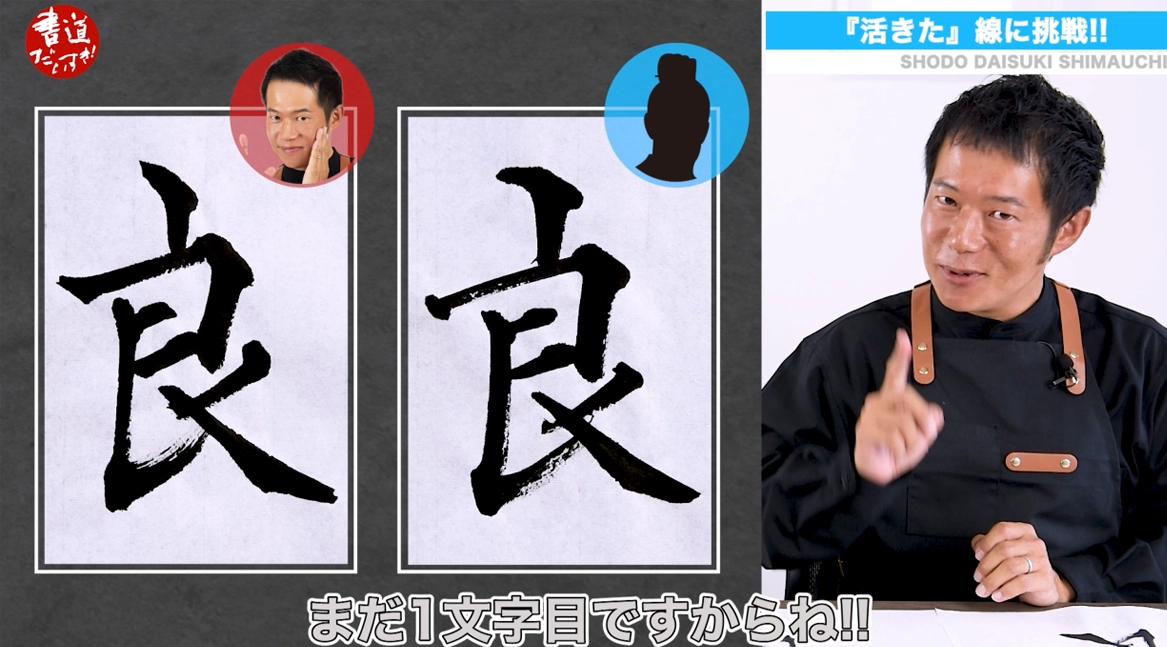
The first character is “良.” Here, differences appeared in the turn of the second stroke and the vertical stroke of the fifth,
Shimauchi 02:36
that’s what happened.
For the turn of the second stroke, I thought I should just draw a strong, powerful line no matter what.
But then, it affected the negative space more than I expected.
And for the fifth stroke (the vertical), this is what happened—
Shimauchi 02:56
the paper grabbed the brush.
And because of that, the line became lighter.
And with the rebound, this “feather” part became heavier.
On screen, you might think, “Shimauchi, that’s not true,” but
Shimauchi 03:13
when you see the real pieces in front of you, it’s different.
And what was most frustrating is: we’re using the same tools.
Exactly the same brush, the same ink, the same paper—starting from the very first sheet, this is what I got.
I may disappoint you all, but
Shimauchi 03:27
still, it’s only the first character.
There might be a comeback from Shimauchi from here on.
Please look forward to it—just a little, just a little.
Alright, on to the second character. Next is “寿.”
This one has many horizontal strokes in a row, so
Shimauchi 03:45
I figured I had to be careful about the spaces between them—thinking, “Roshi surely has that under control.”
So I actually wrote while being careful about the spacing, but then—
Shimauchi 03:59
here’s where I realized Roshi did have brushwork techniques.
At the start of each horizontal stroke, Roshi subtly changes the touch.
And what does that change? Of course, the feel of the line changes, and
Shimauchi 04:17
the negative space between those strokes shifts subtly too.
That completely got me—Shimauchi missed it.
But I worked incredibly hard this time.
I really did. And for this long vertical stroke, I feel I came close to Roshi—that pride,
Shimauchi 04:36
I do have that, at least.
But the difference in this vertical stroke for “寸” (this part) was… honestly, I was stunned.
As expected of Roshi.
Next, (moving on).
Where lines concentrate, you need some ingenuity—Shimauchi knew that too.
And that was also
Shimauchi 04:54
in my head.
When lines concentrate, you can enter with a finer tip at the start of the stroke, securing the negative space properly.
So in that sense I could show “Roshi understands this, right?”—but then,
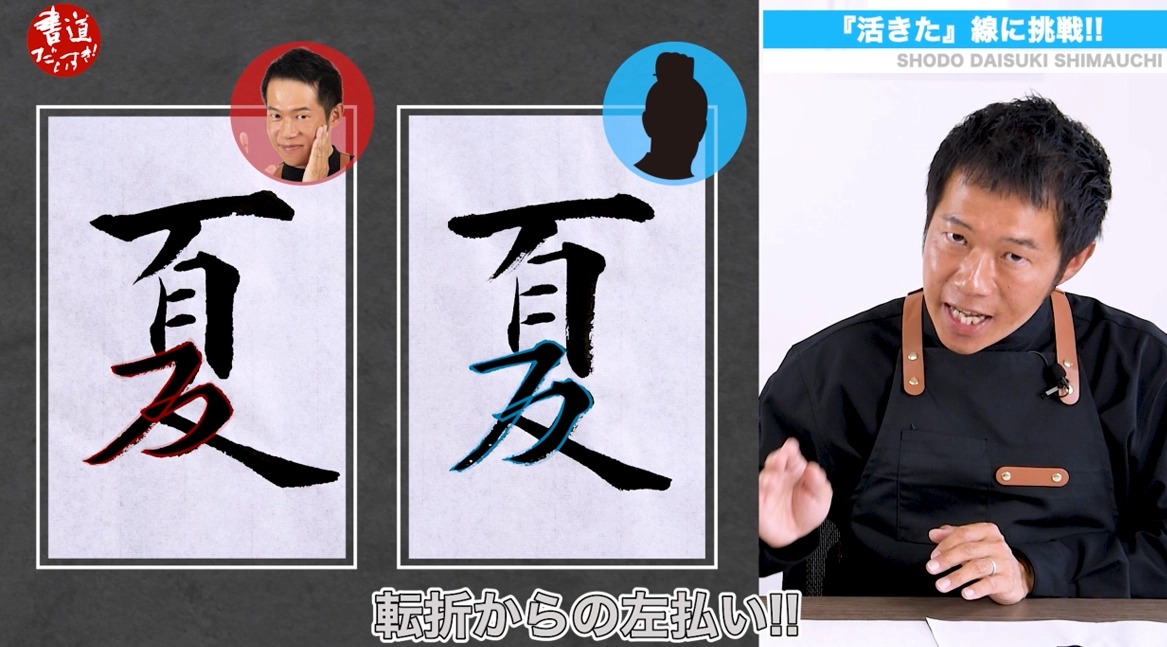
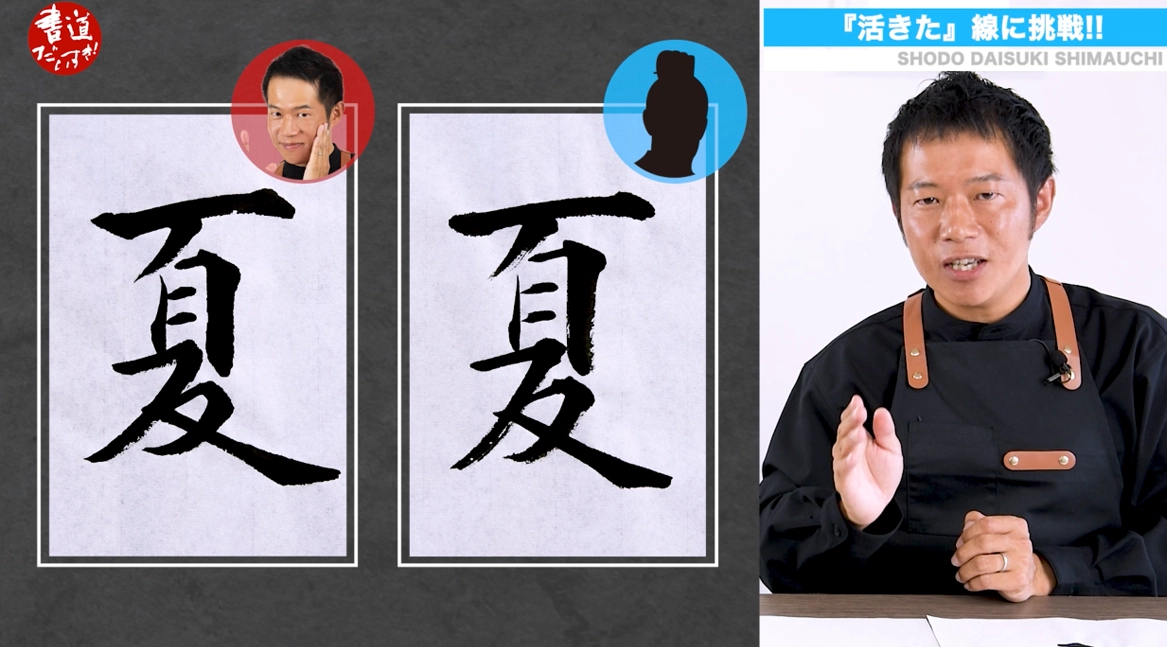
strokes 7 and 8, and then the 9th stroke—
Shimauchi 05:13
from the turn into the left sweep—there was a big difference there.
In other words, my left sweep wasn’t “alive” as a line.
But you know, just looking at the finished model after Roshi wrote it—I can’t fully understand it.
Shimauchi 05:33
So I felt that it’s necessary to see Roshi writing live on the spot—watch it with my own eyes and remember it.
Everyone, during practice, you need to watch every movement of your teacher—
as if you won’t let a single thing slip by.
Shimauchi 05:52
You have to watch with full effort.
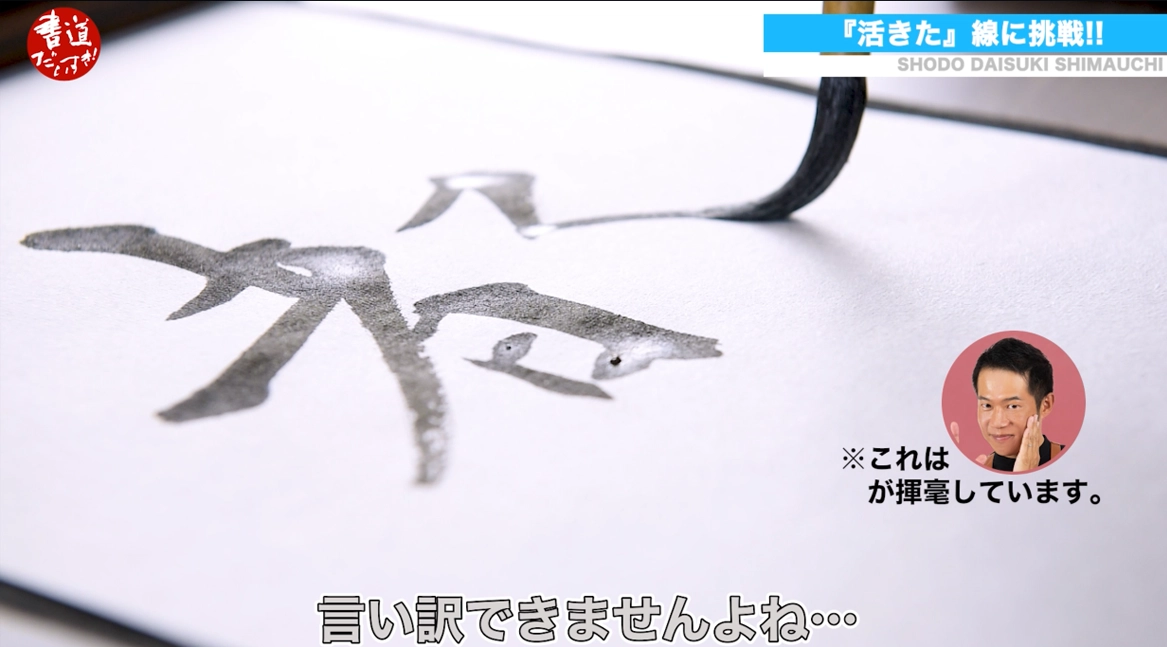
This Roshi carefully observed every movement of the teacher—from grinding ink, to holding the brush, to loading ink, to the act of writing itself—slowly and attentively with their eyes,
Shimauchi 06:10
so it’s important to really watch that carefully.
Now, finally: “都.” For this one, I thought I got the closest to Roshi’s style, and I confidently thought, “Yes!”—but then,
Shimauchi 06:28
looking closely, the first horizontal stroke and the right-side “Oozato” part of the character were different.
I think that’s probably due to differences in brush speed, which changes line quality.
With momentum, you can sometimes draw living lines.
Shimauchi 06:47
In a previous video I introduced, I wrote horizontal strokes while pausing the core each time, right?
But actually, pulling that core through in one strong go—making it “gyu”—can absolutely produce a lively quality. So,
Shimauchi 07:07
those living lines that come from momentum will definitely appear too.
Including living lines, it’s said that ink tone and the way the brush contacts the paper are all decided the moment paper and brush match perfectly.
This time we used exactly the same tools, so the difference between Roshi and Shimauchi is real.
Shimauchi 07:29
I can’t make excuses for that, can I?
Roshi’s skill is truly formidable.
But everyone—Shimauchi still has room to grow.
From here on, I’ll keep facing myself sincerely, train my brushwork methods, and work hard so I can draw more living lines.
Shimauchi 07:46
How was it?
It made me think again about line quality, and it was a meaningful time for Shimauchi as well.
Thinking desperately about what your teacher tells you, practicing repeatedly, and deriving the answer yourself—
Shimauchi 08:05
there’s no greater asset than that.
And since I’m delivering this to an unspecified number of people, I want those who practice calligraphy and those who are interested in calligraphy to simply enjoy it.
And I hope you’ll fall deeply in love with calligraphy.
Shimauchi 08:24
Calligraphy expressed with lines and dots.
In your calligraphy life, I hope you’ll bring as many of your own living lines into the world as possible—even one more.
So, this is Shimauchi from “Shodo Daisuki.” Let’s value our health and get through the heat—goodbye!
About Related Products
Here are the products featured in this video.
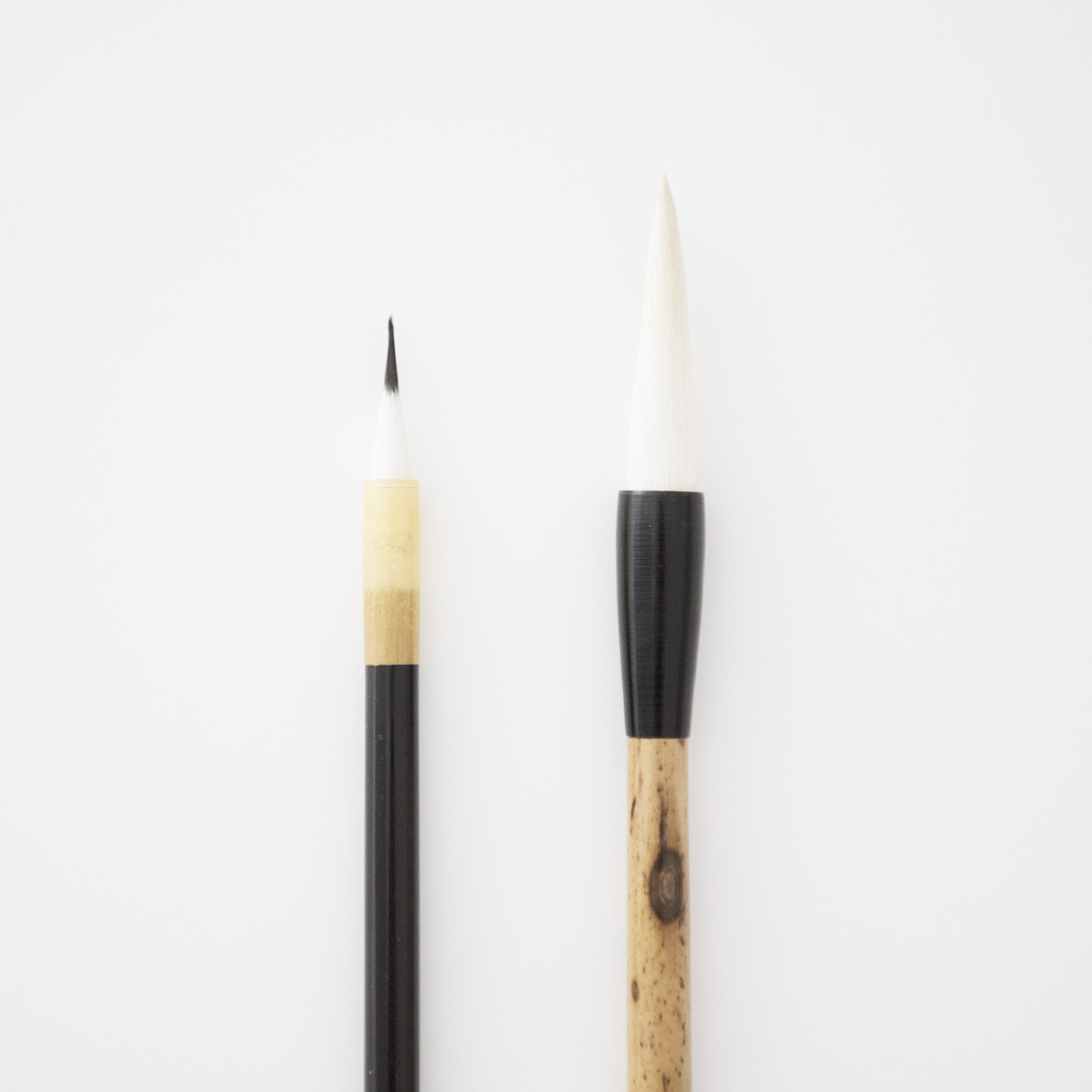
Brushes / fude
There are many types of calligraphy brushes, such as “kanji brushes,” “kana brushes,” “student brushes,” “Chinese-style brushes,” and “performance brushes.” But because there are so many, many people may struggle—feeling brushes are hard to use and not knowing how to choose the right one.
At Shoyu Online, we introduce how to choose brushes and the different types, striving to help you select a brush with confidence.


