

Shodo Daisuki Episode 72
```html
Shodo Daisuki Episode 72
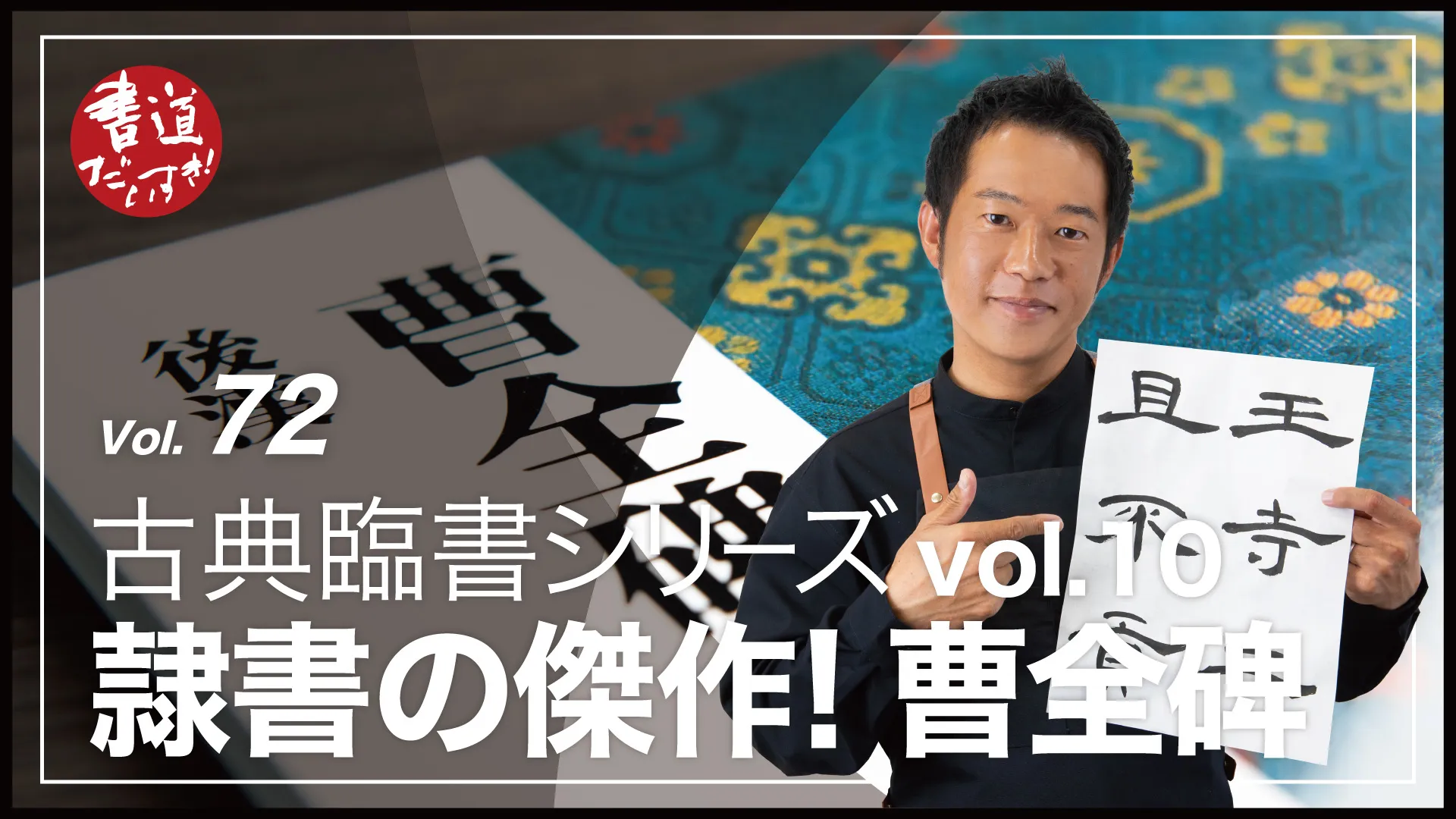
A Masterpiece of Clerical Script!! “Caoquan Stele”!! Classical Copying Series Vol.10 [Shodo]
Shodo Daisuki – Episode 072
Thirty years have passed since the previous episode, “Liqi Stele”!!
Here comes the masterpiece among masterpieces of clerical script—“Caoquan Stele”!!
When it comes to clerical script, many of you may say, “This is the one!!”
Please enjoy the beautiful, delicate elegance of clerical script!!
Shodo Daisuki Episode 72 — Video Overview
This is a lecture from Shimauchi-sensei’s Classical Copying (Rinsho) Series, where he explores the great classics of Chinese calligraphy.
This time, he explains a famous stele known as the “Caoquan Stele (Sōzenhi).”
The lecture begins with the historical background of the Caoquan Stele.
Built in 185 CE, this stone monument was created to praise the virtues of an official of the time named Cao Quan.
Interestingly, it was buried in the ground before its official unveiling, and then excavated about 1,400 years later at the end of the 16th century.
Thanks to this chance, it was not exposed to wind and rain, so its beauty from that era was preserved; today it is kept in a museum in China.
Shimauchi-sensei describes the Caoquan Stele as “the last flower of clerical script,” explaining it while comparing it with another representative clerical-script work, the “Liqi Stele.”
He notes that the Caoquan Stele was created about 30 years after the Liqi Stele and is valued for its more refined beauty.
In the lecture, Shimauchi-sensei also explains in detail the tools he used when copying the Caoquan Stele.
For the brush, based on the text, he chose “a brush with a responsive tip and not much body,” and states that he used a mixed-hair brush (kengō-fude).
For paper, after trying both non-bleeding paper and paper that allows ink to sink in, he decided that ink-absorbing paper is better for expressing the finishing strokes.
For ink, he uses a rich, dark ink.
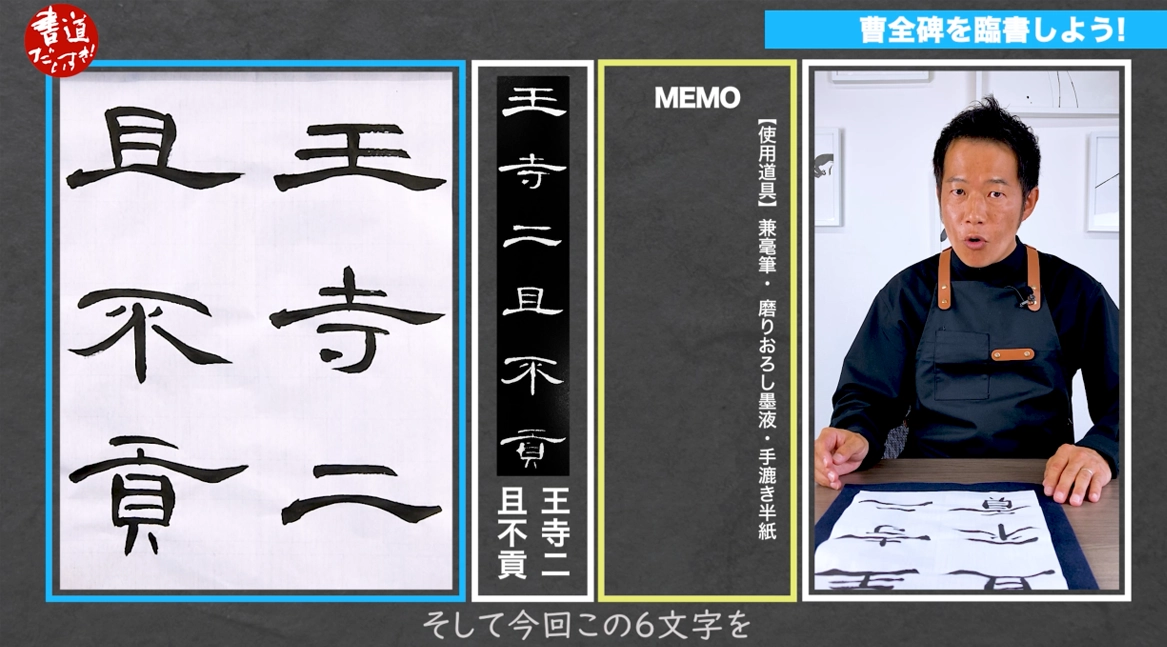
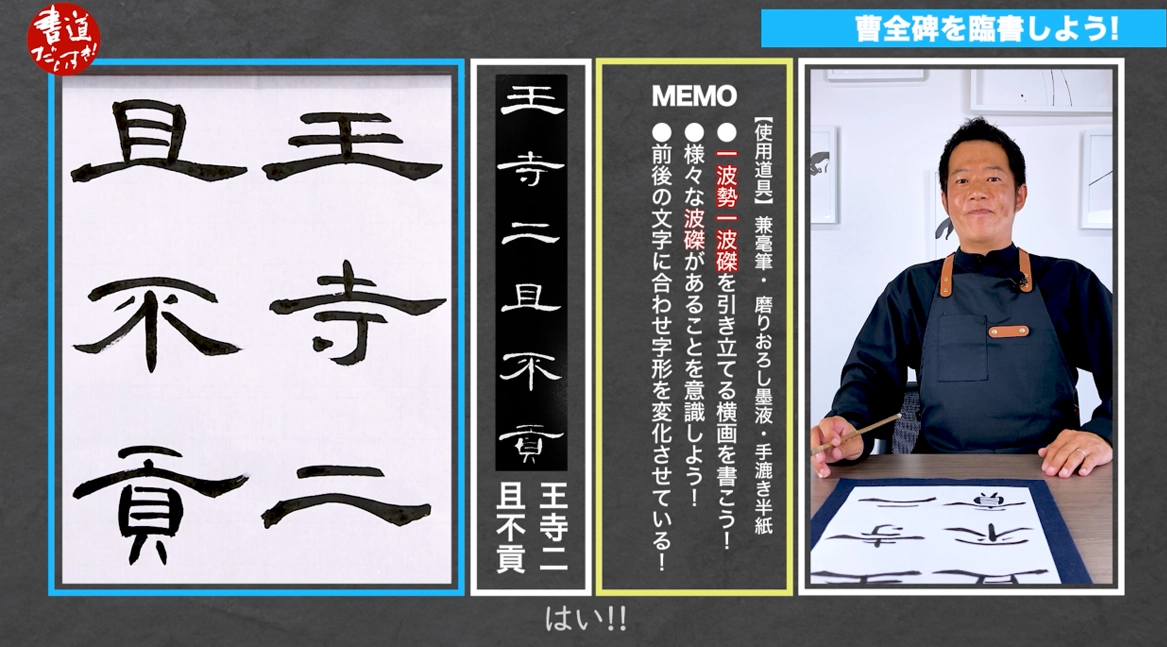
Regarding the choice of characters to copy, he explains why he selected six characters that include many horizontal strokes.
He especially highlights that even the same character can take different forms, emphasizing that one feature of the Caoquan Stele is that the way of writing changes depending on the surrounding context of characters.
Finally, Shimauchi-sensei actually copies the Caoquan Stele and talks about both its difficulty and its appeal.
He points out how challenging it is to express the lively quality of the lines and the sense of speed from the first touch to the finishing stroke, and stresses the importance of training.
He closes by encouraging viewers to try copying the Caoquan Stele themselves.
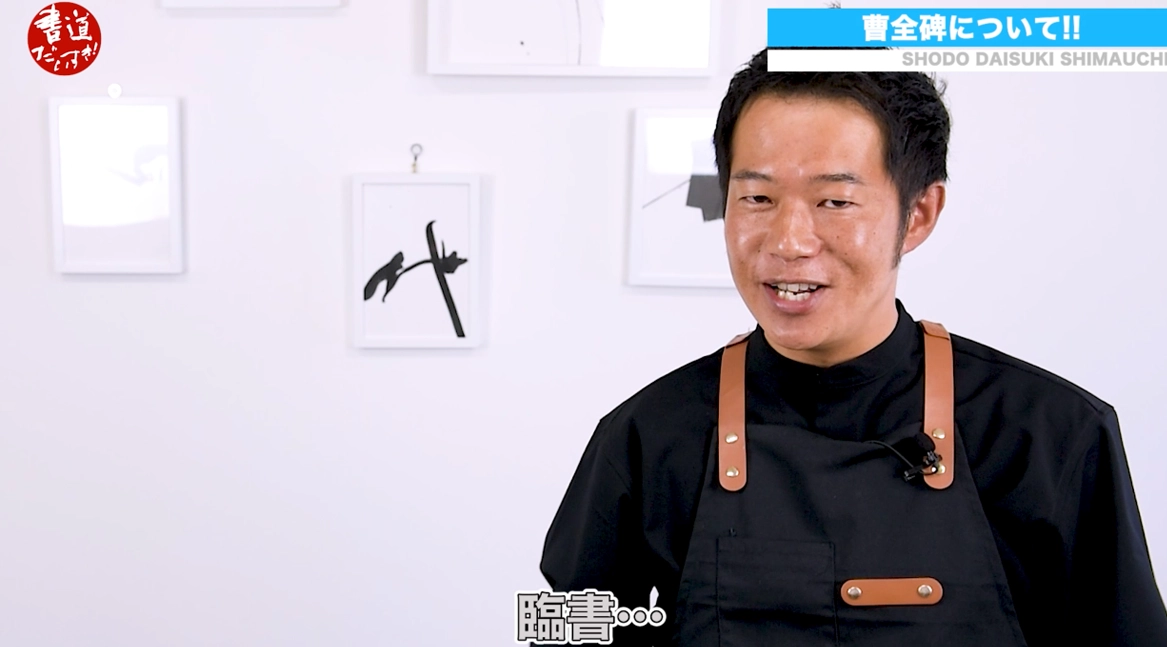
YouTube — Shodo Daisuki Episode 72
Shimauchi 00:00
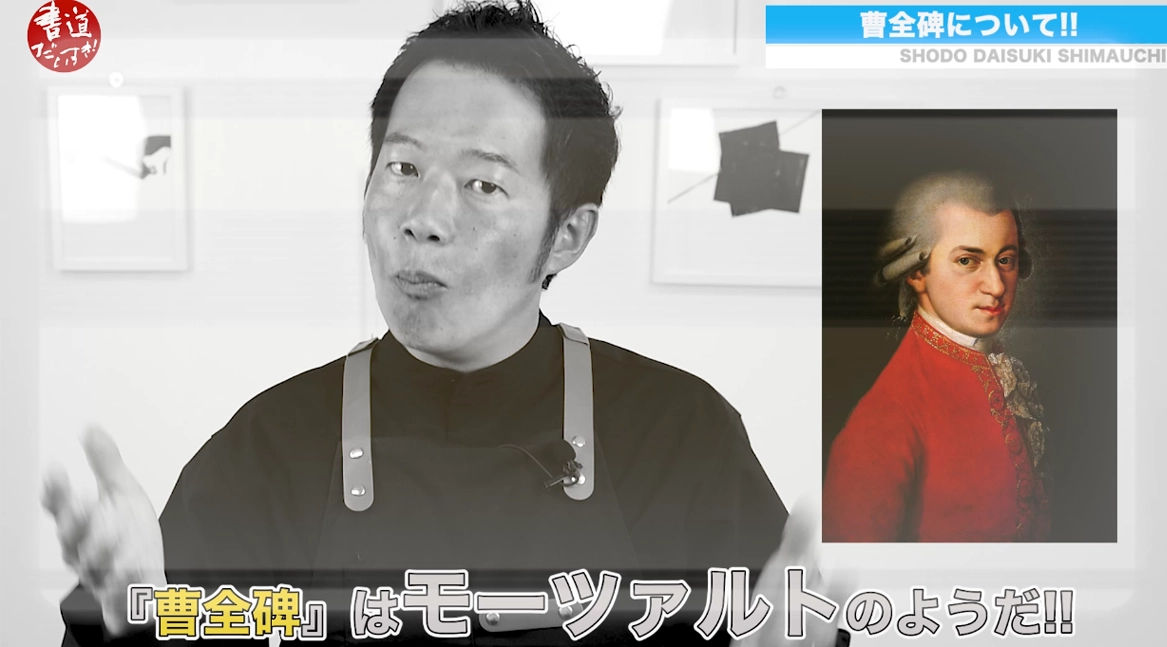
Like Mozart—
it was buried in the earth.
As the “last flower” of Han clerical script, I’ll try to bring out the charm of this Caoquan Stele.
Hello, I’m Shimauchi from “Shodo Daisuki.”
It’s time for the Classical Copying Series, where we experience the classics of Chinese calligraphy in a real, hands-on way.
Shimauchi 00:18
Once again, following the previous episode, today’s topic is a renowned work.
Among famous works, we’ll feature the Caoquan Stele, a piece often called a true masterpiece.
There’s an interesting comparison like this:
“If the Liqi Stele is Beethoven, then the Caoquan Stele is like Mozart.” Oh—
Shimauchi 00:35
I can see why someone would say that.
So I’d like to introduce it by comparing those aspects.
In this video, I’ll first give a fun explanation of the Caoquan Stele, then explain how to choose tools for writing it,
Shimauchi 00:52
and finally, I’ll do a copying (rinsho) demonstration myself.
On this channel, not limited to calligraphy, I’ll keep introducing anything related to writing, so please subscribe,
Shimauchi 01:06
and please tap the Like button as well—thank you very much!
Alright, let’s go!
The year 185 CE. This is a stone monument built to praise the virtues of an official at the time named Cao Quan, and just like the previous Liqi Stele, the back side has the names of the people who contributed money and the amounts carved into it.
Shimauchi 01:26
Actually, with this Caoquan Stele, for some reason it was buried in the ground before its official unveiling.
Then, about 1,400 years later, at the end of the 16th century, it was excavated.
And today, it is preserved in a museum in China.
Shimauchi 01:47
Because it remained out of sight and was not exposed to wind and rain, as a result—yes—
it was able to retain its beauty from that time.
So when we copy it, we can see top-class beautiful lines. It’s a bit ironic, but
Shimauchi 02:04
we’re benefiting from that good fortune.
Rubbings of this stele were brought to Japan early on, and it’s said that it became the foundation of Edo-period clerical script.
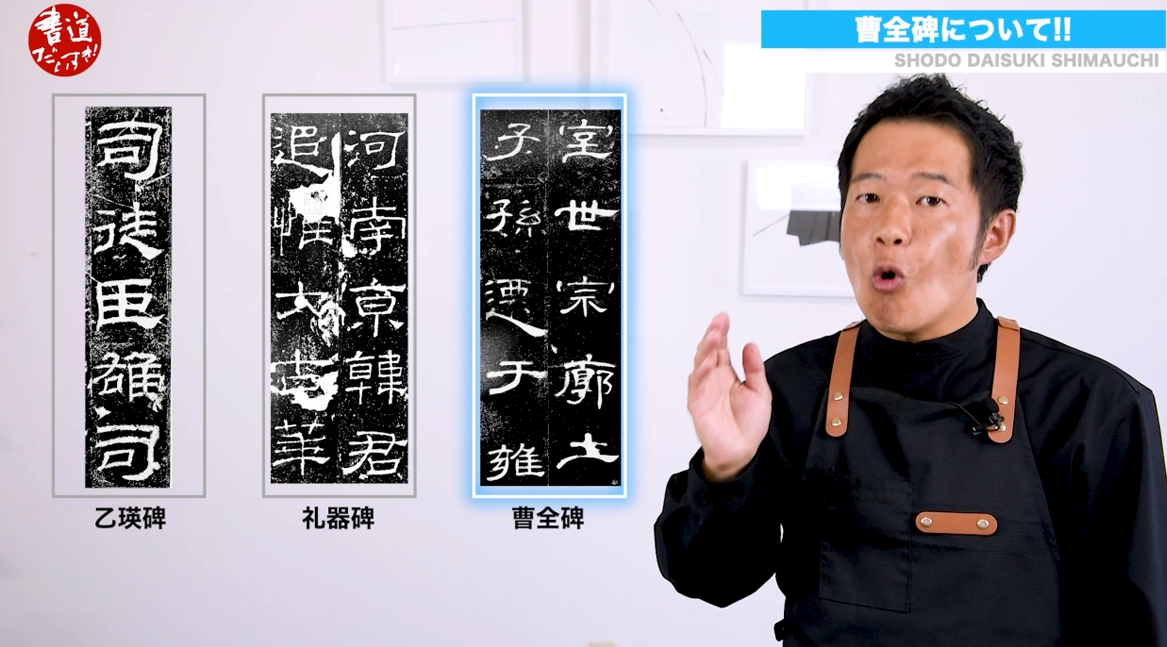
Since we have the chance, let’s compare it with other representative clerical-script masterpieces: the Yiying Stele and the Liqi Stele.
Shimauchi 02:24
What do you think, everyone? Even though it’s the same clerical script, you can clearly see the difference, right?
Last time we copied the Liqi Stele, didn’t we?
From that experience, I felt that the Yiying Stele has an extremely weighty presence, and it makes you realize, “So clerical script can have this kind of spacious depth.”
Shimauchi 02:44
There really are differences, aren’t there?
And now, today’s star: the Caoquan Stele, with its incredibly supple beauty.
Compared to the two pieces we just mentioned, isn’t it much more refined?
And that makes sense—
Shimauchi 03:01
because the Caoquan Stele was created about 30 years later than those works.
It was written not in a major city but in a provincial area, so it’s assumed that it firmly inherited the traditional elements of the Yiying and Liqi steles, and from there, this refined work was produced.
Shimauchi 03:22
And this Caoquan Stele is described as “the last flower of Han clerical script.” Everyone—what a stylish expression, right?
Comparing it to a flower—
wow, that really got me.
Alright then, this elegant Caoquan Stele, called the last flower—
Shimauchi 03:41
Shimauchi will, with all due respect, copy it now.
Let’s get into the copying practice of the Caoquan Stele.
But before that, first I’ll explain the tools Shimauchi used for writing the Caoquan Stele this time.
First, the brush—
Shimauchi 03:59
when I read the text carefully, it says something like: “What if you write with a brush that has backbone, a responsive tip, and not much body?”
So what did I actually try this time?
I tried these three types.
Shimauchi 04:16
For the first ones: last time for the Liqi Stele, I used a sheep-hair brush rather than a mixed-hair brush.
I tried the same brush in a larger size and a smaller size.
And then I also tried a mixed-hair brush—the one on the far right.
And as a result, for this episode, I ended up choosing—
Shimauchi 04:38
this mixed-hair brush and wrote with it.
There’s a reason for that. I tried the sheep-hair brush, but the Caoquan Stele requires a certain level of speed—brush movement speed, in other words.
Shimauchi 04:56
With the sheep-hair brush, the line ended up looking a bit thick and heavy (“poteto”), you know.
Well, in other words, my skill didn’t quite catch up.
But with the mixed-hair brush, if I set the strokes decisively, I could utilize the springiness and write with more control, so
Shimauchi 05:10
I thought, “Alright, for this one, let’s go with the mixed-hair brush.” It ended up matching the text’s guidance, and I decided to use it.
Next, the paper: you often hear that, like the previous Liqi Stele, it’s better to copy on non-bleeding paper, right?
So this time, I also copied the Caoquan Stele on non-bleeding paper.
Shimauchi 05:28
And yes, it’s easy to write because the brush glides smoothly.
But then, the finishing strokes—these finishing parts—because there’s little bleeding, the brush slips too much. When it slips, the finishing can become messy.
Because of that, I felt that paper that lets the ink sink in—so the dots “bite” into the paper—was better this time.
If you feel like your work looks worse due to the paper, or the finishing doesn’t settle well,
Shimauchi 05:47
or the wave strokes (hata / hataku) feel like they’re floating, it might be worth trying more absorbent paper once.
Next, the ink: just like last time, I used a rich, dark ink.
This is liquid ink, but it made the line sink into the paper firmly, which also made it easier to write.
And with dark ink too, I examined various options.
I used one with a bit of special intention this time, so that point is also important.
Shimauchi 06:34
Now, why did I choose these six characters? Everyone, take a look.
Do you notice anything about these characters?
That’s right—most of them are horizontal strokes.
I chose ones with lots of horizontal strokes because, as we said, each character has one “hasei / hataku,” right?
So just like this, each character has one wave-form stroke (hasei/hataku).
But before that, there are lots of ordinary horizontal strokes.
And those horizontal strokes are usually written straight and clean (some have slight waves), and they also play the role of emphasizing the horizontal stroke that has the wave-form “hasei.”
So for the horizontal stroke with “hasei,” the beginning of the stroke is exaggerated as well—that’s another point.
Shimauchi 07:32
And there’s another reason I chose these characters.
I thought this “宅,” for example, had only one way to write its wave-form… but that wasn’t true.
This is interesting. Even in this “畑,” the wave-form here, here, and then at the end—how about this part?
Did you notice? They’re all different shapes.
Let’s write an example. As you can see, not only the way of starting the stroke, but also the finishing part here is different.
So if we can express those differences properly, we’ll be able to bring out more of the Caoquan Stele’s charm.
Just like the Liqi Stele, the Caoquan Stele also changed the way of writing even the same character depending on the surrounding context—so there were already many “must-see” points back then. Truly impressive.
For the final clean copy, I’d like to express that aspect as well.
Shimauchi 09:41
Alright. I wrote it.
No matter how many times you do it, finishing a whole sheet in one shot is nerve-wracking and difficult.
And of course, ink can have different “stickiness” depending on the time, so it’s tricky.
But I think I was able to express my full strength as best as I can right now.
What I felt after writing clerical script—especially after writing the Caoquan Stele—is that if you’re really used to clerical script, the moment you touch the brush down for the first stroke, you already understand the image of how you’ll head toward the final wave stroke (hataku).
As soon as you see the classic, you can tell: “This character enters like this,” “This is the kind of hidden-tip (zōhō) it uses,” and “This is how the final wave is swept.”
That’s still hard for me to judge. Setting the start, deciding the hidden-tip, and the sense of speed until you reach the wave stroke—
Shimauchi 10:40
if that comes out, then the lines will become more and more alive.
So in that sense, “living lines” are quite difficult, aren’t they?
It really comes down to training—nothing else. That’s all.
How was it? This time, I copied the famous clerical-script masterpiece, the Caoquan Stele.
A monument whose author’s name is unknown became a masterpiece that influenced not only China but also Japan greatly—this Caoquan Stele, yes, it was unquestionably a wonderful work.
Thinking back, I did notice that people often write the Caoquan Stele for high school competitions and such, but when I actually copied it like this, wow— it was harder than I expected, and it definitely became one of the most memorable works for me.
So from now on, whenever I get the chance, I want to keep copying the Caoquan Stele.
Everyone, I truly think it’s worth doing—so let’s keep working on it together from here on as well.
This was Shimauchi from “Shodo Daisuki.”
Well then—
it’s the arrival of a hot summer, isn’t it?
I want to keep raising the heat of “Shodo Daisuki” too, so please continue to support us.
See you again next week!
About Related Products
Here are the products featured in this video.
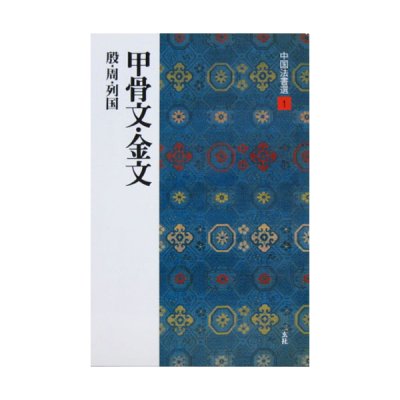
Books / book & publications
For everyone from beginners who want to start calligraphy to intermediate and advanced learners, the knowledge you can gain from books is invaluable.
You can learn beyond your teacher’s model, and books are ideal for practicing at home or for self-study.
Gaining knowledge of calligraphy should also broaden your horizons and deepen your appreciation.


