

Shodo Daisuki Episode 71
```html
Shodo Daisuki Episode 71
Dangerous to Mix!? Liquid Ink and Solid Ink!! [Shodo]
Shodo Daisuki – Episode 071
“Mixing solid ink into liquid ink makes it better”—is that really true!?
Does this hold true under all conditions!?
Through careful testing, Shimauchi has arrived at his own conclusion!!
Please enjoy watching until the very end!!
Shodo Daisuki Episode 71 — Video Overview
This is a transcript of a calligraphy-related video by Shimauchi titled “Do Not Mix! Dangerous: Liquid Ink and Solid Ink.”
In this video, he examines the effects of mixing solid ink into liquid ink.
Shimauchi points out that while many people casually grind solid ink into liquid ink, very few can clearly explain the advantages and disadvantages.
He admits that he himself used to add solid ink based only on a vague impression.
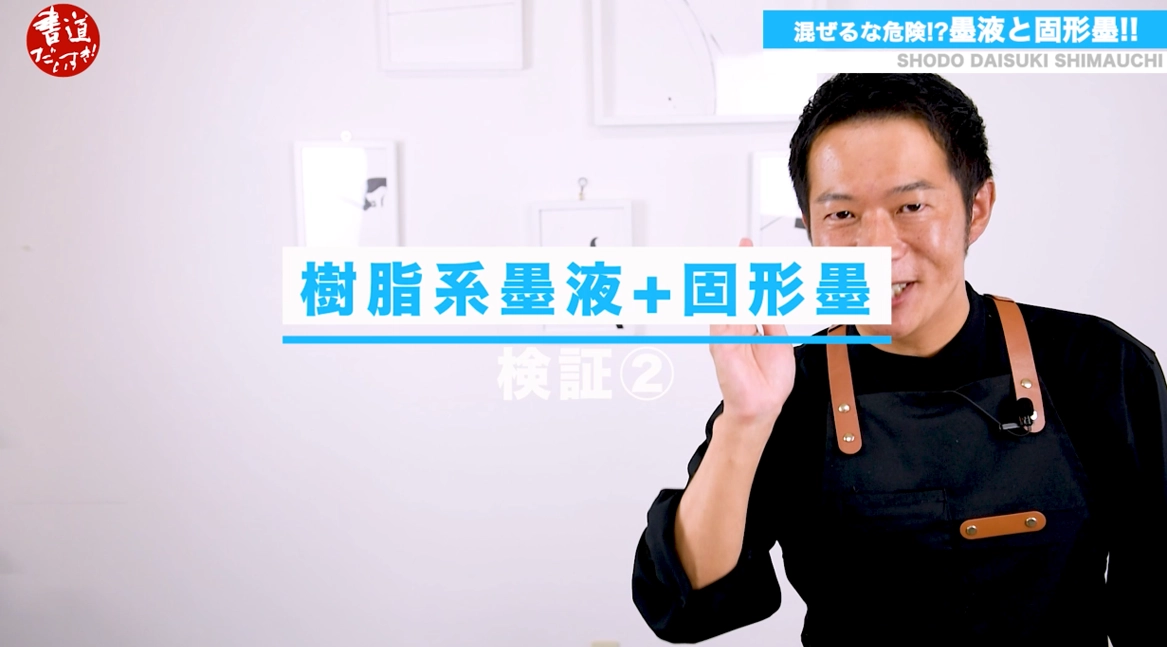
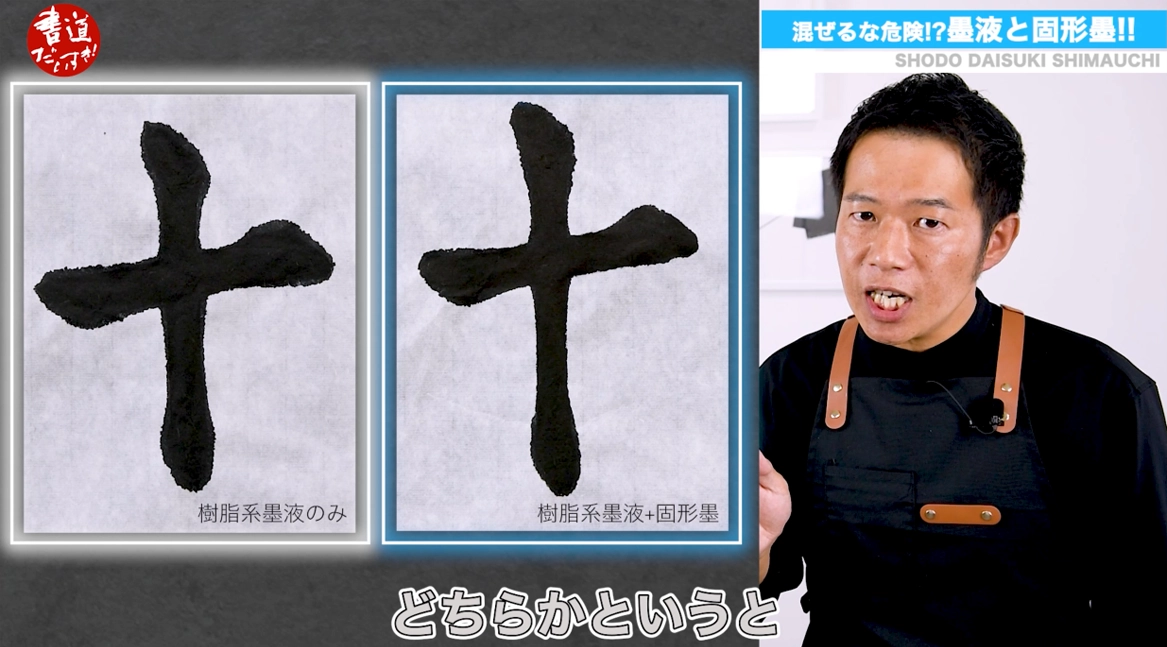
In the experiment, he added solid ink 200 strokes × 3 times (a total of 600 strokes) into 7.5 cc of glue-based liquid ink, and conducted the same test with resin-based liquid ink.
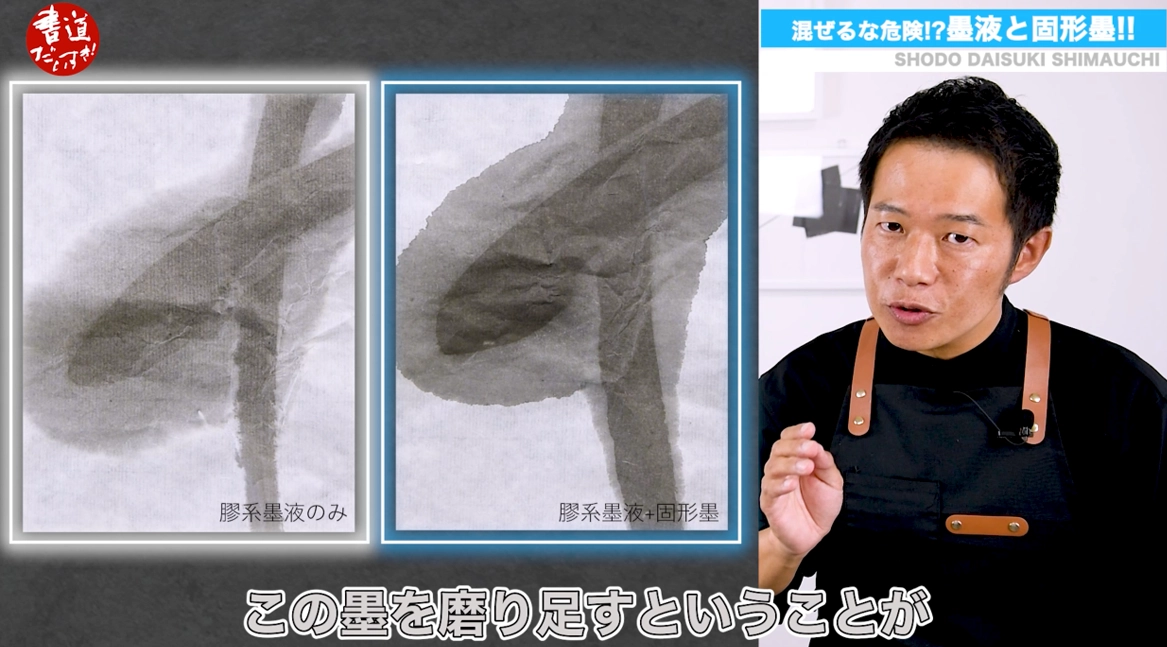
With glue-based liquid ink, the following changes were observed after adding solid ink:
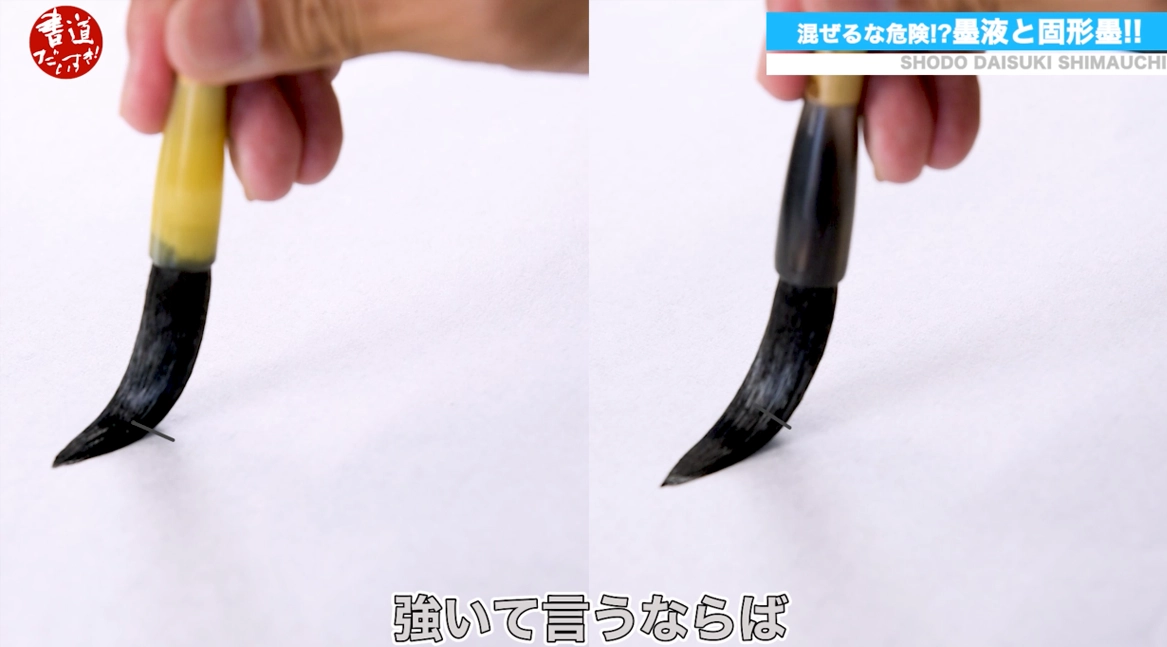
An increased sense of volume when the brush is loaded with ink
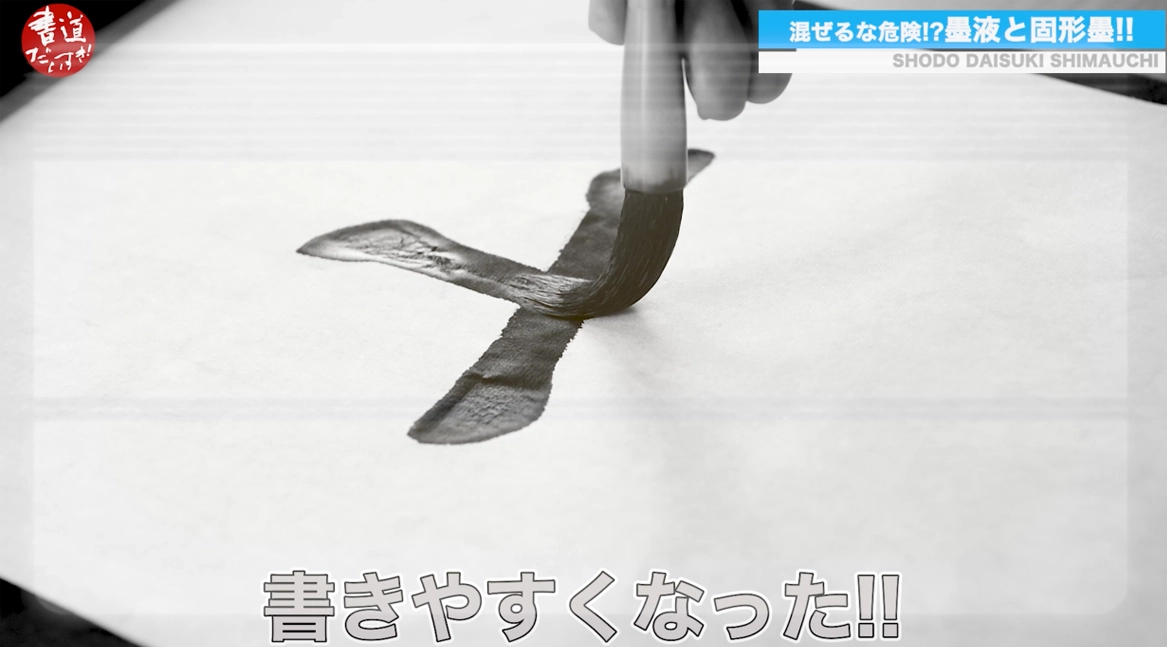
Ink stays on the paper during brush separation, creating moderate resistance and making it easier to write
The ink color changes to a calmer, more sophisticated tone
On the other hand, with resin-based liquid ink, no major changes were observed even after grinding in solid ink, resulting in little effect relative to the effort required.
In tests using different types of paper, almost no grinding-in effect was seen on machine-made paper for either glue-based or resin-based ink.
As his final conclusion, Shimauchi states that grinding solid ink into liquid ink is acceptable when using a combination of glue-based liquid ink and handmade paper.
Examples of use include cases where a mixed-hair brush is used instead of a sheep-hair brush, or when adjusting the atmosphere of a piece that looks overly dark.
Finally, Shimauchi notes that this experiment was conducted using only one type of solid ink he owned, and results may differ with other solid inks.
He emphasizes that there is no absolute answer in calligraphy, that the writer’s judgment is what matters, and encourages viewers to conduct their own tests.
YouTube — Shodo Daisuki Episode 71
About Related Products
Here are the products featured in this video.
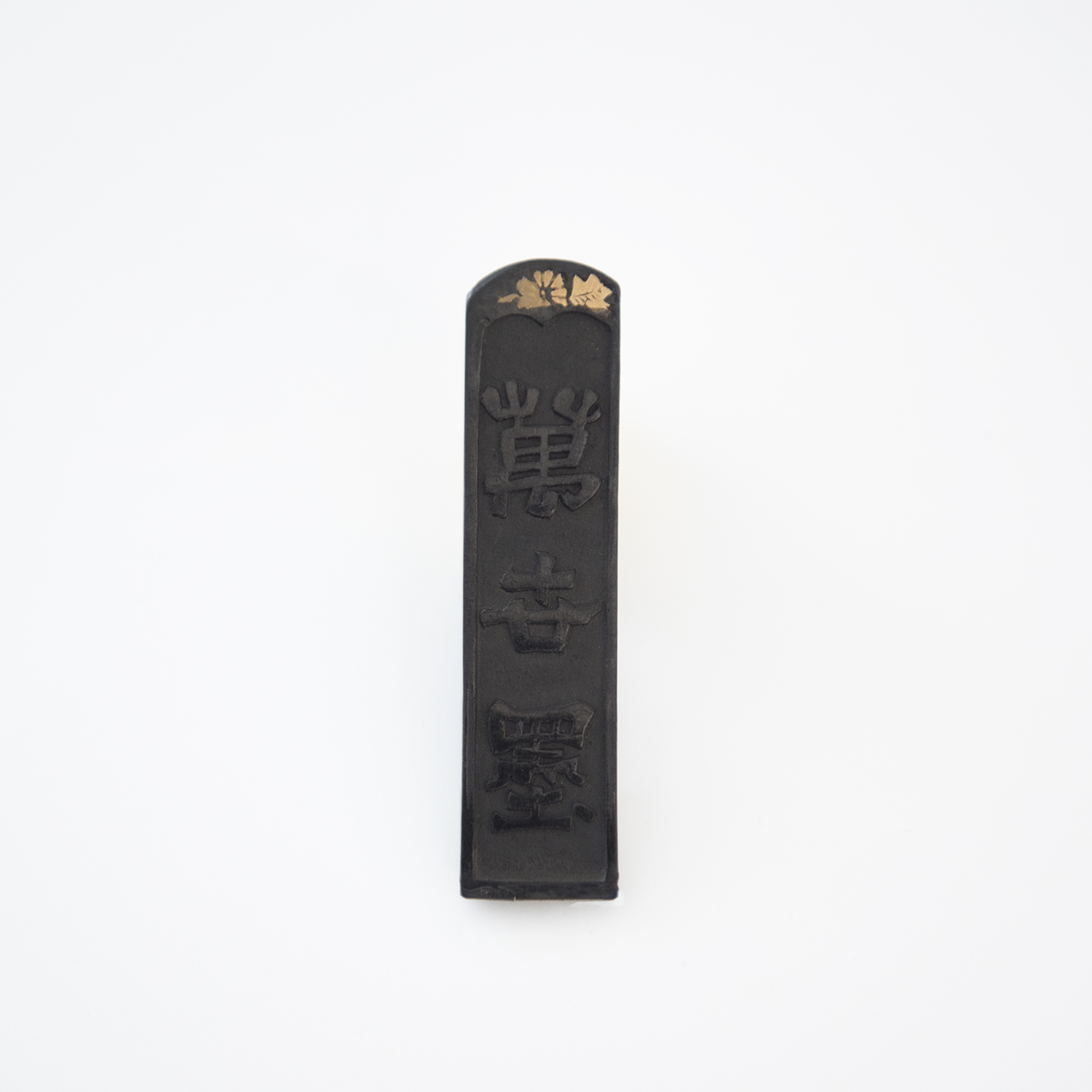
Solid Ink / Sumi
Solid ink is said to have originated in China during the Yin dynasty, before around 1500 BCE.
Its main ingredients are soot, animal glue, and fragrance, and the characteristics of the ink depend on these materials.
Differences in tone, gloss, and bleeding can be enjoyed, and solid ink offers expressive qualities that liquid ink cannot replicate.
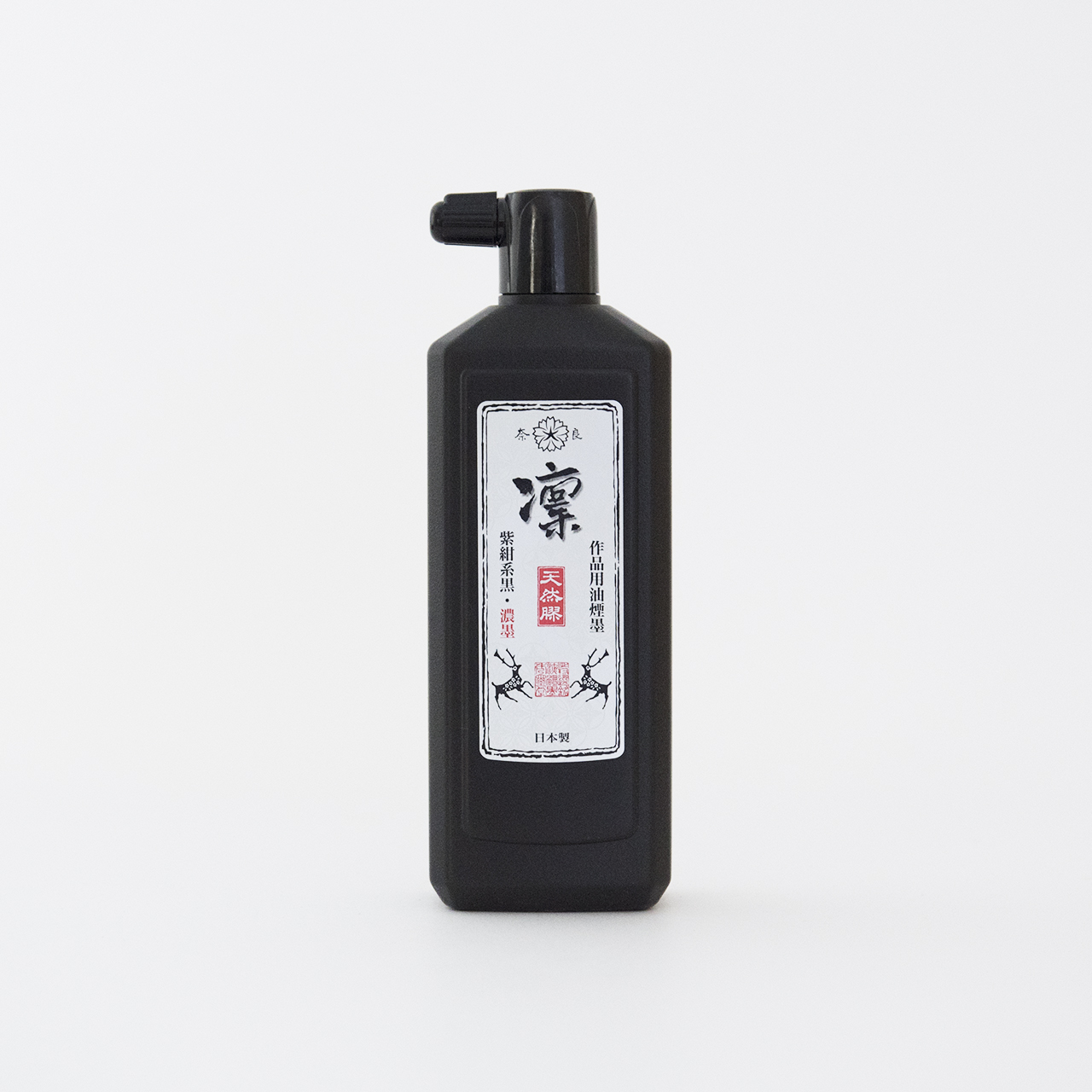
Liquid Ink / Bokueki
Liquid ink has been widely used since it was developed in the mid-Meiji period.
Depending on the manufacturer, it may also be called “ink.” Liquid ink comes in glue-based and resin-based types, which should be selected according to purpose.
At Shoyu Online, we offer a wide range of liquid inks, from student use to works for kana and kanji calligraphy, all at great prices—please take a look.

