

Handmade vs. Machine-Made Calligraphy Paper
Paper used for calligraphy is generally divided into two types based on production method: "handmade" and "machine-made".
Originally, all calligraphy paper was handmade, but after Western papermaking techniques were introduced, machine-made paper became common.
Many people associate handmade paper with high ink absorption and machine-made paper with less absorption, but this is not necessarily true.
Ink absorption can be controlled with sizing agents, and the composition of the raw materials also affects it.
Recent advances in machine-made paper allow production of paper that closely resembles handmade paper.
At Shoyu Online, we provide guidance on absorption levels as well as production methods, which can help you choose the right paper for your calligraphy.
This column introduces the differences in production, characteristics, and identification between handmade and machine-made Japanese paper.
Handmade Paper Production
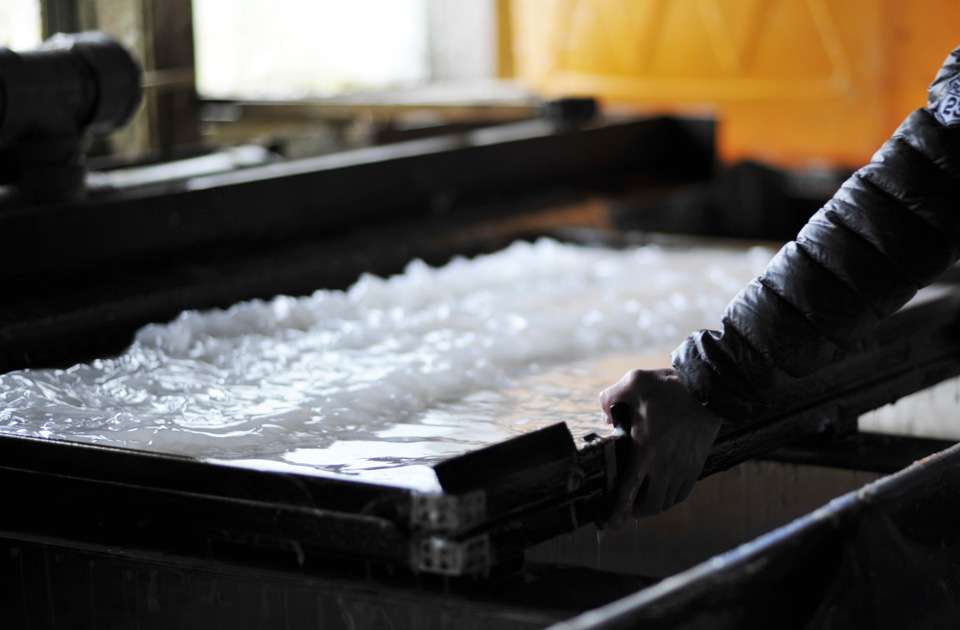
Cooking (Shajuku)
Raw materials are boiled to extract the necessary fibers.
Handmade paper is mainly made from kozo, gampi, or mitsumata.
Adding soda ash results in white paper, while omitting it produces naturally colored paper.
Soaking (Sarashi)
Boiled fibers are soaked in plenty of water to remove the lye (ak) produced from the bark.
Historically, river water was used, but now large tubs are used for soaking.
Pulp Beating
Fibers are beaten to separate impurities and obtain fine, flexible fibers.
This step ensures high-quality paper. The beaten pulp is then partially dehydrated.
Stirring
The pulp is stirred in water with "tororo-aoi" (a natural mucilage) added.
Tororo-aoi helps evenly disperse fibers on the screen during papermaking.
Inadequate beating results in uneven paper with weak strength.
Papermaking
The pulp is poured onto a mold (sukibune) and shaken to form sheets.
"Nagashi-zuki" (shaking) is the common method, while "tame-zuki" (pouring without shaking) is used in some regions.
Nagashi-zuki requires skill to achieve uniform thickness.
Water Removal
Excess water is pressed out, and several sheets are bundled together.
Some regions skip this step entirely.
Drying
The paper is dried in the sun, which may take up to 10 days.
After drying, sheets are carefully separated and attached to large heated plates using brushes to prevent air bubbles.
Brush marks on the back of handmade paper come from this process.
Machine-Made Paper Production
Machine-made paper uses large-scale equipment, allowing efficient mass production compared to handmade paper.
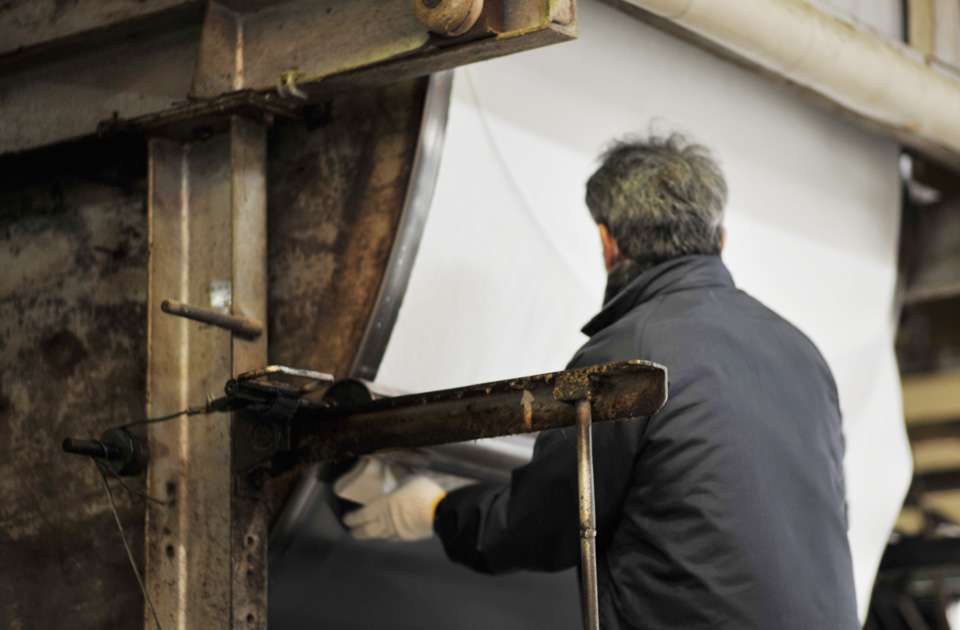
Pulp Preparation
Pulp is boiled in large tanks and stirred with machines.
Machine-made paper mainly uses processed pulp as raw material.
Beating & Washing
Fibers are beaten and separated from impurities, then stirred in large amounts of water.
Machines handle this process on a much larger scale than handmade paper.
Sheet Forming & Dehydration
Paper is formed on large conveyor belts using thick blankets instead of screens.
Water drains through the blankets, leaving the paper fibers behind.
Rollers apply pressure to dehydrate the sheets.
Drying
Sheets pass through drum-type irons to dry, resulting in smooth surfaces.
The back has no brush marks. Rolls of paper are then cut to size.
How to Distinguish Handmade vs Machine-Made Paper
| Handmade | Machine-Made | |
|---|---|---|
| Back Surface | Brush marks visible. | No brush marks, faint fuzzy texture from blanket. |
| Screen Pattern | Visible screen lines. | No screen lines (some machine-made paper imitates them). |
Ink Absorption Is Not Determined by Production Method
The idea that handmade paper absorbs ink more while machine-made paper absorbs less is a misconception.
Absorption can be adjusted using sizing agents or raw material composition.
Traditionally, paper was "aged" at factories, wholesalers, and by users before use. Today, sizing chemicals adjust ink absorption so the paper can be used immediately.
Additional Notes
Some calligraphy paper uses gofun (white pigment) for a smooth, matte finish.
This provides a pleasant contrast with ink and reduces bleeding.
Summary
We have introduced the differences between handmade and machine-made calligraphy paper.
Understanding the characteristics of each paper allows for more expressive calligraphy.
The quality varies by type, so trying different papers helps appreciate the depth of Japanese paper.
Shoyu Online offers over 800 types of calligraphy paper.