

How to Prepare a Brush
Taking care of your calligraphy tools is very important.
Even a high-quality brush can be ruined quickly without proper care.
Here we introduce the basics of how to start using a new brush.
Some brushes are already loosened and ready to use, but most are hardened with glue.
For hardened brushes, the glue must be removed before use—otherwise the ink cannot soak into the hairs properly, and you won’t be able to make full use of the brush.
Below are easy-to-follow methods for preparing your brush (*oroshi-kata*). Choose the method according to your purpose.
Loosening the entire brush tip (穂全部をおろす)
When writing large works such as scrolls, you need the brush to hold a lot of ink. For soft-hair brushes (e.g., sheep hair), the whole tip is used for delicate expression. In such cases, loosen the entire brush tip before use. For large brushes (*futo-fude*), this is the standard method.
Part to loosen
From the base of the hairs to the very tip (the whole brush head)
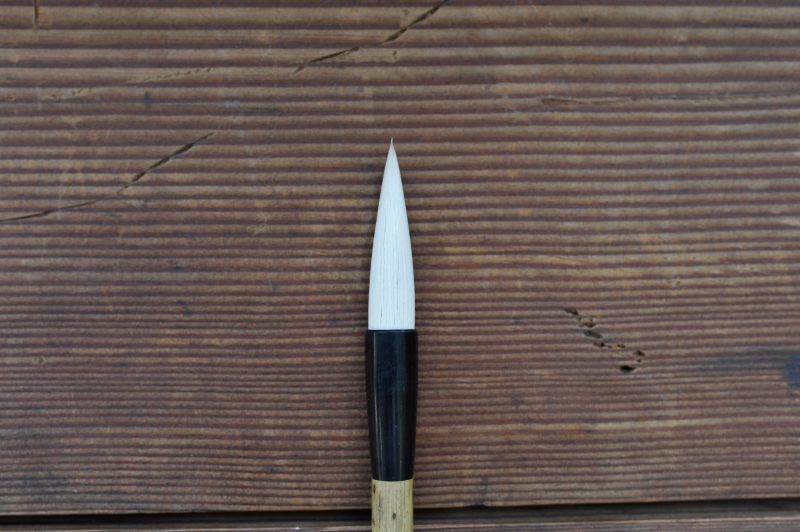
How to loosen
① Prepare lukewarm water and dip the brush tip.
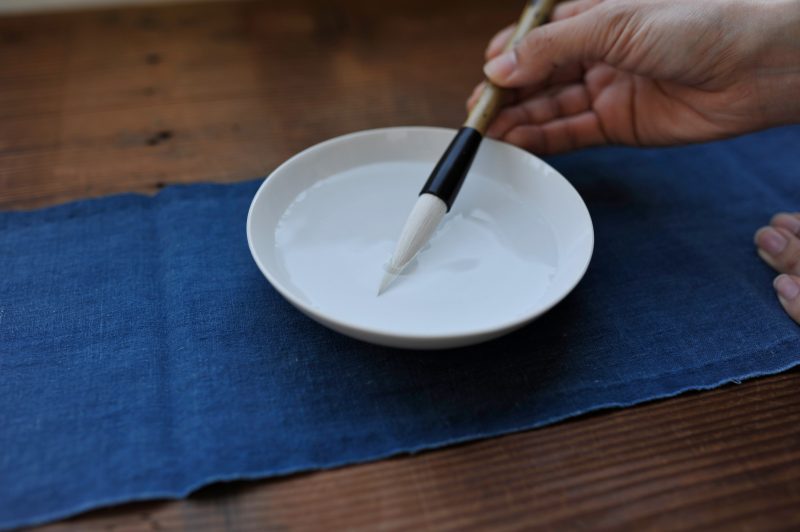
② Gently soften the hairs from tip to base with your fingers.
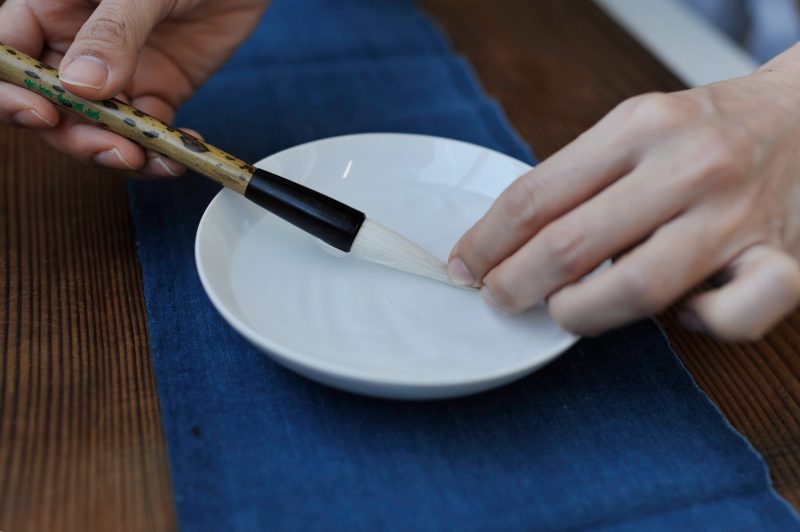
③ The water will become cloudy as glue dissolves. Remove glue even from inside the ferrule (*fude-kan*). Wipe off moisture with paper or cloth. Remove any loose hairs.
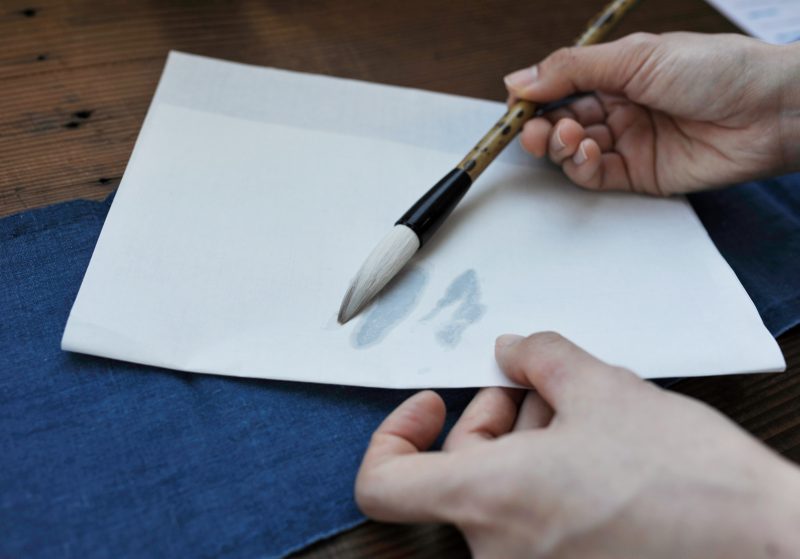
Loosening only the brush tip (穂先だけをおろす)
For small-character works such as sutra copying (*shakyo*), kana writing, or signing names, only the tip of the brush is used.
In this case, loosen only the tip instead of the entire brush.
The extent of loosening changes the thickness and style of strokes.
Even for stiff large brushes, sometimes only the tip is loosened to take advantage of its firmness.
Adjust the length according to your purpose.
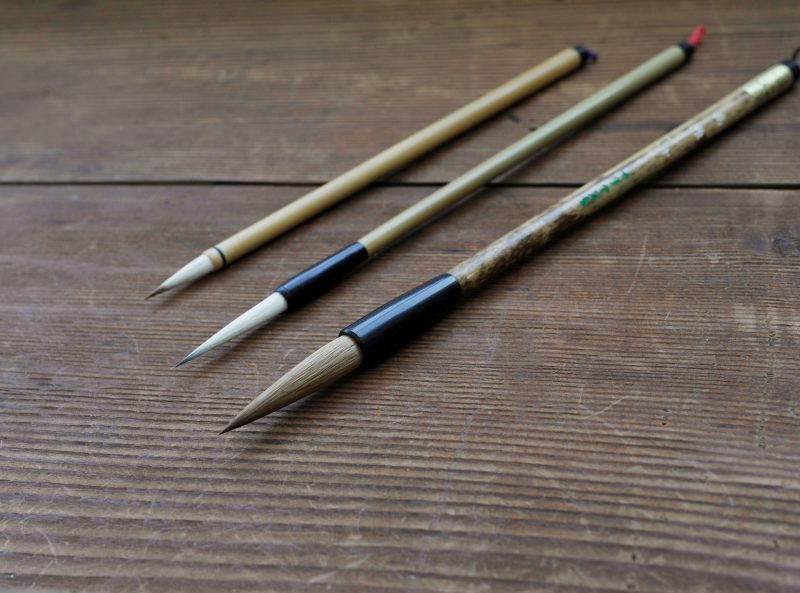
Part to loosen
About one-third of the brush tip
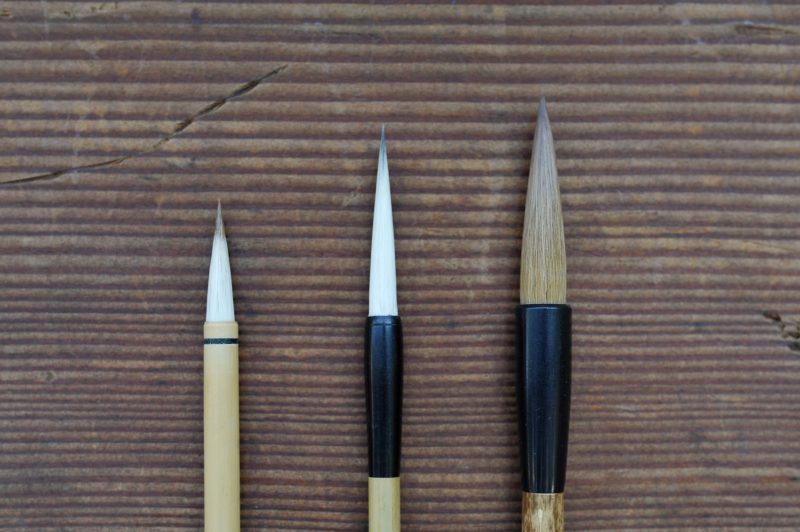
How to loosen
The method differs slightly for fine brushes (*hoso-fude*), kana brushes, and large brushes.
① Dip about one-third of the tip in lukewarm water. Decide the length depending on what kind of characters you plan to write.
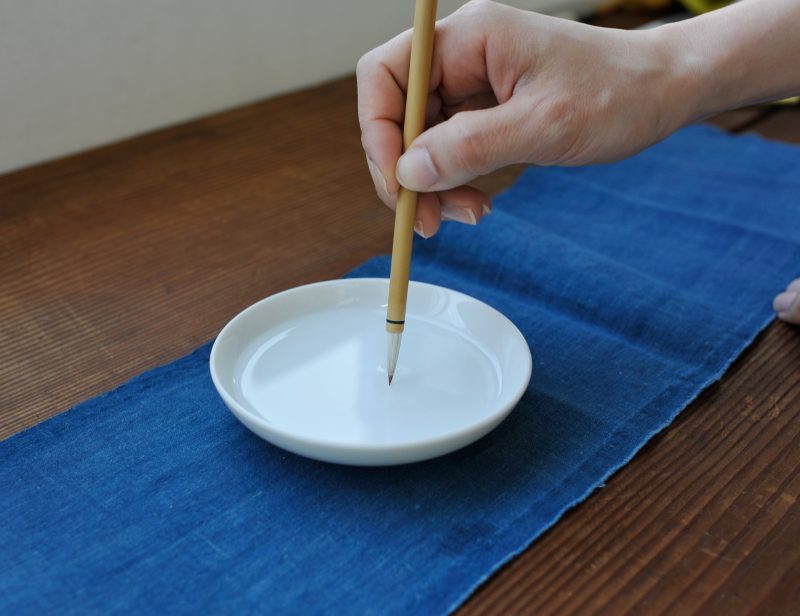
② Leave the rest of the brush hardened, and gently loosen from the tip with your fingers. For curled-tip brushes (*makige* type), avoid loosening too much, or the decorative outer hairs may spread.
③ Remove glue completely, then wipe moisture off by rolling the brush on paper or cloth. Remove loose hairs.
⚠ Do not try to loosen a hardened brush without soaking it first—this may break the hairs.
For Sabaki-fude (捌き筆)
This type of brush is not hardened with glue and is also called *sanmou-fude* (scattered-hair brush). It can be used immediately, but if you prefer, lightly rinse with water before use.
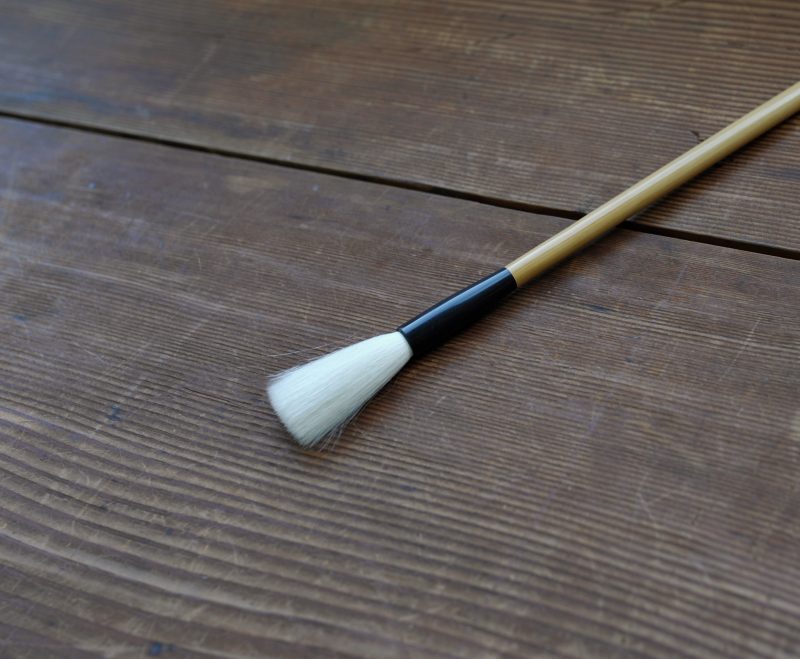
As a finishing step, rinse under running water, remove loose hairs with a brush comb, and let it dry completely before use. When storing, cut the cap tip to improve air circulation and prevent mold.
The way you prepare your brush (*oroshi-kata*) forms the foundation of all calligraphy practice. By starting carefully and treating each brush with respect, you can use it for a long time.