

How to Wash and Care for Brushes
Proper care of calligraphy tools is very important.
Even high-quality brushes can become damaged quickly if not cared for daily.
Here, we will introduce proper maintenance methods, so both beginners and experienced users can review the essentials.
How to Wash Brushes
Calligraphy brushes come in various types, sizes, and thicknesses, each suited to specific uses.
Here, we will introduce care methods for the basic thick and thin brushes.
For instructions on how to initially prepare a new brush, please refer to the separate guide.
How to Wash Thick Brushes
① Gently massage the base of the bristles with lukewarm water to clean thoroughly.
You can use running water or water in a container, ideally around 30–40°C.
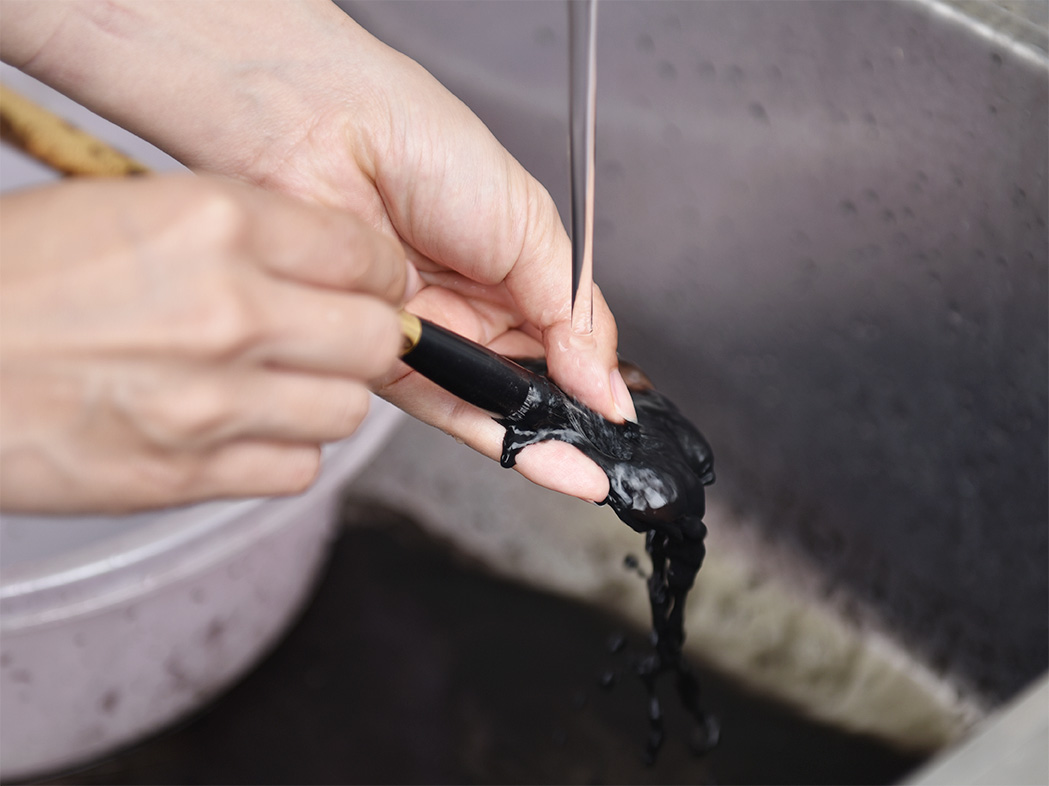
The bristles extend deep into the brush, beyond what is visible.
Removing ink from these hidden parts prevents damage, rotting, shedding, or splitting of the brush.
Although you cannot directly wash the innermost bristle area, focusing on massaging the base repeatedly is very important. You may feel small stiff spots, which is normal, and thorough washing is essential even if the brush appears clean.
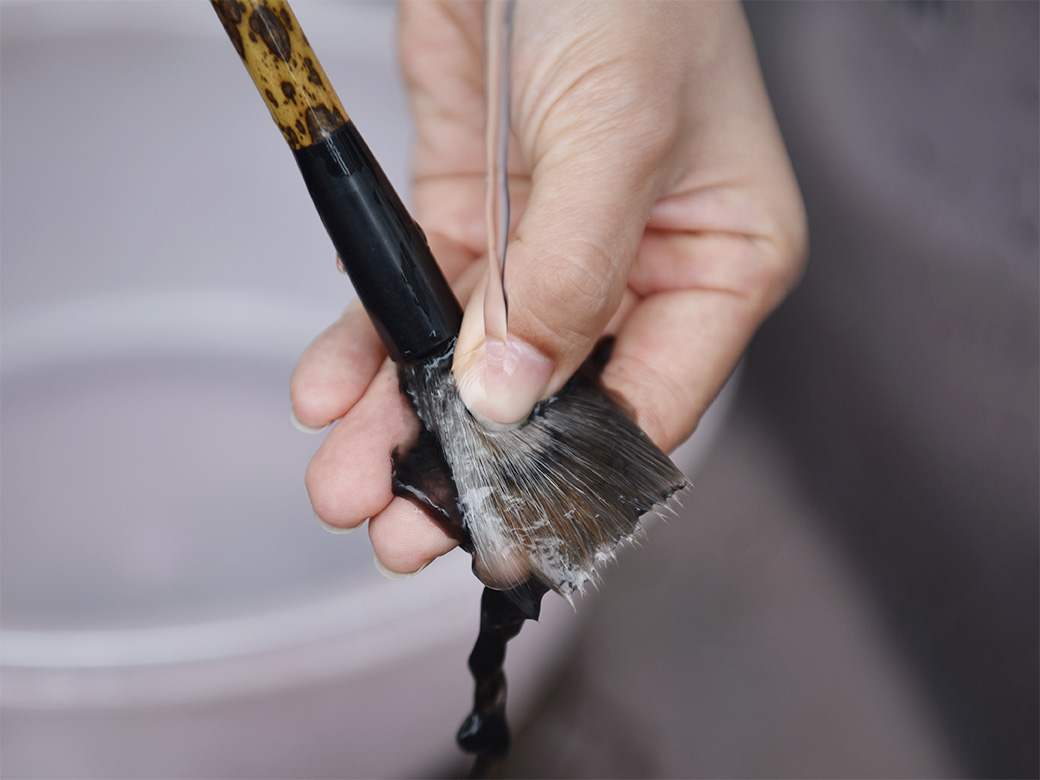
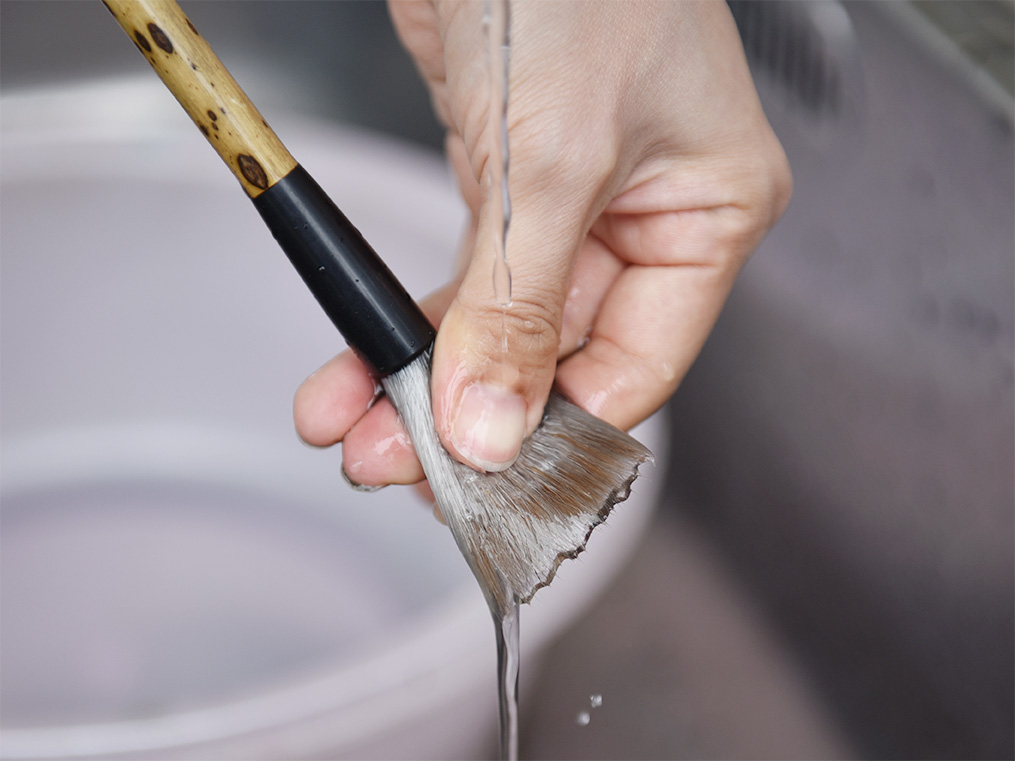
Even after repeated washing, ink may still come out, so continue to wash diligently to remove as much as possible.
② After washing, gently squeeze out excess water from the bristles.
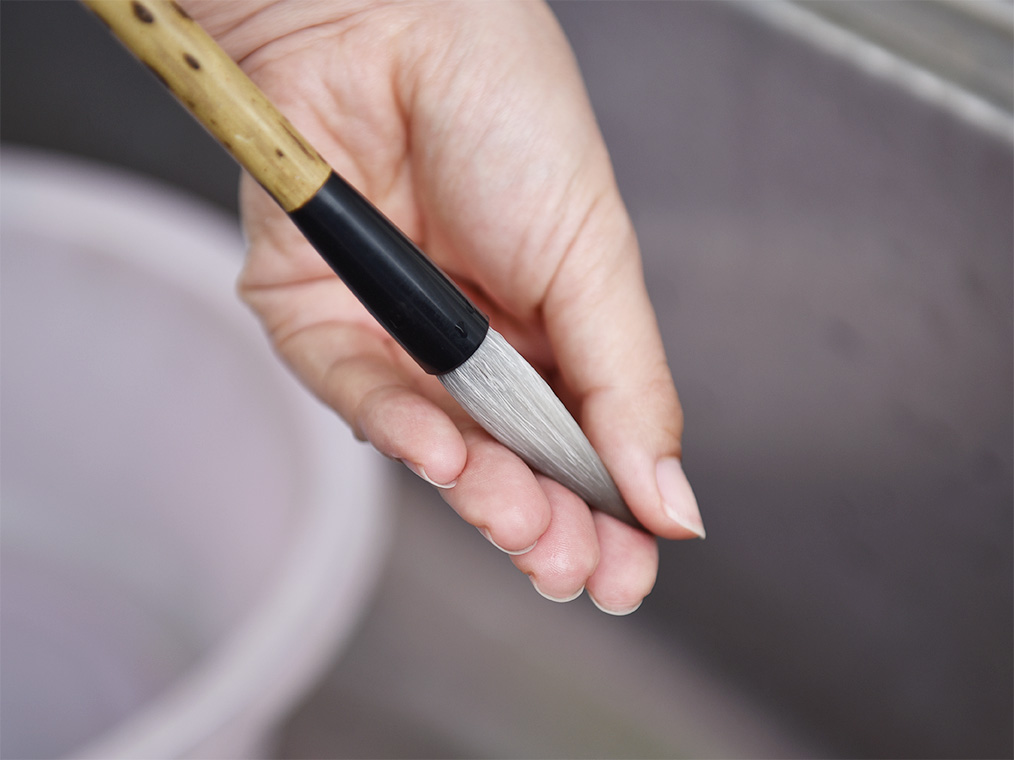
③ Carefully shape the brush tip with your fingers. Using a brush comb to straighten damaged bristles will ensure a neat tip after drying.
④ Hang the brush to air dry naturally.
Using the brush before it is fully dry can cause the base of the bristles to remain damp, leading to rotting. Rotting bristles may shed, break, or even cause the tip to split, so be careful.
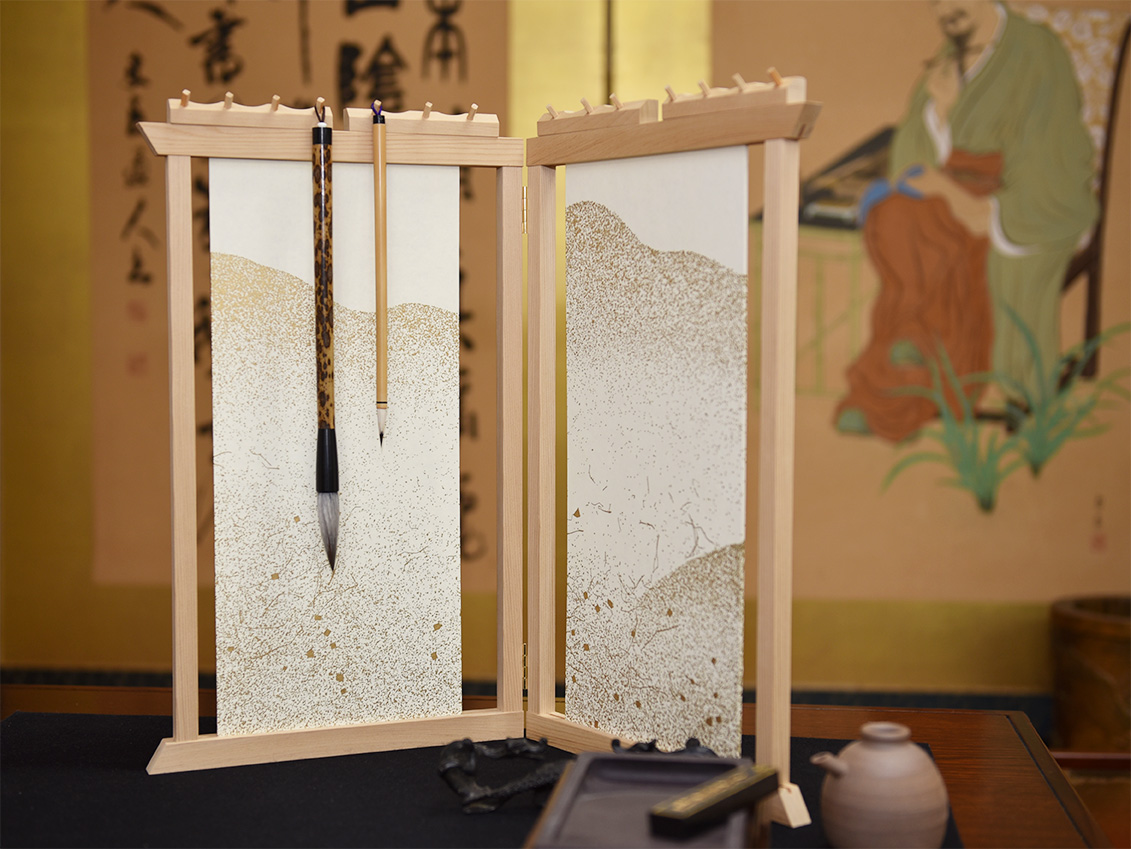
How to Care for Thin Brushes
Thin brushes are sold in a "stiffened" state with glue.
Since only about one-third of the bristles are used after preparing the brush, washing is generally unnecessary. Here’s a method for cleaning without washing:
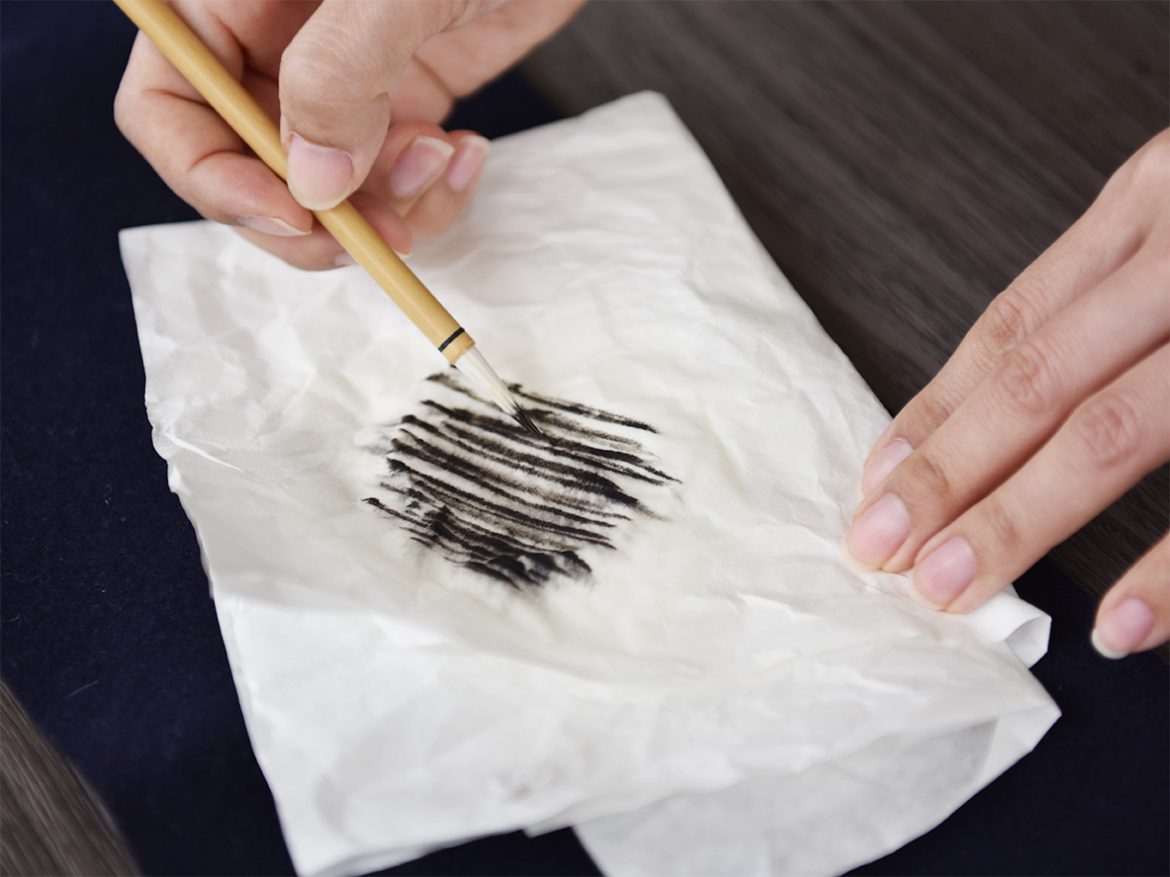
① Prepare absorbent paper such as scrap paper or tissue to remove moisture.
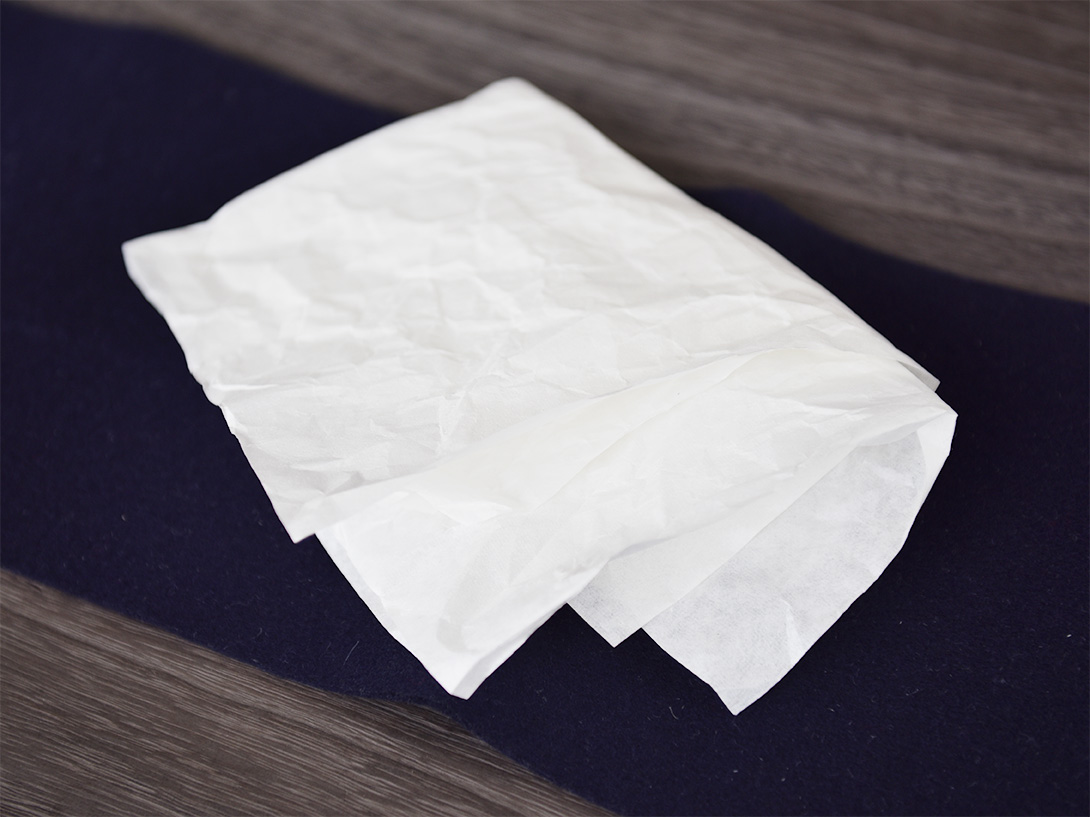
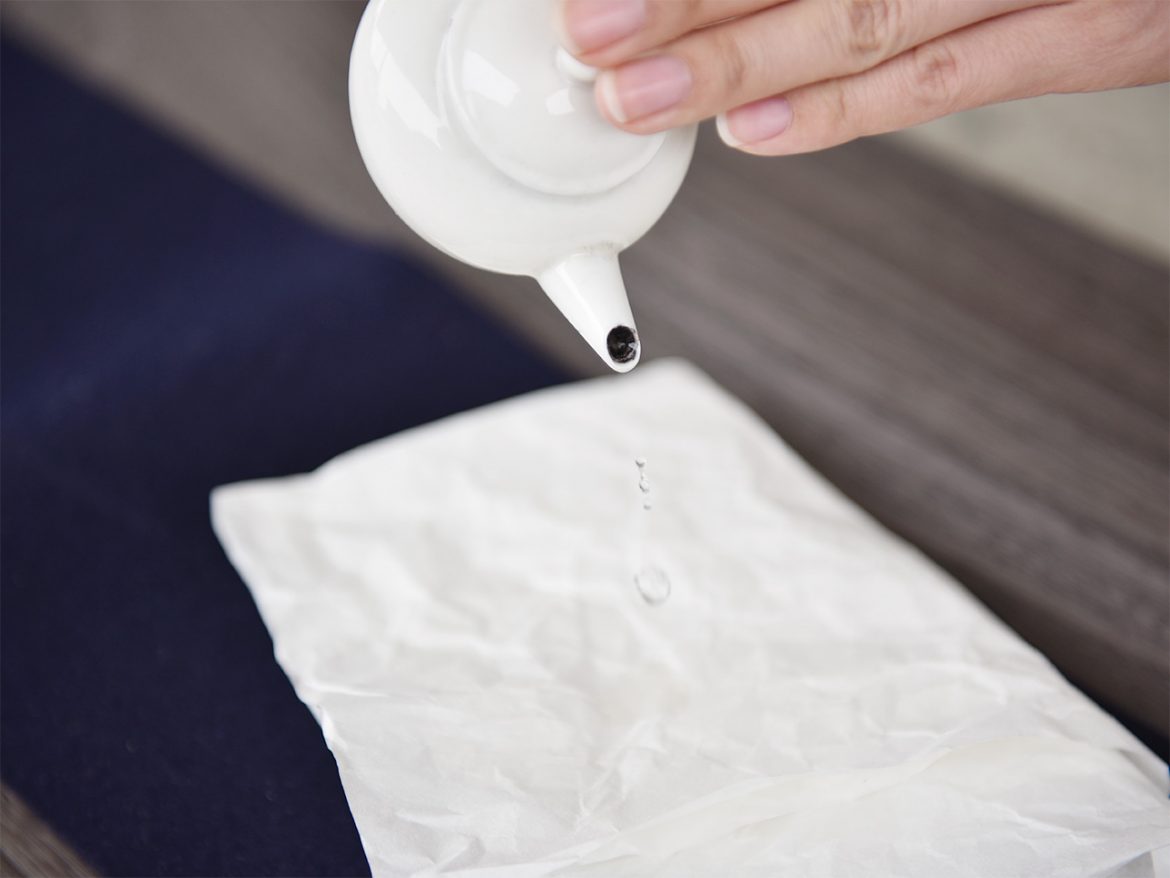
② Add a few drops of water to the prepared paper.
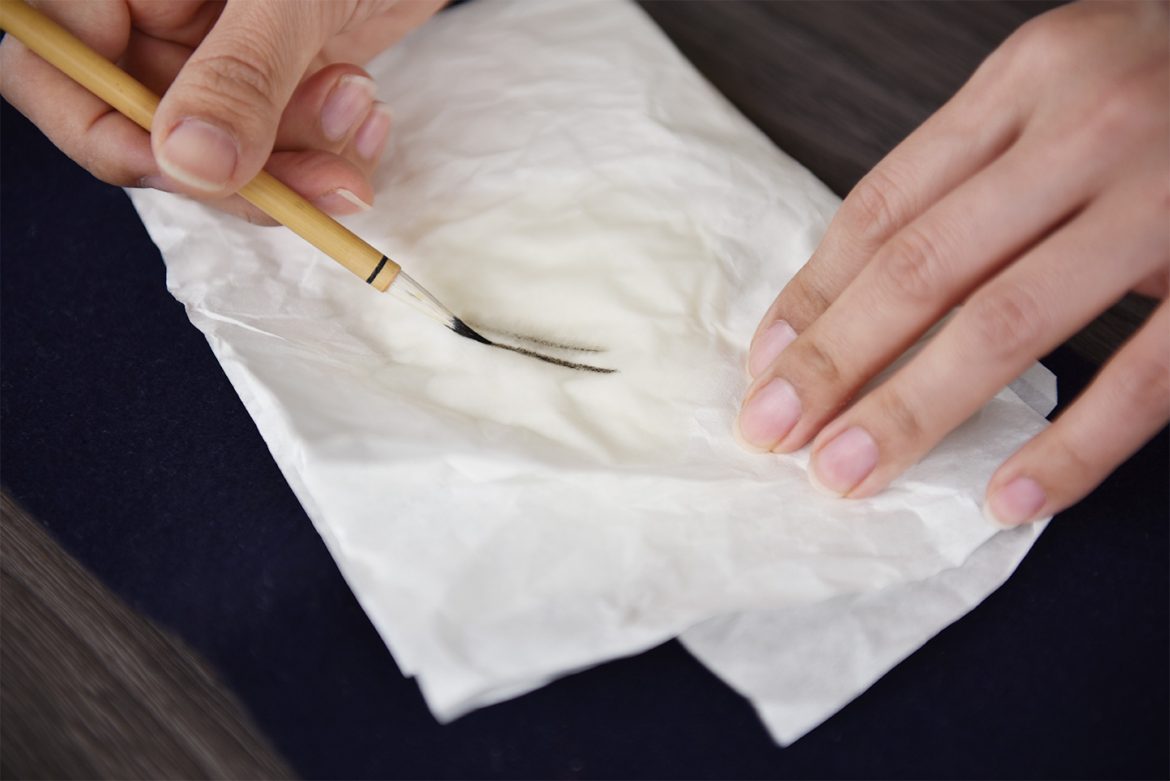
③ Lay the tip of the brush on the damp paper and slowly rotate to wipe off the ink gently. Be careful around the boundary between the prepared and softened areas to avoid loosening the glued part. Stop when the ink is sufficiently removed.
④ Shape the brush tip neatly with your fingers.
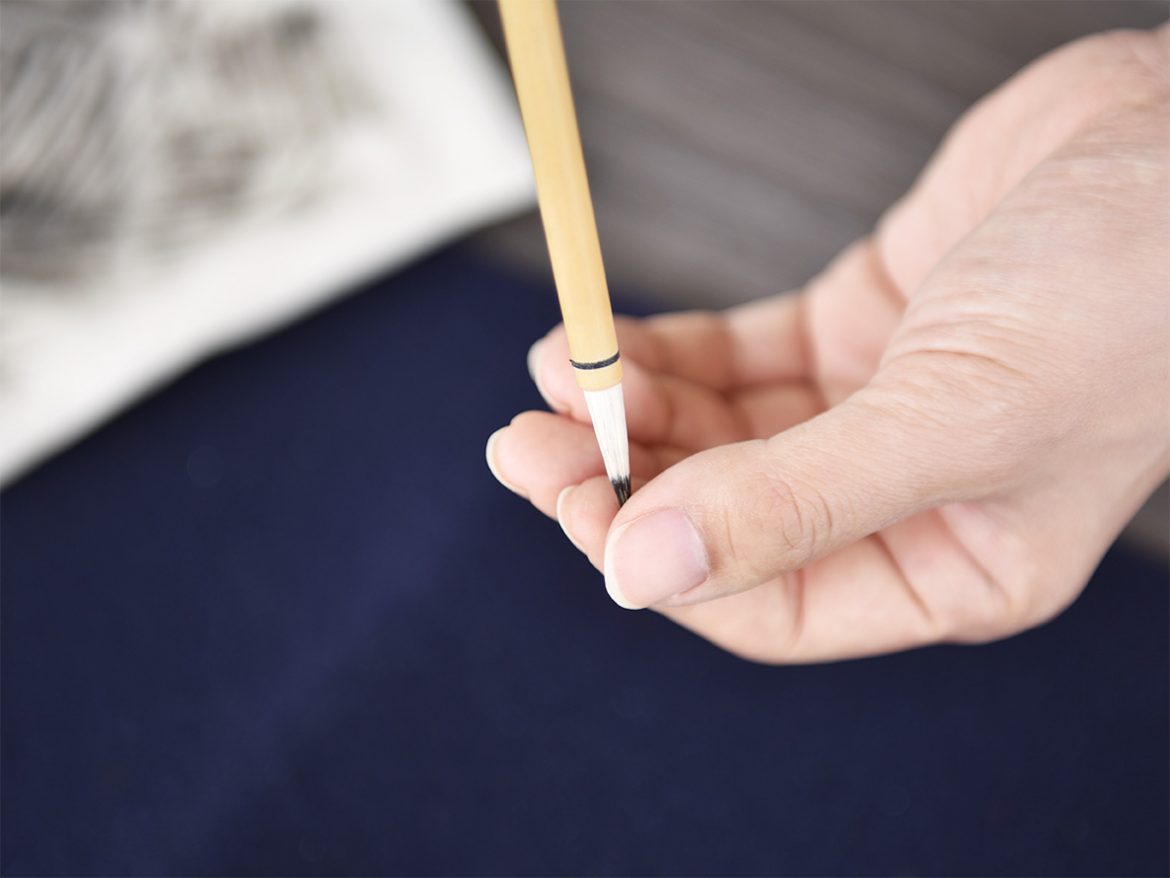
⑤ Hang the brush to air dry naturally.
If Thin Brushes Become Splayed During Care
Repeated cleaning may cause the base of the bristles to splay.
This makes writing small or fine characters difficult.
In such cases, wash the entire brush and use it for other purposes, or re-stiffen it with "brush glue" before reuse.
Precautions When Handling Brushes
- Do not cap brushes immediately after use or washing; bristles may rot.
- Do not use detergents when washing brushes.
- Wash brushes as gently as possible.
- Ensure brushes are completely dry before reuse.
It is best to rotate brushes while using them.
To extend the life of your favorite brushes, prepare 2–3 brushes and use them alternately.
Proper maintenance allows you to continue using your favorite brushes for a long time.