

Raw Materials and Types of Ink
Ingredients of Ink
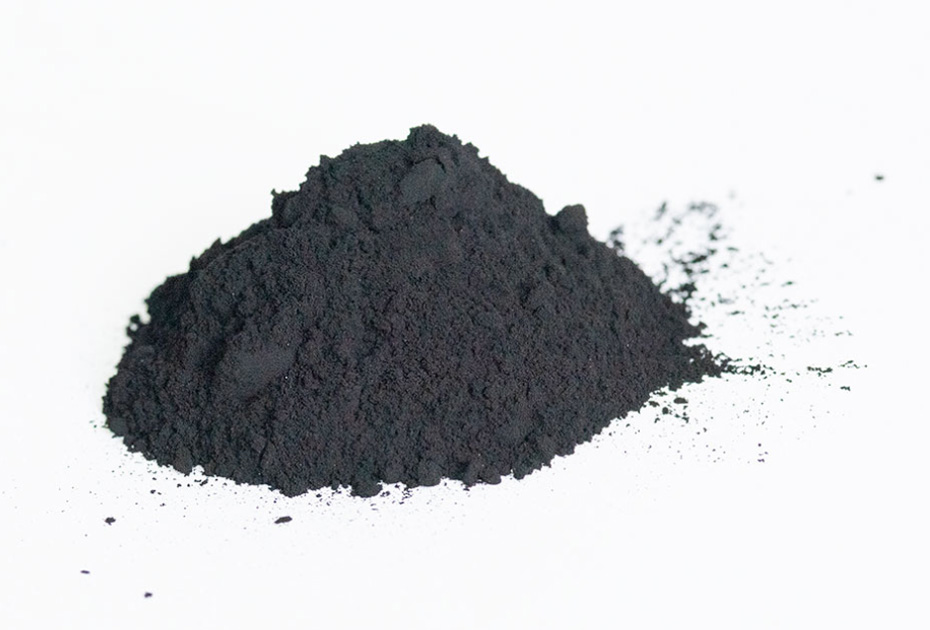
Ink is made from three main ingredients: “soot,” “animal glue (nikawa),” and “fragrance.”
Solid ink is created by kneading soot with dissolved glue, adding fragrance, and then molding and drying it in wooden molds.
About Soot
There are three types of soot: oil soot, pine soot, and refined soot. Inks made from these are called “oil soot ink,” “pine soot ink,” and “refined soot ink,” respectively.
・Oil soot — made by burning vegetable oils such as rapeseed oil.
・Pine soot — made by burning pine branches or bark.
・Refined soot — made by burning mineral oils or carbon black.
About Glue (Nikawa)
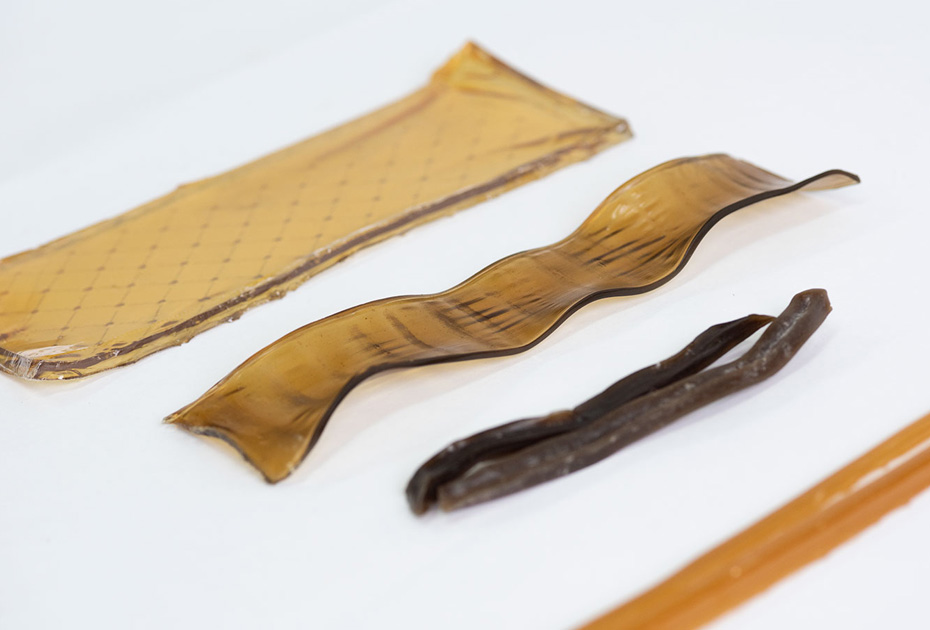
Nikawa is a natural animal glue made by boiling down the connective tissue (nibe) and bones of cows, horses, or deer to extract collagen and other proteins, which are then dried.
When making ink, nikawa is melted in a hot water bath before being mixed in.
In the manufacturing process, nikawa binds the soot particles into solid form, and when writing, it stabilizes the soot on paper.
About Fragrance
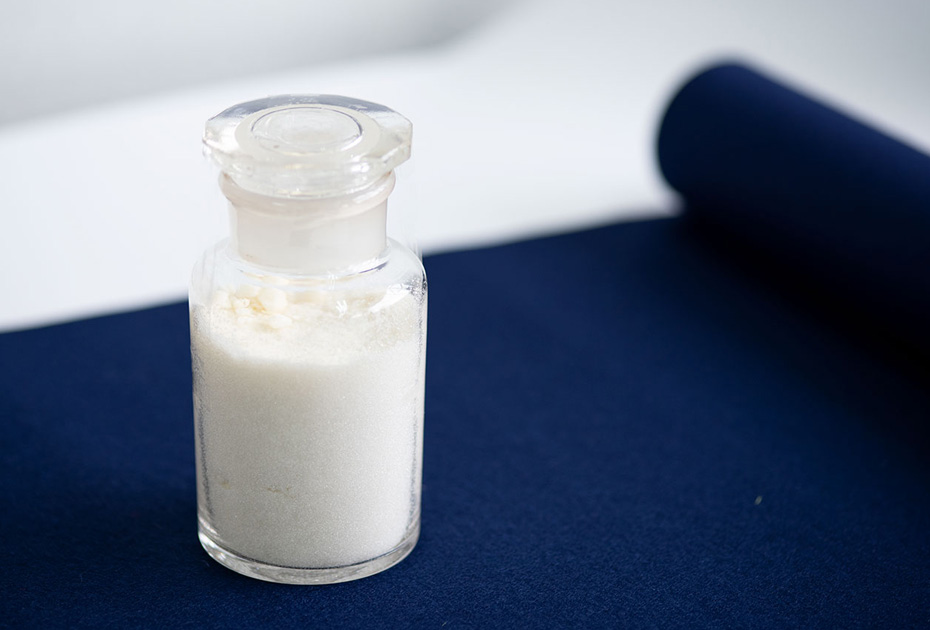
Fragrance is added to mask the distinctive smell of animal glue and also has a calming effect for the person grinding the ink.
Typical fragrances include borneol (ryūnō) and musk (jakō).
Types of Ink
Depending on the type of soot used, ink is categorized as “oil soot ink,” “pine soot ink,” or “refined soot ink.”
■ What is Oil Soot Ink?
Oil soot ink is made by burning vegetable oils such as rapeseed oil, sesame oil, tung oil, or camellia oil in an earthen vessel. A wick made of rush grass is lit, and a cover is placed over the vessel to collect soot on its inner surface.
The soot from pine soot ink has fine and uniform particles, which are kneaded with melted glue and fragrance, then molded and dried.
Although ink originally came from China, it is said that oil soot ink was first developed in Japan, and high-quality oil soot ink continues to be produced today.
At “Kobaien,” a renowned ink manufacturer in Nara, they are the only workshop in Japan that still makes oil soot ink starting from the soot collection process itself.
Feature article “Kobaien: Traditional Ink Making by Hand” >>
― Characteristics of Oil Soot Ink ―
Unlike pine soot ink, the ground surface of oil soot ink has a glossy sheen. When used as dense ink, it appears jet black, while when diluted, it produces warm reddish-brown tones.
Because oil soot ink contains almost no impurities, its particles are fine and uniform, making it ideal for medium to dense ink. Its smooth grinding texture and glossy surface are hallmarks of high-quality oil soot ink—the better the ink, the stronger the gloss.
Its color characteristics are summarized as follows:
| High-Quality Oil Soot Ink | Lower-Quality Oil Soot Ink | |
|---|---|---|
| Dense Ink | Deep, lustrous jet black with a rich depth of tone. | Lacks depth, appearing reddish-brown or pale grayish in color. |
| Light Ink | Pale brown ink with purplish or bluish tones. Creates fine, delicate shading with dimensional depth. (The hue may vary depending on the type of vegetable oil used.) |
Coarse texture with little depth or gradation. |
■ What is Pine Soot Ink?
There are two types of pine soot ink: “Ikimatsu Shōen” and “Ochimatsu Shōen.”
“Ikimatsu Shōen” is made from soot produced by burning resin that seeps from live pine trunks, while “Ochimatsu Shōen” is made from soot produced by burning resin-rich dead pine wood.
To collect the soot, the resinous part of the pine is cut into small pieces and dried, then burned indoors so that soot accumulates on the walls and ceiling, which is then collected.
This soot is mixed with dissolved glue, kneaded, scented, molded, and dried to form ink sticks.
This method, developed in ancient China, was introduced to Japan as one of the oldest ink-making techniques.
Today, due to the prevalence of oil soot ink and the decline of high-quality pine trees, pine soot ink is considered a rare and valuable material.
― Characteristics of Pine Soot Ink ―
Unlike oil soot ink, the surface of ground pine soot ink has no gloss and is said to change from a blackish tone to a bluish one as it ages.
Its uneven soot particles express light ink tones beautifully.
When used thick, it creates a calm, matte black color, and when used diluted, it produces a transparent, elegant tone.
Pine soot ink is said to be particularly effective for reproducing ancient calligraphy or for backgrounds in ink wash paintings.
■ What is Refined Soot Ink?
Refined soot ink, also known as Western soot ink, is made from raw materials such as mineral oil and carbon black.
It is often used for practical and general-purpose inks. Compared to pine or oil soot ink, it becomes black more quickly, but it lacks the traditional saying, “Ink shines in seven colors.”
Although it may be considered inferior to pine or oil soot ink, refined soot ink is recommended over bottled liquid ink for preserving brushes and inkstones.
Popular Oil Soot Inks on Shoyu Online
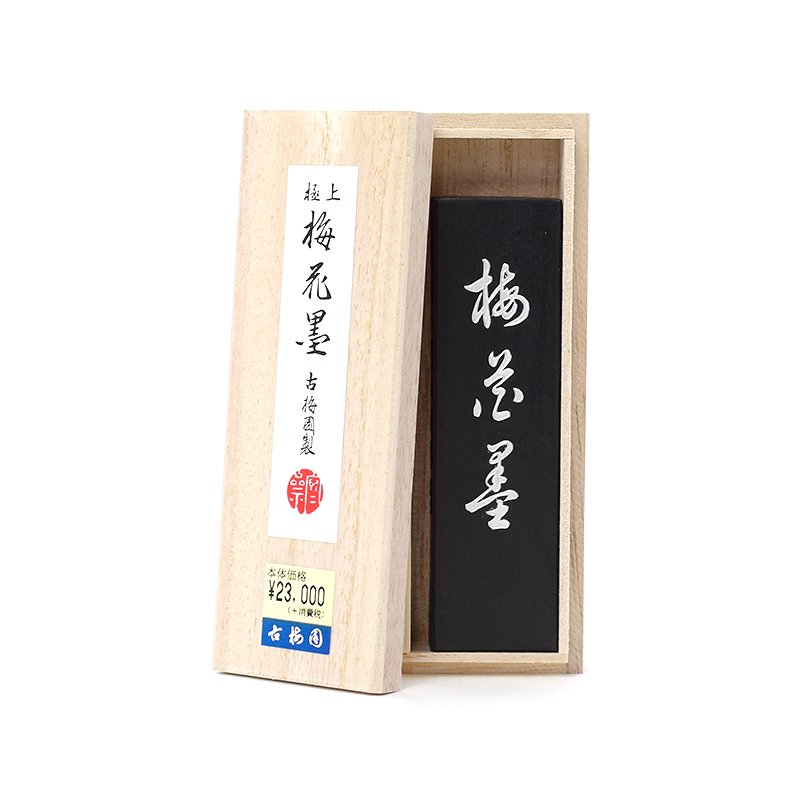
1. Baika Ink – Large 3.0-chō Type (Kobaien)
A top-grade oil soot ink made with rapeseed oil, featuring the finest soot particles. It has a heavy texture, producing a pure black in thick ink and a slightly purplish black in light ink. Excellent flow makes it ideal for both Kanji and Kana calligraphy.
View Product Page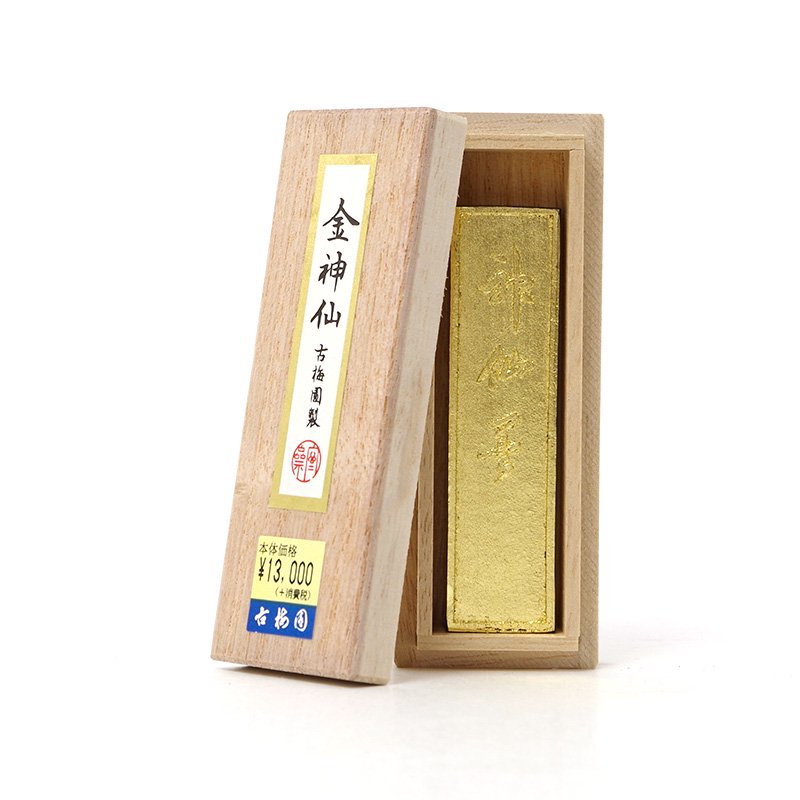
2. Kin Shinsen – 1.5-chō Type (Kobaien)
A high-grade oil soot ink made from rapeseed oil. It produces a glossy pure black when thick and a brownish black when diluted. Suitable for Kanji, Kana, and sutra calligraphy.
View Product Page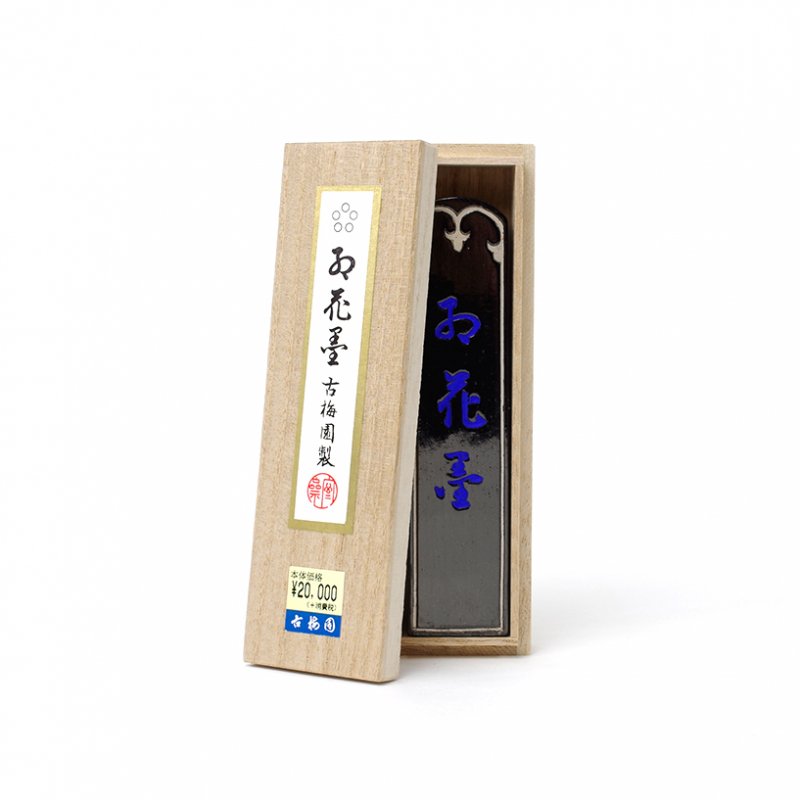
3. Gosei Benibana Ink – 5.0-chō Type (Kobaien)
An oil soot ink made from rapeseed oil, known for its excellent smoothness. Produces a vivid black similar to paint when thick and a grayish tone when diluted.
View Product PagePopular Blue and Pine Soot Inks on Shoyu Online
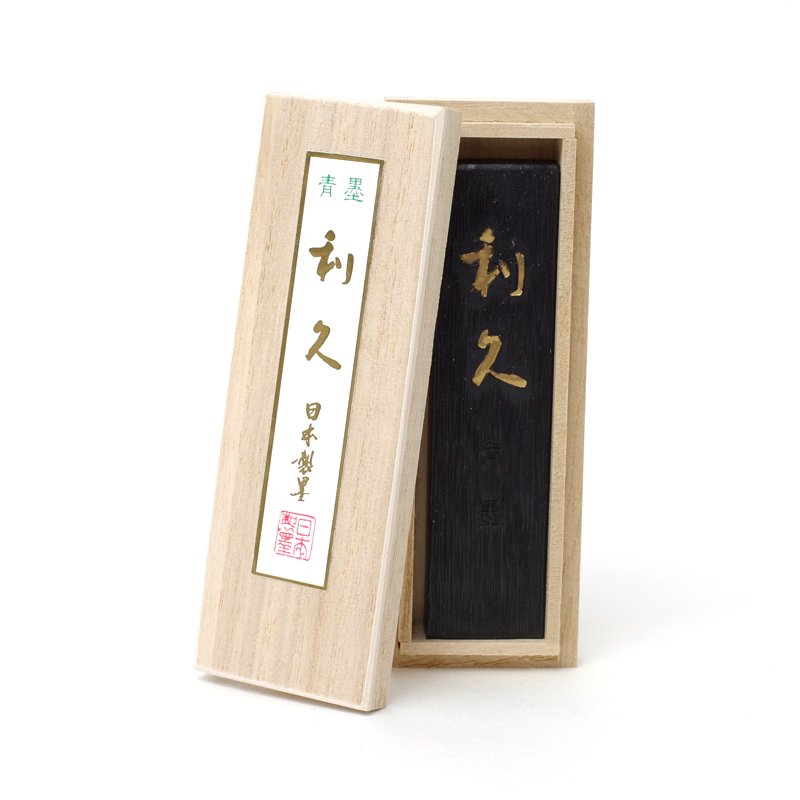
1. Rikyu – 1.5-chō Type (Nihon Seiboku)
A high-quality pine soot ink blended with plant-based indigo to enhance its bluish tone. Carefully formulated to suit the preferences of calligraphers and painters, it offers a deep blue-black color.
View Product Page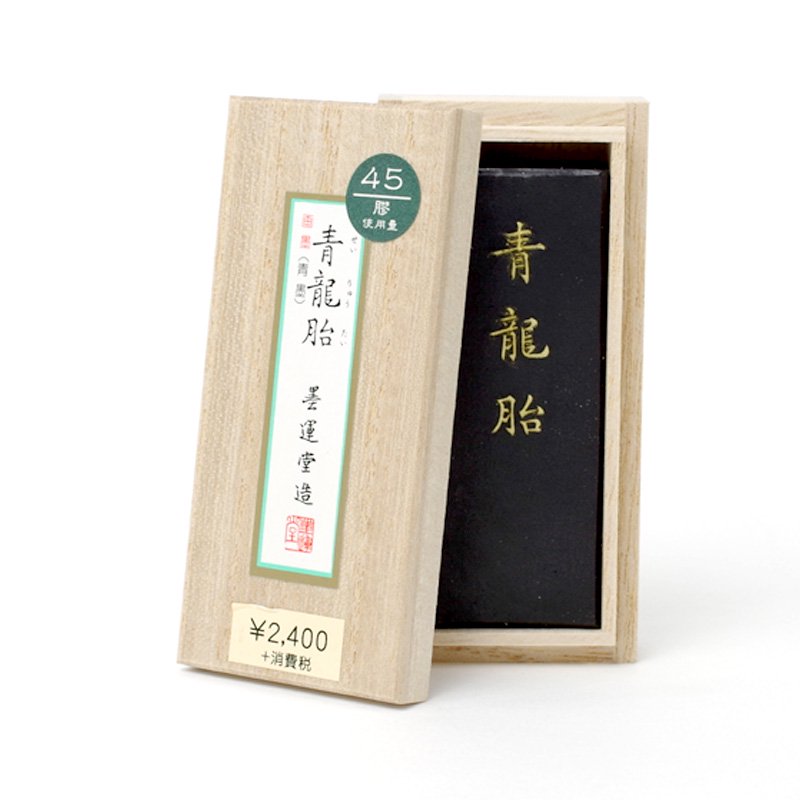
2. Seiryu-tai – 1.5-chō Type (Boku Undo)
Allows for layering without gloss and offers free tonal control with deep, dimensional gradation. Recommended for picture letters and ink wash painting practice.
View Product Page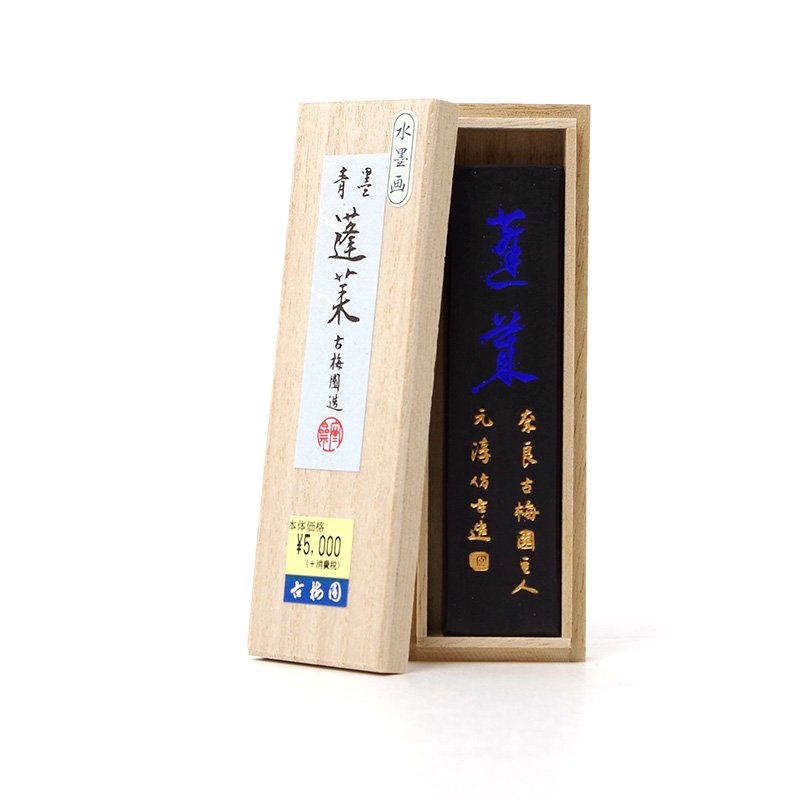
3. Horai – 2.0-chō Type (Kobaien)
A blue ink made entirely from soot using oil suitable for blue tones, developed over 400 years of ink-making tradition. Its light ink tone appears grayish with a hint of blue and a subdued weight, ideal for ink wash and haiga paintings.
View Product PageSummary
We introduced the raw materials and types of ink. Ink is made from three main ingredients: soot, glue, and fragrance. Depending on the type of soot, it is categorized as oil soot ink, pine soot ink, or refined soot ink. Each produces different tones, so please choose according to your artistic purpose.