

Shelf Life of Liquid Ink
Liquid Ink (Bottled Ink, Bokuju) Has a Shelf Life
Liquid ink is convenient because you can use it immediately without grinding, but please note it has a shelf life.
As a guideline, it’s best to use up liquid ink within one year.
The general shelf life is around two years.
If unopened—depending on storage conditions and type—it is said to be fine for about 3–5 years.
Once opened, deterioration accelerates, so please use it as soon as possible.
After opening, shaking the container once a week on a regular basis is said to help slow deterioration.
Differences by Ingredients
Liquid ink generally falls into two types: “animal-glue based” (using nikawa) and “resin-based” (using synthetic resins).
Each has its own characteristics. Some animal-glue based inks can achieve expressions close to those of solid ink sticks; however, their shelf life is considered shorter than that of resin-based inks.
— Features of Animal-Glue Based Ink —
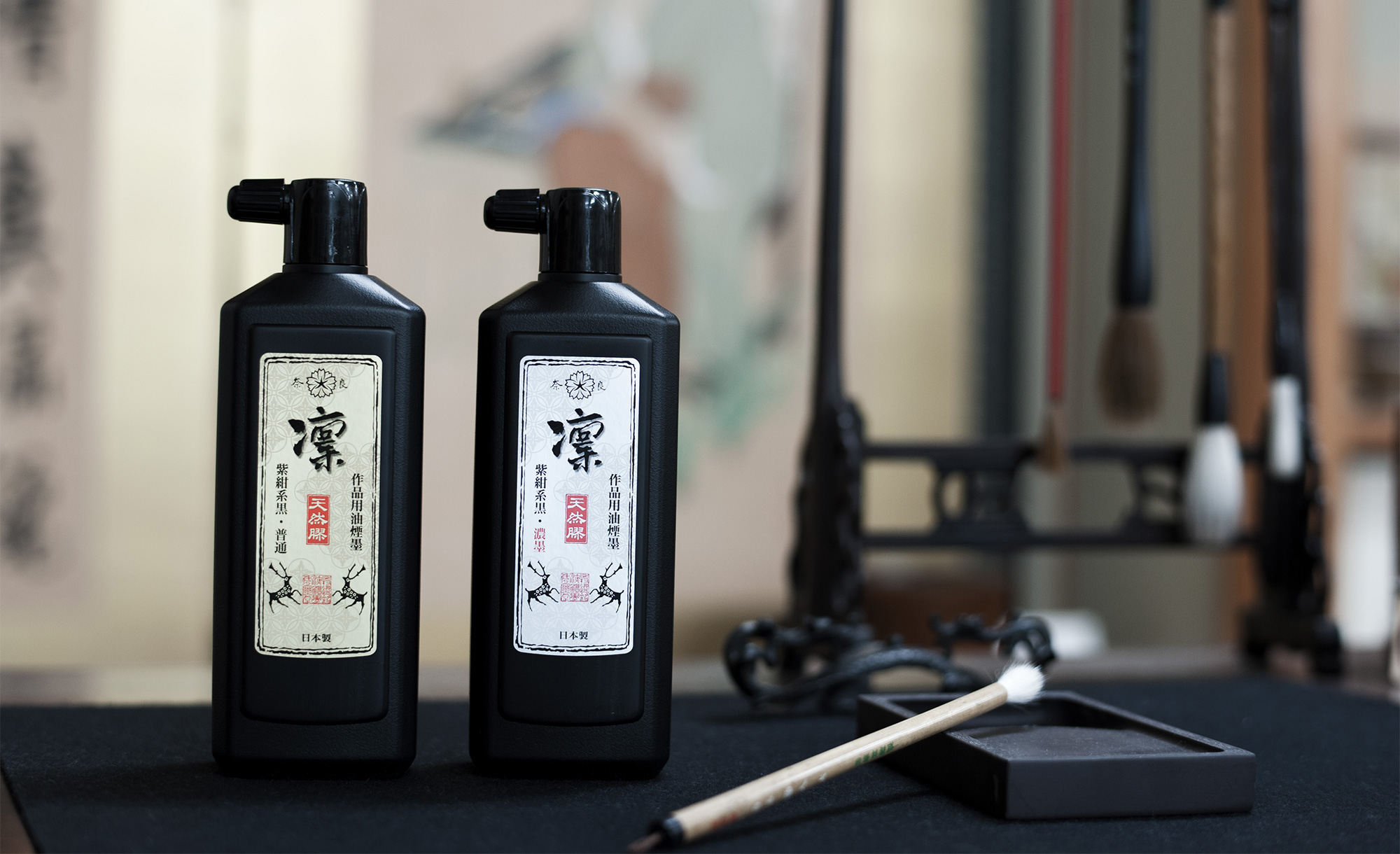
1. Achieves the natural black tone inherent to traditional ink.
2. Achieves the natural flow/“stretch” of ink.
3. Contains “salts” that inhibit nikawa from hardening to keep the liquid state; allow about one week of drying time before mounting (hyōgu).
4. Shorter shelf life.
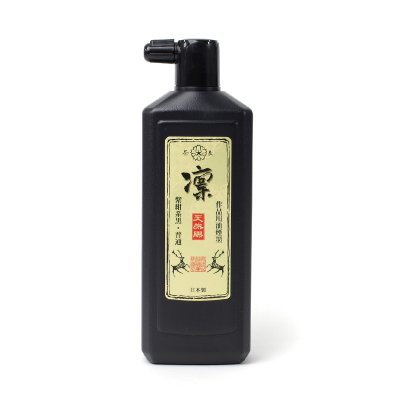
▼ Animal-Glue Based Ink “Rin”
— Features of Resin-Based Ink —
1. Lower likelihood of bleeding during mounting.
2. Easier to express bold, forceful strokes.
3. Harder to obtain the natural black tone and flow of traditional ink.
4. Longer shelf life compared to animal-glue based inks.
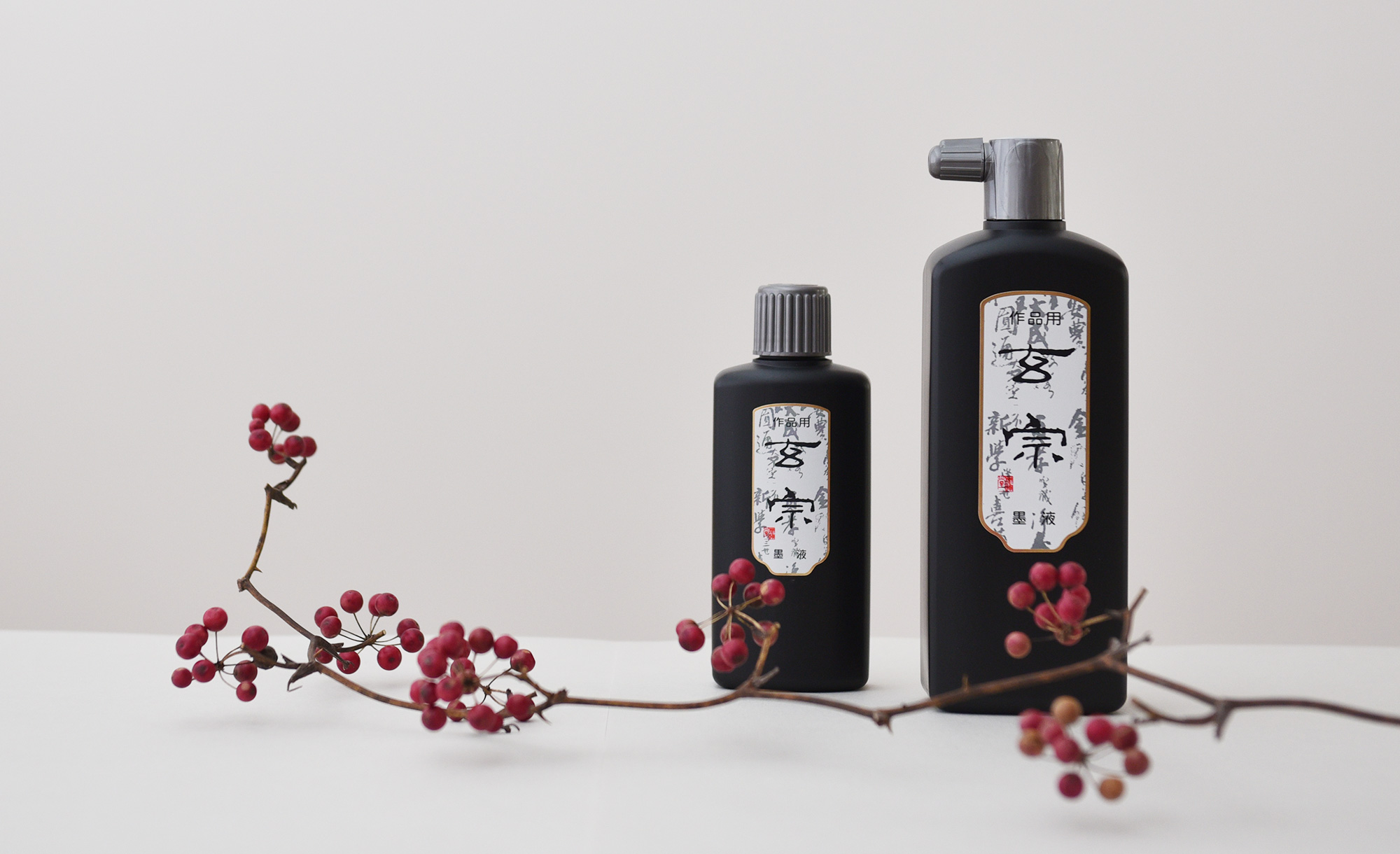
▼ Resin-Based Ink “Gensō”
Three Things You Shouldn’t Do with Liquid Ink
To maintain quality, please avoid the following three practices when using liquid ink.
・Returning ink from the inkstone to the original container ×
・Mixing resin-based ink with animal-glue based ink or with ground ink from solid sticks ×
・Storing under direct sunlight, high temperatures, or high humidity ×
Do Not Return Ink from the Inkstone to the Original Container ×
Liquid ink deteriorates when exposed to air.
Therefore, if you return ink once poured to the container, the ink inside the entire container will deteriorate more rapidly.
Additionally, if you return ink that has been diluted with water, deterioration will accelerate even further.
Do Not Mix Resin-Based Ink with Animal-Glue Based Ink or Ground Solid Ink ×
You may sometimes mix inks to achieve a preferred tone.
Animal-glue based inks can be mixed with each other, but do not mix resin-based with animal-glue based inks.
When mixing animal-glue based liquid ink with ground ink from animal-glue based solid sticks, sediment may occur in dense ink; test in small amounts first.
Do Not Store Under Direct Sunlight, High Temperatures, or High Humidity ×
Direct sunlight, high temperatures, and high humidity accelerate deterioration.
In recent years, many days in July and August exceed 35°C, and some people keep ink in the refrigerator during midsummer (freezer storage is strictly prohibited).
However, over-cooling can cause the ink to coagulate, so aim for appropriate temperatures.
When Liquid Ink Deteriorates…
If it putrefies, the ink becomes thick and gooey.
In inks containing preservatives, putrefaction may not progress that far, but you may notice reduced gloss or difficulty achieving proper bleeding when writing.
Even if you don’t notice changes in appearance or smell, bleeding or discoloration may occur during mounting.
(We recommend using it up within one year of purchase.)
If You Have Ink Left in the Inkstone
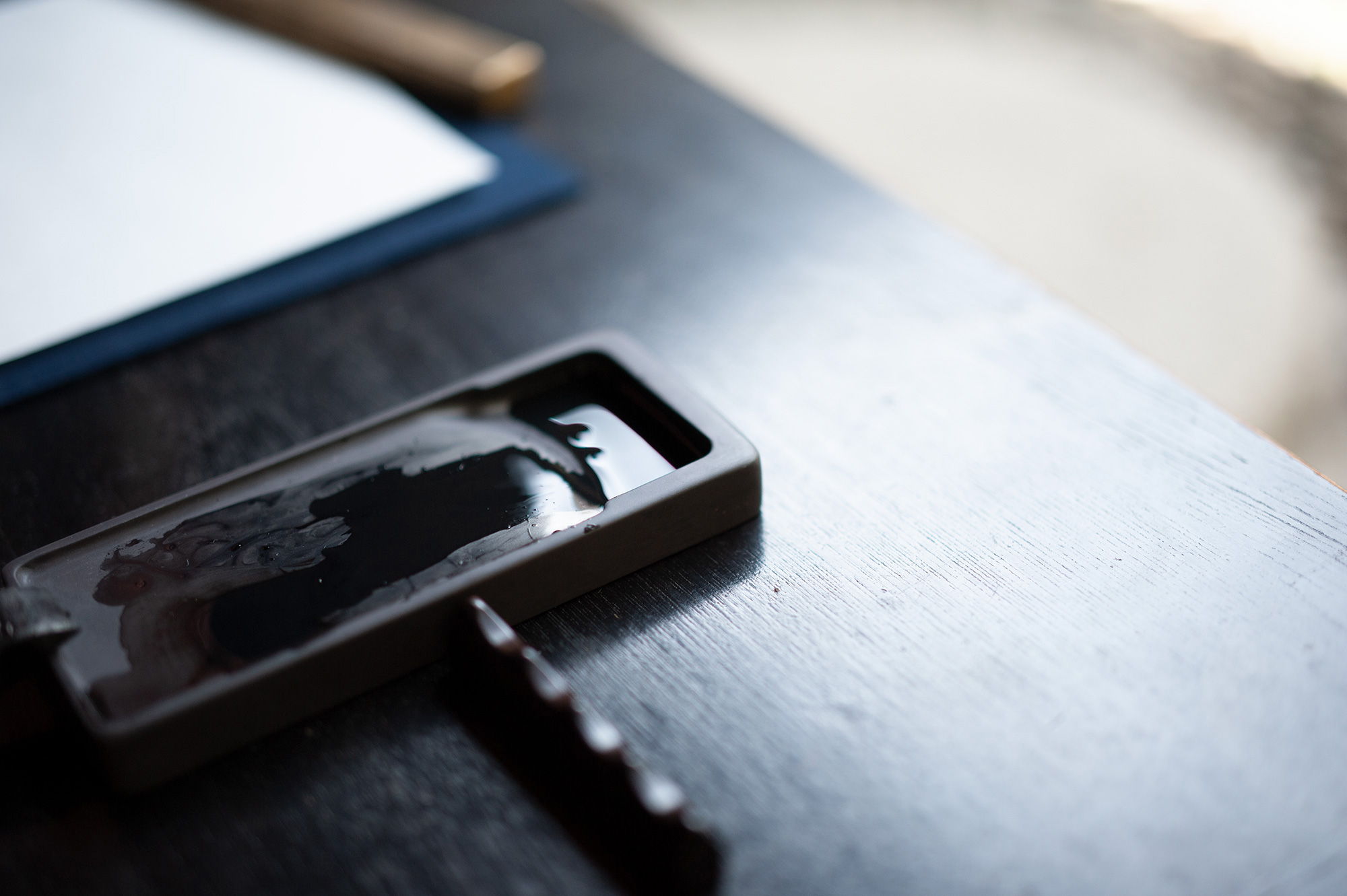
Try to use up any ink taken from the container on the same day.
That said, there may be times when a lot remains in the inkstone and it feels wasteful to discard it.
In such cases, you can transfer it to an inkstone or ink well with a lid and seal it tightly for storage.
Please use it as soon as possible.
Top-Selling Liquid Inks at Shoyu Online
— Animal-Glue Based Inks —
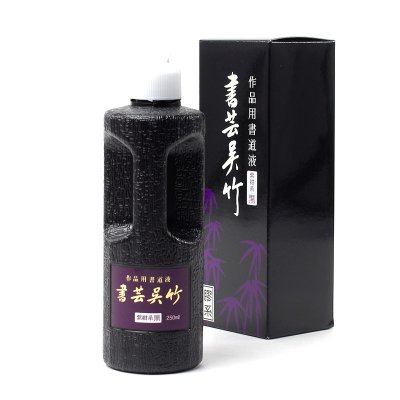
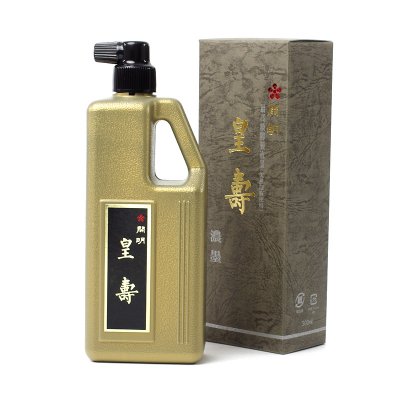
1. Shogei Kuretake — Shikon Series
Available in 250cc, 500cc, 1.0L, etc.
Pure black and blue-tone options are also available.
— Resin-Based Inks —
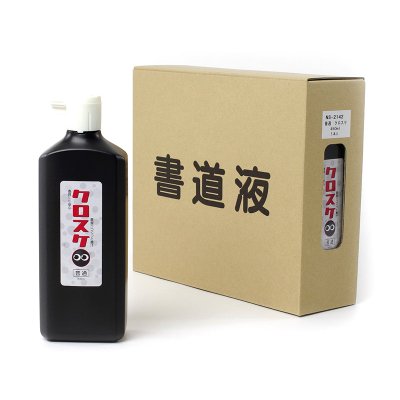
1. Kurosuke
Set of ten 180cc bottles, set of five 450cc bottles, 1800cc, etc.
Dense (nōboku) versions also available.
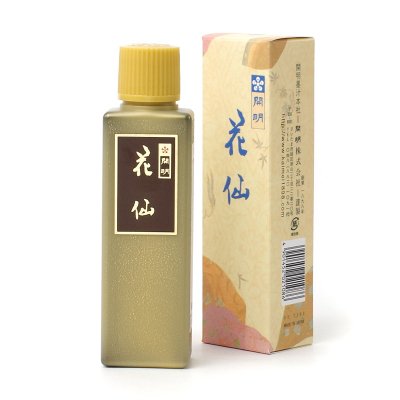
2. Kasen
100cc, 400cc, 1.0L.
Brown-tone (chaboku) and blue-tone (aoboku) options also available.

3. Gensō
200cc, 500cc, 2.0L.
Medium-dense, dense, and extra-dense versions available.
Summary
Liquid ink has a shelf life of around two years.
As a guideline, it’s best to use it within one year.
Once opened, deterioration accelerates, so please use it as quickly as possible.
Any ink you pour into the inkstone should ideally be used the same day. If some remains, do not return it to the original bottle; store it in a separate sealable container instead.