

What Is Xuan Paper?
“Xuan Paper”: A Representative of Chinese Paper
In China, large papers made specifically for painting and calligraphy are collectively called "Xuan paper for painting and calligraphy." Among them, paper that is limited by origin, raw materials, and papermaking method is classified as "Xuan paper."
(In Japan, "Xuan paper" is sometimes referred to as "Hongasen.")
"Xuan paper" is strictly defined: only paper that meets specific requirements regarding origin, raw materials, and papermaking method can be called Xuan paper.
Let's check the requirements that a paper must meet to be called "Xuan paper."
Conditions to be called "Xuan Paper"
To be labeled as "Xuan paper," a paper must meet the following four conditions:
- Raw materials
Use only "qingtan tree bark" harvested in Jingxian County, Xuancheng City, Anhui Province, and "rice straw grown on sandy fields." No other materials may be mixed. - Water
Use spring water unique to Jingxian County, Xuancheng City, Anhui Province. - Production area
Paper must be made in Jingxian County, Xuancheng City, Anhui Province. - Manufacturing method
Use traditional craftsmanship and pure handmade papermaking techniques.
Only paper meeting all four conditions may be called "Xuan paper," making it a very exclusive and precious type of paper.
Top-grade Xuan Paper: "Hongxing Brand"
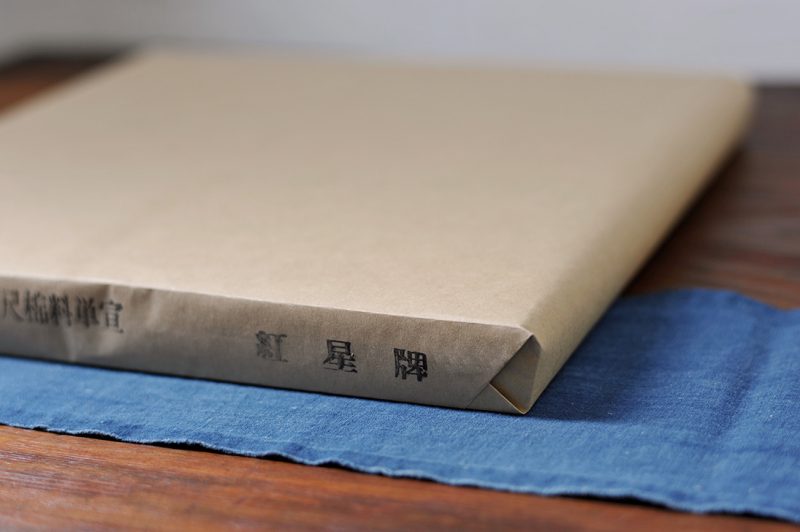
The "Hongxing Brand" is well-known as a representative Xuan paper from China.
If you practice calligraphy, you are probably familiar with this name.
Although not every calligrapher prefers this paper, its unique texture has earned many fans in Japan.
Let's take a closer look at Hongxing, the representative Xuan paper from China.
Only Carefully Selected Raw Materials
Hongxing uses carefully selected raw materials: bark from 2–3-year-old Qingtan trees, rice straw grown on sandy soil, and water from the production area.
Specified Raw Materials
The Qingtan bark and rice straw are the specified raw materials.
"Qingtan bark" comes from Qingtan trees (deciduous tall trees in the Elm family) grown in Jingxian County, Anhui Province. It is considered the highest quality material for Xuan paper, known for water resistance, corrosion resistance, fine texture, and strength.
The "rice straw" is the "sandy field rice straw" cultivated locally. (Chinese rice tends to be taller and larger than Japanese rice.)
These premium materials, combined with the local water and traditional craftsmanship, create paper recognized as "Xuan paper," which explains its high quality and excellent long-term preservation.
Paper Requiring Skilled Craftsmanship
Traditional Method
Traditional papermaking uses a bamboo screen (su-no-ko) sized according to the sheet. Multiple papermakers coordinate their movements to create a purely handmade paper.
Becoming a master who can make Xuan paper requires years of training, as it demands highly skilled techniques. Only by combining the best materials, water, and craftsmanship can Xuan paper be produced. (Semi-automatic methods, such as the "return-flow" technique, are not considered purely handmade.)
Types of Xuan Paper
Xuan paper is made without using chemicals to control ink spreading. However, Xuan paper that undergoes secondary sizing (dosa) is also recognized.
Depending on the degree of sizing, Xuan paper is categorized as follows:
- Raw Xuan (no secondary processing / high ink spread)
- Semi-processed Xuan (light secondary processing / moderate ink spread)
- Processed Xuan (heavier secondary processing / low ink spread)
Most Xuan paper imported into Japan is classified as "Raw Xuan."
Beautiful Ink Spread and Preservation
Carefully handmade Xuan paper has a superior writing feel and can express beautiful ink spreading.
It naturally resists insects and is suitable for long-term preservation. Xuan paper has been used in China for over a thousand years for important calligraphy and painting works, as well as for historical documents, showcasing its outstanding characteristics.
Different Names According to Composition and Papermaking
Xuan paper has common names based on raw material composition, papermaking methods, and thickness, as follows:
- Menliao Tansen
- Jingpi Tansen
- Jingpi Lamon
- Menliao Menrensan
- Menliao Jutansen
- Menliao Kyosen
- Menliao Niso Kyosen
- Menliao Sanso Kyosen
Differences in raw material ratios and papermaking create variations in texture, thickness, and ink spreading, which influence the choice of paper.
Thickness and Ink Compatibility
Xuan paper is classified by thickness, which affects ink absorption and suitability for different brush techniques.
Thicker paper allows more ink spreading and is preferred for bold brushwork, while thinner paper is suitable for fine, delicate strokes.
- Thin Xuan Paper: Ideal for detailed calligraphy and small characters. Ink spreads slightly, giving a soft, elegant look.
- Medium Xuan Paper: Versatile, suitable for both painting and calligraphy. Ink spreads moderately, balancing clarity and softness.
- Thick Xuan Paper: Best for large characters or expressive painting. Ink spreads more, producing rich gradients and textures.
Preservation and Storage
To maintain Xuan paper's quality over time, proper storage is essential.
Keep it away from high humidity and direct sunlight. Rolling and storing in traditional scroll format helps preserve its shape and texture.
When using sheets, store them flat in acid-free folders or boxes to prevent warping and discoloration.
Tips for Beginners Using Xuan Paper
For beginners, Xuan paper can be challenging due to its ink absorption and texture. Here are some tips:
- Start with medium-thickness Xuan paper to balance ink control and expression.
- Practice with smaller brush strokes before attempting large characters or complex paintings.
- Use minimal ink at first; the paper absorbs ink quickly, so gradual layering is more effective.
- Store unused sheets properly to prevent damage from moisture or insects.
Conclusion: The Value of Xuan Paper
Xuan paper, carefully handmade from selected raw materials, water, and traditional techniques, is more than just a writing surface.
It allows the brush and ink to fully express their character, while preserving artwork for centuries.
Whether you are a calligrapher, painter, or collector, Xuan paper provides a connection to centuries of Chinese artistic tradition.
References
- Xuan Paper Production in Jingxian, Anhui Province
- Chinese Calligraphy Materials and Techniques
- Hongxing Brand Official Documentation
Recommended Pure Xuan Paper / Xuan-Type Calligraphy Paper by Shoyu
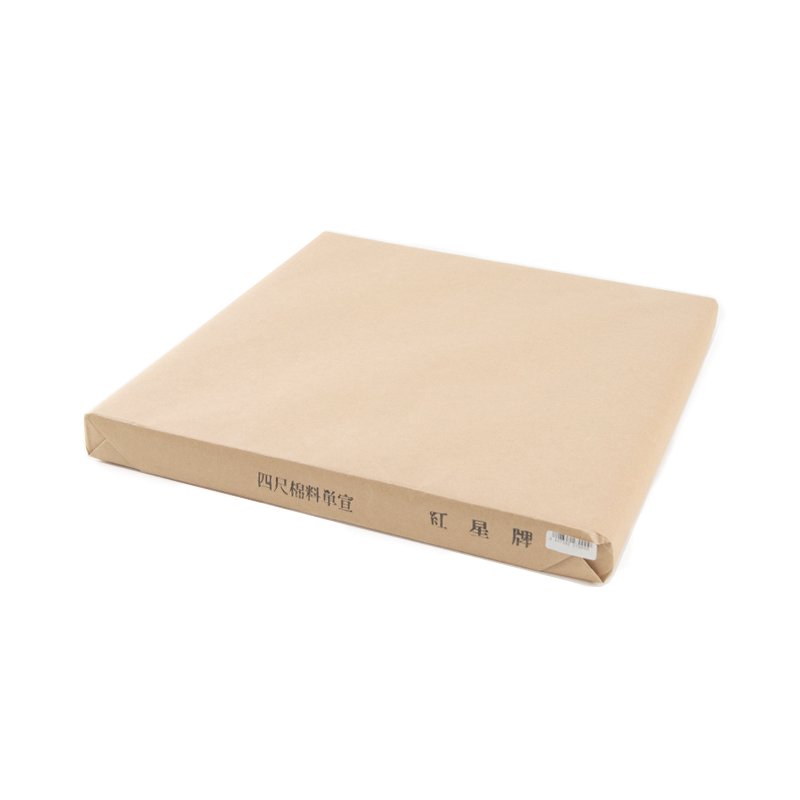
KOSEIHAI Kosei Brand
Pure Xuan Paper
Kosei Brand / Pure Xuan Paper
“The representative brand of Chinese Xuan paper”Kosei Brand Xuan Paper is a top-grade paper made entirely by hand by skilled artisans in Anhui Province, using carefully selected blue sandalwood bark and rice straw from the Satada area, and pure local water. The blue sandalwood bark is highly resistant to water and corrosion, offering both strength and fineness, while the rice straw adds flexibility and softness. It is produced using techniques that take years to master, resulting in a paper highly valued for its preservation quality and exceptional expressiveness in calligraphy and painting.
MORE INFO »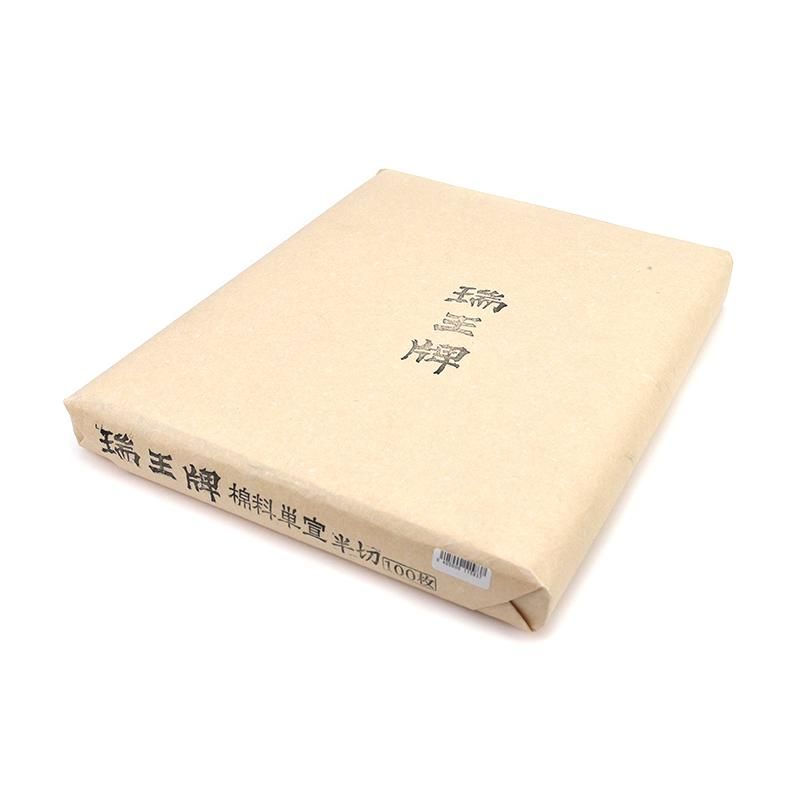
ZUIOOHAI Zuiou Brand
Xuan-Type Calligraphy Paper
Zuiou Brand / Xuan-Type Calligraphy Paper
“Recommended for those who enjoy rich ink bleeding.”This paper has a soft texture that allows gentle and gradual ink bleeding. The surface is treated with strong gofun (chalk powder), providing good brush grip and making it ideal for creative works. It contains ample moisture, allowing you to clearly see the transition from solid lines to ink spread and water gradation. This balance produces beautiful expressions of blur and ink shading, making it excellent for both classical and contemporary calligraphy.
MORE INFO »
SEIRYUUHAI Seiryu Brand
Xuan-Type Calligraphy Paper
Seiryu Brand / Xuan-Type Calligraphy Paper
“Features the crisp texture unique to Xuan paper.”Made from a unique blend of raw materials to achieve both high quality and affordability, this paper is designed for smooth and effortless writing. It is well-known for producing “beautiful ink bleeds” and “clean brush texture,” especially when used with light ink. The natural bleeding of the ink gives depth and character, making it suitable for both classical reproductions and creative works.
MORE INFO »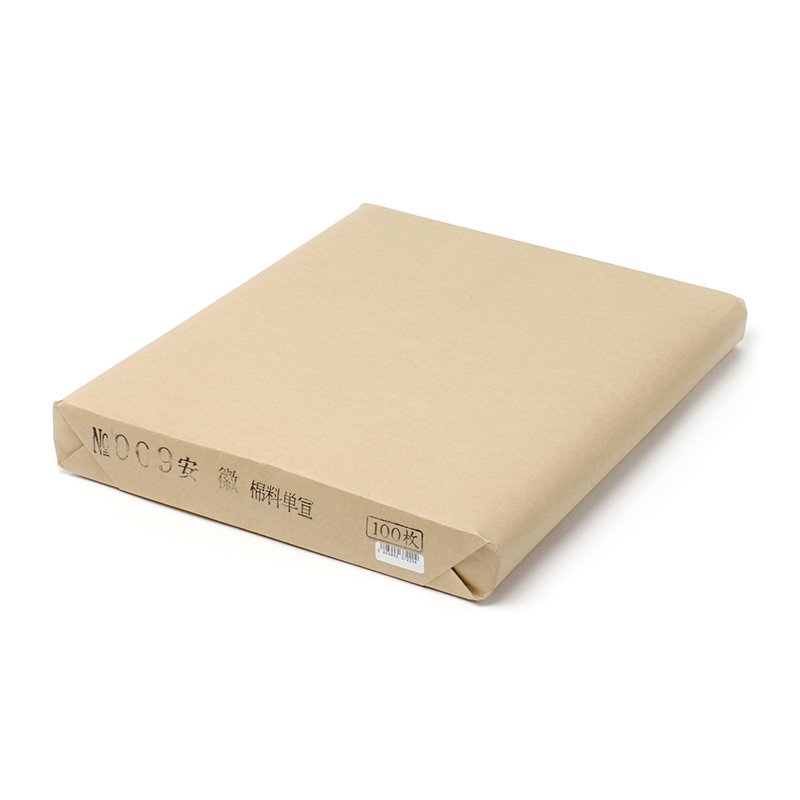
No009 No.009
Xuan-Type Calligraphy Paper
No.009 / Xuan-Type Calligraphy Paper
“Handmade calligraphy paper from Anhui Province, ideal for Chinese characters.”This paper is perfect for those who prefer a pronounced ink bleed. It has a crisp texture, producing beautiful ink tones when the ink is allowed to settle. Suitable for both dense and light ink, it delivers excellent bleeding and brush texture, providing an outstanding writing experience.
MORE INFO »