Shodo Daisuki Episode 2
Is your brush performing at its best? “Shimauchi” from Shodo Daisuki gives a thorough, step-by-step guide to washing your brush!
Shodo Daisuki Episode 2 – Video Overview
Shimauchi, a devoted calligraphy enthusiast, explains in detail how to properly wash and care for your brush.
Using his daughter’s poorly maintained brush as an example, he emphasizes the importance of taking good care of brushes.
The video demonstrates the full process: soaking in lukewarm water, removing ink from the base, grooming with a brush comb (fude-kushi), and proper drying.
He explains that with proper care, a brush will show its true characteristics and make calligraphy even more enjoyable.
He concludes by expressing the hope that this knowledge will help more people enjoy calligraphy.
YouTube – Shodo Daisuki Episode 2
Shimauchi 00:00
Hi there, it’s Shimauchi, a big fan of calligraphy.
Is everyone enjoying calligraphy today?
I wrote a lot again today — I always enjoy it!
Now then, today I’m with an essential friend of calligraphy. The brush I’m holding now is a wool-hair brush.
Shimauchi 00:24
It just feels so good to use.
The hairs are truly soft and the rotation is smooth.
When you can handle a brush like this, writing feels amazing.
I always think we should treat our “friends,” these tools, with care.
Shimauchi 00:41
Why take such care? Because we write with brushes.
We use ink, and if we neglect care after writing with ink, it’s really sad.
As a calligraphy lover,
Shimauchi 00:58
I want to cherish my tools. Still, I told my grade-school daughter to bring home the brush she uses at school.
And… I was shocked!
The tip was frayed and split, and the base was rock hard.
Shimauchi 01:18
What happened here? I was really sad — I felt sorry for the brush.
So today, let’s learn together how to wash a brush properly and make it clean again.
Shimauchi 01:34
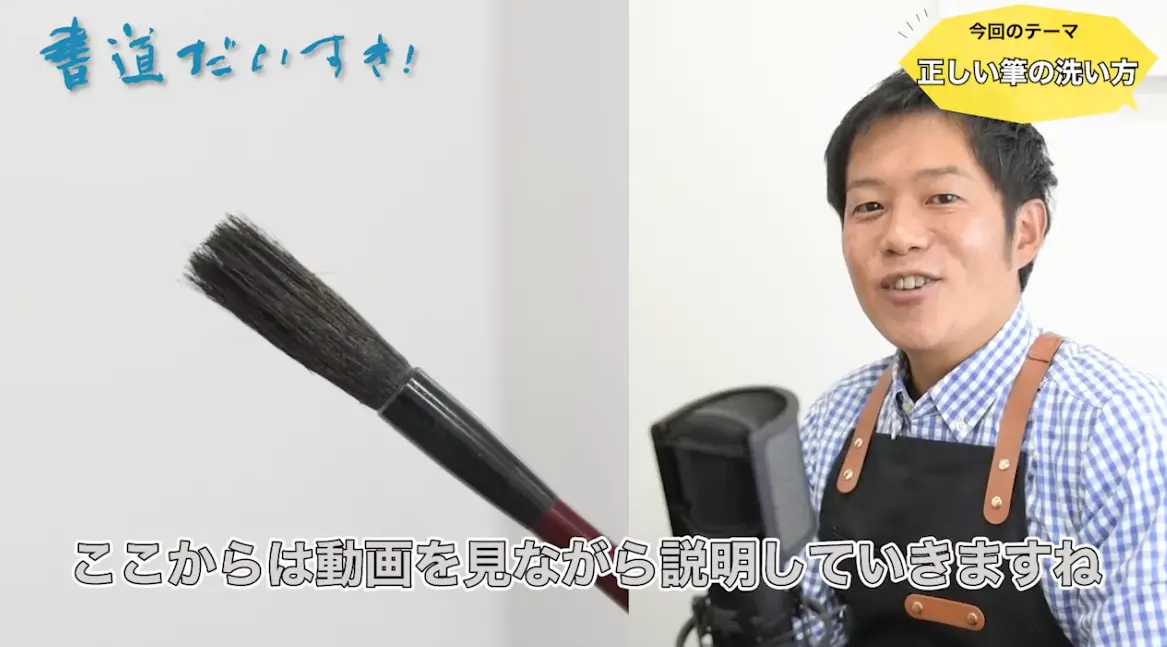
Let’s get started. From here, I’ll explain while we watch the video.
This is my daughter’s brush, and seeing it again on screen… it’s completely hardened at the base.
Shimauchi 01:50
And the tip is so frayed it looks like a broom.
How sad!
We’re going to clean it up now.
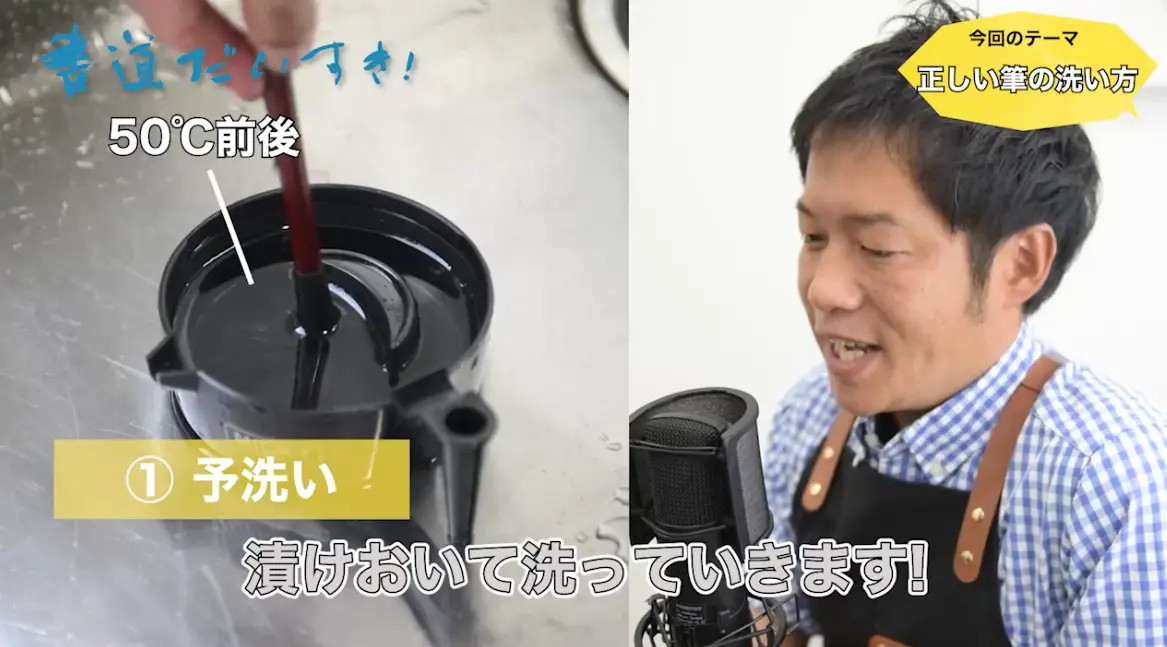
In the next clip, I’ve put somewhat warm, lukewarm water into a bowl.
Shimauchi 02:05
It’s just under about 50°C.
We’ll soak and wash it there.
When ink solidifies at the base, the tip won’t close at all, as you can see.
So we have to melt and remove the carbonized ink that has accumulated at the base.
Shimauchi 02:25
By loosening what’s hardened, the tip will start to close again.
I’m pressing fairly firmly — that’s how hardened the brush is.
Because it’s so stiff, I patiently massage the base, slowly and gently.
Shimauchi 02:37
Then you feel the texture gradually change; the hairs soften little by little;
you can sense that the hardened ink at the base is dissolving.
Shimauchi 02:51
At this point, it’s much smoother, closer to how the brush feels after normal use.
So the soak wash worked well.
Shimauchi 03:06
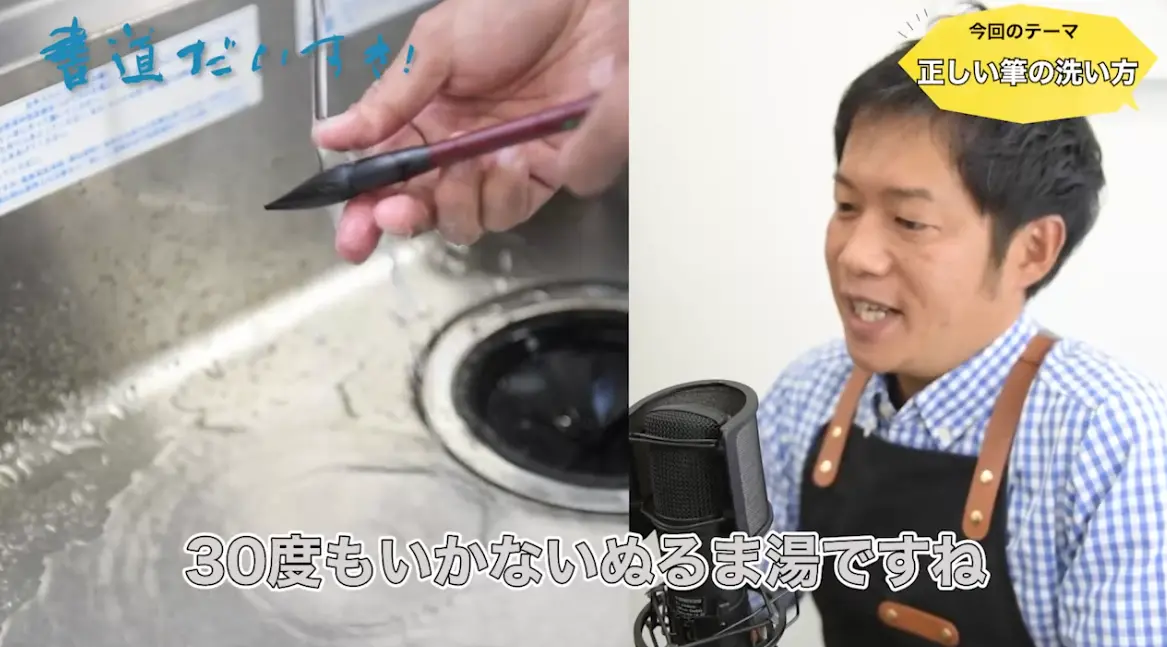
Now I turn on the tap.
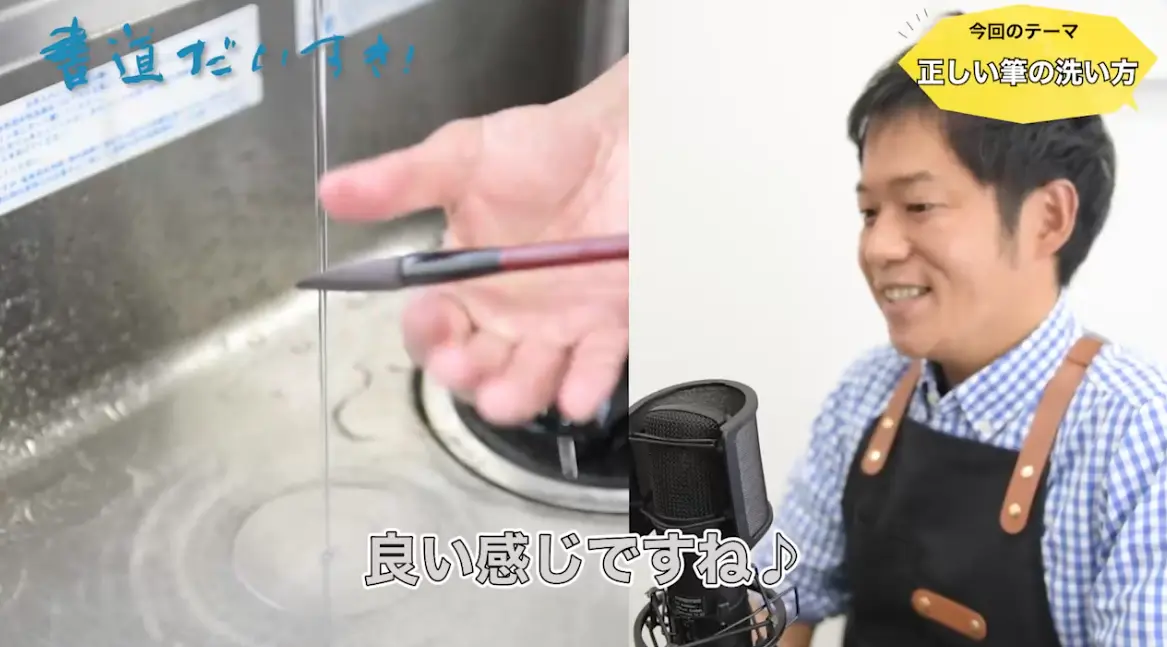
The water is truly lukewarm, not even 30°C.
Wash with lukewarm water, holding the base gently but firmly.
Massage the base thoroughly and carefully.
Shimauchi 03:26
Remember, what you can see isn’t everything.
A good portion of the hairs extends into the ferrule, and ink accumulates there, too — be sure to remove it.
So really focus on the base area.
Shimauchi 03:44
As you feel the base carefully, you might notice parts still hardened.
When you find such spots, keep loosening and removing the ink there.
Shimauchi 03:55
My method might be a bit unusual, but the idea is to massage the base thoroughly.
Do it many times — over and over — until the hardened ink is removed.
Shimauchi 04:10
If you don’t remove the clump of ink at the base, as I said earlier, the tip will stay splayed open.
So take your time and get it all out.
Shimauchi 04:24
Even when you touch it, you can feel how stiff it is.
On camera it might not look like much ink is coming out, but
loosening the ink that has solidified deeper inside is crucial.
Shimauchi 04:38
Be as gentle and diligent as you can.
Wash with care, and it will soon become clean.
Now squeeze out the water well.
It’s looking much cleaner and slimmer; the tip is taking shape again.
Shimauchi 04:55
Next, the brush comb.
I think this tool is really important.
Just like using a comb to tidy your hair,
Shimauchi 05:11
it serves the same purpose for a brush.
A lot of damaged hairs came out of my daughter’s brush — that shows how much it was worn.
Doing this removes the damaged hairs and brings the brush back into shape.
Shimauchi 05:31
If you’ve never done this before, please learn about how a “brush comb” works and give it a try — it will make your brush cleaner and tidier.
Shimauchi 05:45
Look how clean it is now.
That’s how it should be.
Please remember: this is the normal state for a brush.
Wash, tidy, and dry your brush properly every time.
Shimauchi 06:02
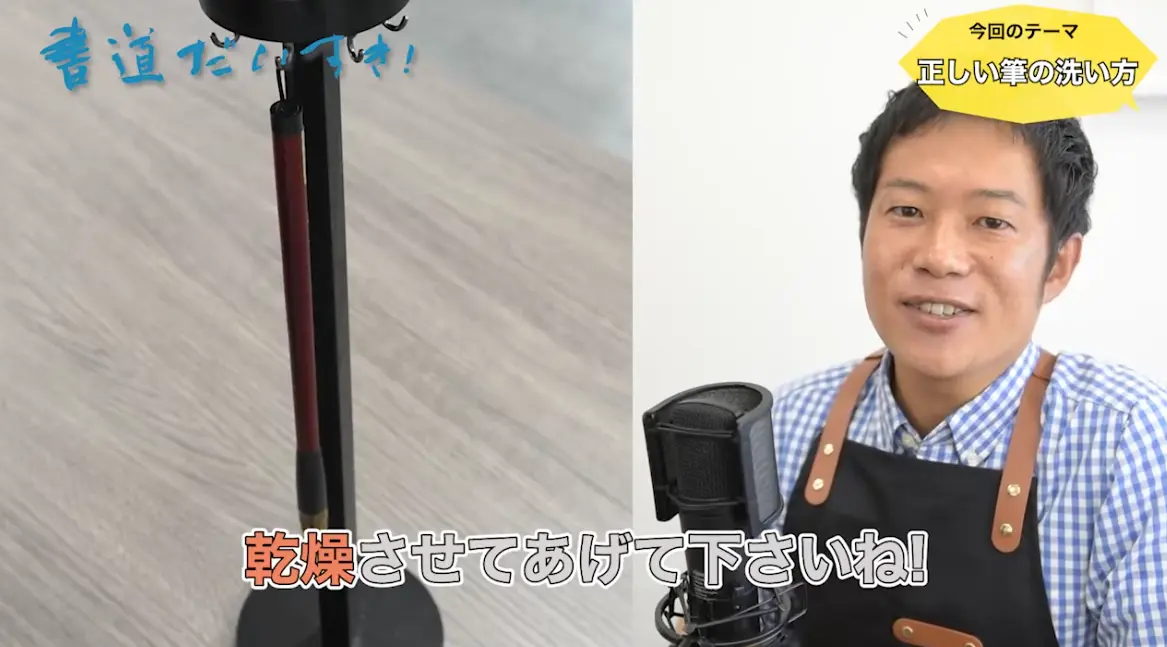
Finally, hang the brush to dry thoroughly.
Thank you for watching.
Did you enjoy it?
Maybe you learned something new, or maybe you felt reassured that your method matches mine, or perhaps you found parts to improve.
Shimauchi 06:18
By washing properly,
Shimauchi 06:32
your brush’s original qualities will come out,
and it will regain its ability to open and close as it should.
That way, you’ll feel, “Hey, my writing is going well today!” and enjoy calligraphy even more.
Shimauchi 06:47
I hope this video helps you remember the right way to wash a brush so it moves better than ever,
and that you can write more enjoyably.
Shimauchi 07:03
If even one more person feels that calligraphy is fun because of this, I’ll be overjoyed.
If you liked the video, please give it a thumbs-up and subscribe to the channel.
Shimauchi 07:22
This was Shodo Daisuki.
See you next time!
About Related Products
Here are items featured in this video.