Shodo Daisuki Episode 25
```html
Shodo Daisuki Episode 25
The Definitive Guide!! How to Handle Liquid Ink!
Shodo Daisuki – Episode 25
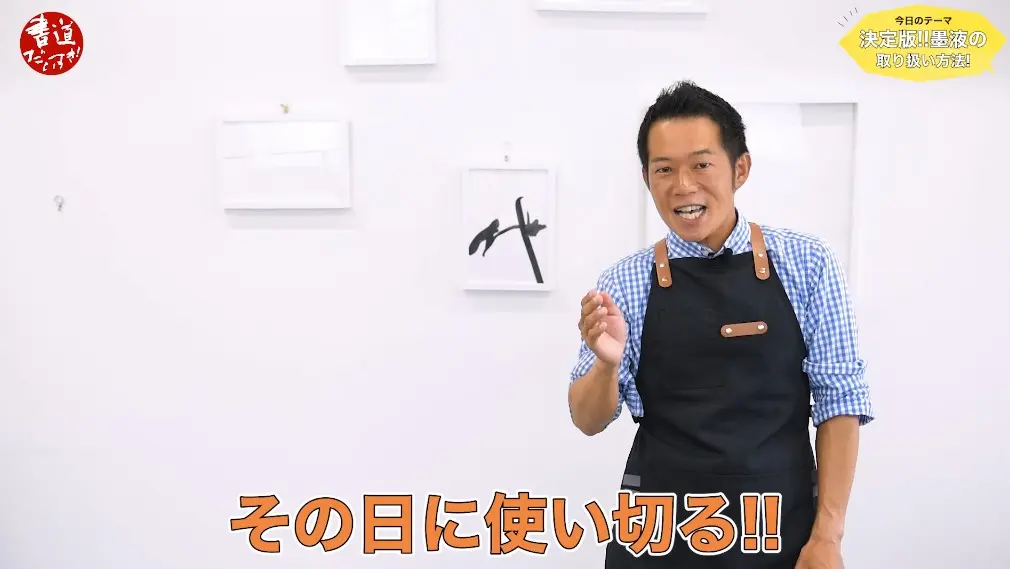
In this video, “Shimauchi” from Shodo Daisuki talks about how to handle liquid ink!
Shodo Daisuki Episode 25 – Video Overview
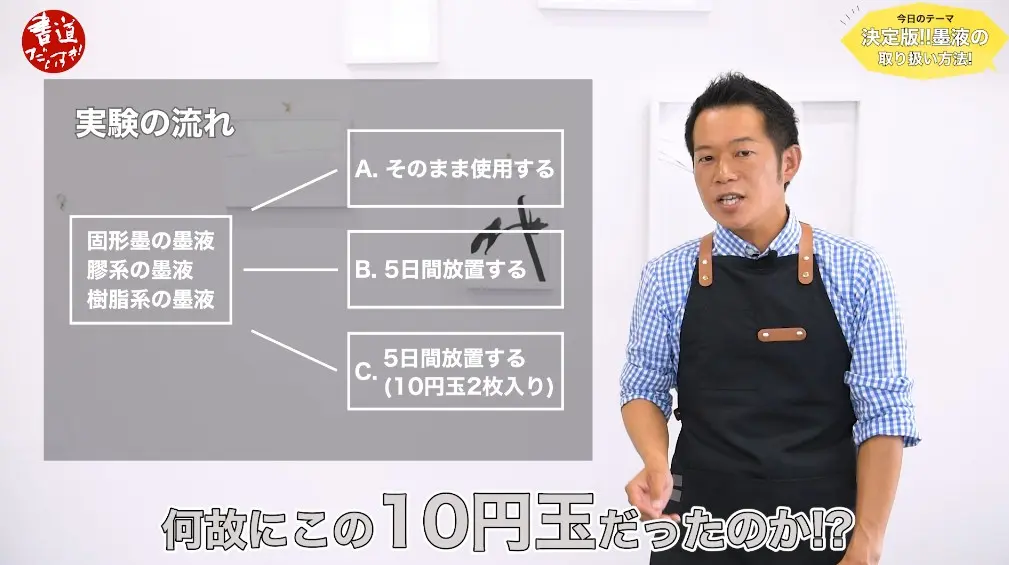
This video explains a verification experiment on how to handle and store liquid ink. Three types of liquid ink were used—(1) freshly ground ink (made by grinding an ink stick), (2) nikawa-based liquid ink, and (3) resin-based liquid ink—and each was compared in three conditions: the normal state, left for 5 days, and with two 10-yen coins placed inside.
First, for the freshly ground ink, leaving it for 5 days caused a slight change in odor and showed signs that the carbon particles were beginning to coagulate. When two 10-yen coins were added, the brush felt more “grippy” (increased resistance), and it was reported that the ink felt as if it had tightened up.
For nikawa-based liquid ink, because it contains preservatives, there was little change in odor or brush feel even after being left for 5 days. However, when two 10-yen coins were added, it similarly felt as if the ink had tightened, and additionally, a problem occurred during backing (urauchi): the carbon “cried,” meaning it bled and scattered. Resin-based liquid ink has less “stretch” of carbon compared to nikawa-based ink, but is characterized by a strong, deep black. It showed the least change after 5 days, and even with two 10-yen coins added, it showed the same tightening effect on brush resistance as the other inks.
As for storage, the video strongly recommends using up the amount you poured out on the same day whenever possible. If you must store it, it’s important to shake the ink well to promote Brownian motion, tighten the cap firmly to prevent oxidation, and store it at a suitable temperature (around 30°C). The video concludes by saying that discovering how simply adding two 10-yen coins can change the writing feel is one of the joys of calligraphy.
YouTube Shodo Daisuki Episode 25
Shimauchi 00:00
I put two 10-yen coins into each original ink solution. It’s strange, isn’t it? This is really just a sensory impression, but one major difference between resin-based and nikawa-based liquid ink is that preventing oxidation is also important. Hi, I’m Shimauchi from Shodo Daisuki.
Shimauchi 00:20
Today’s video is all about how to handle liquid ink. When it gets hot like this, you’re probably writing a lot too, and you might think, “My ink feels sticky,” or “After some time, it’s clumping up,” or “It’s starting to smell bad,” right?
Shimauchi 00:37
Haven’t you experienced that? Some people even store it in the refrigerator to make it last longer. So this time, I used three representative liquid inks, left them for five days, and ran an experiment to test them.
Shimauchi 00:54
I’ll also share tips to help your liquid ink last longer, so please stay with me until the end.
Shimauchi 01:10
On this channel, I make videos with the hope that you’ll truly feel how enjoyable writing can be. So please subscribe as well. Now, let’s begin the verification experiment.
Shimauchi 01:27
Here we go. The three liquid inks I used were: first, freshly ground ink from an ink stick (my favorite), second, nikawa-based liquid ink, and third, resin-based liquid ink.
Shimauchi 01:51
For each one, I tested three conditions: (1) used normally—pouring liquid ink straight from the bottle, and using freshly ground ink right after grinding; (2) left for five days; and (3) with two 10-yen coins placed in the original ink solution.
Shimauchi 02:10
For the “left out” test, I tried to mimic a household environment: times with air conditioning on, times with it off, and natural room temperature changes over five days. I also took measures to reduce evaporation from the surface.
Shimauchi 02:28
And for the third condition, I placed two 10-yen coins into each original solution.
Shimauchi 02:48
Why 10-yen coins? That’s the key point. I originally wanted to use a copper ink basin. Water stored in copper is said to spoil less easily, and copper is believed to have antibacterial effects.
Shimauchi 03:04
But copper ink basins are expensive and hard to get, so I used the very common 10-yen coin instead—since it’s 95% copper—and had those two coins do the work.
Shimauchi 03:24
For paper, I used xuan paper, as introduced in a previous video—very dry, crisp, and thoroughly dried xuan paper. Just noting that up front.
Shimauchi 03:45
First, freshly ground ink. Ink sticks are made from soot, nikawa, and fragrance, and of course, they contain no preservatives. After five days, when I smelled it, it had a slightly sharp, stinging odor—yes, that was true.
Shimauchi 04:05
But when I actually wrote with it, the writing feel didn’t change dramatically. Still, I did sense signs that the carbon particles were starting to coagulate.
Shimauchi 04:22
Next, the sample with two 10-yen coins. This was my first time feeling something like this—brush feel wasn’t very different from the five-day sample.
Shimauchi 04:42
But when writing, it felt strange—in a good way. The “baseline” resistance of the brush (that slight grip) felt stronger and more persistent, like the ink had tightened up.
Shimauchi 04:56
So yes, there was definitely a mysterious change. Next, nikawa-based liquid ink. It’s formulated to be as close as possible to freshly ground ink, but the big difference is that it contains preservatives.
Shimauchi 05:12
After five days, surprisingly, there wasn’t much change in smell. The brush feel when dipping the brush also didn’t change much, and the writing feel didn’t change much either. That made me realize how strong preservatives can be.
Shimauchi 05:50
With two 10-yen coins, the brush feel still didn’t change much. But again, it felt like the baseline tightened up—just like with the ink stick sample.
Shimauchi 06:08
However, there was one pitfall. Visually and in writing feel, it seemed fine—but afterward, I applied backing (urauchi). When I did, the carbon bled and scattered, like it “cried,” when misted with water.
Shimauchi 06:47
You couldn’t tell just by looking—you only notice when you actually apply water. I hesitated to mention it, but I’m sharing this to prevent trouble for you.
Shimauchi 07:18
Finally, resin-based liquid ink. “Resin-based” may sound unfamiliar, but it means synthetic glue is used instead of nikawa. Compared to nikawa-based ink, the carbon “stretch” is weaker.
Shimauchi 07:58
But its strength is the deep black. Even after five days, there was little change in smell or brush feel—this one changed the least among the three. The black strength also remained clear.
Shimauchi 08:35
With two 10-yen coins, it also had that same “tightening” feeling when writing—again, a very sensory thing, but consistent across all three inks.
Shimauchi 08:55
That shared tightening effect is probably due to the 10-yen coins. So, what did you think? The most important premise is: don’t leave it like this—use the liquid ink you poured out on the same day. Please do that.
Shimauchi 09:13
Otherwise, you can’t fully enjoy the potential of freshly ground ink or well-formulated liquid ink. This video was about how to make it last longer if you want to keep writing continuously.
Shimauchi 09:52
One more thing people forget: do you leave liquid ink sitting still? If it stays still, the Brownian motion of particles stops, and that’s said to contribute to spoilage. So before you write, shake it well.
Shimauchi 10:25
Whenever you get the chance, shake it—“Ink, let’s do our best today.” Don’t forget that. It makes a big difference.
Shimauchi 10:40
Also, once you open it, oxidation progresses, so closing the cap tightly to prevent oxidation is important.
Shimauchi 10:56
As for storage location, I’m not saying you must refrigerate it, but it’s best to store it where the temperature stays around 30°C. If it gets too cold, it can coagulate, so keeping it at a suitable temperature matters.
Shimauchi 11:14
Personally, what I found most interesting was that simply adding two 10-yen coins changed the writing feel. That alone was a big discovery. You never know where fun can be found.
Shimauchi 11:35
Continuing to write while discovering enjoyment—that’s one of the great pleasures of calligraphy. If even one more person can keep that “this is fun” feeling, I’ll be happy I made this video.
Shimauchi 11:54
I’ll keep working to share things like this. Thank you for watching all the way through—this was Shimauchi from Shodo Daisuki.
Related Products
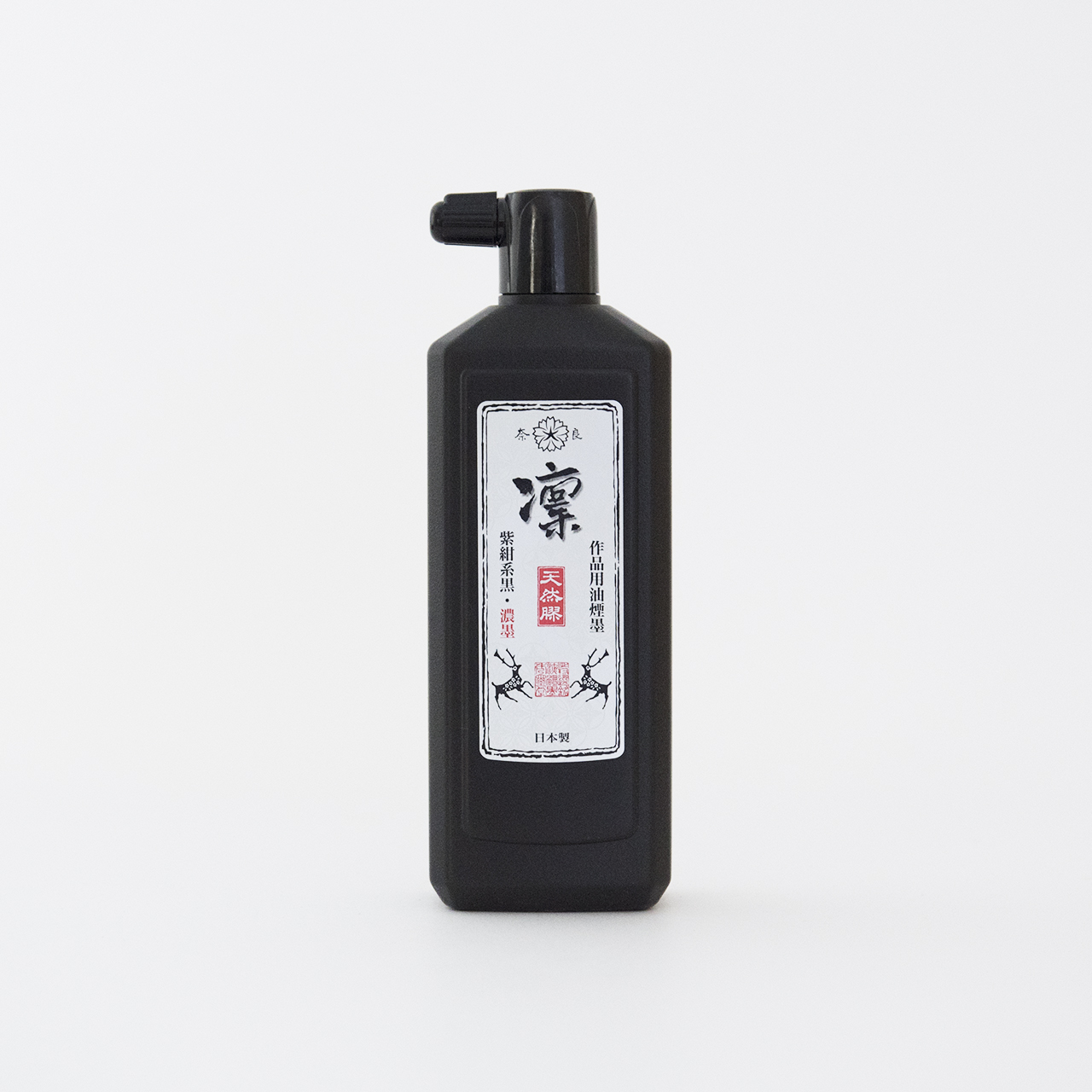
Introducing products featured in this video.