

Shodo Daisuki Episode 36
Shodo Daisuki Episode 36
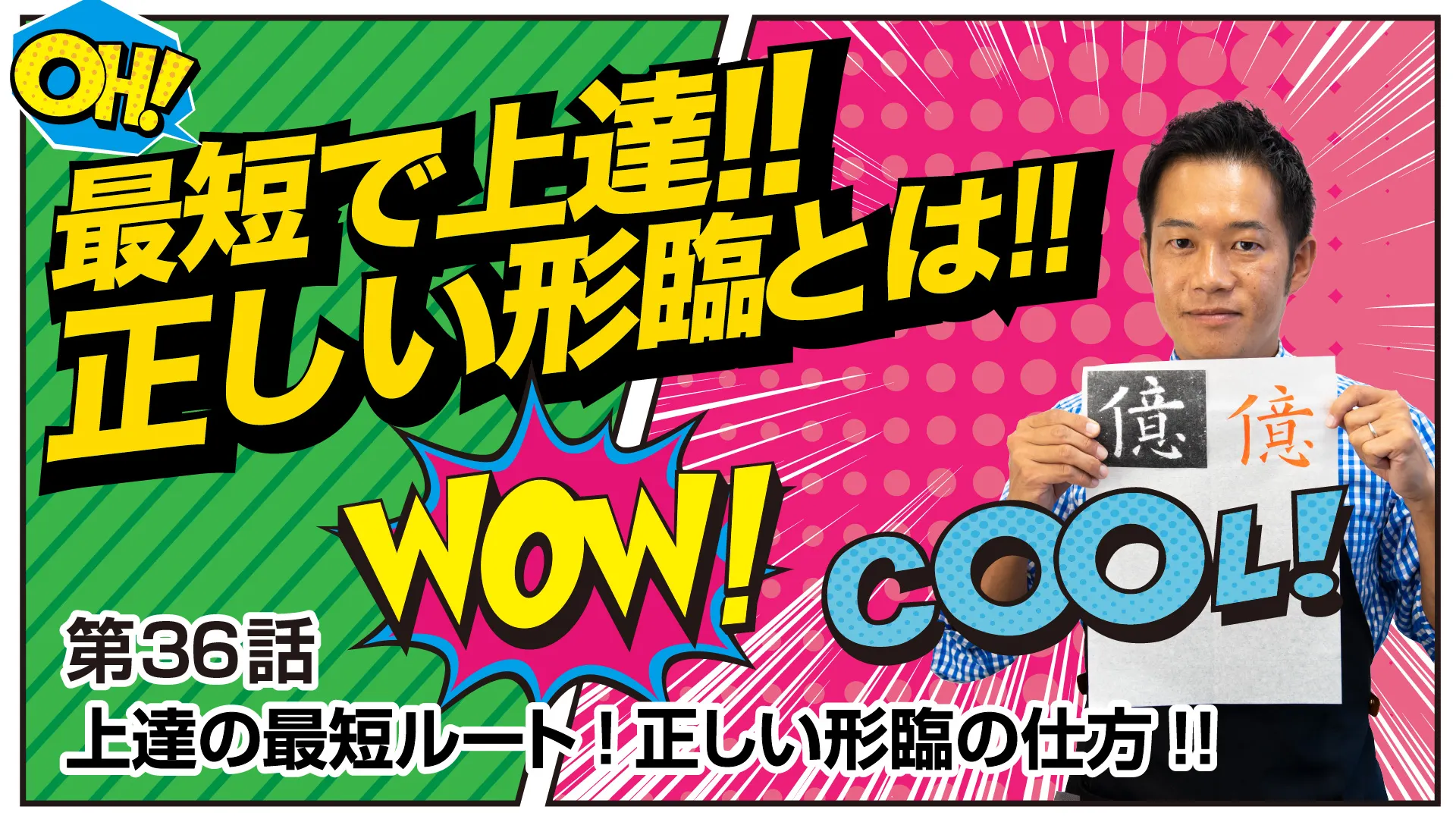
The Shortest Route to Improvement!! How to Practice Correct “Keirin” (Classical Copying)
Shodo Daisuki – Episode 36
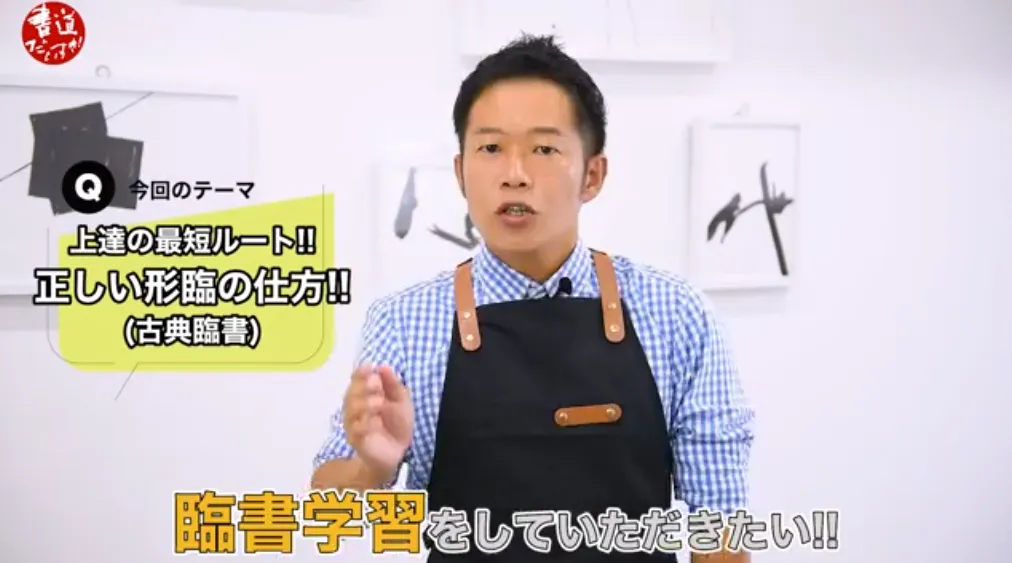
In this video, Shodo Daisuki’s host Shimauchi talks about how to practice “keirin” (form copying) the right way.
Shodo Daisuki Episode 36 – Video Overview
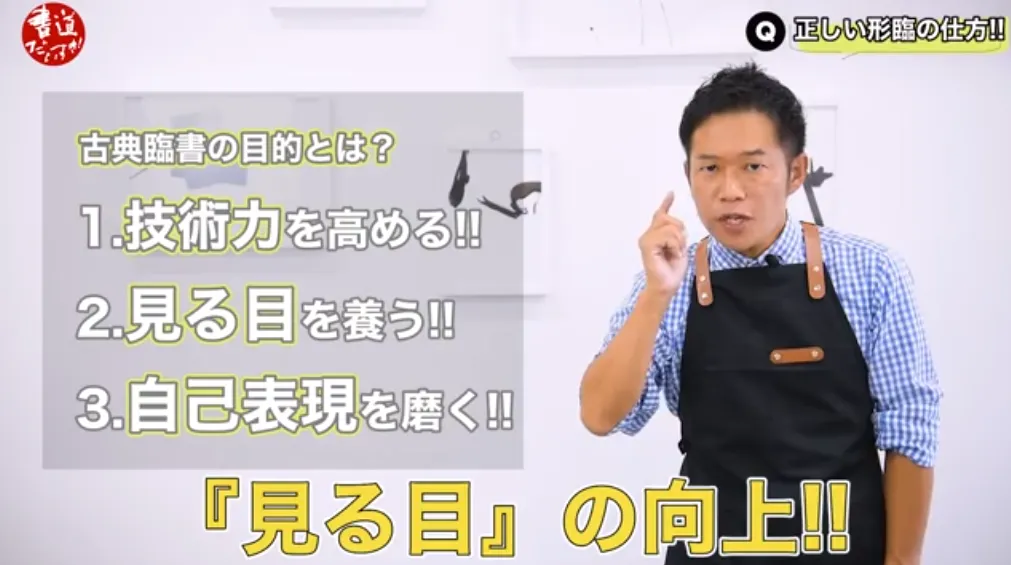
This lesson focuses on copying from the classics, especially on “keirin,” the practice of faithfully copying the shape of characters. “Rinsho” means carefully copying classical models, and Shimauchi emphasizes that it not only improves technique, but more importantly trains your “eye” for seeing well.
Through rinsho, your ability to appreciate works improves, you discover new things when looking at classics and completed pieces, and your own sensitivity and sense of beauty start to change.
For keirin, paper with minimal bleeding is recommended. Because your brush movements naturally become slower while you observe the model closely, you want a paper that doesn’t let too much ink soak in.
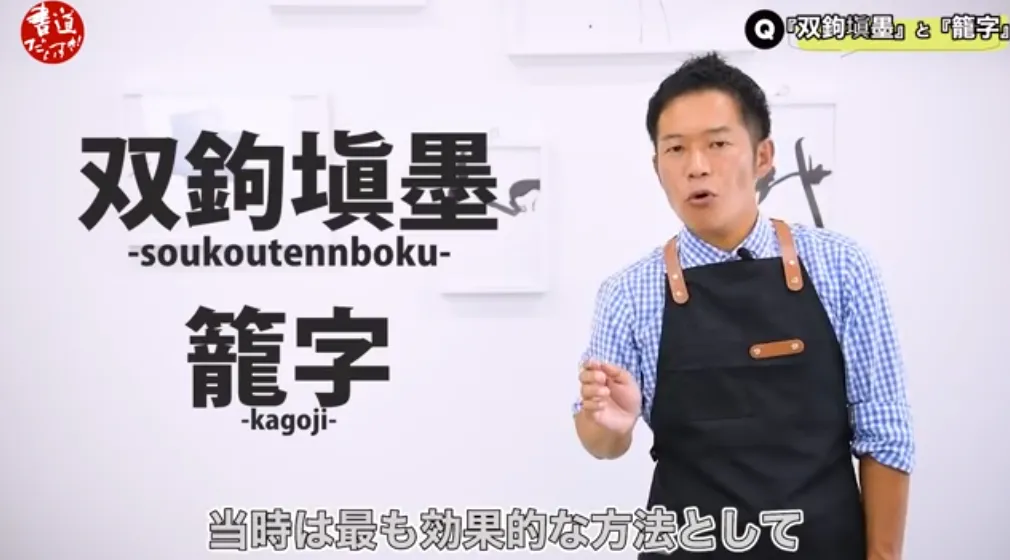
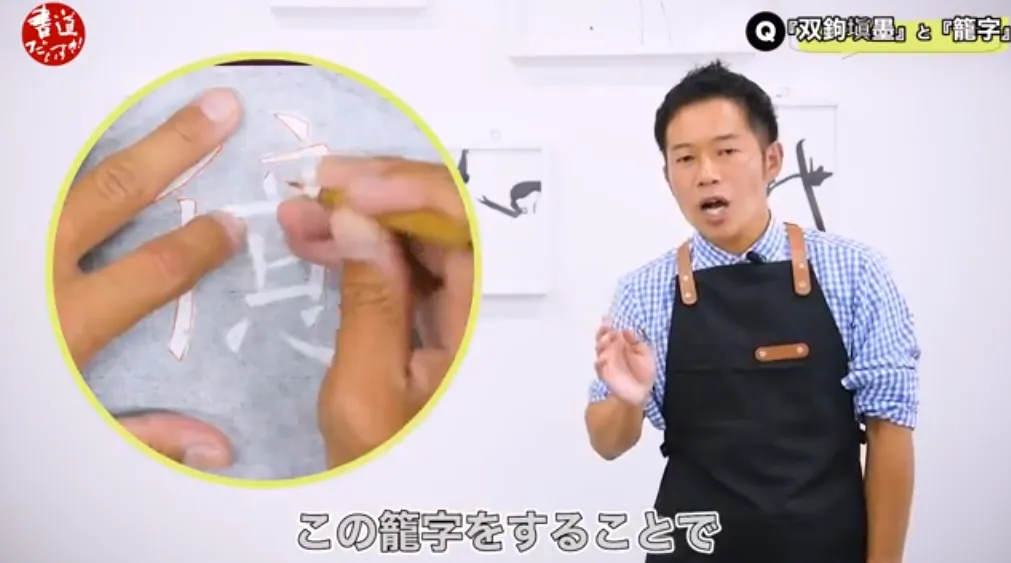
The classical methods of “sokō tenboku” (double-outline filling) and “kōji” (tracing each stroke) are also introduced. In sokō tenboku, you place thin paper over the original, trace the outlines, and then fill them in with ink; in kōji, you trace each stroke of the character in the original stroke order. Shimauchi especially stresses that practicing kōji makes you notice the fine structure and construction of each character.
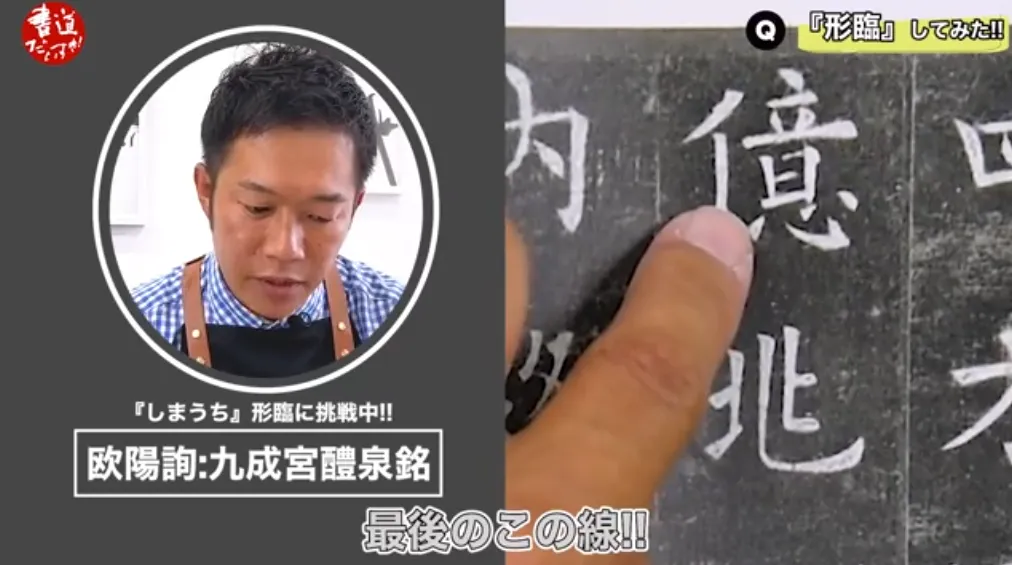
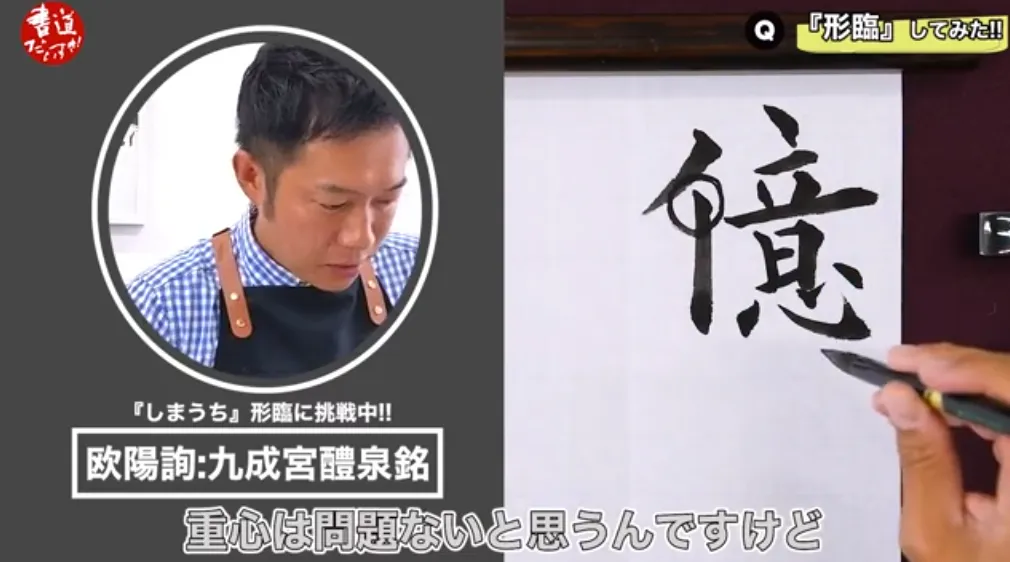
In the latter half of the lesson, six characters are selected from “Kyūseikyū” and Shimauchi demonstrates keirin. He first studies the model carefully, analyzing the features of each character in detail, then actually writes them. He also shows how he isn’t satisfied with his first attempt, notices issues, and tries again.
Shimauchi says that although keirin is difficult, the more you look, the more enjoyable it becomes, as you keep making discoveries and your own writing changes. He also recommends comparing handwritten models by your calligraphy teacher with the original classical works as another effective way to study.
YouTube Shodo Daisuki Episode 36
Shimauchi 00:00
Your own sensibility changes. I think it transforms into “kata-rin” (form-copying) in rinsho where you enlarge it to 310%. What catches my attention is, well, this fact—this one. Hi—this is Shimauchi from “Shodo Daisuki.” Everyone, were you able to watch the previous video?
Shimauchi 00:23
This time, we’ll dig even deeper and take “kata-rin” as our theme. Through rinsho, you can build technical skill, develop an eye for quality, and refine self-expression—so for those who want to write works with compelling expression, rich lines, and a sense of elegance,
Shimauchi 00:46
I really want you—first and second and above all—to study rinsho. And the most basic foundation for rinsho study is kata-rin. Are you all consciously working on kata-rin? With that, today I’d like to explain kata-rin in depth.
Shimauchi 01:07
On this channel, I want to introduce more and more things related to “writing,” not limited to calligraphy—so please subscribe, leave a rating, and support the channel. Now then, let’s get into kata-rin. All right,
Shimauchi 01:24
You’ve been told, “Do rinsho—classical rinsho,” and you’re just doing it because that’s the flow, aren’t you? It’s not that simply writing a lot of sheets is everything—more than anything, quality is what matters. I mentioned this in the previous video, and I’ll say it again here too.
Shimauchi 01:42
The benefits of rinsho aren’t only technical. More than anything, the improvement of your “eye”—that’s the most important. I want to say this again and again. Cultivating this eye is what matters most. You go to an exhibition venue, look at a work, and think, “Wow… what does this even say?”
Shimauchi 02:02
“Hmm… I don’t really understand what’s good about this piece.” That happens, right? When your eye for appreciation improves, you become able to judge and evaluate—objectively—not only your own work, but also the strengths and weaknesses of works written by others.
Shimauchi 02:20
When this eye for appreciation is trained, you discover new things in the way you view classics and artworks, and you find your own goals and ideals. More than anything, your sensibility changes. This is precisely the effect of rinsho—it leads to expanding your own judgment.
Shimauchi 02:43
So you start feeling more and more motivated: “I want to see more works,” “I want to do more rinsho,” “I want to improve more.” This repeated cycle is what accelerates improvement. Therefore,
Shimauchi 03:02
continuing rinsho study is, of course, for improving technique—but for raising your eye for appreciation, it’s the quickest route. And for you to feel, “I want to keep writing,” this rinsho study—the foundation of foundations—is something I truly hope you’ll continue.
Shimauchi 03:21
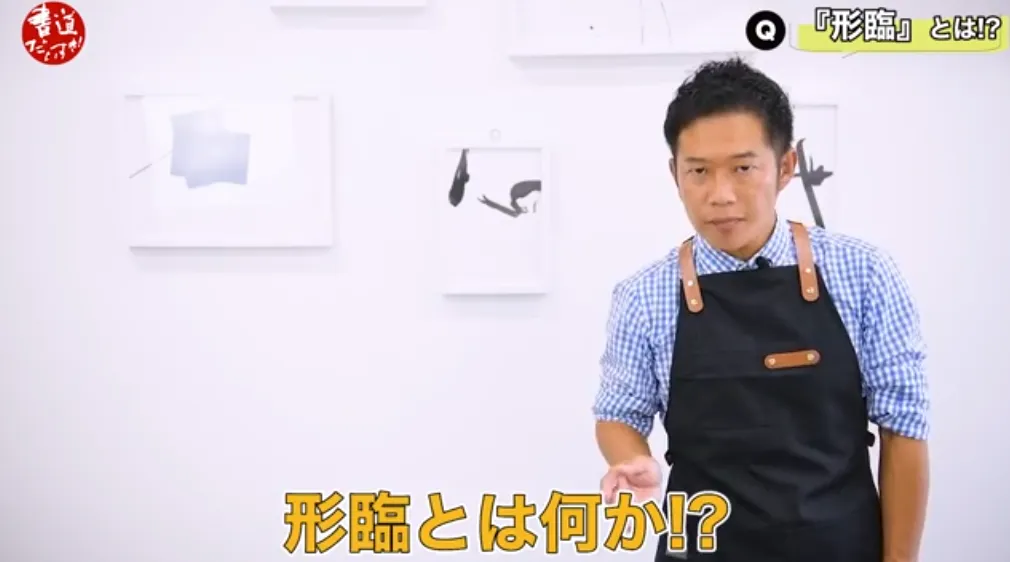
Now, what is kata-rin, our main topic? Kata-rin means copying the form exactly as it is. You carefully observe each line within the character—the angle and thickness of every stroke, the spacing between lines, and the blank areas inside the character—
Shimauchi 03:45
and then you copy faithfully. So what paper is suitable for kata-rin? The answer is simple: paper with little bleeding. Because you want to look closely at the model and copy it carefully—sometimes your brush movement becomes even slower than usual.
Shimauchi 04:08
That means your brushwork slows down, so the ink tends to sink in, right? So, to keep the brushwork smooth and prevent ink from soaking in too much, I want you to use paper that bleeds less.
Shimauchi 04:22
Even inexpensive machine-made paper is enough—as long as it doesn’t bleed much. Use that advantage to practice a lot. Now, before we enter kata-rin, there’s something I want you to know. It’s a method called “sōkō tenboku rōji.” Yeah—sōkō tenboku rōji. Well,
Shimauchi 04:44
I think many of you felt, “That’s an unfamiliar term.” It’s okay—don’t worry. These were both known as extremely effective methods for understanding the shape of characters. First, sōkō tenboku. “Tenboku” is,
Shimauchi 05:03
an old method established for copying characters written on paper. You place thin paper over the characters. This time, I used hanshi paper and tracing paper. Then the model shows through, right? You trace the outline,
Shimauchi 05:23
with a thin brush. It doesn’t have to be a thin brush—you can use a pen too—but this time I deliberately tried it with a thin brush. Then you fill in the enclosed lines. This time I filled it from the front, but
Shimauchi 05:41
some say you fill it from the back, so this time, to make it easier to understand, I filled it from the front with ink. It’s a method for making a replica. You could do sōkō tenboku directly from the original, but of course the original is small, right?
Shimauchi 06:01
So—here’s the thing. This time I added a little twist: I thought, “Why not do sōkō tenboku at hanshi size?” Everyone, take a look at this—I made something like this. This is,
Shimauchi 06:22
enlarging the original to 310%. Then it becomes this size. You can fit this neatly onto hanshi and do sōkō tenboku. Honestly, for those who are truly motivated—it takes effort, but because you can do sōkō tenboku on hanshi, I really want you to try it.
Shimauchi 06:43
Before sōkō tenboku appeared, copying was done through meticulous hand-reproduction. But that required advanced skill, and naturally there were limits. So it’s thought that sōkō tenboku spread because it allowed relatively easy copying without special technique.
Shimauchi 07:09
Still, sōkō tenboku is ultimately handwritten too. So it takes a lot of time and effort—and an efficient method was sought. In every era, technological innovation is necessary. And then what appeared was,
Shimauchi 07:28
a new method: model the characters on stone or wood, carve them, and make copies by taking rubbings. As carving characters and taking rubbings spread, this copying method began to become common. With the emergence of rubbings—something you’re all familiar with—
Shimauchi 07:58
naturally, the method of sōkō tenboku faded from view. However, everyone—this sōkō tenboku is an extremely effective method for learning various disciplines. It helps the stroke order sink in easily, and you begin to see the tendencies of the style.
Shimauchi 08:18
As a way of re-experiencing history, I really hope you’ll challenge yourself with sōkō tenboku. That said, actually—Shimauchi also only researched sōkō tenboku for the first time and tried it for the first time this time.
Shimauchi 08:37
What I learned from experiencing it is—without a doubt—you get new discoveries like, “So this is how the character’s structure is formed.” Absolutely. And it was more fun than I expected.
Shimauchi 08:53
Yes, I’ll add that too—but in reality, it took effort. It also took time. So in those situations, I want to introduce a learning method called rōji. Next, I’d like to explain this rōji.
Shimauchi 09:12
Rōji requires the same preparation as sōkō tenboku. Before, we traced the overall outline, but this time, you trace each stroke of the written character, following the stroke order. Some of you may feel resistance—thinking,
Shimauchi 09:34
“Isn’t that kind of childish?”—but by doing rōji, the accuracy of your rinsho changes dramatically. The effectiveness of rinsho through rōji is that you can understand every element needed for rinsho: the character shapes, the angles of the lines,
Shimauchi 09:53
the thickness, and the blank spaces inside the character. So when you encounter a classic for the first time—when you think, “Okay, I’m going to study classics now”—I really want you to challenge yourself with rōji.
Shimauchi 10:12
About this rōji experience—Shimauchi honestly feels personally that it was good to do. Because—well, we did it like this this time, but I don’t think it has to be done only this way. You can do it right away with a pencil, a pen—anything.
Shimauchi 10:30
Rōji means tracing stroke by stroke, right? Following the stroke order means you had to imagine what the hidden lines look like—because you can’t see them. So how far does this line go, and how does the ending stroke finish—
Shimauchi 10:50
it’s entirely imagination. Imagining how it transitions—so to speak—from the start, through the movement, to the finishing—using that imagination may also lead to improving technical skill, I thought.
Shimauchi 11:12
And by tracing, you start to see the fine structure. I could see, unexpectedly, “Wow, this part was actually that big.” Like, “This line was that long?” The way it looked was completely different compared to actually writing with a brush.
Shimauchi 11:29
So if you’re struggling with classical rinsho right now—if you can’t write well, if you can’t quite copy it closely—then by all means, try this rōji. I think it will dramatically change your kata-rin in rinsho. Try it—even if you think you’re being fooled. I’m sure it’s worth it.
Shimauchi 11:49
Now then, I’ll actually do kata-rin myself. The classic I’ll copy this time is Ouyang Xun’s “Jiucheng Liquan Inscription,” which I love. And the section I’ll copy is these six characters—right here. I want to copy this part. And as I’ve said many times, since cultivating your eye is important,
Shimauchi 12:09
I won’t jump straight into writing—I want to first look carefully at the model. So first, the first character, “Oku.” About this “Oku,” overall, aside from the second stroke of the “person” radical, the strokes are long. And,
Shimauchi 12:31
it’s written that way. Next, this “c” part—this part was bigger than I expected. That’s something I learned by doing rōji too. And then this last line here—it sticks out. Normally, you might tend to tuck it in, so it’s easy to miss—so I want to pay close attention to it.
Shimauchi 12:50
And finally, this part here—this entering stroke (nyūshitsu). It goes in very smoothly, without strain. I want to focus on that too. And the “i” component here—its center of gravity is quite shifted to the left, so rather than aligning it straight, I want to remember that it’s slightly left-weighted.
Shimauchi 13:10
Next, this character—you read it as “Chō.” I didn’t know that, honestly. Reading the interpretation, it’s a new discovery that this is the character “Chō!”—it’s interesting. And look at this: everyone, it rises beautifully to the upper right. It’s easy to overlook and end up making the long central line the highest, so that’s something to watch out for.
Shimauchi 13:27
Next, this “hajimaru” (begin) character—this first stroke of the “woman” radical is more upright than expected, almost straight. It’s easy to open to the left, so I want to be careful. And the “dai” character also has an exquisite shape—its width is very sharp. I want to watch that too, because it can easily become horizontally wide.
Shimauchi 13:43
And this character “motte” (to hold) leans quite a bit to the left. And this dot in the third stroke—it’s flicked almost perfectly sideways. What I felt with this “bū” character was the way the blank space is taken—very boldly. So I want to write it without making it cramped, consciously keeping that open space.
Shimauchi 14:00
And what seems difficult is this long “sōru” line. This is very difficult, so at the part where it intersects at this corner, I want to pause a bit—then put strength into the line as I write. And the final dot is thicker on the inside than expected, so I want to pay attention to that.
Shimauchi 14:18
And lastly, this “kō” character—this one shows the sculptural characteristics of the “haisen” form quite well, I think. And this is a bit subtle—look at this force here: the starting energy doesn’t come out as much as you’d expect. This left sweep—the balance—its center of gravity is more left than expected. And there’s a lot of blank space here. And the left sweep is drawn vertically so it doesn’t get in the way—so the space between the radical and the component is being used well.
Shimauchi 14:35
This is the kind of spot where you might instinctively want to tighten it up and end up sticking it together, so I want to be careful there. Even with just these six characters, I noticed so many things—so rather than writing blindly, I think it’s important to first form a clear image in your mind, and then write with the brush.
Shimauchi 14:54
Actually, after writing and then if there are still odd parts, I want to think, “Ah, I should have done this a bit more like that,” and adjust. Now then, let’s move on to practice. First, this time, I want to calculate and plan this “Oku” character carefully. Okay—let’s do it.
Shimauchi 15:12
Yeah… but as expected, writing it in one shot is difficult. What bothers me is this starting energy, I guess. This technique was a bit off. Hmm… I think the center of gravity was okay, but here—the blank space overall was a bit narrow. Why is that? It’s probably here—this position.
Shimauchi 15:30
This position—it was too low. It was much too low. In reality it’s higher, so… it should have started around here and gone like this. So this should have been about this much. I needed to write it in that kind of way.
Shimauchi 15:49
Thinking that, everyone—kata-rin is hard, but the more you look carefully, the more fun it becomes. Because you notice things—and your own writing changes. So I want to try writing it one more time.
Shimauchi 16:10
All right—how was that? Shimauchi himself thinks it became a bit better than before. But I still think this “hi” part should be bigger. So, when you really try to do kata-rin properly, you might discover things by doing that earlier rōji. Kata-rin is deep—really deep. But if you keep cultivating your eye like this, your technique will come along too.
Shimauchi 16:26
So I really want you all not to forget this: cultivate your eye, and carefully appreciate the model. Many of you probably attend calligraphy classes. In those cases, your teacher will look at the classic and then write a model with brushwork (nikuhitsu) for you. So of course, looking carefully at that model is important too. And it’s also interesting to compare your teacher’s hand-written model with the original classic.
Shimauchi 16:42
You can tell, “Ah, the teacher is looking at this part of the original.” So you get a kind of double discovery. Please remember that. How was it, everyone? I think you could see that even just one thing—kata-rin—has great depth.
Shimauchi 17:16
This time, along with rinsho, we also touched on an old learning method for calligraphy and painting, called rinmo. In Japan, copying has sometimes been thought of as something bad, but it’s an effective technique for accurately recognizing the forms of classical models.
Shimauchi 17:39
In rinsho, the brush energy becomes lively, but how you grasp the form tends to become unstable. To learn both character form and brush energy well, I think both rinsho and rinmo are important and necessary. When I asked, “Are you consciously doing kata-rin?” this is what I meant.
Shimauchi 18:03
Once again, I hope you’ll review your rinsho—especially this kata-rin—and that your rinsho study becomes even more enjoyable. With that wish, Shimauchi would like to end here. Next time, we’ll take on i-rin and hai-rin—this will be a challenge for Shimauchi too, so I hope we can study together.
Shimauchi 18:32
And with that—this was “Shodo Daisuki Shimauchi.” Ah, we’re starting to feel those long autumn nights, aren’t we? Everyone, please have a wonderful weekend. Sorry for going on so long.
Shimauchi 18:49
See you again next week! Goodbye!
About Related Products
Here are the products that appear in this video.
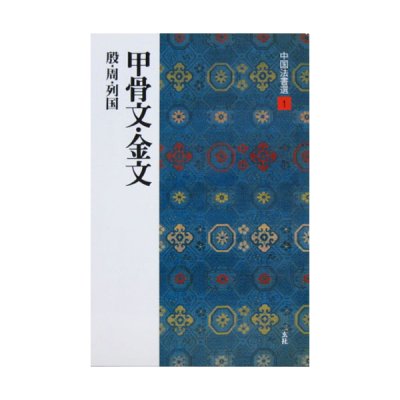
Books & Publications /book&publication
Whether you are a complete beginner just starting calligraphy or an intermediate to advanced learner, the knowledge you gain from books is invaluable.
They allow you to learn beyond your teacher’s exemplary works and are ideal for home practice or self-study.
Deepening your understanding of calligraphy through books will surely help broaden your horizons.