

Shodo Daisuki Episode 35
Shodo Daisuki Episode 35
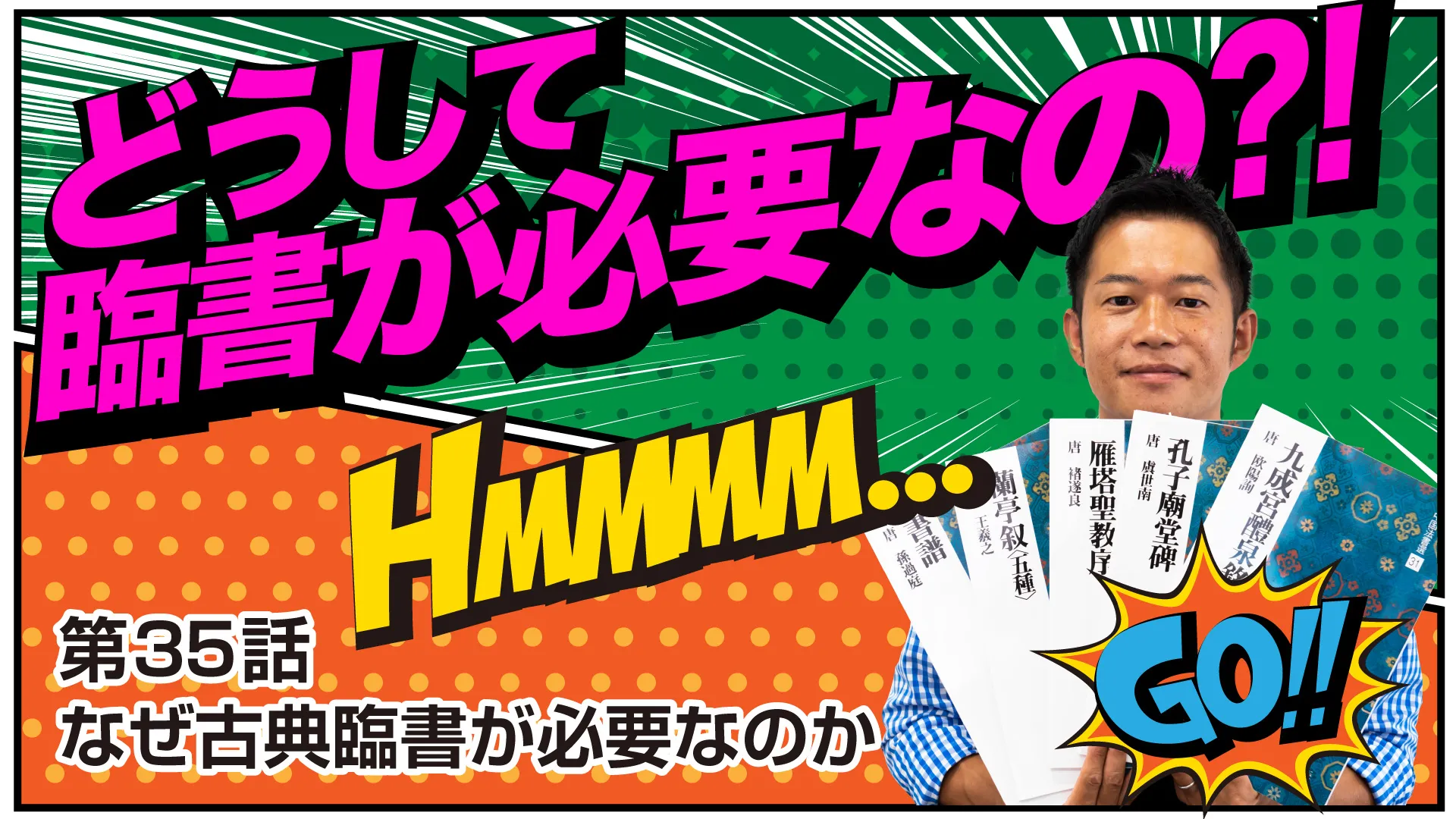
Why Is Copying Classical Masterpieces (Rinsho) Necessary?【Calligraphy】
Shodo Daisuki – Episode 035
Everyone who studies calligraphy eventually encounters “copying classical masterpieces (kotten rinsho)”!!
Why not take this opportunity to face it properly once again?
A man who loves calligraphy, “Shimauchi,” explains everything in depth!!
Shodo Daisuki Episode 35 – Video Overview
This video is a lecture by Shimauchi on the theme “Why is copying classical masterpieces necessary?”.
He gives a detailed explanation of the importance and meaning of copying classical works (kotten rinsho) in calligraphy.
The lecture covers what classical rinsho is, its three approaches (keirin, irin, hairin), the benefits of rinsho, tips for improvement, and recommended classical works to study.
Drawing on his own experiences, Shimauchi emphasizes that classical rinsho is not only for improving technique, but also for “cultivating the eye.”
He says that when he was younger, he did not fully understand its value, but as he grew older, he came to realize how important it is.
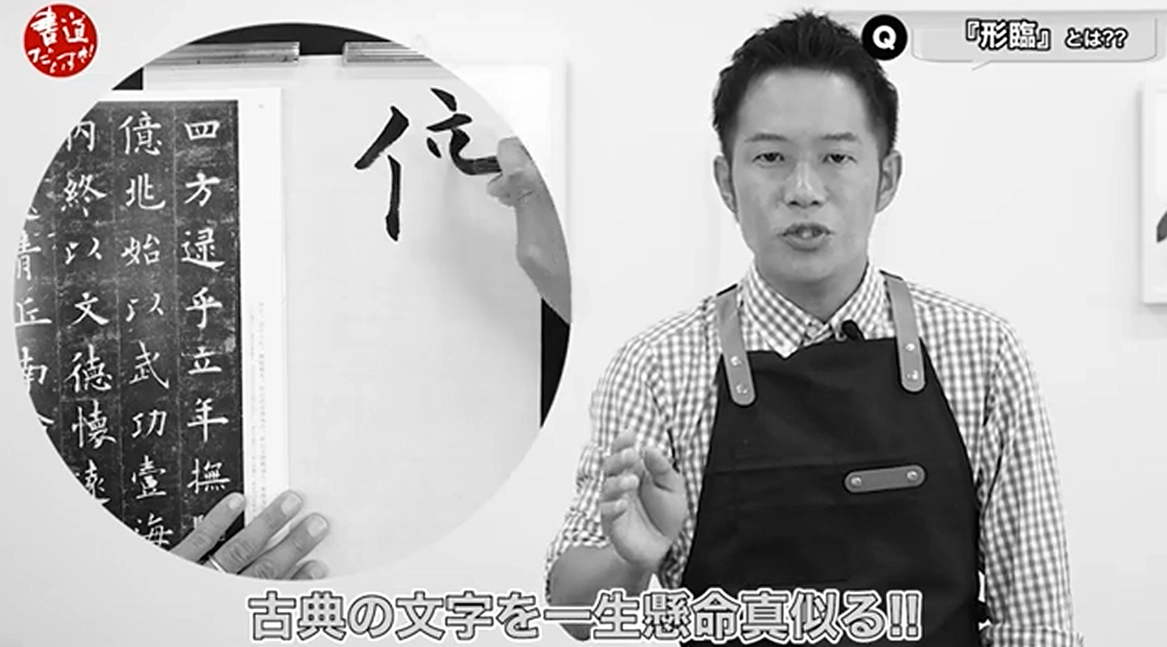
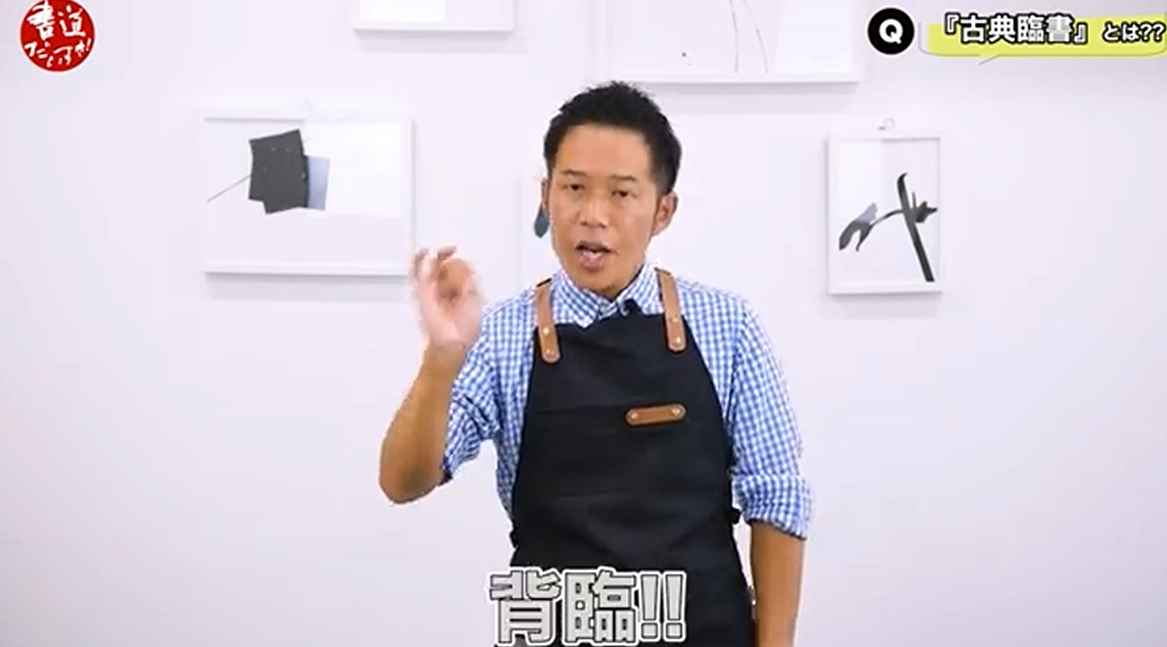
He introduces three methods of rinsho: “keirin” (copying the visual form as faithfully as possible), “irin” (writing while understanding the author’s spirit and background), and “hairin” (memorizing the classical work and then adding one’s own interpretation).
Through these approaches, practitioners should aim to improve technical skill, develop an eye for appreciation, and enhance their ability for self-expression.
He also explains tips for improving at rinsho, such as objectively comparing your work with the original, training spatial awareness by practicing six characters on one sheet of hanshi, and maintaining steady practice over time.
In addition, he touches on the importance of studying all five major scripts: kaisho, gyosho, sosho, reisho, and tensho.
In closing, Shimauchi reiterates that classical rinsho is not only for improving technique; above all, it is about “cultivating the eye.”
By sharpening your eye, you become aware of where your skills fall short, which naturally leads to a desire to improve.
This lecture is the first in a three-part series, and in the next video he plans to explain “keirin” in more detail.
Youtube Shodo Daisuki Episode 35
Shimauchi 00:00
You copy the characters from the classics as faithfully as you can. You see them with your eyes, form the image in your mind, and then your hand moves.
The goal is to achieve these things and to be able to make objective comparisons and analyses—that’s what really matters.
Hello, this is Shimauchi, a man who loves calligraphy. Today’s theme is “Why is copying classical masterpieces (rinsho) necessary?” and I’d like to talk about that.
Shimauchi 00:26
Anyone who practices calligraphy has probably experienced classical rinsho at least once.
I myself have been doing classical rinsho since I was in high school.
Even so, when I was younger, I didn’t really understand why we needed to do rinsho or what I was supposed to be learning from it.
Shimauchi 00:47
It was hard to grasp its true meaning when I was young.
But as time went by, I met more and more people, exchanged ideas, and thought a lot on my own. Now that I’m over 40 and can look back, I feel there are things I can finally say.
Shimauchi 01:02
That’s why I decided to talk about this topic over three episodes.
Whether you’re about to start classical rinsho or you’re already working hard at it, I’d like to clearly explain once more what classical rinsho is really about, so I’ll be happy if you stay with me to the end.
Shimauchi 01:17
On this channel, I’ll keep introducing various topics related to writing and calligraphy, not just traditional shodo alone.
So please consider subscribing and giving the video a high rating—I’d really appreciate your support.
Shimauchi 01:34
Now then, what exactly is classical rinsho? Let’s get into the main topic.
When it comes to painting, you learn through sketching—seeing and drawing what’s in front of you. For music, you listen to and perform classical pieces. So what is the equivalent for calligraphy? It is to appreciate classical masterpieces and copy them—that is rinsho.
Shimauchi 02:00
“Classics” refers to the beautiful brushworks left by people of the past—many of them have been admired and recognized as outstanding calligraphy for thousands of years.
Rinsho means to observe these classics carefully and write while looking at them.
There are three methods of rinsho: keirin, irin, and hairin.
Shimauchi 02:25
It is said that classical rinsho is so profound that one could spend an entire lifetime pursuing just a single work.
The first type is “keirin.” Keirin means to make your writing look as similar as possible to the original classical work.
Shimauchi 02:48
This is probably what most of you imagine when you hear “classical rinsho.”
To improve your own technique, you copy the characters from the classical piece as faithfully as possible.
You study things like the angle of the dots, the length of the strokes, and the white space.
Shimauchi 03:06
You research and analyze these elements while doing your best to imitate them.
However, many people end up thinking only about technique—“Why doesn’t it look right? How should I move my arm?”—and focus solely on how to move the brush.
Shimauchi 03:23
In reality, though, beyond technique itself, what’s truly important is to carefully look at each character in the classical work with your eyes—in other words, to appreciate it.
You see it with your eyes, form the image in your mind, and then your hand moves.
Shimauchi 03:44
By doing that, you not only improve your technique, but also cultivate your eye.
Of course, quality is important in keirin, but there are times when quantity—writing a lot—is also essential.
So it’s important to keep this in mind when you practice keirin.
Shimauchi 04:03
The second type of rinsho is “irin.”
Irin is the next step after keirin.
You put yourself in the author’s shoes, thinking about the historical background in which the work was written—
Shimauchi 04:23
what kinds of tools the author used, in what kind of situation they wrote the piece, and what they might have felt to produce such writing.
You copy while holding these thoughts in mind.
Shimauchi 04:40
In other words, you imitate the author’s state of mind and spirit as well.
To become the author and write—that is irin.
The third type is “hairin,” the ultimate form of rinsho.
Shimauchi 05:06
In hairin, you repeatedly copy the classical work over and over until it is completely etched into your memory.
Then, you add your own interpretation and express it in your writing.
That is hairin.
Shimauchi 05:27
This is the final stage many practitioners aspire to reach, because once you can do hairin, it leads to truly free expression.
So, rinsho has these three methods. Through them, you improve your technical skill, cultivate your eye, and eventually polish your self-expression.
Shimauchi 05:47
That is the purpose for which classical rinsho should be practiced.
So what happens if you lack classical rinsho?
We’re in an age where many people want to post their own work on social media—
Shimauchi 06:11
one piece after another, they upload their calligraphy online.
If you haven’t done enough rinsho, your forms become unstable. Your personal quirks come out too strongly and the work can look vulgar or lack refinement.
Shimauchi 06:26
People may feel that your fundamentals are weak.
Anyone with a trained eye can immediately see whether someone has done proper classical rinsho or not.
On the other hand, if a piece grounded firmly in classical rinsho appears—
Shimauchi 06:41
a trained viewer will instantly recognize that it carries “the fragrance of the classics.”
They will sense that it is on another level, that its atmosphere is different.
As a result, the overall evaluation of the work rises dramatically.
Shimauchi 07:03
So the difference made by classical rinsho is huge.
If you’re going to present your work publicly, it’s better to do so after you’ve built that foundation through classical rinsho.
Next, how can we improve more quickly at rinsho?
Shimauchi 07:23
Don’t just stop after writing—don’t leave your copies lying there and call it a day.
Always compare your own rinsho with the original classical work.
By doing so, you can see what has improved, what has gotten worse, and what still needs to change.
Shimauchi 07:41
I’d like you to make it a habit to reflect on this either after practice or during breaks.
By constantly comparing your own work with the classical model, you gradually develop the ability to evaluate and analyze your writing objectively.
Shimauchi 08:01
This not only cultivates your eye but also leads directly to improved technique.
So I think you can see just how important this is.
Next, let’s talk about the number of characters per sheet when doing rinsho.
Shimauchi 08:18
At first, four characters per sheet of hanshi is fine.
Once you get used to writing four characters, you should move on to six.
Why six characters on one sheet of hanshi?
Shimauchi 08:33
As many of you may have experienced, fitting six characters neatly onto one sheet is actually quite difficult.
The size of each character differs, and the structure may be tall and narrow or short and wide.
Shimauchi 08:49
Placing six characters with such varying forms onto one sheet in a well-balanced way is not easy.
You need to consider the inner white space of each character, the margins on the paper as a whole, and the space for the seal as well.
Shimauchi 09:05
In doing so, you train your overall spatial awareness.
That’s why I recommend practicing until you can place six characters firmly and beautifully on one sheet of hanshi.
Repeated practice of this is very effective.
Shimauchi 09:20
Now, about how many sheets to write—let me give an analogy.
In the Shimauchi household, we always take our temperature in the morning.
By measuring our temperature, we can get a good sense of how we’re feeling that day.
Shimauchi 09:36
If you keep doing it, it’s surprisingly useful.
In the same way, practicing rinsho every day is ideal.
But if every day is too difficult, every other day is fine.
Shimauchi 09:51
It’s best to write three to ten sheets while facing the classical piece seriously, making comparisons, and concentrating on what you’re doing.
Once you build this kind of steady rinsho habit, you’ll start to sense how your condition changes from day to day.
Shimauchi 10:08
You’ll notice days when you feel, “Everything is going really well today!”
That’s your chance to improve.
When that happens, dive into the “zone” and write as much as you can.
Shimauchi 10:27
The time you spend writing in that state directly correlates with how quickly you improve.
On the other hand, on days when you feel, “I’m just not in the groove today…,” it’s important to cut your practice short.
Otherwise you may end up writing aimlessly without any real progress.
Shimauchi 10:39
Some of you are probably very busy and may find that even every other day is difficult.
But remember, rinsho doesn’t always mean sitting at a desk with a brush and ink.
Shimauchi 10:54
For example, you can practice with a pencil or brush pen whenever you have a moment.
Or during short breaks or while you’re on the move, you can look at reproductions of classical works, imagine them clearly, and “write” them in your head.
Shimauchi 11:09
That, too, is a form of rinsho.
The key is to keep doing what you can, consistently.
To help with that, here’s one suggestion for making rinsho a daily habit.
Shimauchi 11:26
If possible, create a dedicated space where you can always practice rinsho on half-sheets of paper.
In other words, a place where you don’t have to set up and put away your tools every time, and can always sit down and write.
I’ve actually done this myself.
Shimauchi 11:42
It’s just a very small space with a single chair where I can sit and practice rinsho whenever I want.
Even though I’m very analog by nature, I’ve adapted a bit to the digital age by using my smartphone to record my own rinsho practice on video.
Shimauchi 11:58
I then review the clips and photos of my writing.
This is incredibly helpful, so it makes me want to sit down there every day, even for a short time.
But if it’s really difficult to create that sort of space—
Shimauchi 12:12
at the very least, you can keep a pencil, a brush pen, and a small memo pad handy somewhere.
I think most people can secure enough room for that.
Shimauchi 12:24
That way, whenever inspiration strikes, you can write immediately.
Oh—and I almost forgot something very important.
Shimauchi 12:43
The brush you use every day must always be washed thoroughly after use.
Please don’t forget this. If you don’t, the brush will be damaged very quickly.
Treat your brushes with care.
Shimauchi 13:05
Now, about which scripts to practice in rinsho.
Ideally, you should practice all five: kaisho, gyosho, sosho, reisho, and tensho.
Some of you may have practiced rinsho in kaisho, gyosho, and sosho but not much in reisho or tensho.
Shimauchi 13:26
However, by studying and copying reisho and tensho as well, you’ll gain new insights.
Through repeated practice of the brush techniques needed for each of the five styles, you’ll be able to produce powerful, stern, sticky, or soft lines with intention.
Shimauchi 13:45
A single stroke can then contain a wide range of techniques packed tightly together.
The line itself gains depth.
So even if the amount of practice varies, I’d like you to experience rinsho in all five scripts if possible.
Shimauchi 14:04
Next, let me introduce some recommended classical works to study.
For kaisho, I recommend works by the “Four Great Masters of the Tang,” such as Yu Shinan’s “Kongzimiaotang Bei,” Ouyang Xun’s “Jiuchenggong Liquan Ming,” Chu Suiliang’s “Yanta Shengjiaoxu,” and Yan Zhenqing’s “Yanshi Jiabiao Bei.”
Shimauchi 14:27
Personally, I loved Ouyang Xun, so I studied him intensively.
But in hindsight, I regret that I hardly studied Yan Zhenqing at all.
For gyosho, I recommend Wang Xizhi’s “Lantingxu” and the “Collected Shengjiaoxu.”
Shimauchi 14:46
For sosho, I recommend Sun Guoting’s “Shu Pu” and Wang Xizhi’s “Shiqi Tie.”
For reisho, I suggest works like “Caoquan Bei,” “Yi Ying Bei,” and “Li Qi Bei,” which are representative of “bafen” clerical script with flattened forms and beautiful “wave” strokes.
For tensho, I recommend “Taishan Kesi,” “Shiguwen,” and the seal script works of Deng Shiru and Wu Rangzhi.
Shimauchi 15:21
The five classical groups I just introduced are all considered particularly beautiful and important.
By studying them as a set, you can learn both form and brush technique.
Shimauchi 15:40
After you’ve gone through them once, you can then choose the classics you personally like and delve deeper into them.
However, it’s very important to understand why you should study all five major scripts through rinsho in the first place.
Shimauchi 16:00
Forgive me for speaking personally again, but when I was young, I focused heavily on kaisho, because its flaws are easy to see.
I concentrated my rinsho almost entirely on kaisho.
Shimauchi 16:17
I spent so much time on it that my practice of gyosho and sosho was really just superficial—barely scratching the surface.
And as for reisho and tensho, I hardly did any rinsho in those styles at all.
Shimauchi 16:35
As the years passed and I continued working in this field, I got to talk with many different people about rinsho.
In doing so, I realized just how little knowledge I had and how shaky my skills were when not backed by classical foundations.
Shimauchi 16:54
I also discovered that the calligraphers whose work I admired most were invariably those who had done solid, thorough rinsho in a wide range of classical works.
Shimauchi 17:10
Even calligraphers who seem very individual and unique at first glance actually spent their youth diligently copying many different classics.
They absorbed and digested those classics and then used them to create their own new style of writing.
Shimauchi 17:29
If you want to continue studying calligraphy seriously from here on, classical rinsho becomes all the more important.
That’s one of the reasons I wanted to communicate this and why I made this video.
Shimauchi 17:44
I truly hope you will practice rinsho in all five scripts—even if it’s just the most famous classics in each.
I got a bit carried away and spoke at length, but in the end, what I wanted to say is this:
Shimauchi 18:02
Classical rinsho is the perfect training method for improving your technique, cultivating your eye, and polishing your self-expression.
Especially important is cultivating your eye.
Shimauchi 18:22
Again, speaking from my own experience—ever since I entered this industry at age 22, I’ve met many teachers and seen many exhibitions.
My eye for calligraphy kept getting sharper and sharper.
Shimauchi 18:39
But at the same time, I increasingly felt how lacking my own technical skills were.
My eye improved, but my technique didn’t keep up.
That was a very frustrating experience.
Shimauchi 18:56
Still, once your eye is trained, you become aware that you must strengthen your technique.
And if you put in the work, your skill can eventually catch up to your eye.
So cultivating your eye is the most important thing.
Shimauchi 19:15
Rinsho is also a journey where you can discover new, hidden worlds within yourself that you never knew were there.
It’s a fun and fascinating world—that’s what I’d like to leave you with today.
Shimauchi 19:39
This has been Shimauchi, a man who loves calligraphy.
Next time, I’ll be talking in detail about “keirin,” so please look forward to that.
Let’s meet again on Friday! Goodbye!
About Related Products
Here are the products that appear in this video.
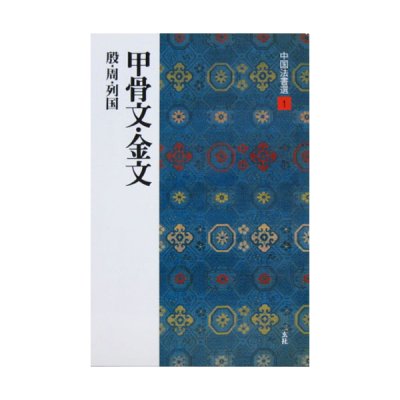
Books & Publications /book&publication
Whether you are a complete beginner just starting calligraphy or an intermediate to advanced learner, the knowledge you gain from books is invaluable.
They allow you to learn beyond your teacher’s exemplary works and are ideal for home practice or self-study.
Deepening your understanding of calligraphy through books will surely help broaden your horizons.
