Shodo Daisuki Episode 22
Shodo Daisuki Episode 22
How to Tell “Machine-Made Paper” from “Handmade Paper” *Including How to Identify the Front and Back!*【Calligraphy】
Shodo Daisuki – Episode 022
Deep and decisive for the overall impression of your work—calligraphy gasenshi paper!
In this episode, “Shimauchi” thoroughly explains the difference between machine-made and handmade paper!
Shodo Daisuki Episode 22 — Video Summary
This video is an explanation by “Shodo Daisuki” Shimauchi about types of paper and how to identify them.
It focuses on the differences between handmade paper and machine-made paper, including their characteristics and practical ways to tell them apart.
Shimauchi begins by asking whether viewers truly understand what kind of paper they are currently using (handmade or machine-made).
Some people judge by price, but he points out that accurately identifying paper by appearance alone can be surprisingly difficult.
He then explains the handmade papermaking process: sheets are formed carefully one by one using a screen, stacked and pressed to remove water, and then sun-dried for as long as ten days.
After drying, the stack is soaked again, sheets are peeled off one by one, and each sheet is dried again by being placed onto a heated iron plate.
During this stage, a distinctive wavy pattern remains from the process of attaching the sheet to the iron plate—this becomes a key identifying feature of handmade paper.
In contrast, machine-made paper is produced efficiently in large quantities using industrial machines, and it is mainly made from pulp.
Because it is dried directly with a large drum-shaped iron, the side that touches the iron becomes the smooth “front,” while the opposite side touches a blanket and becomes the “back.”
The blanket marks are an important clue for identifying machine-made paper.
Shimauchi also corrects a common misconception: “machine-made paper doesn’t bleed, handmade paper bleeds.”
Bleeding can be adjusted through sizing (anti-bleed treatment), and today many papers—both handmade and machine-made—are designed to minimize bleeding.
He also explains that paper without sizing can become easier to write on if it is “rested,” but paper that contains sizing does not benefit from resting.
Finally, Shimauchi demonstrates how to identify handmade paper vs. machine-made paper using real samples.
He emphasizes that, as technology advances, more machine-made papers are produced to look like handmade paper—so having correct knowledge is essential.
He also announces that the next episode will take a deeper dive into handmade paper.
Shimauchi 00:00
So, it’s better to discard the idea that machine-made paper doesn’t bleed and handmade paper does.
Well then—ah, it’s been a while. Hello everyone, this is Shimauchi from Shodo Daisuki.
Shimauchi 00:22
Everyone, let me suddenly ask you this—do you personally know what kind of paper you are currently using?
That may sound like a strange way to ask, but are you truly aware of the paper you’re writing on?
Shimauchi 00:39
Many of you may be using paper provided by your school or calligraphy teacher.
But when someone asks, “Is this machine-made paper or handmade paper?”—can you answer confidently?
Shimauchi 00:53
Some people might say, “Well, the prices are completely different, so cheap means machine-made and expensive means handmade.”
But if you were suddenly handed a sheet of paper and asked on the spot, could you answer with certainty?
Shimauchi 01:09
To be honest, it’s not that easy.
Nowadays, there are many machine-made papers that closely resemble handmade paper.
That’s why I want to clearly explain how to tell them apart in this video.
Shimauchi 01:25
If, after watching this video, you can say, “Yes, I know how to distinguish machine-made paper from handmade paper,”
that would make me very happy. So please stay with me until the end.
Shimauchi 01:47
Once again, this is Shimauchi from Shodo Daisuki.
Alright, let’s begin.
In calligraphy paper, there are broadly two types: handmade paper and machine-made paper.
Shimauchi 02:07
The way these papers are made is fundamentally different, so I’ll explain it briefly.
If we go too deep, it becomes very complicated, so I’ll keep this explanation simple.
Shimauchi 02:23
First, handmade paper.
When you imagine it, you might picture someone scooping pulp by hand like this.
The actual screen is much larger, but paper is formed using a screen called a “suketa.”
Shimauchi 02:37
This motion—moving the screen back and forth—is called “nagashi-zuki.”
The screen is then held still while water drains downward. This method is known as “tame-zuki.”
Shimauchi 02:55
The exact technique varies by region, but we’ll stop here for now.
Once the sheets are formed, they are stacked one by one and pressed to remove moisture.
Shimauchi 03:07
After stacking, pressure is applied to extract water thoroughly.
This creates a large block of paper, which is then sun-dried for as long as ten days.
Yes—ten full days.
Shimauchi 03:26
Even after pressing out the water, the paper is still dried under the sun for ten days until it becomes completely firm.
And then, unbelievably, the dried stack is soaked in water again.
Shimauchi 03:47
Each sheet is peeled off and attached to a large heated iron plate—like an iron.
Using a brush, air is removed as each sheet is dried one by one again.
Shimauchi 04:09
Because of this process, handmade paper always shows subtle wavy marks on the back side.
These marks come from attaching the paper to the iron plate and are a key identifying feature.
Shimauchi 04:35
Many people probably didn’t know this.
Handmade paper is created carefully, one sheet at a time, with tremendous effort and time.
Shimauchi 04:50
Naturally, this means higher costs.
Now let’s move on to machine-made paper.
Shimauchi 05:09
Machine-made paper is produced using very large machines and can be manufactured efficiently in large quantities.
The main raw material is pulp.
Shimauchi 05:27
There are various steps in machine papermaking, but I’ll skip the details.
In the final stage, the paper is dried directly using a large drum-shaped iron.
Shimauchi 05:46
The side that touches the iron becomes smooth and glossy—this is the front side.
The opposite side touches a blanket, which becomes the back side.
Shimauchi 06:05
This is something many people don’t know.
Machine-made paper does not have brush marks on the back—only blanket marks.
That’s a major difference from handmade paper.
Shimauchi 06:25
Many people assume that machine-made paper doesn’t bleed and handmade paper does.
But ink bleeding can be controlled by sizing agents.
Shimauchi 06:40
So it’s better to abandon that simplistic idea altogether.
These days, many papers—both handmade and machine-made—are designed to minimize bleeding.
Shimauchi 06:54
Whether sizing has been applied or not is actually more important.
I’d love to demonstrate how to identify that sometime—it’s surprisingly easy once you know.
Shimauchi 07:11
When you apply ink to paper, a certain reaction occurs.
From that reaction, you can tell whether sizing is present or not.
Shimauchi 07:24
Paper without sizing becomes easier to write on when it is “rested,” allowing moisture to escape.
That’s why people say paper should be rested before use.
Shimauchi 07:41
However, if paper contains sizing, resting it can actually make it unusable.
The ink may stop penetrating altogether, turning it into something like kana paper.
Shimauchi 08:01
So resting paper is not always the right answer.
First, you need to know whether sizing has been applied or not.
Shimauchi 08:18
Now, let me show you some actual paper.
This one clearly has a smooth front and a rough back—obviously machine-made.
Shimauchi 08:37
You can see the grain lines here, but the key point is the blanket marks running perpendicular to them.
Those marks confirm that it’s machine-made paper.
Shimauchi 09:33
Next is handmade paper.
At first glance, the front and back are difficult to distinguish.
But when you hold it up to the light, you can see the wavy brush marks.
Shimauchi 10:12
These marks are unmistakable with the naked eye.
That’s how you identify handmade paper.
Shimauchi 10:33
Finally, let’s look at a paper that appears handmade at first glance.
But when you check the back, you’ll find blanket marks—it’s actually machine-made.
Shimauchi 11:27
Without proper knowledge, it’s easy to mistake these papers for handmade ones.
As technology advances, knowing how to distinguish them becomes increasingly important.
Shimauchi 12:36
Paper has a front and a back.
Writing on the front brings out the paper’s true characteristics.
I hope you’ll use paper correctly and intentionally.
Shimauchi 13:10
This kind of knowledge may seem trivial, but it’s useful and worth sharing.
Next time, we’ll take a deeper dive into handmade paper.
Shimauchi 13:23
If you’re curious about that, please subscribe to the channel and look forward to the next video.
Shimauchi 13:38
Thank you for watching.
This was Shimauchi from Shodo Daisuki.
See you again soon. Goodbye.
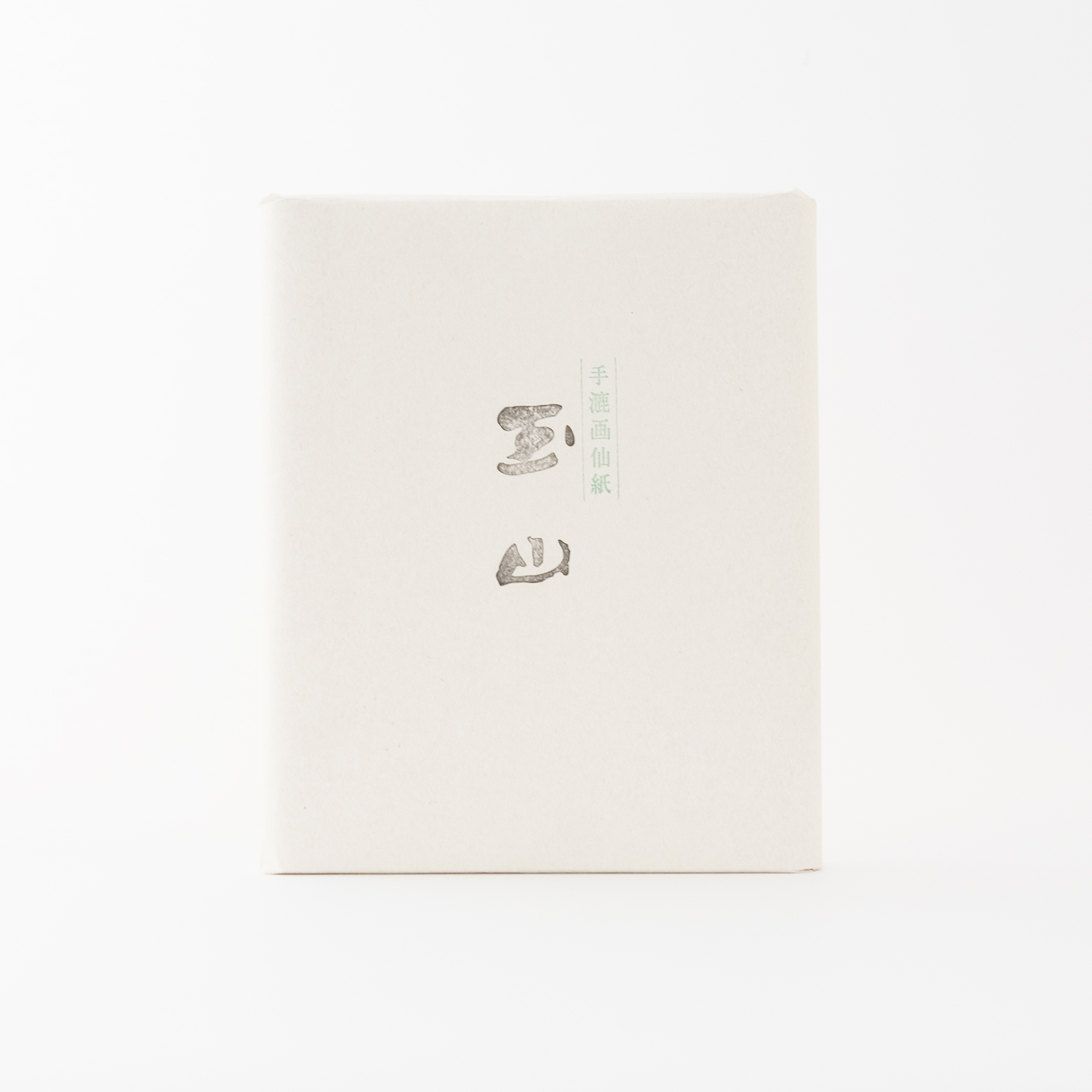
Related Products
Here are the products featured in this video.
Related Products
Here are the products featured in this video.