

Shodo Daisuki Episode 43
Shodo Daisuki – Episode 43
Choosing the Right Size of “Rakkan” Seal for Your Work!! [Calligraphy]
Shodo Daisuki – Episode 043
The “rakkan seal” is what signifies the completion of a calligraphy work!!
But which size of rakkan seal should you prepare for which kind of piece!?
Many people may feel unsure about this!!
Calligraphy lover “Shimauchi” explains it thoroughly!!
Shodo Daisuki – Episode 43: Video Overview
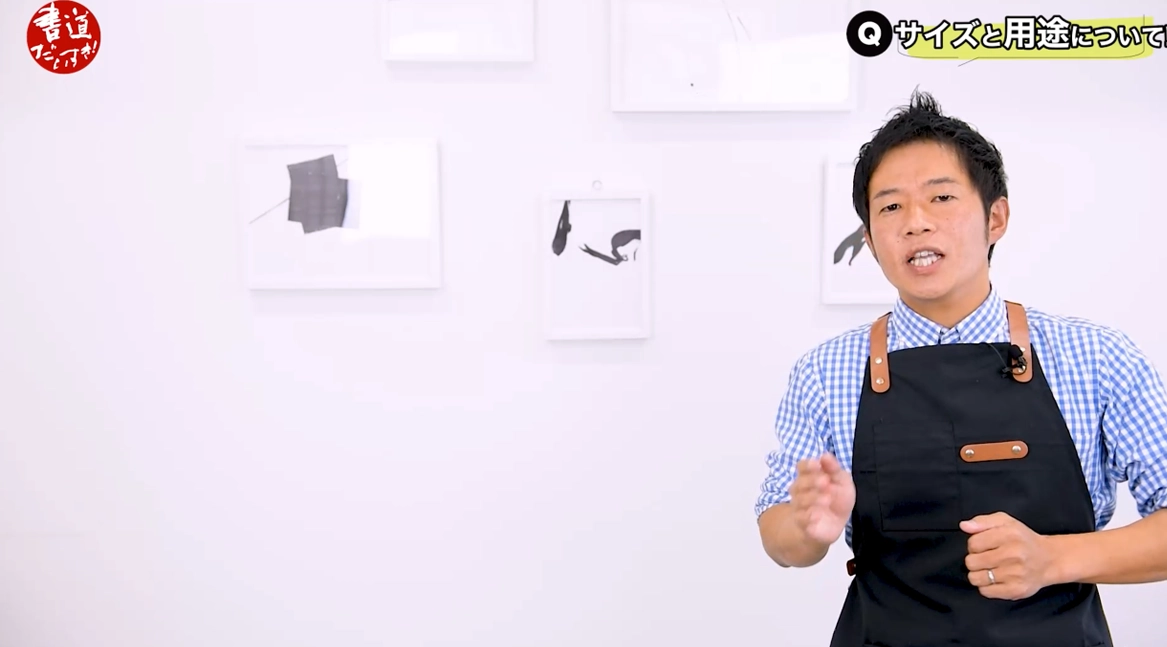
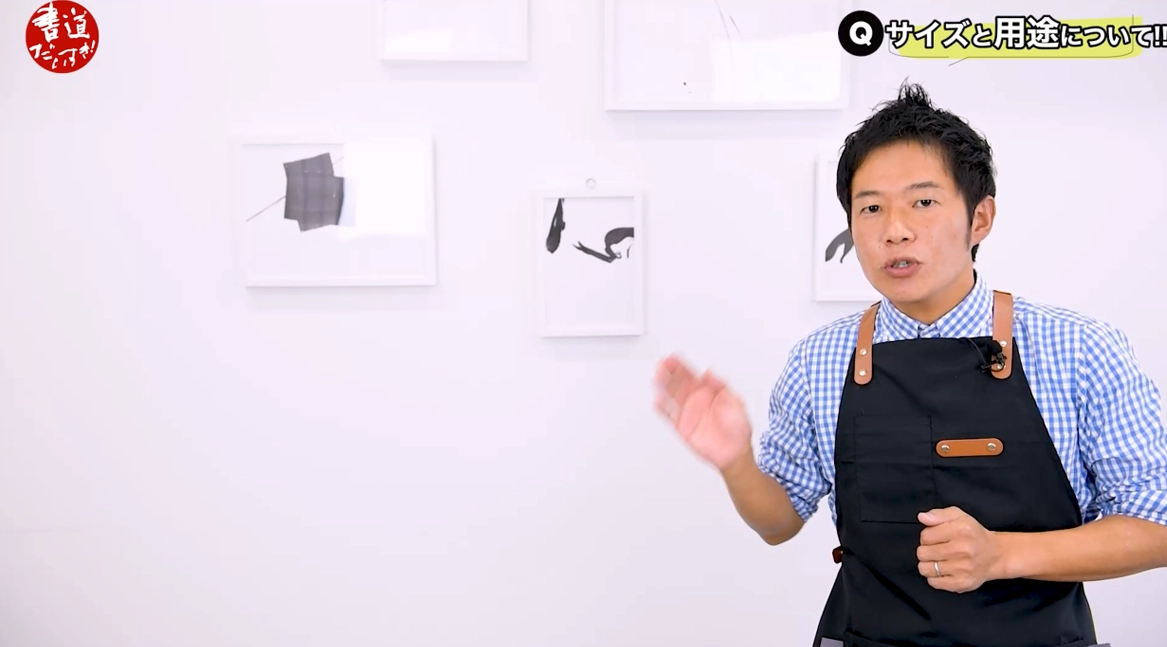
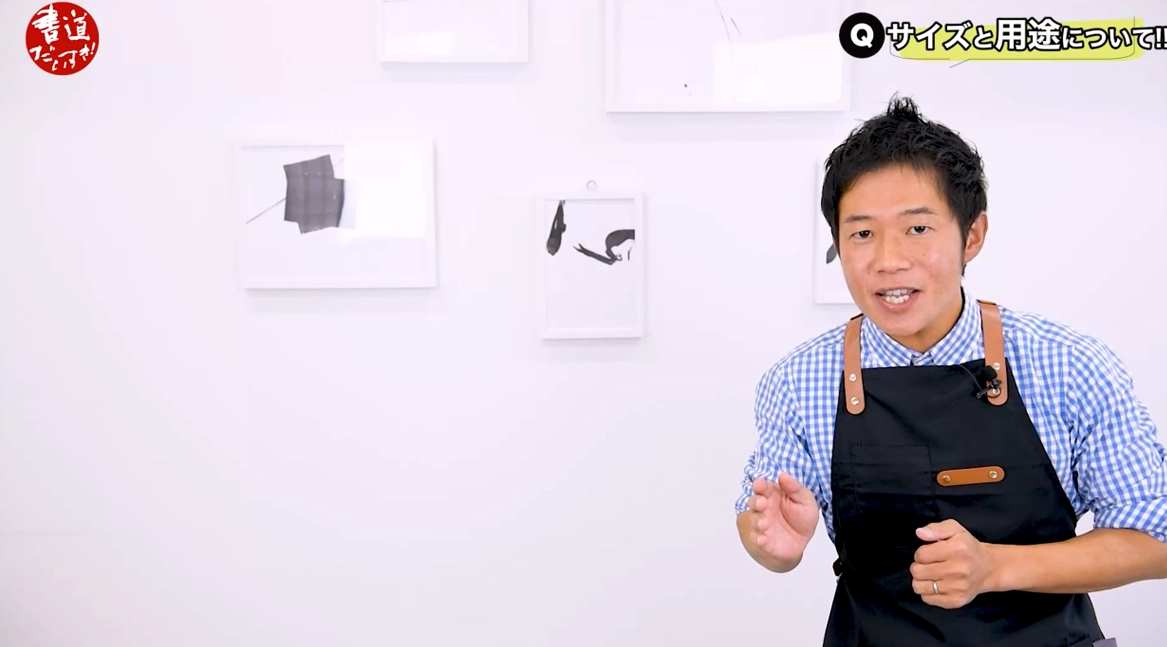
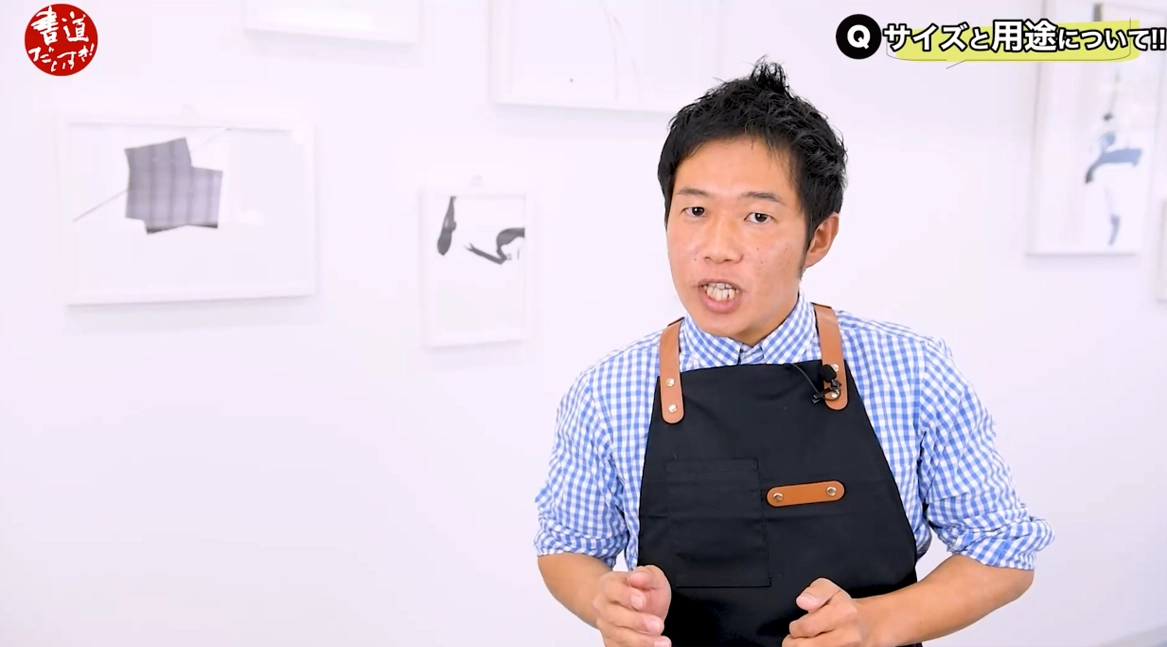
Shimauchi explains in detail how to choose the appropriate size of rakkan seal for calligraphy works.
He notes that rakkan seals come in many sizes, from about 0.5 cm up to around 7.5 cm, and that the ideal size depends on the type and size of the work.
In particular, the suitable size differs between kanji works and kana works, and he points out that rakkan seals for kanji are generally larger than those for kana.
For kanji poems (kanshi), he explains that a seal size in the range of 1 cm to 2 cm is appropriate, but that the best size varies depending on the size and number of characters and on the specific content of the work.
If you do not have a seal in the ideal size, he advises that you can compensate by carefully considering where and how you place the seal.
When ordering a new rakkan seal, he suggests printing red squares of 1.2 cm, 1.5 cm, and 1.8 cm, placing them on your work, and using that visual check to decide which size is best.
He also explains that, in addition to rakkan seals, there are other types of seals with different roles: inshu-in placed at the upper right to mark the beginning, asshaku-in stamped at the lower right or lower left to mark the end, and yūin (decorative “playful” seals) placed where the artist wishes to add an accent.
In particular, he explains that yūin help decorate the empty space and tighten up the overall impression of the work.
He concludes by saying that a piece is truly complete only after the rakkan is written and the rakkan seal is impressed, and that the tension of that final step is itself one of the pleasures of calligraphy.
Youtube Shodo Daisuki – Episode 43
Shimauchi 00:00
Hello, this is Shimauchi, and I love calligraphy.
In this video, I’d like to talk about choosing the most suitable size of rakkan seal for your work.
Standard seals sold on the market range widely in size, from around 0.5 cm up to about 7.5 cm.
Shimauchi 00:18
So you may be wondering things like: “What size seal should I use on a kanshi (Chinese-style poem)?” or “Can I use the same seal on a hansetsu piece that I use on a kanshi work?” I imagine many of you feel unsure about this.
If you watch this video through to the end,
Shimauchi 00:37
I think you’ll understand which seal size suits the size of the work you write, and also how to decide which of the seals you already own can be used on which size of piece.
So I hope you’ll stay with me until the end. Thank you very much!
Shimauchi 00:54
If you feel, “I want to watch this channel again!” or “I’d like to support this channel,” please subscribe and give the video a like—just a quick click makes me very happy.
Now, let’s get into the main topic. Please relax and enjoy.
First, let’s talk about seal sizes and how they’re used.
Shimauchi 01:11
Seal stones come in various sizes, and you’ll see them indicated in “bu” or “sun” (traditional units), right?
However, please also be aware that some seals are sold with sizes indicated in millimeters, so it’s important to pay attention to that as well.
Now, as a rough guide to the sizes of seals,
Shimauchi 01:28
if you look at this table, what probably stands out is the large difference between seals for kanji works and seals for kana works.
Just imagine it for a moment.
Kanji pieces and kana pieces have a very different overall feel, don’t they?
Shimauchi 01:46
Of course, the character size is different too.
The impression of the rakkan itself is also different between seals meant for kanji and those meant for kana.
Naturally, the design of the rakkan for kanji and for kana are not the same.
So, in order to express the atmosphere of the margins and empty space in the work,
Shimauchi 02:07
the size of the rakkan seal becomes quite important.
You may see from the table that, in general, rakkan seals for kana works are slightly smaller than those for kanji works.
Sometimes you see people stamping a kanji-style rakkan seal on a kana piece, but
Shimauchi 02:24
it can feel a bit off in some cases, so if possible, I recommend avoiding using the same seal for both. It’s better to prepare one set of seals for kanji and another for kana.
Next, if we look at seals for kanji poem works,
Shimauchi 02:40
you’ll see a range from 1 cm to 2 cm. That’s quite a wide range, isn’t it?
You might think, “It’s only 1 cm,” but when it comes down to it, that difference is actually very big.
The reason there is such a range
Shimauchi 02:58
is that even among works classified as “kanshi,” what is written can be very different.
The character size is important, of course, and so is the number of characters.
Take a look at this piece.
The impression given by a 1 cm seal and a 2 cm seal is completely different, right?
Shimauchi 03:17
For this particular work, if it were me, I’d want to use a seal around 1.2 cm to 1.5 cm.
You may be thinking, “But I only ever write on half-sheets, so I can’t prepare a new rakkan size every single time.” I can almost hear your protests.
And of course, it would be tough to buy a new seal each time.
Shimauchi 03:36
So suppose, for example, that you only have a 2 cm seal, or that the seals you own don’t match the suggested “ideal” sizes.
Everyone, this is an important point. In that case, you need to think carefully about where you stamp the seal and how you design the rakkan.
There is a huge difference between simply stamping a big seal without knowing any better
Shimauchi 03:58
and deliberately using a larger seal with a clear intention.
In Episode 21, I talked about placing the seal impression on your work and imagining how it will look—this is very important, as I mentioned then.
For those of you who are thinking about making a new rakkan seal for kanshi works,
Shimauchi 04:17
and who are not sure what size to choose, I recommend this approach: prepare solid red squares in 1.2 cm, 1.5 cm, and 1.8 cm,
Shimauchi 04:34
then imagine the rakkan you would write and place those red squares on your work in that area. While looking at them, think: “Given how I write, this size feels right.” Once you decide that, you can have the seal made in that size without much hesitation.
This method isn’t limited to kanshi works.
Shimauchi 04:53
You can use it for other work sizes as well. Whenever you want a new rakkan seal, this is one good way to choose the size.
The table I showed is only a reference for “suitable sizes.” There is no rule that you must stay within those measurements.
Shimauchi 05:10
Think of it as a guide to help you when you’re unsure.
Above all, the most important thing is to judge which seal size truly fits your own work.
Please don’t forget that—that’s really crucial, okay? I’m counting on you!
Since we’re on the topic, I’d also like to talk a bit about basic principles for seals stamped around the work.
Shimauchi 05:33
The seal that indicates the author is called the rakkan seal, and we usually use a full-name seal or an art-name (gō) seal for this.
The standard way is to stamp it below the signature, but it is also possible to omit the signature and let the seal alone serve as the rakkan.
When using two seals,
Shimauchi 05:56
the basic rule is to put the full-name seal above and the art-name seal below.
Now, have you ever noticed other seals stamped at various positions on a work?
These are given different names depending on where they are placed. First, the seal stamped at the upper right of the work
Shimauchi 06:21
is called an inshu-in and is said to mark the beginning of the piece.
It is often mistaken for a kanbō-in (official document seal), but that term refers to seals used on official documents, such as for sealing envelopes or legal papers.
Calligraphy works are artistic and refined, so rather than calling it a kanbō-in, it is better to use the term inshu-in.
Shimauchi 06:44
You may also have seen seals stamped at the lower right or lower left of a work.
These are called asshaku-in and they mark the “bottom” or the end of the piece.
There is also something called a yūin, which is a more playful seal that the artist stamps wherever they like.
Shimauchi 07:10
A yūin is often stamped in a deliberately left blank area to add an accent.
So for viewers, it may prompt them to think, “Ah, so that’s why the seal is placed there.”
Shimauchi 07:26
Yūin are not limited to seals with just characters carved on them.
Some are shōkei-in with small pictures or motifs carved instead of text.
That’s one of the fun things about yūin.
You don’t have to stamp a yūin on every work,
Shimauchi 07:45
but depending on how you use it, it can add color to the empty space
and help tighten up the overall composition.
In other words, it can enhance the visual impact of the piece.
If you feel like “I’d like to try using a yūin,” I encourage you to give it a go.
Shimauchi 08:05
How was it?
A work is completed only when the rakkan is written and the rakkan seal is stamped.
The rakkan and rakkan seal, in particular, contain many decorative elements.
Because you can’t relax until you’ve stamped that final seal, it can be quite nerve-wracking,
Shimauchi 08:27
but I think that very tension is one of the real delights of calligraphy.
Holding on to that sense of tension while still enjoying yourself as you face the paper—that’s what I, Shimauchi, was reminded of while making this video.
This has been “Shodo Daisuki” Shimauchi.
I’ve also started a short-video series called “秒で字がうまくなる (Improve Your Characters in Seconds).”
Shimauchi 08:50
I’d be grateful if you’d check it out as well.
I’ll keep doing my best with a healthy sense of nervousness. See you!
Related Products
Here are the products that appear in this video.
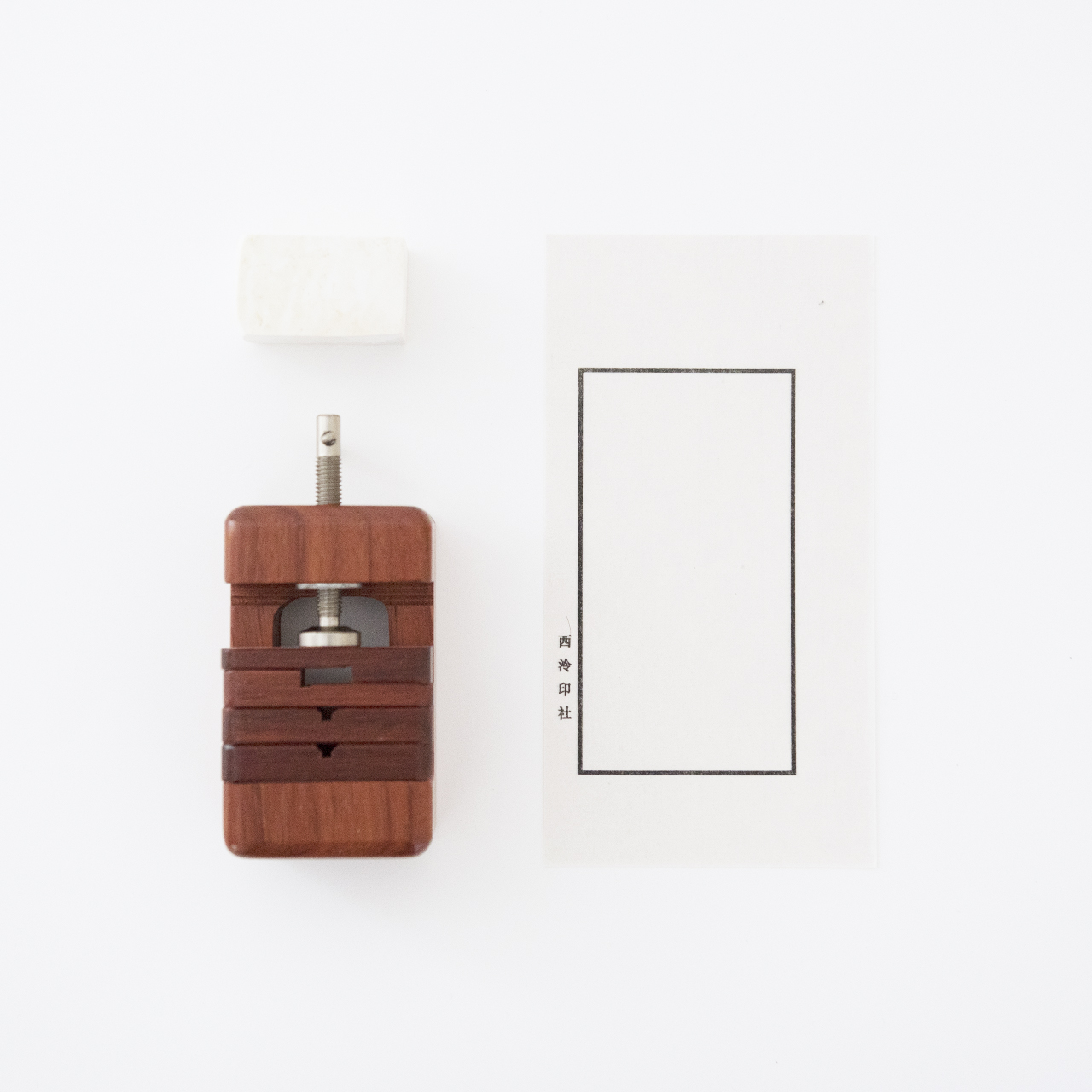
Seal Engraving Supplies / tenkokuitem
Rakkan seals become a part of your work itself. If you can carve them yourself, the joy of calligraphy expands even further.
Ordering a custom-made seal is nice, but if possible, why not enjoy crafting one with your own ideas and preferences?
At Shoyu Online, we offer a wide range of seal-engraving tools and materials to support your tenkoku (seal carving) journey.