

Shodo Daisuki Episode 44
Shodo Daisuki Episode 44
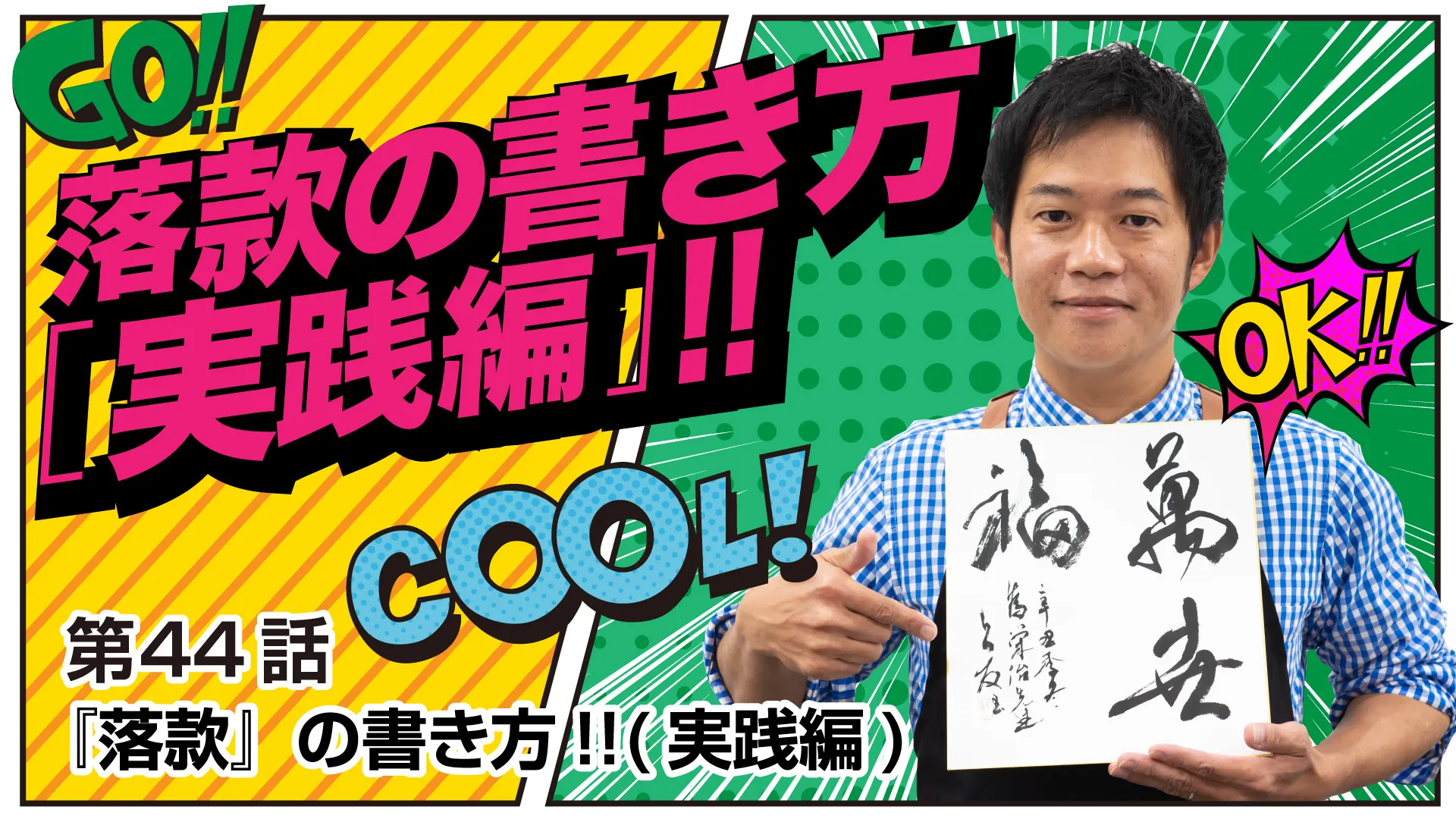
How to Write “Rakkan”!! (Practical Edition)【Calligraphy】
Shodo Daisuki – Episode 044
This is a follow-up to the episode from two times ago about “Rakkan”!
This time, the focus is on how to actually write your rakkan!!
Once you watch this, you’ll definitely be able to put it into practice from tomorrow!!
Shimauchi, a man who loves calligraphy, explains everything in depth!!
Shodo Daisuki Episode 44 – Video Overview
Shimauchi explains practical ways to use rakkan (the written information that accompanies a work) in calligraphy.
Rakkan exists to convey “when, where, who, what, why, and how” a work was created, and the calligrapher can decide which of these elements to include.
In this lesson, he focuses especially on how to express “when,” giving a detailed explanation of the stem-branch system known as “kanshi” (干支), which combines the Ten Heavenly Stems and Twelve Earthly Branches.
Kanshi is a 60-term cycle formed by combining the Five Elements theory (wood, fire, earth, metal, water) divided into yin and yang as the Ten Heavenly Stems with the Twelve Earthly Branches, and it is the standard way to indicate time in rakkan.
He also explains how to express months using seasonal terms based on the old lunar calendar, such as “mō” (beginning), “chū” (middle), and “ki” (end) of each season.
Shimauchi emphasizes that using this knowledge of rakkan adds depth and gravitas to a work, and he also touches on how to use the phrase “kintei” (respectfully presented) for gifted works and on etiquette when signing your name.
Finally, he stresses the importance of incorporating rakkan practice into your daily training, and shares his experience of seeing many examples of kanshi used in actual works at a recent exhibition.
YouTube Shodo Daisuki Episode 44
Shimauchi 00:00
You may omit any of the elements you like.
They are divided into two types, yin and yang, making a total of ten, and then continue in a cycle — that’s the key point.
Isn’t that incredibly cool?
Hello, this is Shimauchi, who loves calligraphy.
This time is a further practical edition of the episode from two times ago about how to write rakkans.
Shimauchi 00:26
Once you watch this, you’ll definitely deepen your knowledge of how to use rakkans not only on your own works, but also on pieces you give to others as gifts, and in many other situations.
Please watch until the end.
On this channel I introduce all kinds of things related to “writing,” not just calligraphy alone,
Shimauchi 00:45
so if you enjoy it, please subscribe and give the video a like — I’d really appreciate your support.
Now, let’s start the main part.
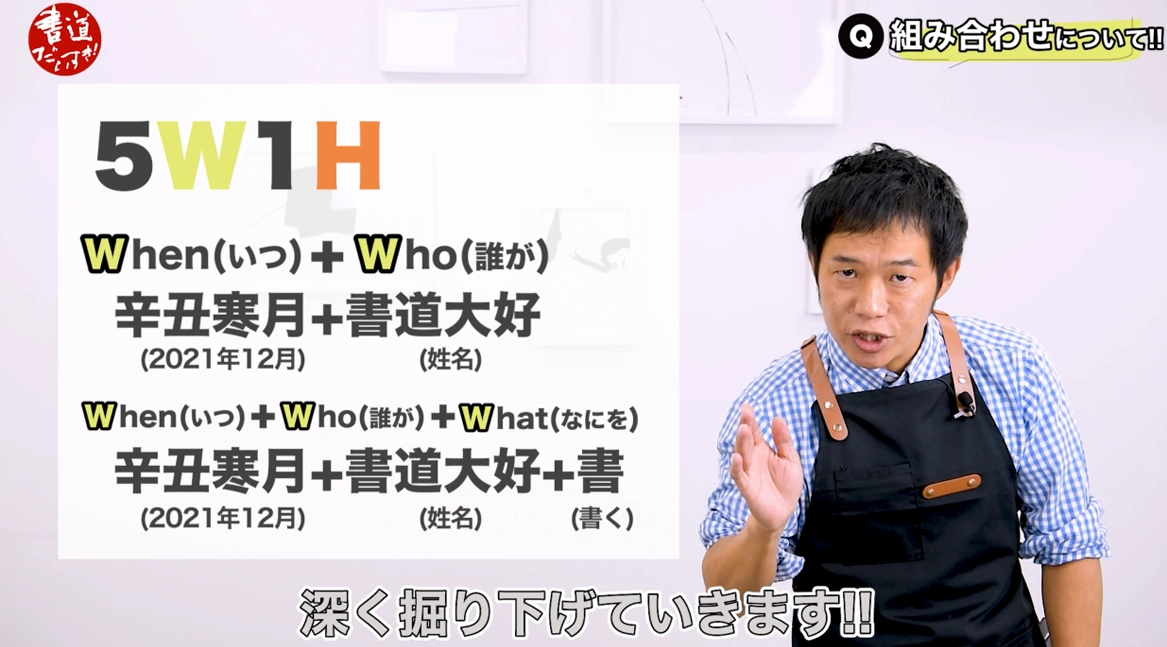
Regarding how to combine elements in a rakkan, have you heard the business expression “5W1H”?
Shimauchi 01:04
5W1H stands for: Who, When, Where, What, Why, and How.
Rakkan exists to convey these 5W1H elements in your work.
Which of these items to include or omit is entirely up to the calligrapher’s judgment.
However, because the text is written as classical Chinese, in line with Chinese grammar,
Shimauchi 01:30
it is not desirable to introduce Japanese vernacular expressions into it.
There are no strict rules for the order of “when, where, who, what,” but in general, your own name tends to appear at the very end of the sentence.
In this video, we’ll take a deeper look at the most commonly used element: “when.”
Shimauchi 01:51
First, let’s revisit the stem-branch system we touched on last time, called “kanshi” (干支).
Note that this is “kanshi,” not “eto” as we usually say in everyday life.
For now, please set aside the zodiac animals we normally use and listen to the explanation from here with a fresh mind.
Shimauchi 02:11
Kanshi refers to the Ten Heavenly Stems and Twelve Earthly Branches. Please take a look at this chart.
There is a way of thinking called the Five Elements theory, which classifies everything in the universe into wood, fire, earth, metal, and water.
These are then divided into yin and yang, making a total of ten types — the Ten Heavenly Stems.
This is a very simplified explanation, and real specialists might scold me for it,
Shimauchi 02:41
but I don’t think it’s entirely wrong, so I hope you’ll forgive me.
The Twelve earthly branches are the familiar zodiac signs we know in Japan.
When we assign the Ten Heavenly Stems to the Twelve Branches to indicate years, the result is called the Ten-Stem Twelve-Branch system, or “kanshi.”
The first year is “kōshi,” the second is “otsuchū,”
Shimauchi 03:03
the third “heiin,” and so on, with the tenth being “mizunoto-tori.”
Here is the important part: after that, the cycle continues with “kō-i” and so on — it keeps turning in sequence.
The final, 60th, combination is “mizunoto-i.”
Then, 60 years later, it returns again to “kōshi.”
Shimauchi 03:29
This is what is called “kanreki,” the 60th birthday.
Incidentally, the year 2021 is “shin-chū” (辛丑).
Kanshi is a standard way to express when a piece was written in the rakkan.
Being told to memorize all 60 combinations by heart would be exhausting, wouldn’t it?
But just understanding how the system works
Shimauchi 03:51
will make it much easier for you to use it from now on.
Once we’ve covered the year, the next topic is how to express the month.
You can simply write “such-and-such month,” but using alternative month names clearly adds more flavor and elegance.
It also makes the written form look much more refined.
Shimauchi 04:12
So I’d like to introduce some of these alternative names for the months as well.
If we divide a year into the four seasons of spring, summer, autumn, and winter, each season is three months long.
These three months can be described as “mō” (beginning), “chū” (middle), and “ki” (end). When we apply these terms, we get expressions like those shown here.
For example, December is “ki-tō,” the end of winter.
Shimauchi 04:36
However, one thing you must keep in mind is that this calendar is based on the old lunar system, so it doesn’t line up exactly with our modern seasonal sense.
Also, there are the familiar Japanese month names that you may have heard, such as “Mutsuki” and “Kisaragi,”
Shimauchi 04:54
but unfortunately, since we are writing in Chinese poetry or classical Chinese, using those Japanese names is not acceptable — it’s “NG,” you might say.
Now, how does it look when we combine these month expressions with the kanshi years?
Doesn’t it give the work much more depth than just writing your name alone?
I think it looks far more impressive this way.
Shimauchi 05:16
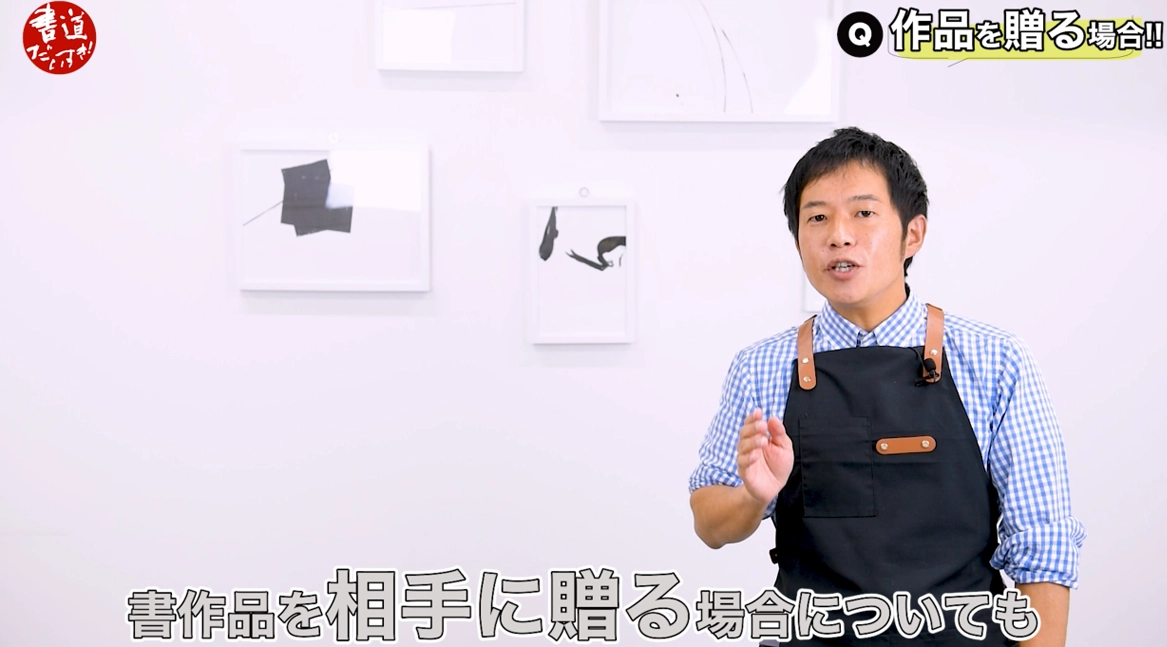
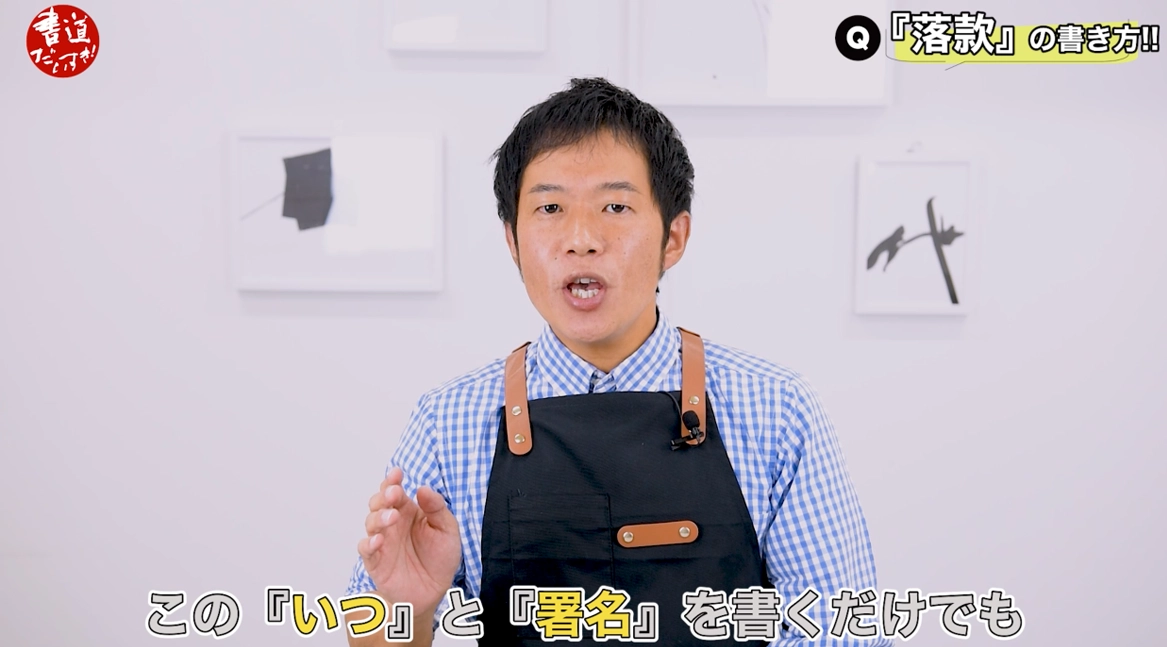
Since we’re at it, let me also explain how to handle works that you present to someone else.
In that case, it is common to write the character 「為」 or the phrase 「為書」 above the recipient’s name, which means “written for so-and-so.”
What you must pay attention to here is that it is a matter of etiquette to attach an honorific under the person’s family name.
Shimauchi 05:40
Imagine being handed a shikishi board, writing a single character neatly and boldly,
and then smoothly adding a rakkan like the ones we’ve discussed in this video.
If you can do that, wouldn’t it look incredibly cool?
How did you find this explanation?
It’s easy to focus only on writing the main text,
Shimauchi 06:00
but once you are writing a piece, the rakkan is also an important part of the work.
I recommend getting into the habit of adding rakkans even when you’re just practicing.
If you do that, I’m sure it will help you in decisive moments when it really counts.
There is still much more I could say about rakkans,
Shimauchi 06:22
but even just writing these five elements and your signature will give your work a much deeper feeling, so please give it a try.
Actually, I visited an exhibition recently.
There, I saw many works that used this year’s kanshi and seasonal expressions for the month in their rakkans.
Shimauchi 06:39
Those phrases naturally caught my eye wherever I looked.
You could say that’s the fruit of study.
This has been Shimauchi, who loves calligraphy.
When I turn on the air conditioner, it becomes much harder to manage the moisture of the ink,
and I end up getting tossed around by it — that was my recent experience.
See you again next time.
About Related Products
Here are the products that appear in this video.
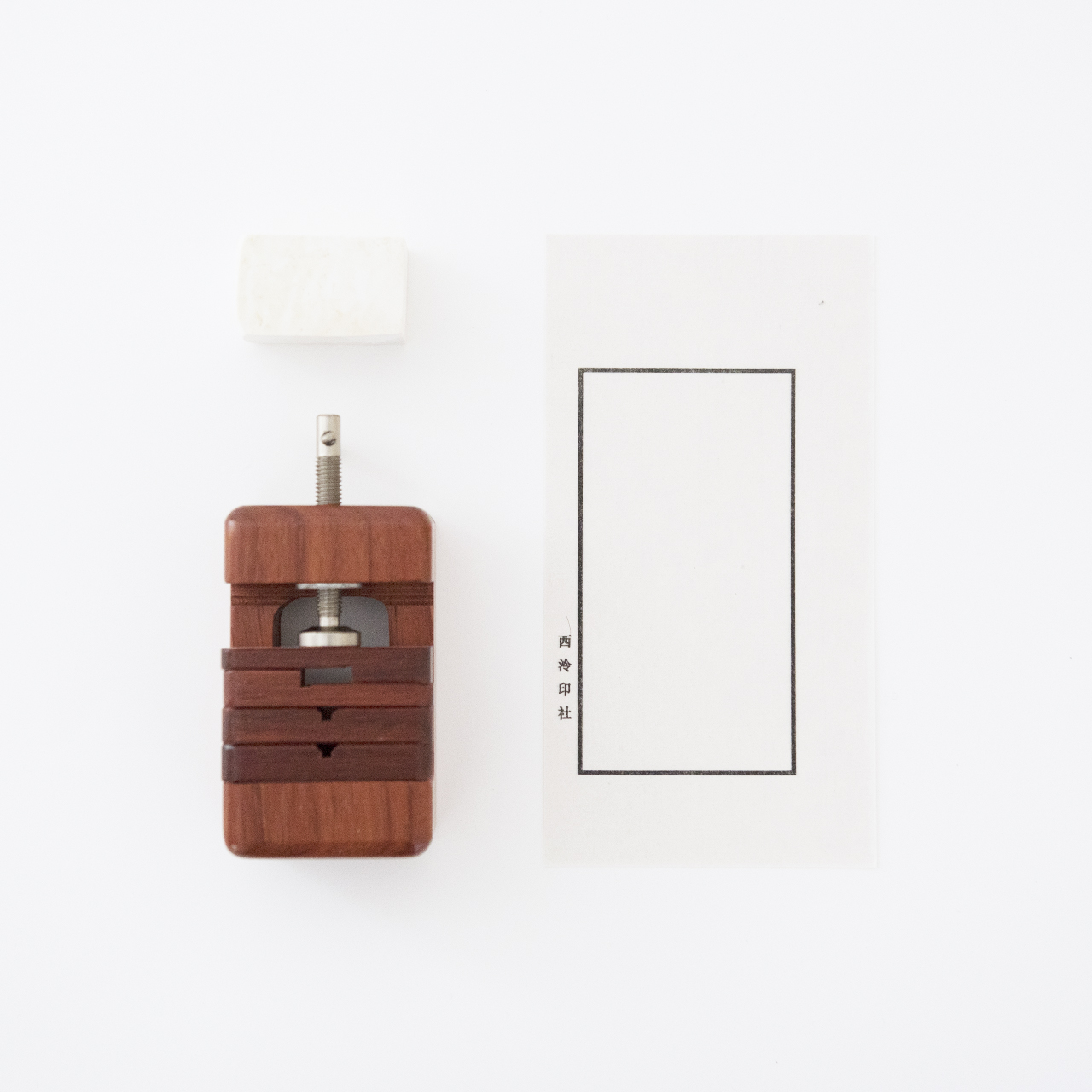
Seal Carving Supplies / tenkoku item
The rakkan seal becomes part of the work itself. If you can carve it yourself, the joy of calligraphy expands even more.
Ordering a custom seal is one option, but if possible, why not create your own with great care?
At Shoyu Online, we offer a wide range of seal-carving tools and materials to support your tenkoku practice.


