

Shodo Daisuki Episode 53
Shodo Daisuki Episode 53
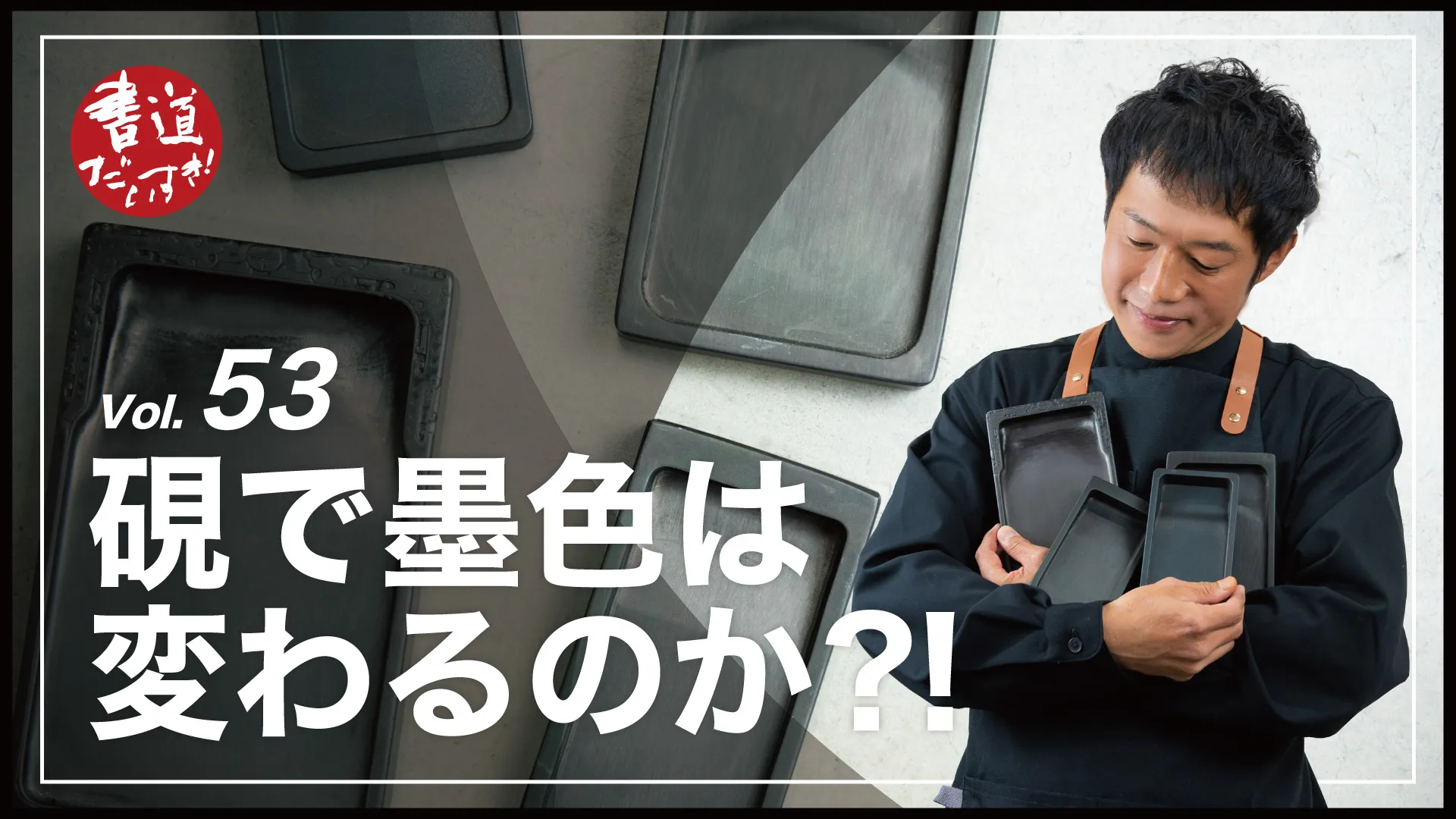
Test: Do Inkstones Change the Ink Tone?!【Calligraphy】
Shodo Daisuki – Episode 053
One of the Four Treasures of the Study and essential to calligraphy: the “inkstone”!
They range from budget to ultra-premium—but how much does the inkstone actually affect ink tone?
In this episode, we thoroughly show how the ink tone changes with four classic types of inkstones!
Shodo Daisuki Episode 53 – Video Overview
In this video, Shodo-lover Shimauchi compares four kinds of inkstones.
Using a ceramic inkstone, a student “ramon” inkstone, a fine “ramon” inkstone, and a Kozaiyan Duanxi inkstone (tankeiken), he explains in detail the differences in ink tone and feel.
He tests each inkstone in practice and compares how the ink tone develops, how it grinds, and how it writes.
He concludes: the ceramic type actually grinds more pleasantly than expected but produces a lighter tone; the student ramon inkstone grinds quickly but feels a bit rough while writing; the fine ramon inkstone offers a balanced feel and suits beginners; and the Duanxi inkstone brings out the best ink tone and character.
Shimauchi emphasizes that you don’t always need the most expensive inkstone—what matters is choosing one within reach that matches your purpose.
Understanding each tool’s pros and cons and selecting appropriately for your use is key to enjoying calligraphy.
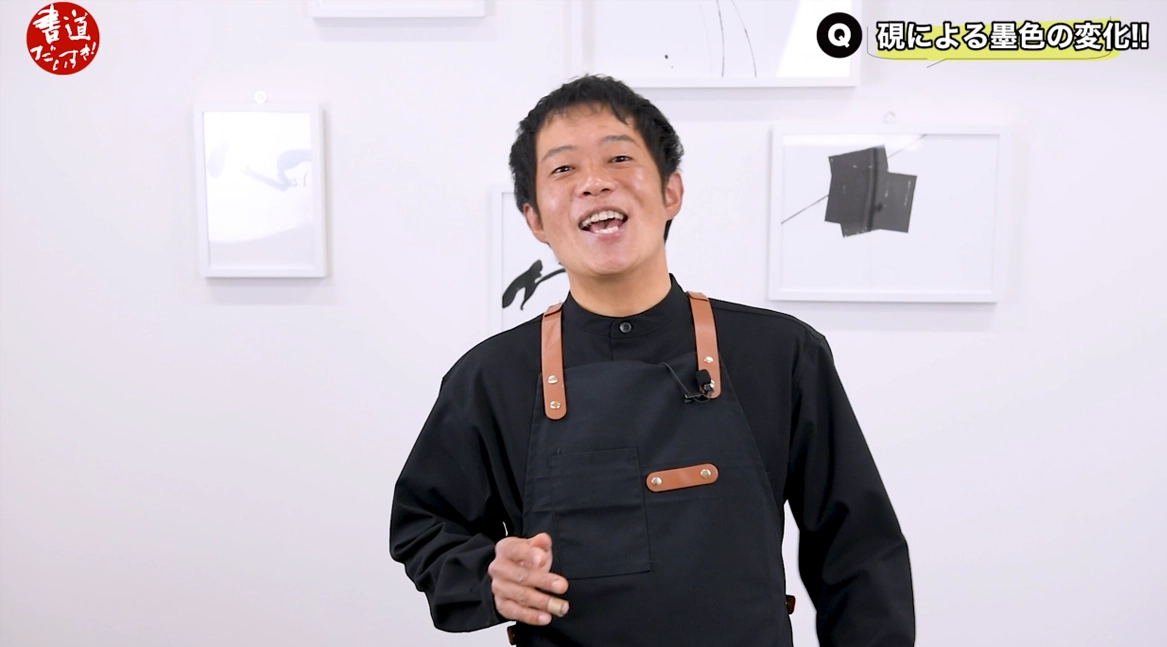
YouTube Shodo Daisuki Episode 53
Shimauchi 00:00
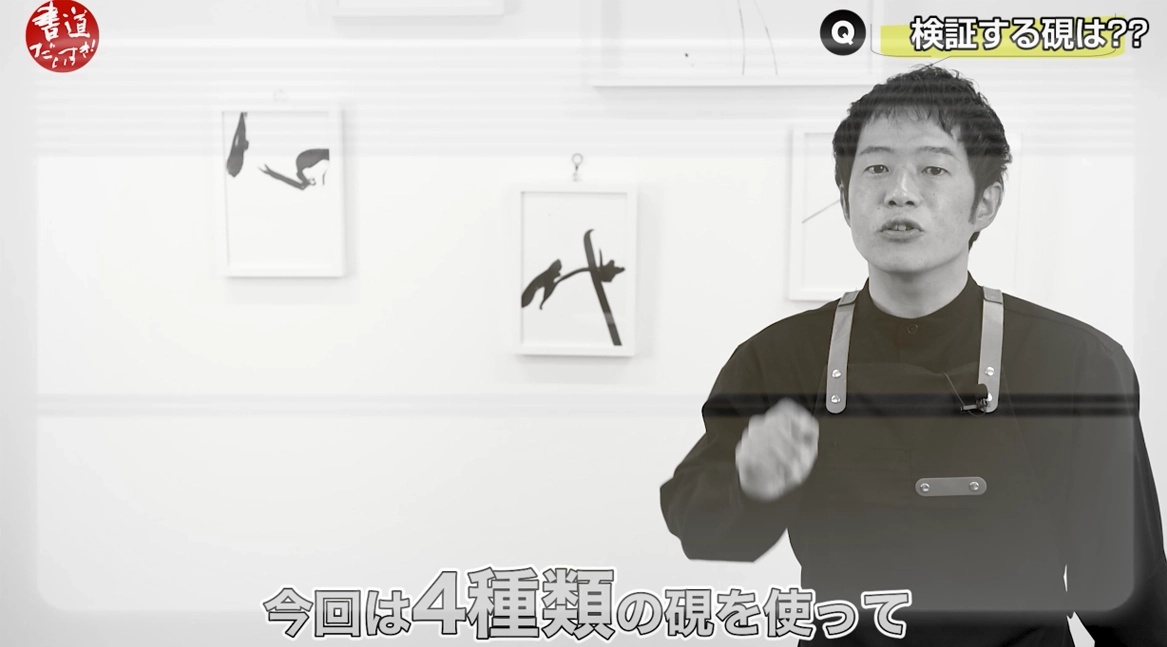
We’ll test using four types of inkstones.
Some aren’t even stone anymore!
I’ll be shocked if one gives the worst ink tone…
Doesn’t this have an indescribable charm? Hello—this is Shodo-lover Shimauchi.
Today we’ll test whether inkstones change ink tone.
Shimauchi 00:24
That’s the plan.
Inkstones range from a few hundred yen to over a million—do they really change the ink tone?
Maybe there’s almost no difference, and cheaper ones work better?!
Shimauchi 00:41
How about it—are you getting curious?
If you own a fine Duanxi inkstone, you probably wouldn’t bother comparing it with the standard kit inkstone.
So I’ll do that “nosy” job for you today.
Shimauchi 01:00
I’ll run the tests for real.
The results are very interesting—don’t miss the end!
On this channel I introduce all sorts of “writing” topics beyond calligraphy, so please consider subscribing.
Shimauchi 01:17
I’d really appreciate it. Let’s begin!
First, what we’ll test.
We’ll compare four inkstones.
(1) A ceramic type—lightweight and common for schoolchildren these days.
Shimauchi 01:40
It’s not even stone, right?
So how does it feel to grind? What ink tone does it yield? Fascinating questions.
(2) A student “ramon” inkstone—
often included in calligraphy kits and a staple school supply.
Shimauchi 02:04
You’ll also see it frequently as a classroom inkstone.
Strictly speaking, these “student ramon” stones don’t actually have ramon patterns, so the name isn’t literal; it’s just become the label for affordable kit inkstones.
Shimauchi 02:23
So—everyone’s seen one. How capable is it, really?
(3) The fine “ramon” inkstone—positioned above the student type.
Shimauchi 02:47
Many start using this in high school and beyond.
Some call it a Gyokuzan inkstone; it has the characteristic internal patterning of ramon stones.
Nowadays “fine ramon inkstone” is the common name,
Shimauchi 03:08
so I won’t dig deeper here.
Its surface teeth feel finer and more even than the student one—
so I expect it to produce ink well.
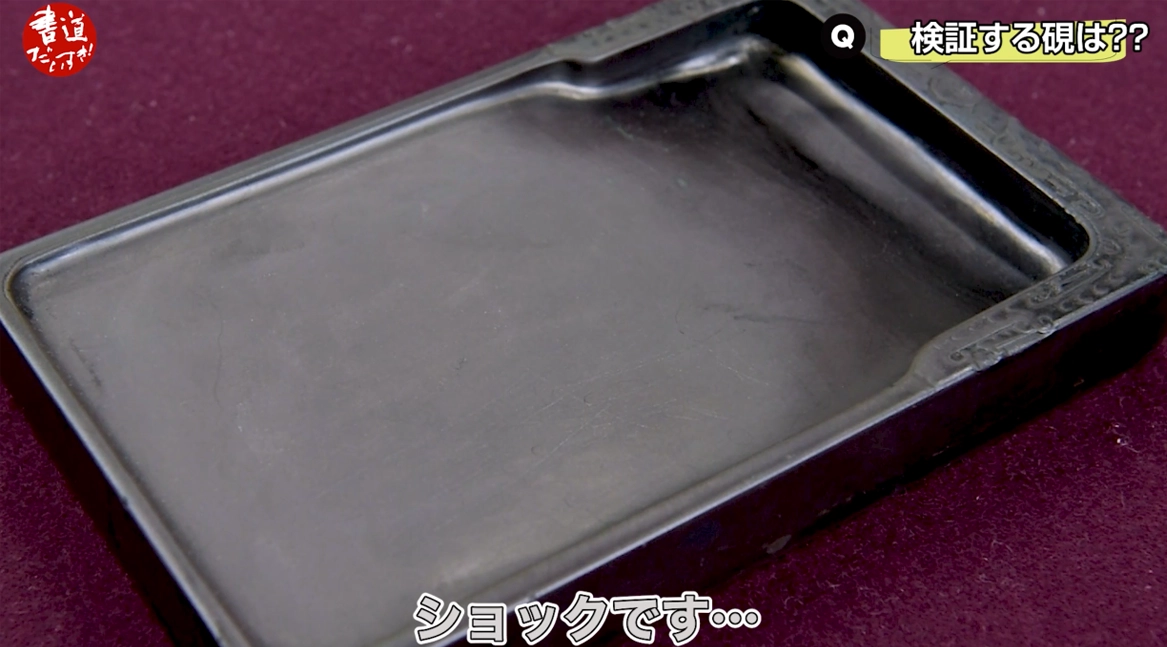
(4) Duanxi inkstone.
The famous Duanxi at last!
Shimauchi 03:31
Today I’ll use my daily driver: a Kozaiyan Duanxi inkstone.
Strictly speaking it’s a “new” Kozaiyan Duanxi—that’s the proper term, but I’ll leave it at that.
Honestly, I’d love to test even more expensive inkstones,
Shimauchi 03:58
but I’d get in trouble for that!
So I’m fielding my beloved Kozaiyan Duanxi as the top contender—please look forward to it.
If it doesn’t produce the best ink tone, that would be a shock…
Shimauchi 04:19
I’d be disappointed—but it’ll be fine.
It’ll be fine—I’ve ground with it for ages; I’m confident.
Here are the results—four samples side by side.
Let me share my impressions for each.
Shimauchi 04:39
First, the ceramic type.
Embarrassingly, this was my first time grinding on one.
I expected a gritty feel, but it actually felt pleasant to grind on.
Strange—but…
Shimauchi 04:57
there’s a catch.
When I wrote with it, contrary to the grinding feel, the ink wasn’t that dark.
On the paper it bled less, and the tone looked a bit faded—
so… not quite there.
Shimauchi 05:15
Close—close, but not quite. Still, you can enjoy the grinding experience.
Next, the student ramon inkstone— the grinding feel
is somewhat heavy.
As I ground,
Shimauchi 05:30
it felt like the brush was catching— a rougher grind, perhaps.
But the ink darkened quickly—
that was clear.
Shimauchi 05:45
However, when writing, the dense ink felt tacky—
the brush seemed to catch, making it harder to write smoothly.
Even in light ink (tanboku), the texture felt rough.
Shimauchi 05:58
So it was hard to achieve refined lines and light strokes.
Still, the fast darkening was better than I expected.
Compared with the ceramic, the depth of tone
Shimauchi 06:15
is obviously stronger.
Next, the fine ramon.
Since I used this a lot in the past, the grinding feel
had a reassuring familiarity—“Ah, this is it.”
Shimauchi 06:30
That sense of comfort is valuable.
I think it’s a great stone to learn with initially.
The writing feel is moderate and comfortable,
and in light ink,
Shimauchi 06:44
it produced a moderate, pleasing bleed.
If you want a Duanxi but find it pricey and are still using a student ramon,
I recommend trying a fine ramon inkstone—
Shimauchi 06:57
it’s affordable and worth it.
Lastly, my daily Duanxi.
No favoritism here—
yes, I love it, but I also grind on it every day.
The grinding feel is simply excellent.
Shimauchi 07:15
It just feels “right.”
When writing, it seems to bring out the solid ink stick’s true potential—
its inherent color shows clearly.
In light ink, the bleeding pattern was distinctly different from the other three.
Shimauchi 07:36
Naturally the light strokes were clearer, and even the way it bled differed in tone.
Doesn’t it create an indescribably lovely character?
Some may think all inkstones are the same for grinding,
Shimauchi 07:55
but when you actually grind, the Duanxi has a subtle “grip”—
the grinding feel is altogether different.
Comparing ink tones like this, you can see the differences.
There are colors and bleeds only a Duanxi seems to produce.
Shimauchi 08:17
You don’t need one that costs tens of thousands (of yen).
There are reasonably priced Duanxi inkstones, too.
Why not choose an affordable Duanxi that fits your needs and enjoy the experience of grinding?
Shimauchi 08:35
Whew—
I’m relieved my favorite held its own!
Each stone’s character really stood out—fascinating, right?
Now I’m tempted to test Meishi or Laokeng stones as well… but that’s for another time.
Shimauchi 08:55
Lately I feel it’s not “cheap equals bad.”
It’s about understanding a tool’s merits and drawbacks for yourself,
and choosing the right tool for each purpose—
Shimauchi 09:17
that, I believe, is crucial to enjoying calligraphy.
If this channel can help you do that, nothing would make me happier.
There’s so much depth ahead—
Shimauchi 09:33
and I want to keep diving into the vast world of calligraphy.
I hope you’ll keep joining me for the long run.
This was Shodo-lover Shimauchi—
please look forward to the next video!
Everyone,
Shimauchi 09:51
see you again on Friday night!
Good-bye!
About Related Products
Here are the products featured in this video.
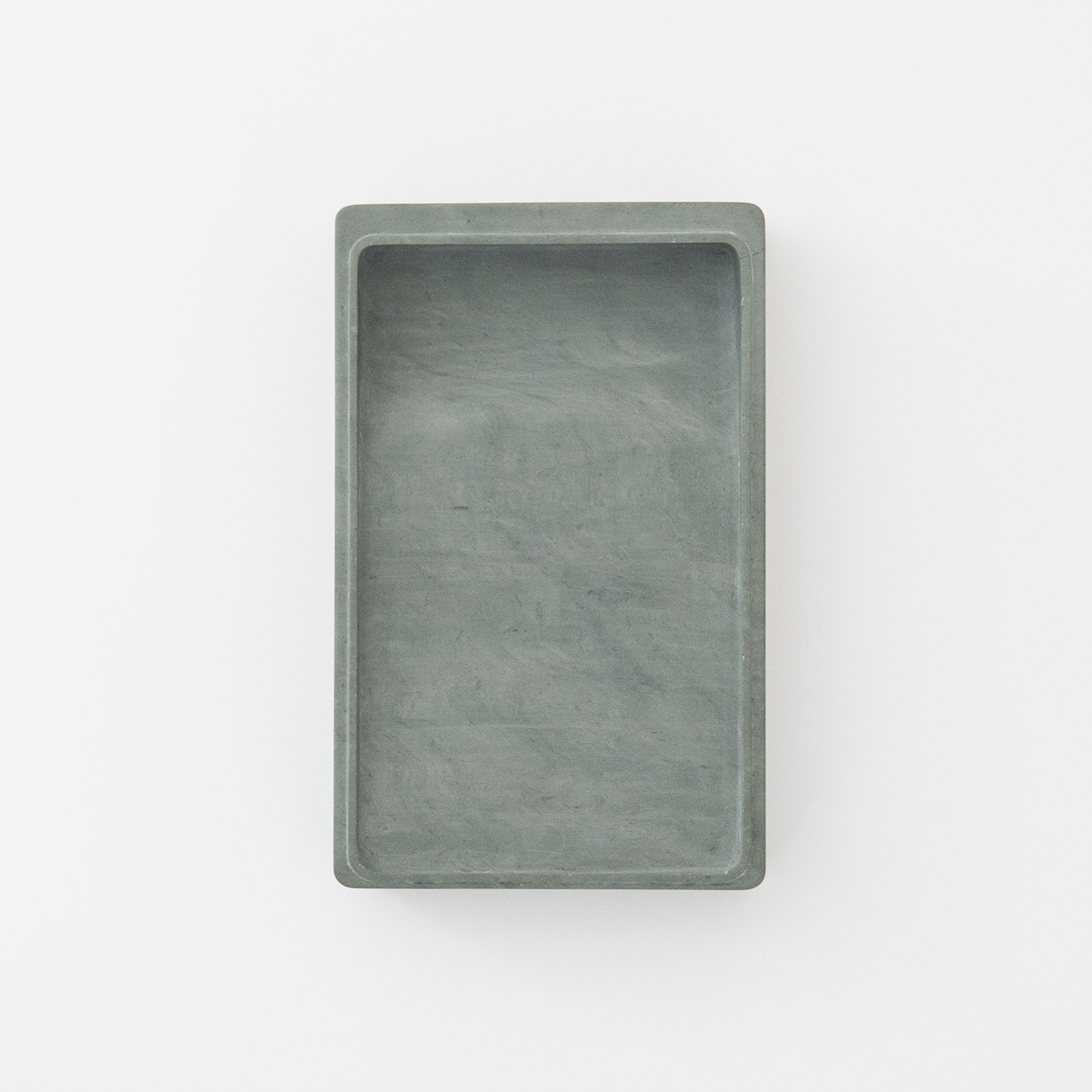
Inkstone / suzuri
The path begins with grinding ink.
Just having an inkstone calms the mind… An inkstone isn’t merely a utilitarian tool; it is also an object to appreciate—an art piece.
An inkstone plays a crucial role in achieving a good ink tone.
As the saying goes, “An inkstone lasts a lifetime.” Choose the best quality you can within your budget.
Grinding fine ink on a fine inkstone—that’s the ultimate luxury.


