

Shodo Daisuki Episode 67
Shodo Daisuki Episode 67
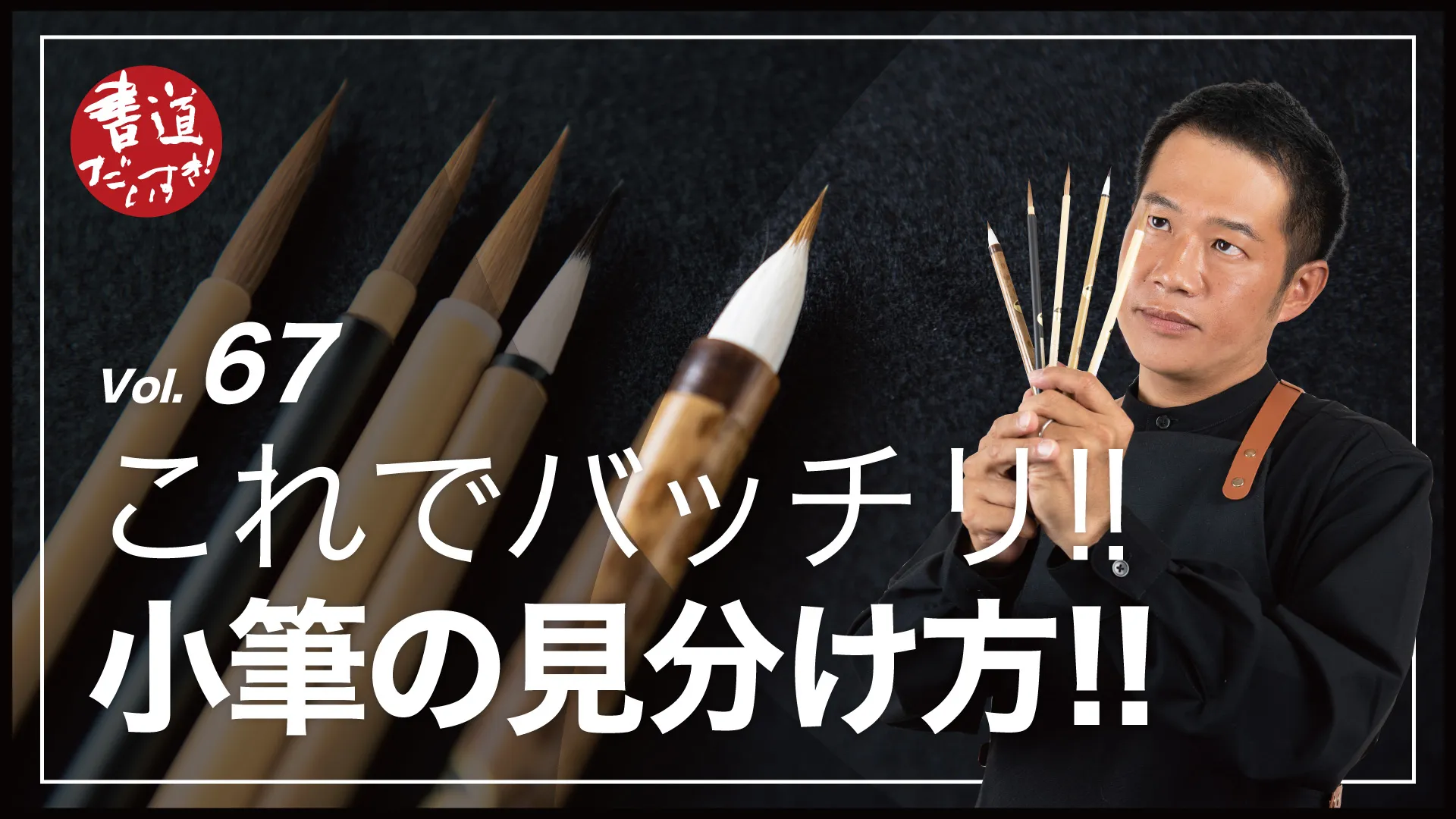
Now You’ve Got It!! How to Tell Different Small Brushes Apart!!【Calligraphy】
Shodo Daisuki – Episode 067
Even when we say “small brushes,” their shapes and uses vary widely!!
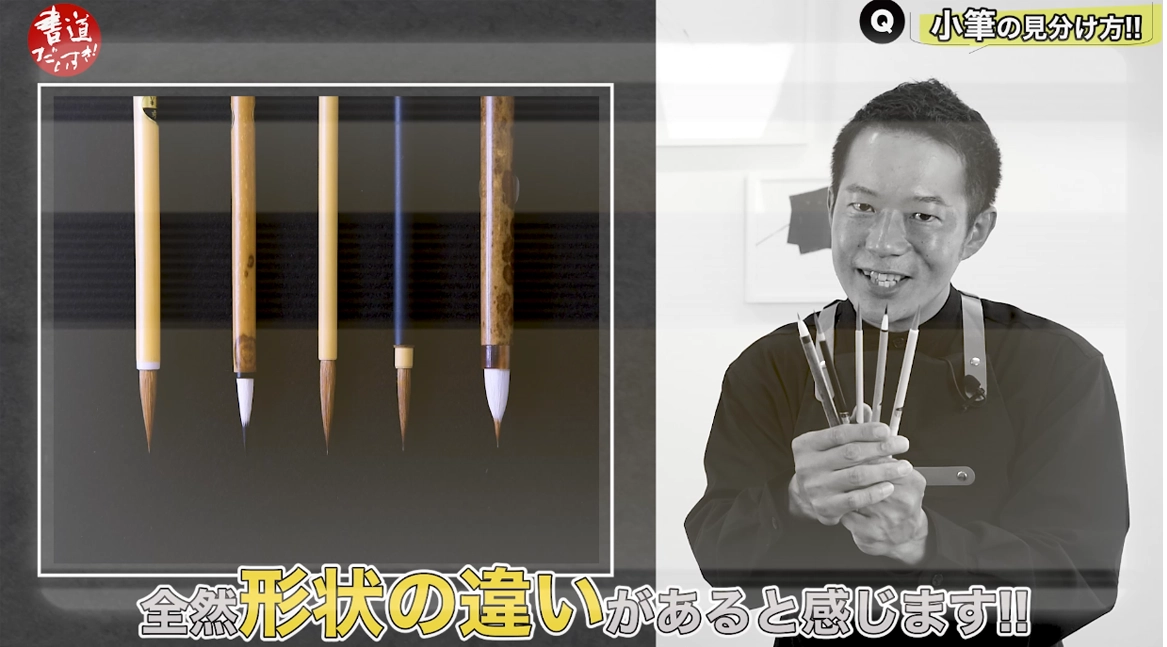
This time, we picked out five types of small brushes and compared their characteristics, writing feel, and ink-holding capacity!!
We’ll also share the check points that Shimauchi always looks at when buying a small brush!!
Shodo Daisuki Episode 67: Video Overview
This is an explanatory video by Shimauchi about the types and features of small calligraphy brushes.
In this video, he explains in detail five types of small brushes: a fine-line brush, a fine-line “wrapped-hair” type, a kana brush, a menso brush, and a sutra-copying brush.
At the beginning, Shimauchi says that through this video, viewers will be able to deepen their understanding of what their own small brushes are for and how to use them.
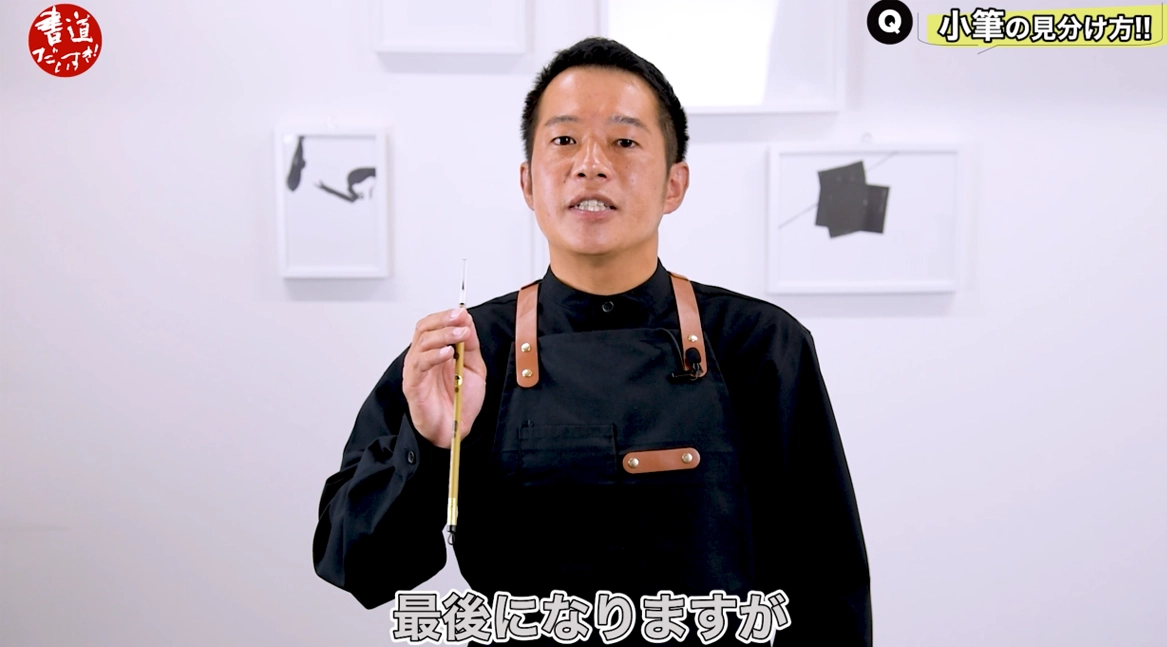
He also previews that at the end he will introduce the check points he personally uses when purchasing a small brush.
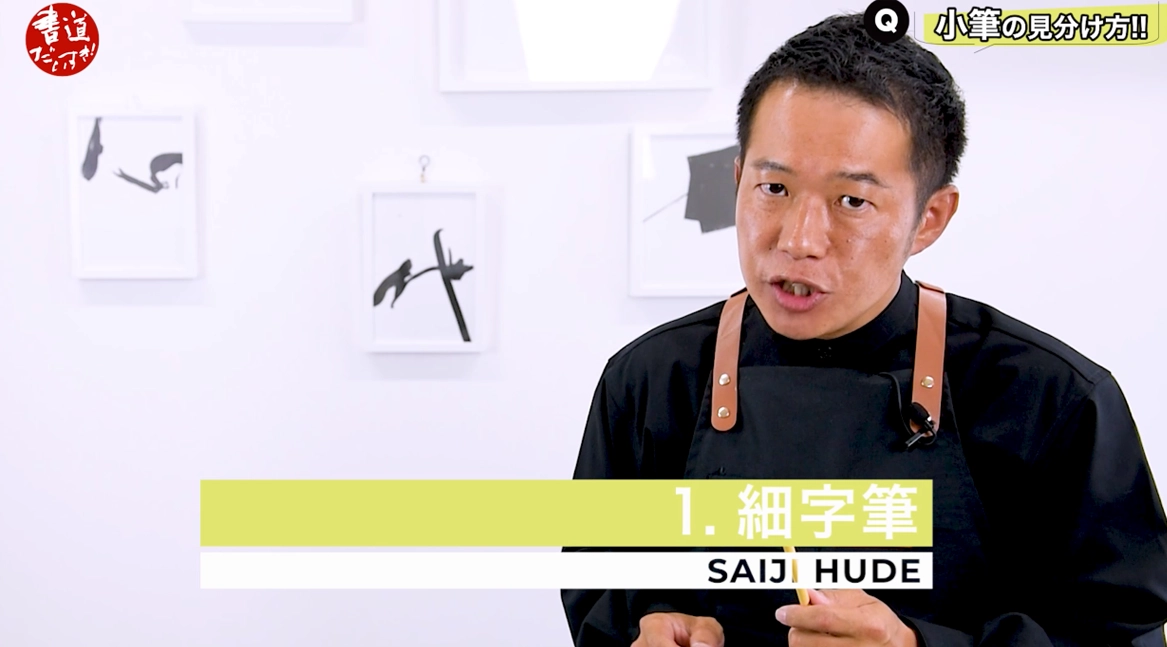
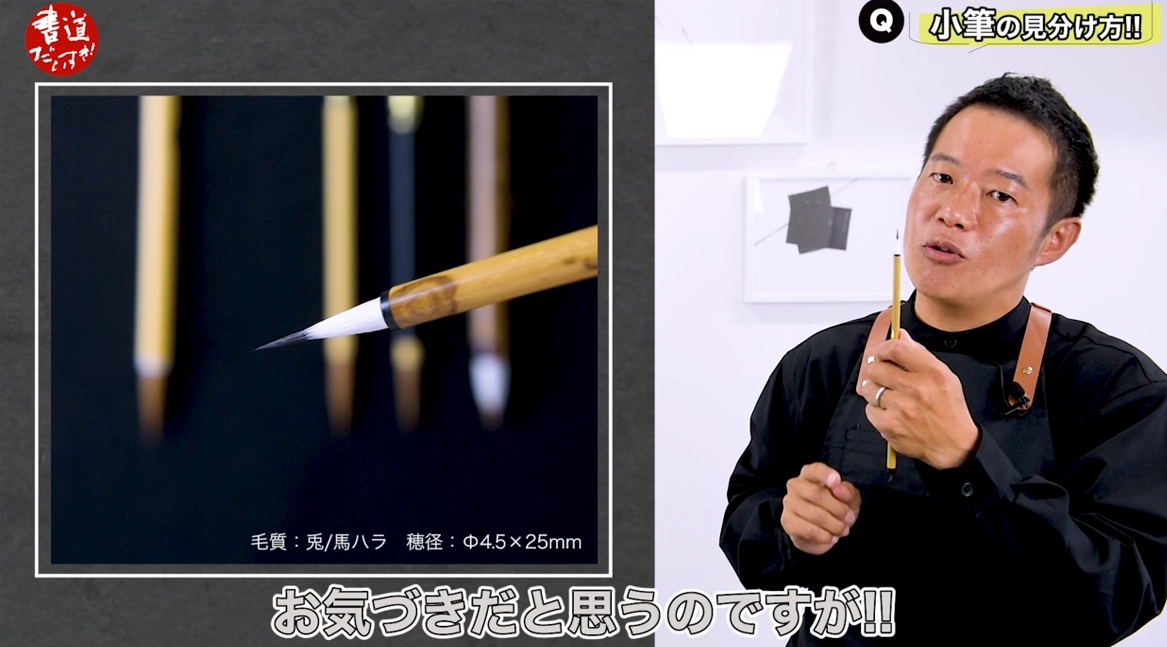
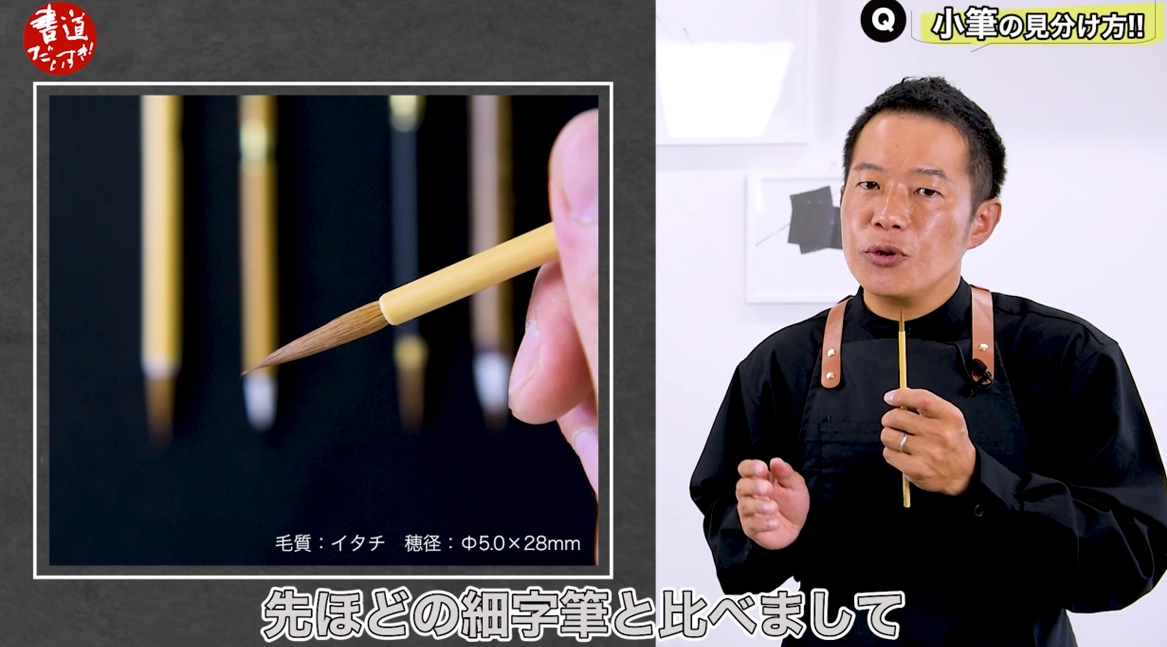
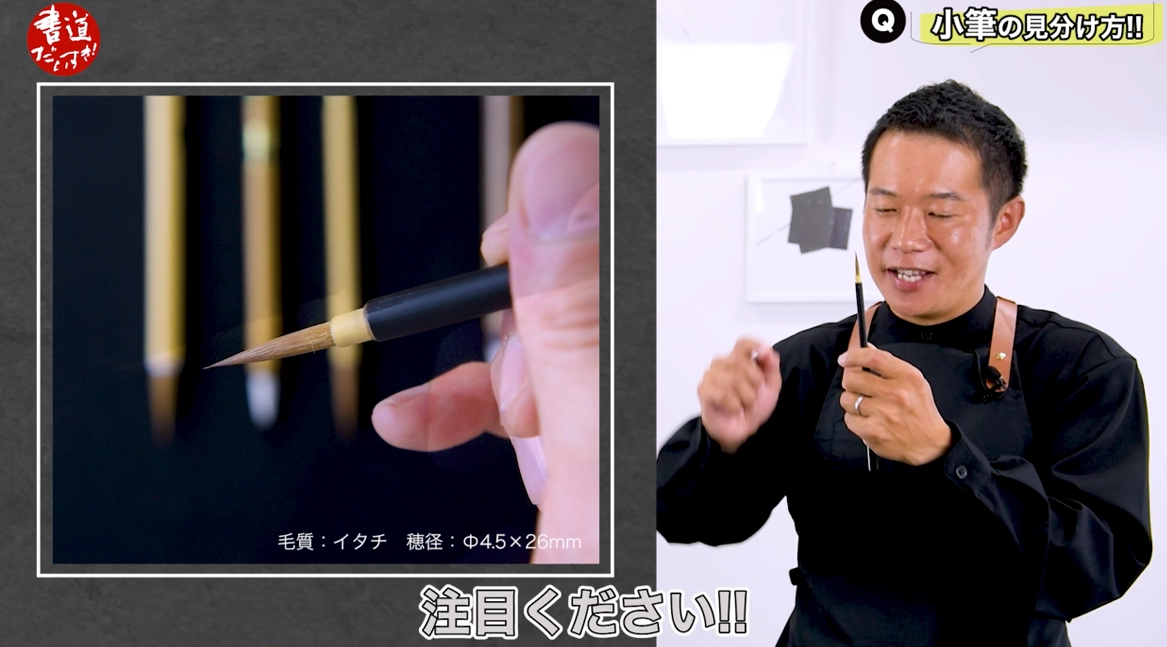
First, regarding fine-line brushes, he explains that many have a lot of brown hair and often use weasel hair as the main material.
Recently, there have also been more brushes that include nylon to add firmness. The key feature of this type is that the user can decide the “working position” themselves, allowing lines of various thicknesses and making it a versatile, all-purpose brush.
However, he notes that if ink accumulates and hardens, the shape of the tip may change, so caution is needed.
For the fine-line wrapped-hair type, he explains that the black hair portion is the usable part, while the surrounding white hair is decorative hair meant to make the tip less likely to bend or break.
The tip is sharp, and some can also be used for kana; it has the characteristic that the tip “turns” like a mouse’s tail.
He also notes that it has the advantage of making the usable part clearly defined, which helps people who are not good at “bringing the brush down,” but it also has the limitation that line thickness is restricted.
For kana brushes, he explains that the tip length is not very different from a fine-line brush, but the diameter is slimmer.
Because it looks like a willow leaf when viewed from the side, it is also called a “ryubyo brush” (willow-leaf brush).
However, when writing larger characters, the tip becomes longer, and depending on how you bring it down, the hair can feel soft and may become difficult to control.
A feature of the menso brush is its structure: it has another shaft inside the main shaft, a shape known as a “menso shaft” or “danjiku” (split shaft).
This brush is used for delicate work such as Japanese painting and coloring Buddhist statues, and it has the advantage of being easy to hold and less likely to break even though the tip is very small.
He says there is not much difference between versions for painters and for calligraphy.
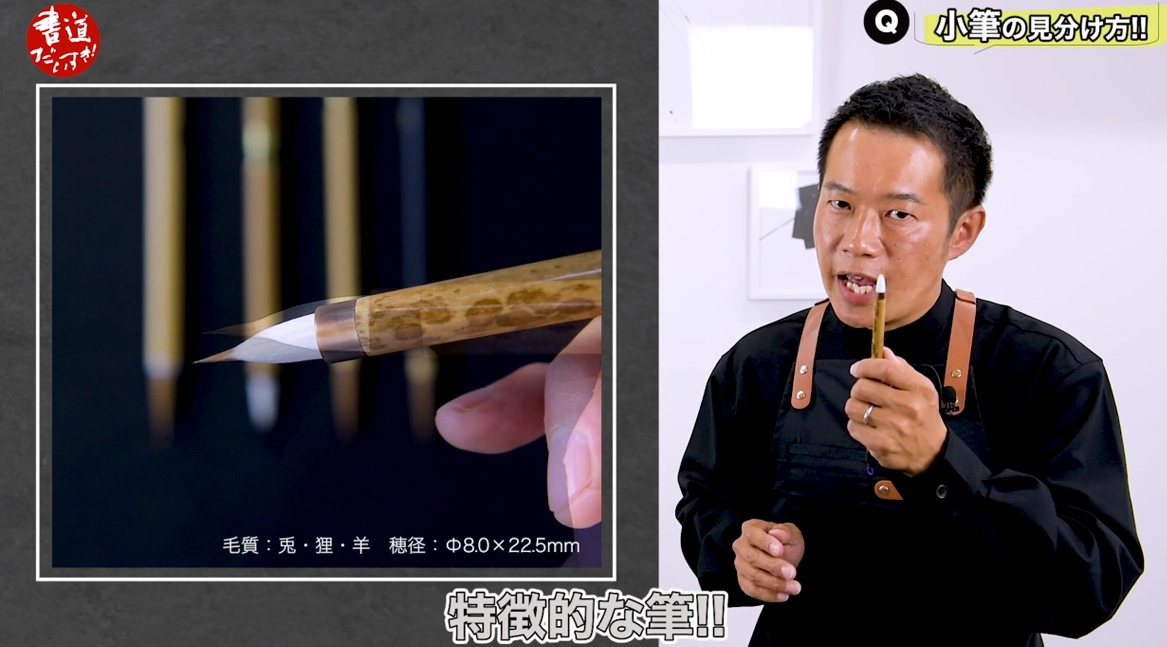
Finally, regarding the sutra-copying brush, he explains that it is also called a “sparrow-head brush,” because it is shaped like a sparrow’s head.
Only the very tip is usable, but thanks to the firm decorative hair, the base of the tip is stable, allowing you to fully utilize the springiness of the tip.
He says it is ideal for fine writing and sutra copying when you want to write each stroke neatly and precisely.
Shimauchi also conducts a comparison experiment on ink-holding capacity using the five types of small brushes.
He reports that the fine-line brush and the menso brush held ink well, while the sutra-copying brush and the wrapped-hair fine-line type did not hold ink for as long—though the sutra-copying brush produced powerful lines.
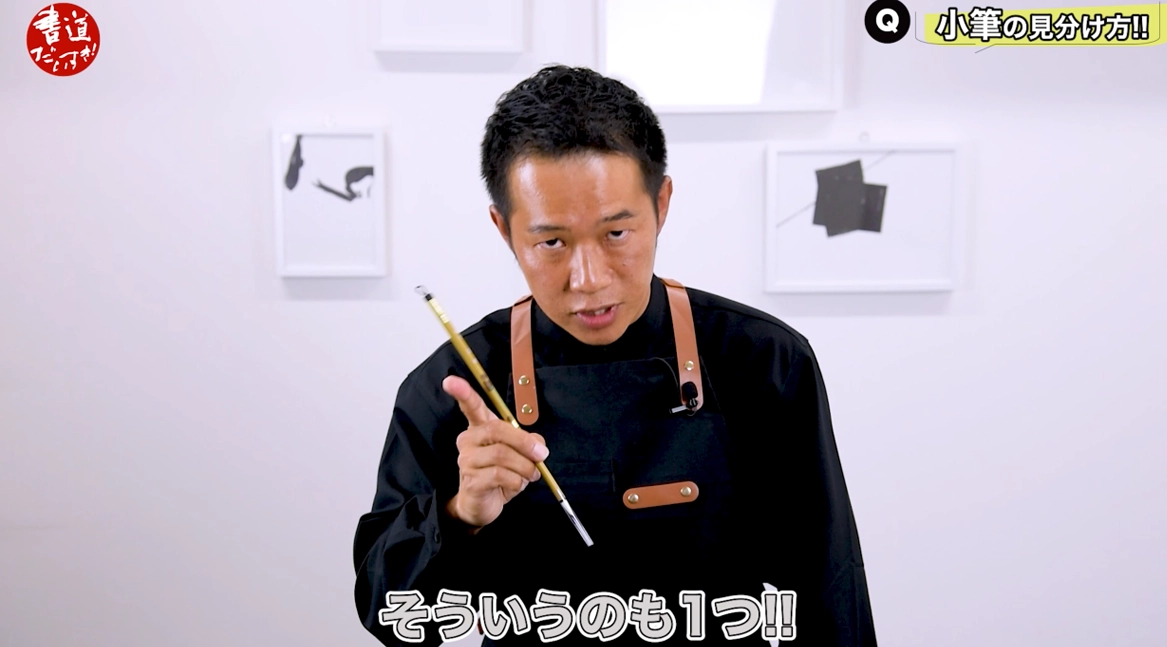
At the end, Shimauchi shares three check points for buying a small brush: (1) hold the tip up to a light and choose one with straight, sharp “lifeline hairs,” (2) choose one with sufficient hair volume, and (3) confirm whether the balance/feel in the hand suits you.
He closes by saying there are no strict rules for how to use small brushes; it’s important to use them comfortably and enjoyably, but it’s even better when you understand their intended use.
YouTube Shodo Daisuki Episode 67
About Related Products
We introduce the products featured in this video.
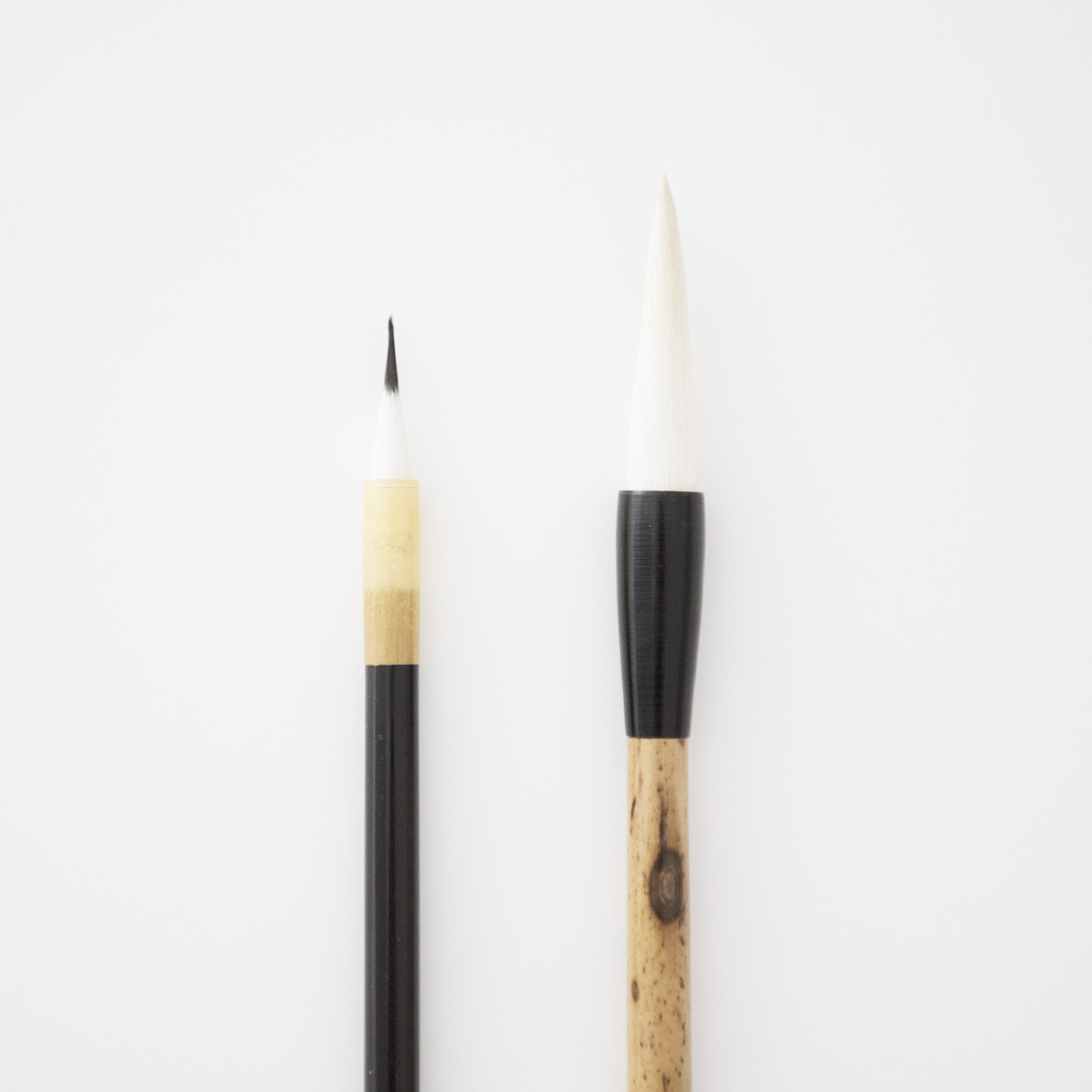
Brushes / fude
There is a wide variety of calligraphy brushes—such as “Kanji brushes,” “Kana brushes,” “Student brushes,” “Tang-style brushes,” and “Performance brushes.”
Because there are so many options, many people struggle with how to choose and end up feeling their brush is hard to use.
At Shoyu Online, we introduce brush types and how to choose the right one so you can shop with confidence.