

Shodo Daisuki Episode 62
Shodo Daisuki Episode 62
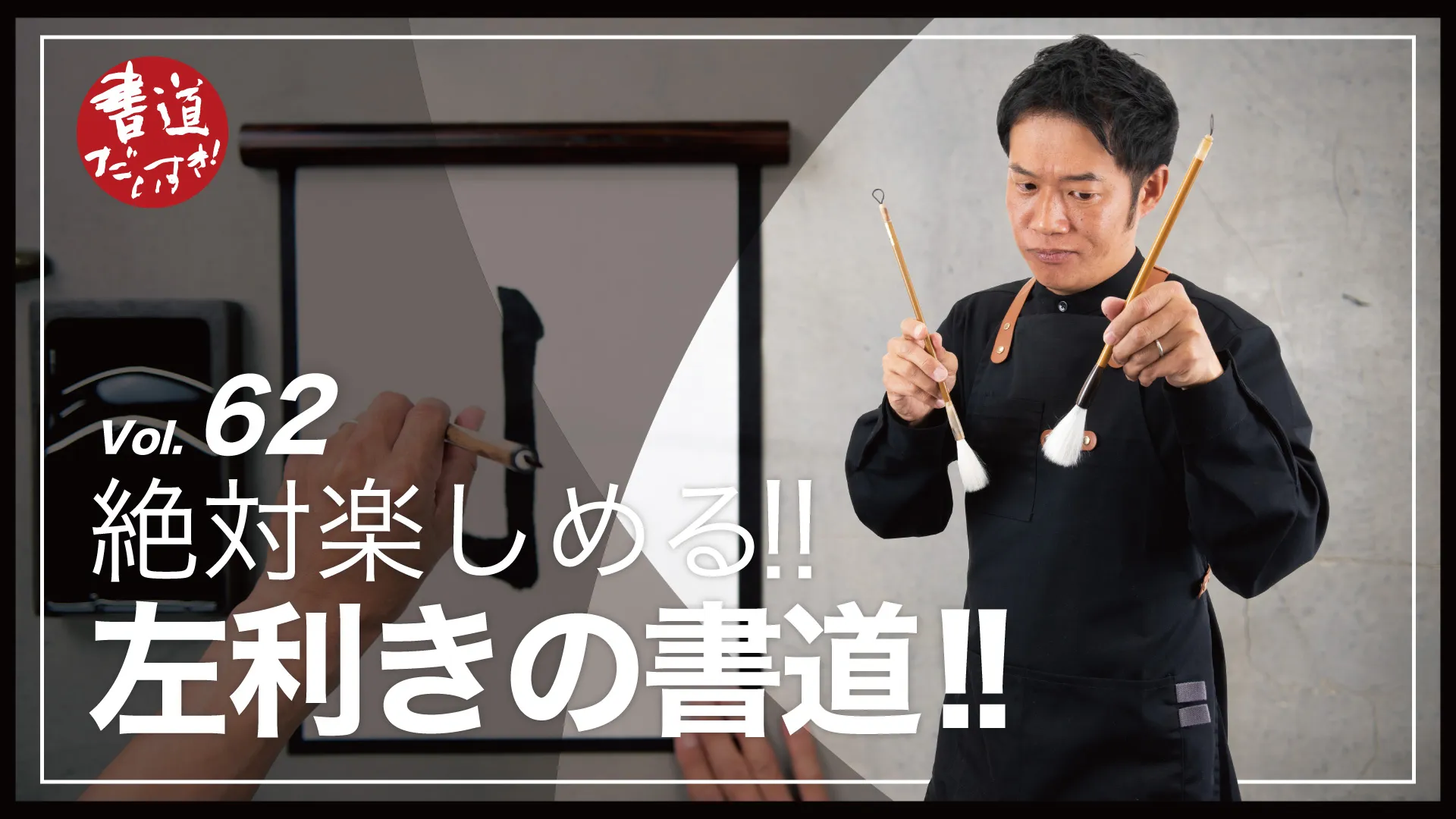
Guaranteed Fun!! “Left-Handers” and Calligraphy!!【Calligraphy】
Shodo Daisuki – Episode 062
Traditionally, people say calligraphy doesn’t suit “left-handers.”
But is that really true?
With a few simple tweaks, your line quality can change dramatically!!
This is essential not only for left-handers but also for right-handers—don’t miss it to the very end!!
Shodo Daisuki Episode 62 — Video Overview
This episode focuses on “Left-Handers and Calligraphy,” presented by Mr. Shimauchi (who is right-handed).
He examines the challenges left-handers face and tests practical ways to overcome them.
At the start, he challenges the assumption that left-handedness is unsuited to calligraphy, and expresses a strong wish for left-handers to enjoy it.
He was especially shocked to learn some left-handed elementary school students describe brush class as “hell,” and he’s determined to help fix this.
By actually writing left-handed, he identifies concrete issues: difficulty setting brush angle, the support hand crossing with the writing hand, and the left hand’s back hiding the line in progress.
To solve these, he proposes:
• Adjust the brush shaft angle to match how right-handers hold it.
• Place the paper to the left side of the body.
• Tilt the paper about 45 degrees.
Testing these showed that tilting the paper makes up-strokes (rising to the right) feel natural and leverages the circular movement common among left-handers.
In the end, he makes a clean copy left-handed and is pleasantly surprised by the “generous, open lines” unique to left-handers.
If you aim to become a professional calligrapher, retraining to right-handedness can be an option; however, for most people—especially beginners and children—the simple strategies in this episode can let left-handers truly enjoy brush writing.
YouTube Shodo Daisuki — Episode 62
Shimauchi 00:00
I think many are really struggling.
In short, like this—
add angle and gradually open it up.
Hello! I’m Shodo-Daisuki Shimauchi.
Today’s theme is “Left-Handedness and Calligraphy.”
Shimauchi 00:19
People often say left-handers don’t suit calligraphy, and if you say “I’m left-handed,” some reply, “Then calligraphy might be tough.”
Most shocking of all: some elementary kids call brush class “hell.”
Shimauchi 00:33
I can’t ignore that.
Yes, right-handers have it easier and feel less awkward—
Shimauchi 00:52
but I want to dispel the notion that left-handers can’t write well in calligraphy.
There are lines only left-handers can express—and regardless of handedness,
Shimauchi 01:08
I want everyone to truly enjoy calligraphy.
As a lifelong right-hander, I’ll try writing left-handed to find what’s hard, what’s troublesome, and how to improve it.
Shimauchi 01:26
Left-handers of course—and even right-handers—might find tips to better use your dominant hand.
Please enjoy the video to the end.
This channel covers not just calligraphy but all things “writing,” so
Shimauchi 01:45
please subscribe and like!
Let’s start: Left-Handers & Calligraphy.
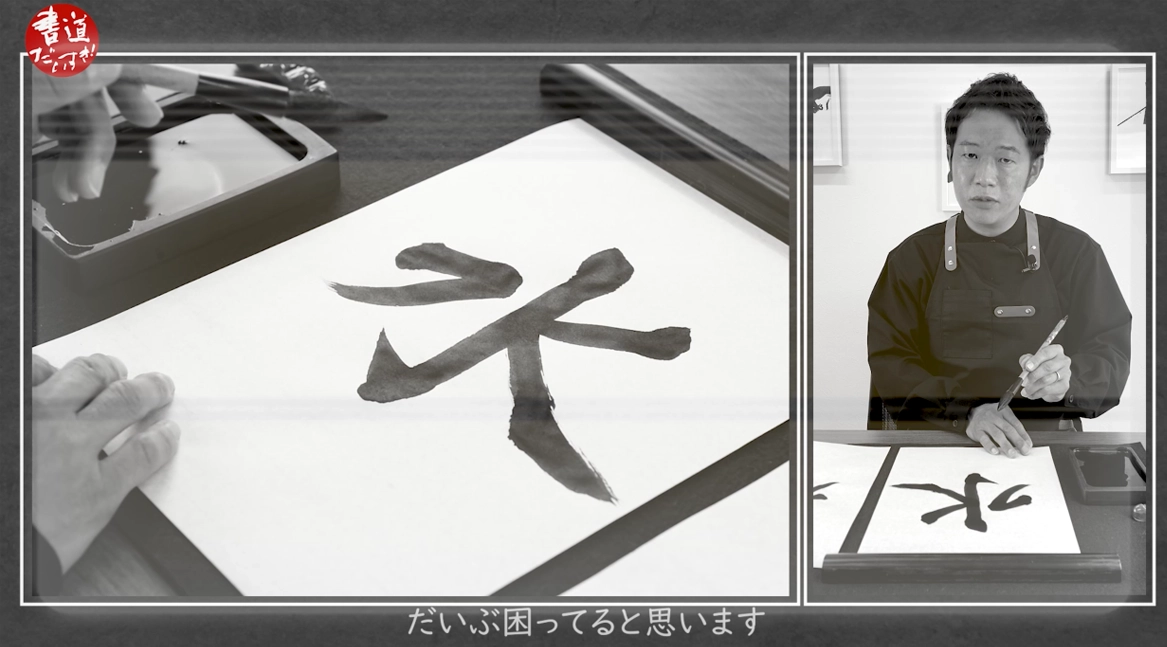
Here’s “水 (water)” written with my dominant right hand.
Now I’ll pick up the brush with my left
Shimauchi 02:08
and try writing the same character.
Left-handers naturally place the tools to the left.
The exemplar usually sits on the right—
which suddenly feels far away.
Shimauchi 02:33
Maybe that’s about dominant eye. Left-handers might not find it odd, but that’s my honest first impression.
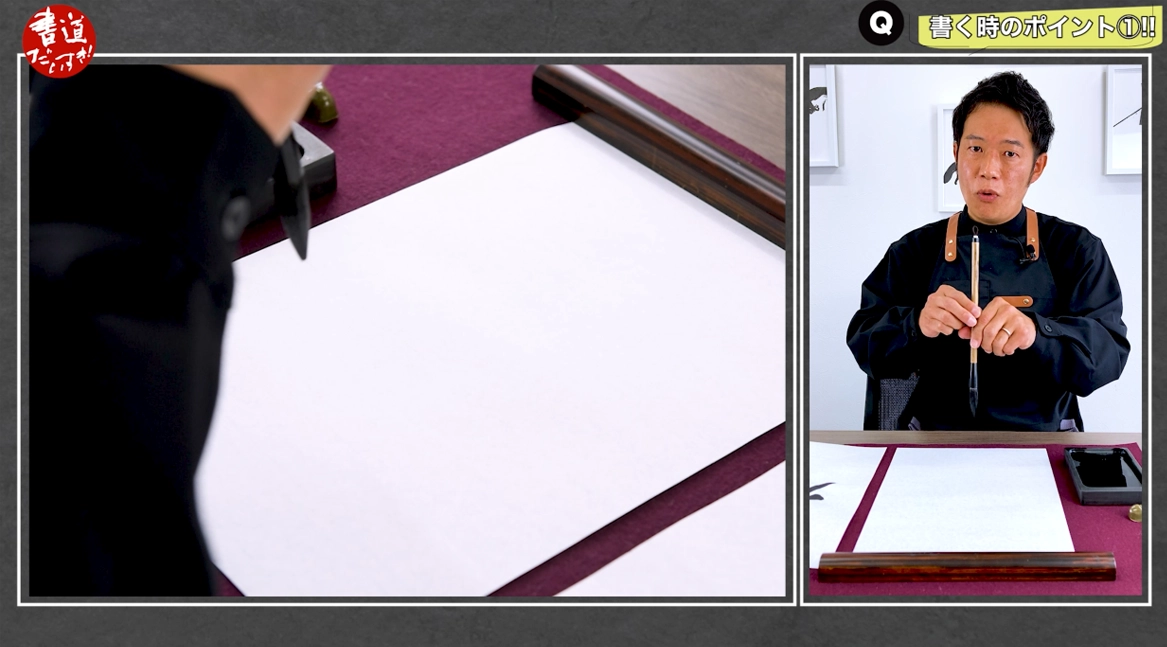
Even readying the brush is tough. Normally I hold here, but—
Shimauchi 02:47
shall I hold here instead? Okay, let’s go.
Whoa—the paper shifts more than I expected.
It moves. This is harder than I thought.
All right, I wrote freely for now.
Shimauchi 03:30
The form is manageable from visual memory, but the starting stroke angle (kihi)
was challenging; also, when I held the brush, it tended to “thump” down, so
Shimauchi 03:51
the paper slipped. How to fix the paper?
If I hold here, my hands cross—tricky.
Shimauchi 04:08
I practiced and did a “clean” attempt. The shapes improved, but more issues appeared.
Shimauchi 04:32
First, the starting angle—hard to set properly.
I ended up “forcing” lines.
Also, if I don’t hold the left side, the paper slips—
Shimauchi 04:52
which makes my hands cross like this.
And the final sweep—my left hand hides it.
Shimauchi 05:09
I can’t see where I’m pulling the stroke.
I imagine many left-handed kids then lay the brush down to see—
Shimauchi 05:27
which of course fattens the line and makes it blotty.
Up-strokes to the right are also harder if you lay the brush down—
the tip may fray more easily.
Shimauchi 05:48
I suspect many left-handed kids are struggling a lot.
Let’s consider improvements and try again.
First fix: change the brush shaft angle.
Shimauchi 06:08
I’ll mimic the right-handed angle and posture,
but in my left hand.
Let me try writing like this.
Shimauchi 06:31
Not sure what will happen, but here goes.
Ah—one thing stands out:
the line width has clearly changed.
I felt better feedback in my arm.
Shimauchi 06:59
I could write with the same angle as with my right hand, so lines tightened compared to before.
But tilting like this makes my left hand’s back hide the strokes even more.
Shimauchi 07:19
So we need another fix.
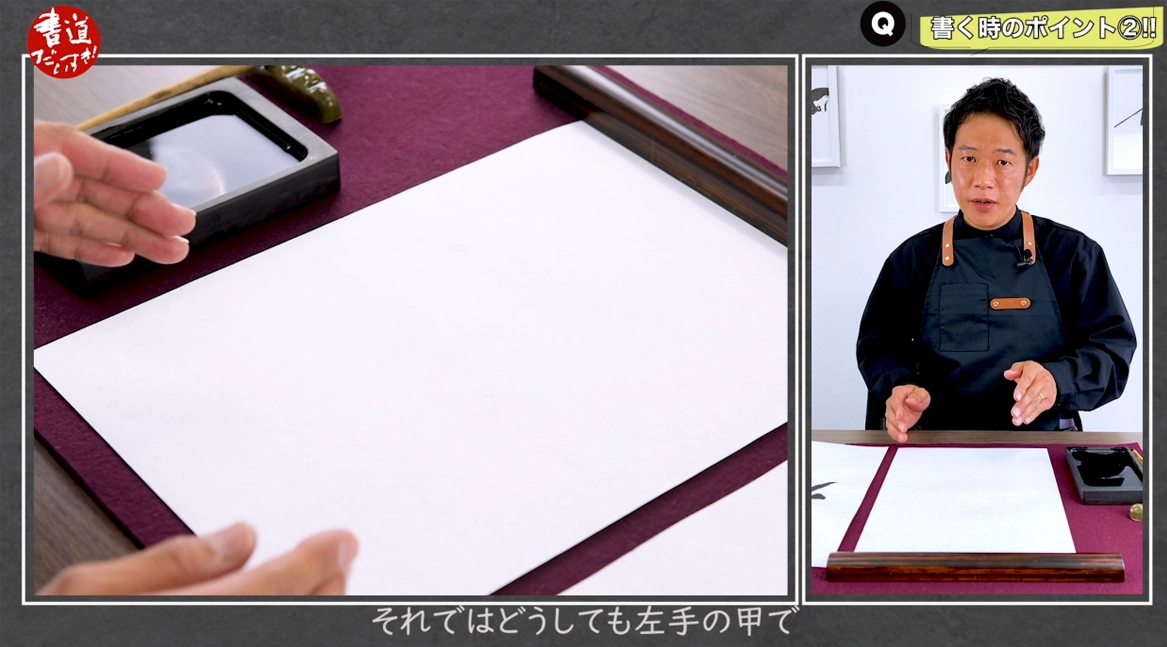
Earlier, the paper was centered.
Shimauchi 07:38
But since the left hand hides the line, let’s boldly shift the paper left—past center, to the left side.
Let’s see what changes.
Shimauchi 08:02
Now the paper is shifted left by about half its width.
The exemplar is closer, but the writing area feels a little farther—still perfectly workable.
Shimauchi 08:27
Okay, I’ll write on this side—here goes.
I could see the line clearly.
Lines tightened again, and I think I started at the same angle as the exemplar.
Shimauchi 08:51
Honestly, I’m happy—
It’s amazing how much such a small change helps.
Left-handed kids should try this!
Shimauchi 09:09
If shifting left feels too far for some children,
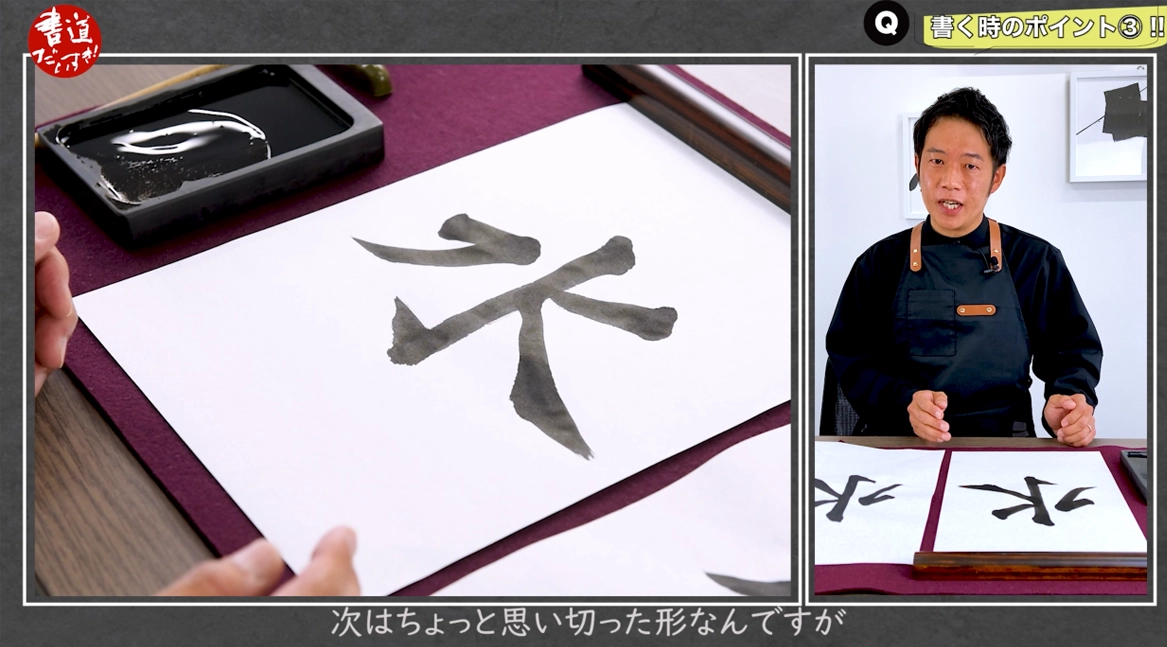
there’s another option: keep the paper centered, but tilt it.
Shimauchi 09:30
About 45°—
and tilt the exemplar similarly.
Let’s try it.
Holding here alone was enough to stabilize the sheet,
Shimauchi 10:21
so I didn’t have to cross my hands much.
Before, I held the right side and crossed frequently; this reduced it.
Shimauchi 10:37
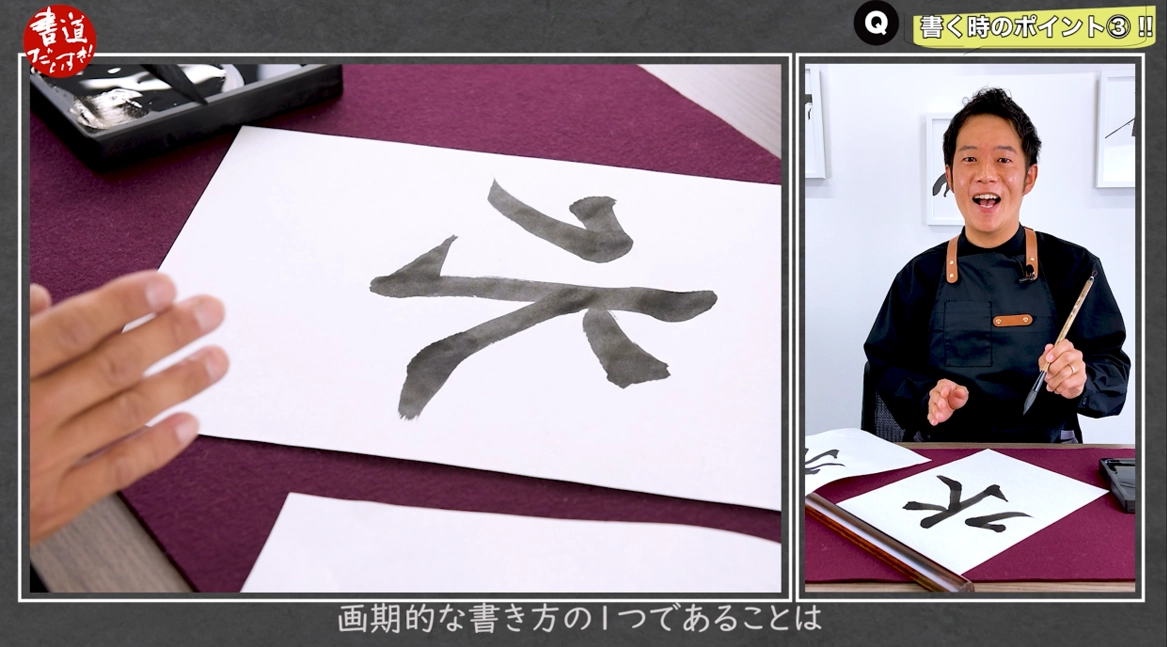
Tilting also made right-up and right-down strokes easier—
it aligns with left-handers’ circular movement.
Shimauchi 10:55
Especially the rising-to-the-right stroke became naturally easy.
That’s probably the biggest benefit of tilting to ~45°.
Shimauchi 11:18
It makes a lot of sense.
However, if you’re used to writing with paper straight, tilting may feel odd at first—
Shimauchi 11:34
so you’ll need practice to gain confidence.
It has pros and cons—
Shimauchi 11:49
but it’s certainly a game-changing method.
Finally, I made a clean copy left-handed.
As I said at the start,
Shimauchi 12:08
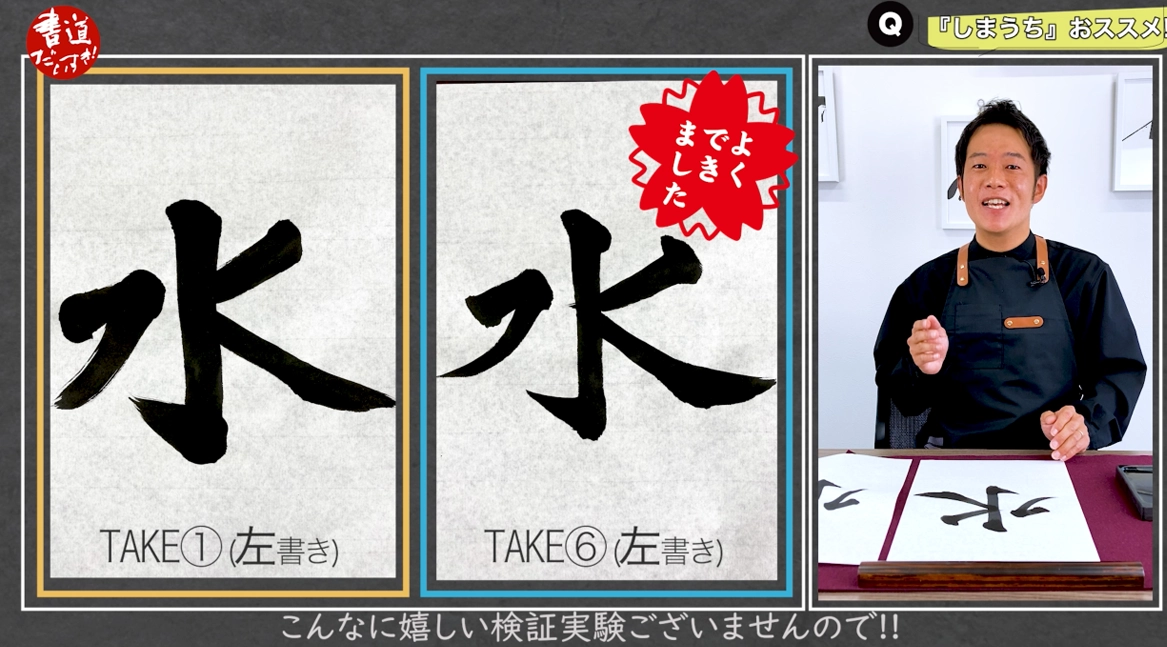
there really are lines that only left-handers can produce.
Compared to my right-handed sample, the left-handed piece feels more “open” and “generous.” I like it!
Shimauchi 12:33
For that final copy, I simply used the brush angle that felt best—
matching a right-hander’s tilt—with my left hand.
Shimauchi 12:53
Because I’ve long practiced right-handed, I have the basics to keep forms tidy—
but with the left-hand tilt, some parts do get hidden.
Shimauchi 13:11
Combine the tilt with shifting the paper a bit left, and the lines will change for the better.
Visibility drops otherwise, and the arm collapses, making crisp lines harder.
Shimauchi 13:28
So: tilt the shaft, picture a firm start, and your lines will improve—this is my top recommendation.
If right-up strokes remain hard, you don’t need a full 45°—even a slight tilt helps.
Shimauchi 13:46
Here you can compare my first and final “水.” The difference surprised me.
Shimauchi 14:03
It’s a striking change—please try it!
Left-handed children—
Shimauchi 14:22
and adults too—
if you want to enjoy calligraphy left-handed, spread these tips!
It’s wonderful if left-handers feel, “Hey, this is actually fun!”
Shimauchi 14:40
This experiment made me happy—let’s enjoy it together.
As a lifelong right-hander, I can’t fully feel what lifelong left-handers feel,
Shimauchi 15:00
but I now understand some of the stress points and the right-hander’s blind spots.
Even something we say casually—“Write with a rightward rise”—
Shimauchi 15:18
requires lots of ingenuity for left-handers.
If you later aim to be a calligrapher, retraining to right-handedness is understandable—
Shimauchi 15:39
but most people are at an earlier stage.
Most children first meet brush writing in school class.
Whether or not we can offer the tips from this episode at that moment
Shimauchi 16:01
can dramatically shape their feelings about brush writing.
Let’s put aside “right vs left,” and help everyone enjoy the simple culture of writing with a brush, without stress, from the heart.
Shimauchi 16:23
That’s my wish. This is Shodo-Daisuki Shimauchi—
waving left-handed today—goodbye!
About Related Products
Here are products featured in this video.
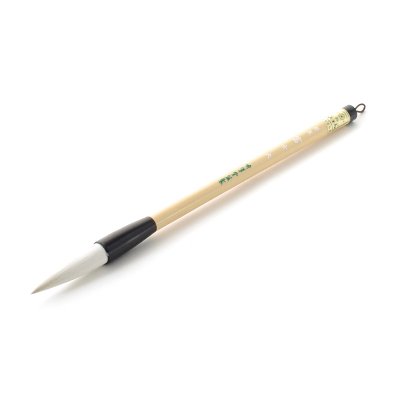
School Calligraphy Supplies / gakudo shodo tohin
Compared with adult tools, school calligraphy supplies are designed to help children write more easily.
Many items are made especially user-friendly for children and beginners.


