

Shodo Daisuki Episode 63
Shodo Daisuki Episode 63
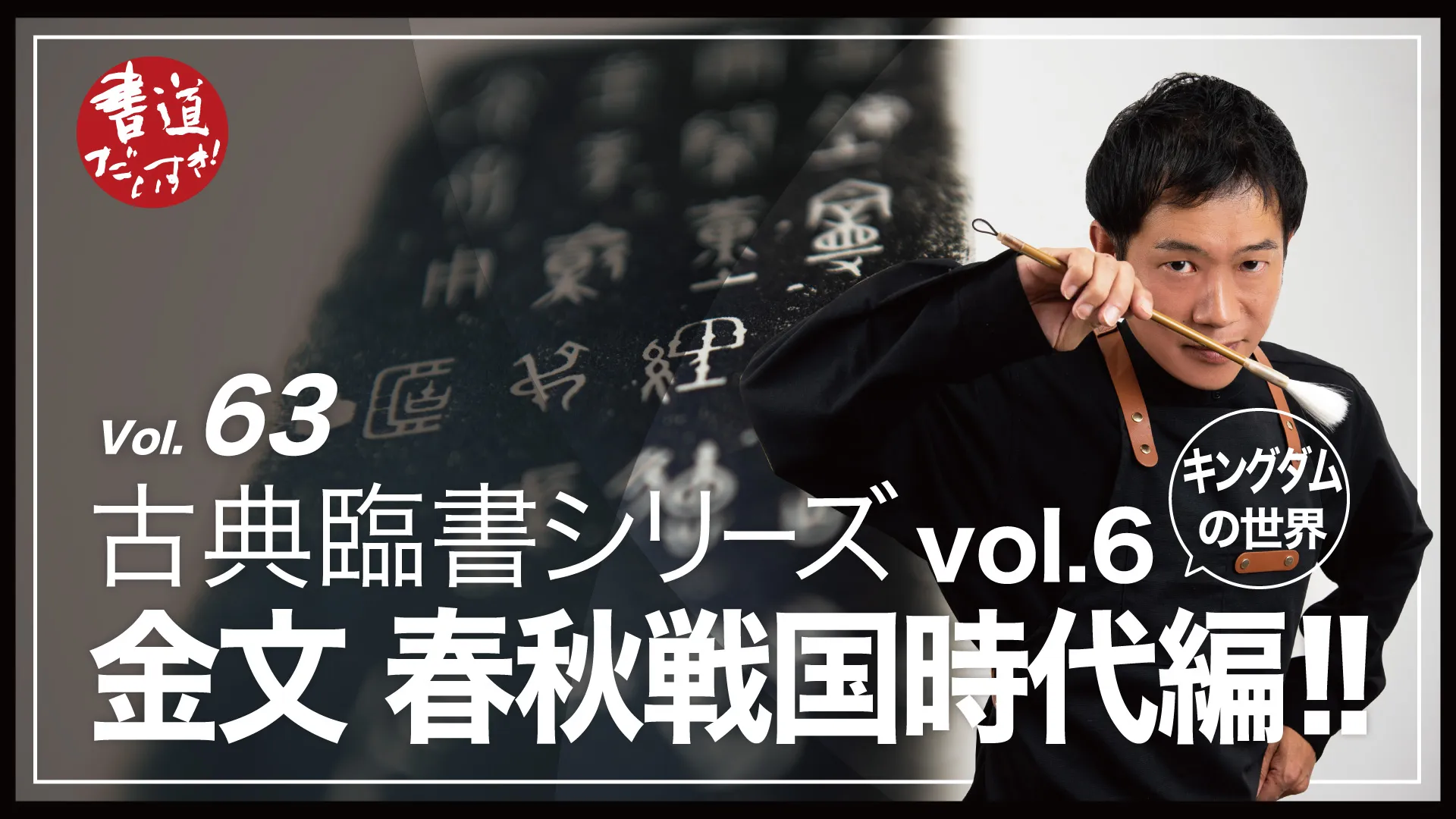
“The World of the Hit Manga KINGDOM!! Kinbun in the Spring & Autumn / Warring States!!” Classical Copying Series vol.6【Calligraphy】
Shodo Daisuki – Episode 063
About 600 years after the previous “Kinbun”!
We’ll study and copy “Kinbun – Spring & Autumn / Warring States Edition.”
The smash-hit manga KINGDOM is set precisely in this era!!
It’s a rare chance to see and feel the distinct scripts of each state!!
Please enjoy the episode through to the end!!
Shodo Daisuki Episode 63 – Video Overview
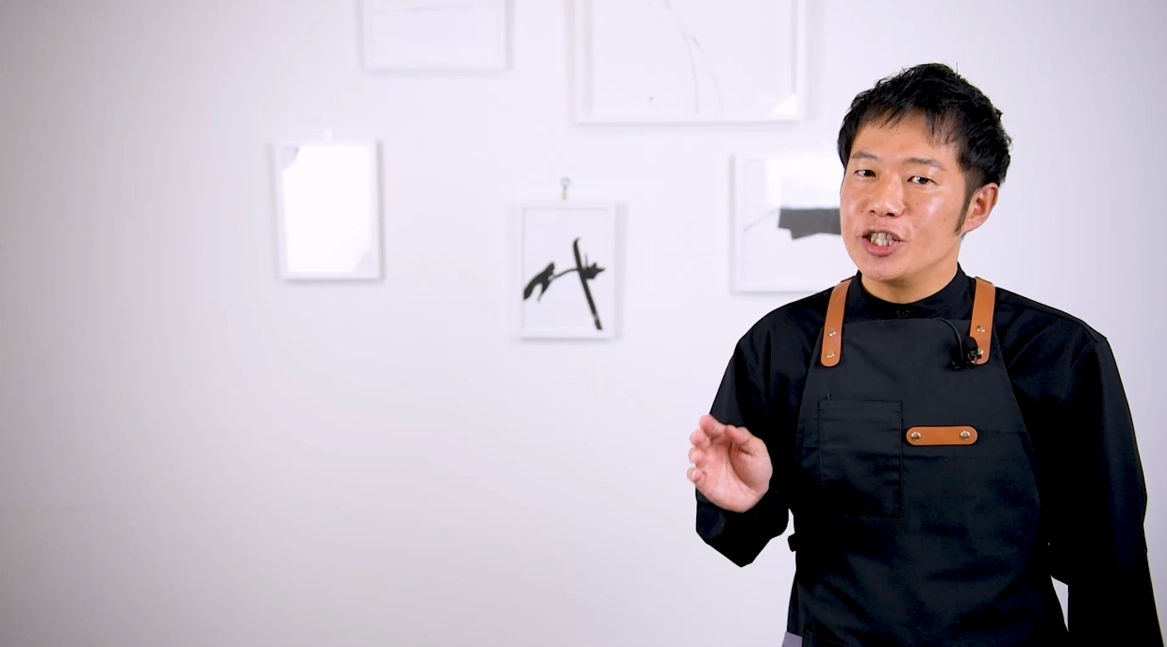
Shimauchi introduces “Classical Copying Series vol.6: Kinbun – Spring & Autumn / Warring States Edition.”
Continuing from the last episode’s Kinbun, he connects the topic with the popular manga KINGDOM and highlights how fascinating each state’s unique script forms were on the eve of Qin’s unification of China.
He explains the historical context: the Zhou royal house’s decline, the rise of regional states, and how written culture spread.
With the spread of iron tools, engraved bronze inscriptions (刻銘金文) appear—letters directly chiseled into bronze with a tagane—along with inlaid gold for decorative effects.
He compares the scripts of five states familiar from KINGDOM: Qin, Chu, Yan, Qi, and Zhao.
Qin inherited the Zhou script tradition and looks well-regulated; Chu features rhythmic, diverse strokes; Yan, a northern state prolific in bronze weapons, preserves more primal inscriptional traits; and Qi, a great power, exhibits particularly attractive forms.
Personally drawn to Qi’s script, Shimauchi chose to practice Chu for the live copying.
The four characters he focuses on are “齊,” “曼,” “経,” and “永,” explaining their etymologies and meanings.
He notes Qi’s traits: tall proportions, a fine balance of curves and straights, generous spacing, and ornamental touches.
In practice, he aimed for strength and severity in line quality, but finds brush handling still challenging—especially the moment the tip meets paper and the final, uninterrupted finishing of strokes.
On his second sheet he pressed the tip more firmly and felt the importance of raising the probability that lines come out as intended.
Finally, he reflects on the historical significance of Qin’s script unification and cites the line from the KINGDOM movie—“We rose this far by the sword and by the written word”—as proof of the power of script then. He closes with a pledge to share the joy of calligraphy with the world.
YouTube Shodo Daisuki Episode 63
Shimauchi 00:00
Hello, it’s Shodo-Daisuki Shimauchi!
Welcome to Classical Copying Series vol.6—our topic is Kinbun in the Spring & Autumn / Warring States era.
You might say, “Kinbun again?” There’s a good reason—my partner Benjamin…
Shimauchi 00:22
…is a huge fan of the blockbuster manga KINGDOM—and it’s set smack in this era.
Confession: I hadn’t actually read the original—sorry! Please send complaints to Benjamin.
Shimauchi 00:41
Still, it’s rare for a calligraphy channel to connect with a mega-popular manga.
So we’ll make the most of that this time.
Shimauchi 01:00
It’s not just because of KINGDOM.
Right before Qin unified China and standardized script, each state had its own fascinating letterforms.
Shimauchi 01:19
The era’s background is dramatic—please watch to the end!
On this channel we share not only calligraphy but all things “writing,” so please subscribe and like!
Shimauchi 01:34
Let’s go—Kinbun in the Spring & Autumn / Warring States! First, background:
Roughly 600 years after the Da Yu Ding we copied last time.
Shimauchi 01:56
As Zhou royal power declined, states fought for supremacy—the Warring States.
How did script function then? Once “royal exclusive,” script spread east as the capital moved—
Shimauchi 02:15
and diffused across the states, producing distinct regional scripts throughout China.
Shimauchi 02:37
Bronze vessels remain, but with iron widespread, engraved Kinbun (chisel-cut) appears.
Gold inlay also begins, adding splendor.
Shimauchi 03:23
Beyond bronzes, coins, seals, bamboo slips, and silk manuscripts show unique scripts too.
Qin formed later in the west and moved into former Zhou lands—
Shimauchi 03:45
so its script inherits Zhou tradition—obviously more regular than others.
It’s clear why later standardization used Zhou/Qin as a base.
Shimauchi 04:06
Chu’s lines are diverse and rhythmic—like a fresh cultural wind.
Shimauchi 04:25
The “Three Jins” (including later partitions) show, e.g., the strikingly designed inscriptions from the Zhongshan king’s tomb—
a style now used as modern “Kinbun-tai.”
Shimauchi 05:07
Yan, in the north, produced many bronze weapons; its script retains primal, molded traits—feels a bit “earlier.”
Shimauchi 05:28
Qi, a great eastern power balancing Qin to the west, has especially attractive letterforms.
Shimauchi 05:45
It’s amazing how a “courtly” script spread and diversified so richly.
Personally, my favorite is Qi—so I’ll copy Qi characters today.
Shimauchi 06:30
Here’s one sheet I tried in advance. The inscription: a man named Chen Man in Qi commissioned a ritual bronze to be used and cherished long-term.
I picked four characters I wanted to write.
Shimauchi 06:56
First: “齊,” the old form of “Qi.” Hair ornaments set upright on a board shape the top motif.
Next: the right part of “曼” (without water radical), signifying a beautiful feminine eye.
Shimauchi 07:24
Third: the old “経/緯”—a warp set upright; by contrast “緯” derives from weft-threads.
Last: “永,” the form of flowing water.
Shimauchi 08:04
Qi traits: tall shapes, a fusion of curves and straights, generous white space, and ornamental details.
Shimauchi 08:41
My focus this time was strong, severe lines.
But some strokes still blobbed; my handling needs work—true split-tip starts and controlled finishes would naturally fray both edges of verticals.
Shimauchi 09:39
Those first-touch moments are very hard; finishing in one breath also needs practice.
Shimauchi 10:02
For the next sheet I’ll prioritize line quality—sharper, finer lines overall.
Okay, one more complete sheet—
Shimauchi 11:19
This time I pressed the tip quite firmly.
We all know that instant when you realize a stroke is already “lost.”
Raising the probability that each stroke goes as intended—that’s key.
Shimauchi 11:54
That’s it for today.
Starting with KINGDOM, we arrive at Qin’s unification and the birth of small-seal and, later, clerical script.
Shimauchi 12:15
A memorable movie line says: “You rose this far by the sword and by the written word.”
It underlines how weighty script was then.
Shimauchi 12:34
Inspired by that passion for unifying scripts, our channel will keep sharing the joy of calligraphy with the world.
This was Shodo-Daisuki Shimauchi. See you next week—goodbye!
Related Products
Here are items featured in this video.
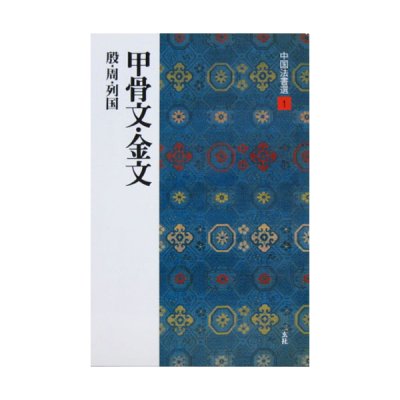
Books / Book & Publication
From beginners to intermediate and advanced learners, books are vital sources of calligraphy knowledge.
They let you study beyond your teacher’s examples and are ideal for at-home practice or self-study.
Growing your knowledge of calligraphy also broadens your horizons.


